Central Disorders of Hypersomnolence: What Patients Should Know

These disorders cause ongoing excessive daytime sleepiness even after what seems like adequate sleep. Narcolepsy and idiopathic hypersomnia are among the main central disorders of hypersomnolence.
Key Takeaways
- These disorders cause ongoing excessive daytime sleepiness even after what seems like adequate sleep.
- Narcolepsy and idiopathic hypersomnia are among the main central disorders of hypersomnolence.
- Diagnosis usually involves a detailed history, sleep tracking, and specialized sleep testing.
- Treatment may include lifestyle strategies, scheduled naps, and medications tailored to the specific disorder.
- A specialist evaluation is important because symptoms can overlap with sleep deprivation, sleep apnea, depression, and medication effects.
Central disorders of hypersomnolence are sleep-wake disorders that cause persistent daytime sleepiness not fully explained by too little sleep or another medical problem. Understanding symptoms, diagnosis, and treatment can help patients seek timely care and improve daily functioning.
Overview
Central disorders of hypersomnolence are a group of conditions in which the brain has difficulty regulating sleep and wakefulness. The main feature is excessive daytime sleepiness, meaning a strong tendency to fall asleep or struggle to stay awake during the day. This happens even when a person appears to spend enough time in bed.
These disorders are different from simply being tired after a busy week or poor sleep habits. In central hypersomnolence disorders, sleepiness is often persistent, disruptive, and out of proportion to a person’s schedule. It can affect school, work, driving, concentration, memory, mood, and overall quality of life.
The group includes conditions such as narcolepsy type 1, narcolepsy type 2, idiopathic hypersomnia, and some rarer hypersomnia syndromes. Because symptoms can overlap with other causes of sleepiness, careful evaluation by a clinician with expertise in sleep medicine is often needed to make the right diagnosis.
Symptoms and How They May Feel
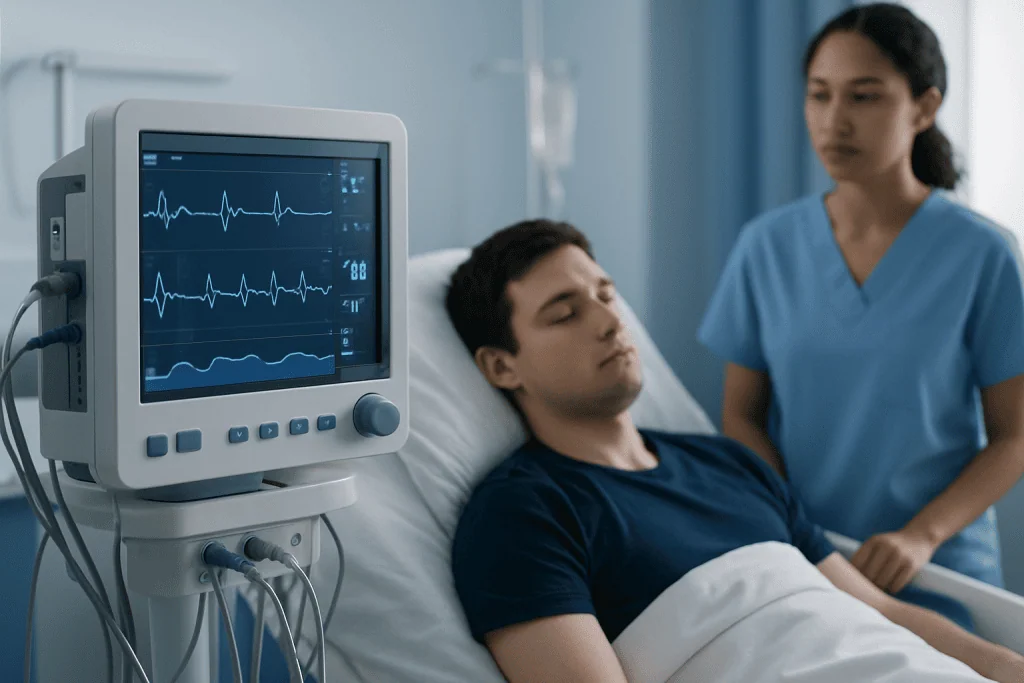
The most common symptom is excessive daytime sleepiness. Patients may describe it as an uncontrollable need to sleep, repeated unintended naps, “sleep attacks,” or feeling mentally foggy and unrefreshed throughout the day. Some people sleep for long periods at night yet still wake feeling as though they have not rested enough.
Symptoms can vary depending on the specific disorder. In narcolepsy, daytime sleepiness may be accompanied by cataplexy, which is a sudden brief loss of muscle tone triggered by strong emotions such as laughter or surprise. Some people also experience vivid dream-like hallucinations when falling asleep or waking up, or sleep paralysis, a temporary inability to move during these transitions.
Idiopathic hypersomnia often involves prolonged nighttime sleep, severe sleep inertia, and “sleep drunkenness,” a state of marked grogginess and confusion after waking. Naps may be long and not especially refreshing. Patients may also notice poor attention, forgetfulness, slower thinking, and reduced energy, which can easily be mistaken for stress, depression, or burnout.
- Persistent daytime sleepiness despite adequate sleep opportunity
- Frequent or irresistible naps
- Difficulty waking up in the morning
- Unrefreshing sleep or naps
- Cataplexy, sleep paralysis, or vivid sleep-related hallucinations in some cases
Causes and Risk Factors

The exact cause depends on the specific diagnosis. In narcolepsy type 1, a loss of brain cells that produce hypocretin, also called orexin, is believed to play a major role. Hypocretin helps regulate wakefulness, and low levels can lead to unstable transitions between sleep and wake states. Researchers think this process may involve autoimmune mechanisms in some patients.
For idiopathic hypersomnia, the cause is less clearly understood. It is considered a neurologic sleep-wake disorder, but no single explanation fits all patients. Genetics may contribute in some cases, and ongoing research is exploring how brain signaling and sleep regulation differ in affected individuals.
Many other conditions can cause or worsen sleepiness and need to be considered before diagnosing a central hypersomnolence disorder. These include sleep deprivation, obstructive sleep apnea, circadian rhythm disorders, depression, head injury, thyroid disease, medication side effects, alcohol or substance use, and other neurological illnesses. This is one reason why a broad medical review is essential.
Risk factors may include a family history of similar symptoms, prior infections in some cases, or other medical conditions that affect sleep quality. However, central hypersomnolence can also occur in people without obvious risk factors, and symptoms often develop gradually over time.
How Doctors Diagnose Central Hypersomnolence Disorders
Diagnosis begins with a detailed clinical history. The doctor will ask when sleepiness began, how often naps occur, whether naps are refreshing, what nighttime sleep is like, and whether symptoms such as cataplexy, hallucinations, or sleep paralysis are present. A review of medications, mental health, work schedule, and other health conditions is also important.
Keeping a sleep diary and using actigraphy, a wearable device that tracks rest and activity patterns, may help show whether the patient has had sufficient sleep before testing. Doctors often need to confirm that chronic sleep deprivation is not the main cause of symptoms. Standardized questionnaires may also be used to measure daytime sleepiness.
Objective sleep testing is usually an important part of diagnosis. Overnight polysomnography, or a sleep study, can assess sleep quality and identify other disorders such as sleep apnea. The next day, a multiple sleep latency test measures how quickly a person falls asleep during several scheduled nap opportunities and whether rapid eye movement sleep appears unusually early.
Some patients may need additional evaluation, such as blood tests, brain imaging, or review by neurology or psychiatry, depending on the symptoms. If narcolepsy with cataplexy is strongly suspected, specialized testing such as cerebrospinal fluid hypocretin measurement may be considered in selected cases. The goal is to build an accurate diagnosis and rule out other treatable explanations for daytime sleepiness.
Treatment Options
Treatment depends on the exact disorder, the severity of symptoms, and the patient’s daily needs. The main goals are to improve alertness, reduce the impact of symptoms on work and safety, and support a regular sleep-wake schedule. Management often combines practical routines with medication, rather than relying on one approach alone.
Lifestyle measures can be very helpful. Patients may benefit from consistent bedtimes and wake times, planned short naps when appropriate, limiting alcohol, and avoiding sedating medications unless a doctor advises otherwise. Good sleep hygiene matters, but it is important to understand that these disorders are medical conditions, not simply a matter of willpower or habits.
Medications may be used to promote wakefulness or address specific symptoms such as cataplexy. The choice depends on the diagnosis, other health conditions, age, possible side effects, and how symptoms affect daily life. Follow-up is important because treatment often needs adjustment over time, and some patients respond better to one option than another.
When symptoms are complex or diagnosis is uncertain, care in a dedicated sleep disorder treatment program can be helpful. In selected cases, related neurological evaluation may also be needed, especially when doctors are considering other central causes of sleepiness such as narcolepsy. Near the end of the care journey, some international patients choose centers such as Acibadem International, where multidisciplinary specialists in JCI-accredited hospitals evaluate and treat sleep-wake disorders.
Prevention, Self-care, and Daily Living
Central disorders of hypersomnolence usually cannot be prevented in the same way as a common illness, but symptom control can often be improved with consistent self-care. Keeping a regular sleep schedule, allowing enough time for nighttime sleep, and avoiding major shifts in routine can reduce added strain on the sleep-wake system.
Safety planning is an important part of daily life. People with untreated or poorly controlled daytime sleepiness may be at higher risk of accidents while driving, working with machinery, or doing tasks that require sustained attention. Patients should talk with their doctor about whether their symptoms make certain activities unsafe and what precautions are appropriate.
Support at school or work may also be useful. Some patients benefit from scheduled break times, a quiet place for a brief planned nap, or flexibility in start times if mornings are especially difficult. Family members often find it helpful to learn that hypersomnolence is a recognized medical condition, not laziness or lack of motivation.
If another sleep problem is present, treating it can make a meaningful difference. For example, doctors may recommend CPAP treatment when obstructive sleep apnea contributes to sleep fragmentation and worsens daytime symptoms. Managing mental health, exercise within individual tolerance, and following the treatment plan closely can all support better long-term outcomes.
When to See a Doctor
A medical review is important when daytime sleepiness lasts for weeks, interferes with daily life, or leads to unintended sleeping in passive or active situations. Falling asleep while reading is common in many tired people, but drifting off during conversations, meals, work, or driving deserves prompt attention. Persistent morning grogginess that makes it very hard to wake up can also be a sign of a sleep-wake disorder.
Urgent evaluation is especially important if symptoms create a safety risk, such as drowsy driving, workplace accidents, or sudden muscle weakness with emotions that suggests cataplexy. New sleepiness after a head injury, a new neurological symptom, or a major change in medications should also be discussed promptly with a clinician.
Because central hypersomnolence can resemble other sleep or medical conditions, early assessment may shorten the time to diagnosis and reduce unnecessary frustration. A sleep specialist can help determine whether symptoms are due to sleep deprivation, another medical issue, or a disorder of central sleep-wake regulation.
Frequently asked questions
What are central disorders of hypersomnolence?
They are conditions that cause excessive daytime sleepiness because of problems in the brain’s regulation of sleep and wakefulness. Common examples include narcolepsy and idiopathic hypersomnia.
How are these disorders different from being sleep deprived?
Sleep deprivation usually improves when a person gets enough sleep consistently. In central disorders of hypersomnolence, significant sleepiness often continues even after adequate sleep opportunity and may require specialized testing.
Can central hypersomnolence affect memory and concentration?
Yes. Many patients report brain fog, reduced attention, slower thinking, and memory difficulties. These symptoms often improve when the underlying sleep-wake disorder is properly identified and treated.
Is narcolepsy the same as idiopathic hypersomnia?
No. Both can cause severe daytime sleepiness, but they are different diagnoses with different clinical features and test patterns. Narcolepsy may include cataplexy and rapid entry into REM sleep, while idiopathic hypersomnia often involves long sleep time and difficulty waking.
What tests are commonly used for diagnosis?
Doctors often use a detailed sleep history, sleep diary, actigraphy, overnight polysomnography, and a multiple sleep latency test. Additional tests may be needed to rule out sleep apnea, medication effects, or other medical conditions.
Can these conditions be treated?
Yes. While treatment does not always eliminate symptoms completely, many patients improve with a combination of lifestyle measures, scheduled naps, and medications chosen by a sleep specialist. Regular follow-up helps tailor treatment over time.
References
- American Academy of Sleep Medicine
- National Institute of Neurological Disorders and Stroke
- National Heart, Lung, and Blood Institute
- European Academy of Neurology
- MedlinePlus
This article is for general information only and is not a substitute for professional medical advice. Please consult a qualified doctor about your individual situation.
Explore treatments in Turkey — costs, top hospitals & a free quote
JCI-accredited · board-certified surgeons · reply within 24h
Add us as a Preferred Source to see more of our trusted health content across Google Search, AI Overviews and Discover.

More from the Health Library



Related Specialists

Asst. Prof. Dr. Ceren Meriç Özgündüz
Psychiatry
Assoc. Prof. Dr. Özlem Özgür Gürsoy
Gynecology & Obstetrics
Dr. Ekin Pasinlioğlu
Pediatrics
Assoc. Prof. Dr. Selim Ergün
Orthopedic Surgery & Traumatology