Cerebellum and Stroke: What Patients Need to Know
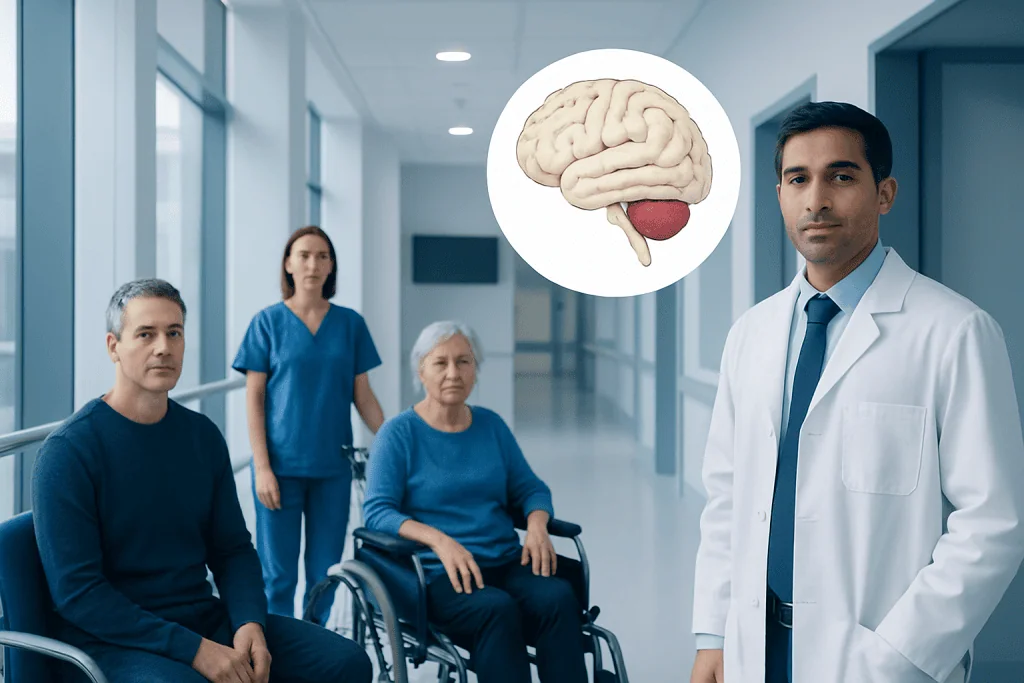
The cerebellum coordinates balance, movement, posture and parts of speech and eye control. Cerebellar stroke may cause sudden dizziness, vomiting, severe imbalance, headache, double vision or slurred speech.
Key Takeaways
- The cerebellum coordinates balance, movement, posture and parts of speech and eye control.
- Cerebellar stroke may cause sudden dizziness, vomiting, severe imbalance, headache, double vision or slurred speech.
- Dizziness alone is common and often harmless, but sudden dizziness with neurological symptoms should be treated as a possible stroke emergency.
- CT and MRI scans help clinicians distinguish a cerebellar stroke from inner-ear disorders and other causes of vertigo.
- Treatment depends on whether the stroke is caused by a clot or bleeding, as well as the timing and the person’s overall health.
- Rehabilitation and control of stroke risk factors are important parts of recovery and prevention.
A stroke affecting the cerebellum can quickly disrupt balance, coordination, speech, vision and walking. Sudden severe dizziness or unsteadiness—especially with other neurological symptoms—needs emergency assessment because prompt treatment can protect brain function.
Overview: What Is a Cerebellar Stroke?
Cerebellum and stroke are linked because a stroke can occur in the blood vessels supplying the cerebellum, the area at the lower back of the brain that helps coordinate movement, balance, posture, eye movements and speech. When its blood supply is blocked or a blood vessel bleeds, brain cells can be injured within minutes. Symptoms often begin suddenly and may include severe unsteadiness, dizziness, vomiting, difficulty walking or problems with coordination.
A cerebellar stroke is a type of posterior circulation stroke, meaning it affects blood vessels at the back of the brain. Although some symptoms can resemble a common inner-ear balance disorder, a cerebellar stroke is a medical emergency. Early evaluation is essential because certain treatments may be time-sensitive, and swelling in this compact area of the skull can occasionally create serious pressure on nearby brain structures.
There are two main stroke types. An ischemic stroke happens when a blood clot blocks an artery, while a hemorrhagic stroke occurs when a blood vessel ruptures and bleeds into or around the brain. The symptoms may overlap, so brain imaging is needed to identify the cause and guide safe treatment.
How the Cerebellum Affects Stroke Symptoms
The cerebellum does not usually control muscle strength directly. Instead, it fine-tunes movements so they are smooth, accurate and well timed. For this reason, a person with a cerebellar stroke may still be able to move an arm or leg but have trouble reaching for an object accurately, sitting upright, standing steadily or walking in a straight line.
Symptoms vary depending on the exact blood vessel and cerebellar region involved. They may affect one side of the body more than the other, often on the same side as the cerebellar injury. In some cases, nearby brainstem pathways are also affected, which can lead to more extensive symptoms such as facial weakness, swallowing difficulty, altered sensation or weakness.
Possible signs of cerebellar stroke include:
- sudden inability to walk normally, falling or marked loss of balance;
- new intense spinning dizziness or vertigo, particularly when accompanied by other neurological signs;
- nausea and repeated vomiting without an obvious stomach illness;
- poor coordination, clumsiness or difficulty using a hand precisely;
- slurred, slow or poorly articulated speech;
- double vision, abnormal eye movements or difficulty focusing the eyes;
- a sudden severe headache, particularly when bleeding is involved; and
- confusion, drowsiness or reduced alertness in more severe cases.
Not every person has every symptom. Importantly, facial drooping or one-sided weakness—well-known stroke signs—may be absent in an isolated cerebellar stroke. This is why sudden, unexplained severe imbalance should not be dismissed, especially in someone with vascular risk factors.
Why Cerebellar Strokes Happen and Who Is at Risk

Most cerebellar strokes are ischemic. A clot may form in an artery supplying the back of the brain, travel from the heart, or arise from plaque in arteries in the neck or brain. Less often, a tear in the wall of a neck artery, called an arterial dissection, can reduce blood flow or produce clots that travel to the cerebellum. Hemorrhagic strokes may result from long-standing high blood pressure, certain blood vessel abnormalities, blood-thinning medicines or other causes of bleeding.
Many risk factors are shared with other forms of stroke. These include high blood pressure, diabetes, high cholesterol, smoking, atrial fibrillation and other heart rhythm conditions, obesity, physical inactivity, sleep apnea, excess alcohol intake and a previous stroke or transient ischemic attack. Advancing age raises risk, but stroke can occur in younger adults as well.
Some risks cannot be changed, including age, family history and certain inherited conditions. Others can often be improved with medical care and daily habits. Managing blood pressure is particularly important because it reduces the risk of both clot-related and bleeding strokes. A clinician can help identify personal risks and develop a prevention plan that accounts for other health conditions and medicines.
How Doctors Diagnose a Cerebellar Stroke
Diagnosis begins with an urgent clinical assessment. The medical team asks when symptoms started or when the person was last known to be well, reviews medical history and medicines, and performs a neurological examination. This includes checking eye movements, speech, limb coordination, sensation, strength and the ability to sit, stand or walk safely.
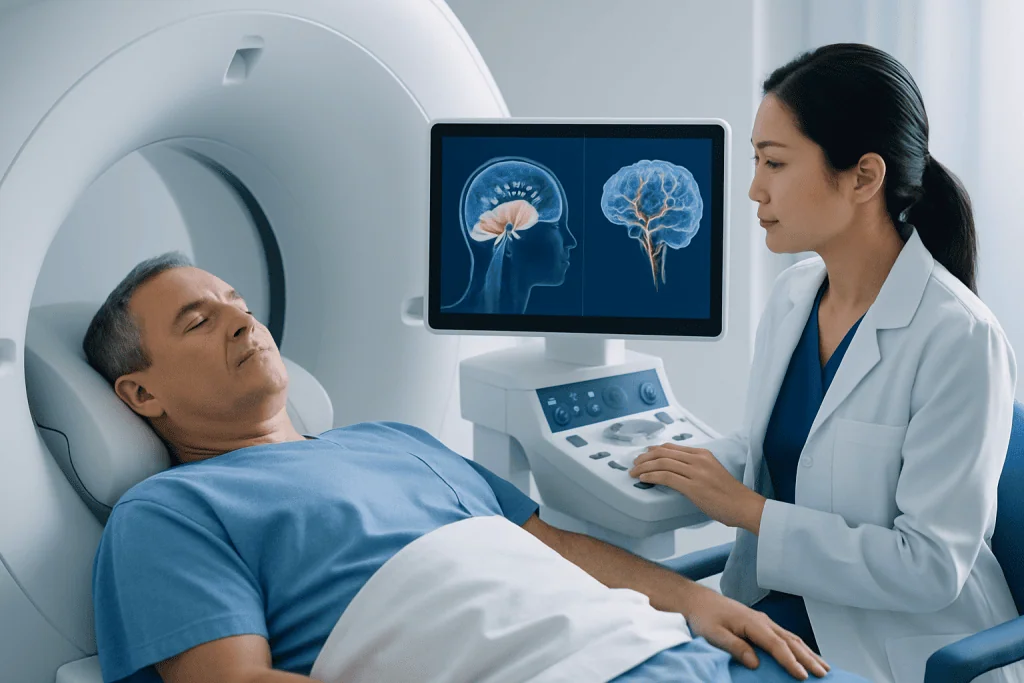
Brain imaging is central to diagnosis. A non-contrast CT scan is commonly performed quickly to look for bleeding and other urgent problems. In early ischemic stroke, however, a CT scan can sometimes appear normal, especially in the posterior part of the brain. MRI with diffusion-weighted imaging is often more sensitive for detecting a small or early cerebellar infarct. CT or MR angiography may be used to examine the blood vessels for blockages, narrowing or dissection.
Additional tests may look for the source of a clot or contributing conditions. These can include blood tests, an electrocardiogram, heart rhythm monitoring, echocardiography and imaging of neck arteries. Clinicians also consider non-stroke causes of dizziness, such as vestibular migraine, medication effects, infection or benign inner-ear conditions. Because these conditions can look similar at first, self-diagnosis is not reliable when symptoms are sudden or severe.
Treatment Options and Hospital Care
Treatment is tailored to the stroke type, the time since symptoms began, scan findings and individual medical circumstances. For eligible people with ischemic stroke, clot-dissolving medicine may be considered within an appropriate treatment window after careful assessment. In selected cases involving a large blocked artery, a catheter-based procedure to remove the clot may be an option. These decisions are made urgently by a stroke team because the potential benefits and risks depend on the situation.
A hemorrhagic cerebellar stroke requires a different approach. Care may include carefully controlling blood pressure, reversing certain anticoagulant medicines when appropriate, managing complications and monitoring the person closely. Cerebellar bleeding or a large cerebellar infarct can cause swelling that obstructs the normal flow of cerebrospinal fluid or compresses the brainstem. In selected cases, neurosurgical procedures may be needed to relieve pressure.
During hospital care, the team monitors breathing, heart rhythm, blood pressure, temperature, blood sugar and swallowing safety. A swallowing assessment is important before food, drink or oral medication is given if there is concern about impaired swallowing. Treatment also addresses the underlying cause, such as atrial fibrillation, artery disease or uncontrolled hypertension, to lower the chance of another stroke.
Acibadem International’s multidisciplinary specialists and JCI-accredited hospitals diagnose and treat stroke for international patients, with care plans coordinated across emergency, neurology, neuroradiology, neurosurgery and rehabilitation services when needed.
Recovery, Rehabilitation and Everyday Support
Recovery after a cerebellar stroke differs from person to person. Some people improve substantially over days to weeks, while others need longer-term support for balance, coordination, vision, fatigue or speech changes. The brain can adapt through neuroplasticity, and repeated, purposeful practice helps many people regain function.
Rehabilitation may begin in hospital and continue at home or in an outpatient setting. Physical therapy can address gait, balance, strength and safe transfers. Occupational therapy focuses on everyday tasks such as dressing, washing, cooking and using the hands effectively. Speech and language therapy may help with speech clarity, communication and swallowing. Vision assessment can be valuable for persistent double vision or eye-movement difficulties.
Falls prevention is especially important while balance is recovering. A therapist may recommend a walking aid, home modifications or supervised exercises. It is usually safer to avoid driving, climbing ladders or walking alone in hazardous areas until a clinician has assessed function. Emotional changes, anxiety and fatigue are also common after stroke and deserve attention; support from family, rehabilitation professionals and mental health services can be helpful.
When to Seek Medical Care
Emergency medical care is needed immediately for sudden trouble walking, severe new dizziness, loss of coordination, double vision, slurred speech, weakness, numbness, facial asymmetry, confusion, fainting or a sudden severe headache. Calling local emergency services is safer than driving to a hospital, since symptoms can worsen quickly and emergency teams can begin assessment on the way.
A simple stroke awareness message is to act quickly when there is sudden facial drooping, arm weakness or speech difficulty. However, cerebellar stroke may present mainly with abrupt imbalance or vertigo. New dizziness combined with inability to stand or walk without support, repeated vomiting, a severe headache, vision changes or other neurological symptoms should be treated as an emergency.
Even when symptoms disappear within minutes or hours, urgent assessment is still needed. A transient ischemic attack can be a warning that a future stroke may occur. For less urgent but recurring dizziness, worsening balance or concerns about stroke risk factors, arranging a prompt appointment with a qualified doctor is appropriate.
Reducing the Risk of Another Stroke
Secondary prevention starts with identifying why the stroke happened. Depending on the cause, a doctor may recommend medicines to reduce clotting risk, manage blood pressure or cholesterol, or treat diabetes and heart rhythm disorders. Medicines should be taken exactly as prescribed, and they should not be stopped suddenly without medical advice.
Daily habits also matter. A balanced eating pattern rich in vegetables, fruit, legumes, whole grains and healthy protein sources can support heart and vessel health. Regular physical activity, adapted to a person’s abilities and medical guidance, can improve blood pressure, fitness and mood. Avoiding tobacco and limiting alcohol are important steps, while treatment for sleep apnea may be advised when relevant.
Follow-up appointments provide an opportunity to review recovery, medication effects and risk-factor goals. Family members can help by learning the warning signs of stroke, supporting appointments and encouraging a safe return to activity. Prevention is most effective when medical treatment, rehabilitation and sustainable lifestyle changes are considered together.
Frequently asked questions
Can a stroke affect only the cerebellum?
Yes. A stroke can occur in blood vessels that mainly supply the cerebellum, producing symptoms related to balance and coordination. However, nearby brainstem structures or other areas of the posterior circulation can also be affected, so symptoms and severity vary.
Is dizziness always a sign of cerebellar stroke?
No. Dizziness is common and is often caused by inner-ear disorders, dehydration, migraine, medicines or other non-stroke conditions. Sudden dizziness with severe imbalance, inability to walk, double vision, slurred speech, weakness, numbness or a severe headache needs emergency assessment.
Can a cerebellar stroke be missed on a CT scan?
An early CT scan may not always show a small ischemic stroke in the cerebellum. CT remains important for rapidly identifying bleeding, while MRI can be more sensitive for detecting early or small posterior circulation strokes. Doctors use the examination, symptom timing and imaging together.
What is recovery like after a cerebellar stroke?
Many people improve with time and targeted rehabilitation, particularly for walking, coordination and speech. Recovery may continue for months, and the outcome depends on the size and location of the stroke, complications, treatment timing and a person’s general health.
Can cerebellar stroke cause headache?
It can. A sudden severe headache may occur, especially with hemorrhagic stroke, but many cerebellar strokes do not cause headache. Any abrupt severe headache or headache with neurological symptoms should be treated as an emergency.
How can someone lower their risk of cerebellar stroke?
Key steps include controlling blood pressure, managing diabetes and cholesterol, not smoking, staying physically active and following treatment for heart rhythm problems such as atrial fibrillation. A doctor can recommend an individualized prevention plan after reviewing personal risk factors and medical history.
References
- American Stroke Association
- National Institute of Neurological Disorders and Stroke
- Centers for Disease Control and Prevention
- European Stroke Organisation
- World Stroke Organization
This article is for general information only and is not a substitute for professional medical advice. Please consult a qualified doctor about your individual situation.
Joint and spine care in Turkey — expert assessment & treatment
JCI-accredited · board-certified surgeons · reply within 24h
Add us as a Preferred Source to see more of our trusted health content across Google Search, AI Overviews and Discover.
Check your numbers in seconds
BMI, calories, due date, blood pressure and 30+ more clinical calculators — free, instant, doctor-reviewed ranges.