Cervical Disc Replacement: Procedure, Recovery and Results

Cervical disc replacement is most often performed through the front of the neck at one or two affected disc levels. The procedure can relieve pressure on spinal nerves or the spinal cord while maintaining motion at the treated level.
Key Takeaways
- Cervical disc replacement is most often performed through the front of the neck at one or two affected disc levels.
- The procedure can relieve pressure on spinal nerves or the spinal cord while maintaining motion at the treated level.
- Recovery varies, but many people begin gentle walking soon after surgery and return gradually to usual activities over several weeks.
- Not everyone with neck pain or cervical disc degeneration is a suitable candidate; spinal alignment, facet joint health, bone quality, and the number of affected levels matter.
- Potential complications are uncommon but include swallowing difficulty, voice changes, infection, nerve injury, implant-related problems, and the possible need for further surgery.
Cervical disc replacement is a neck operation that removes a damaged cervical spinal disc and replaces it with an artificial disc to relieve nerve or spinal cord pressure while aiming to preserve movement. It may be an option for carefully selected people with persistent arm pain, weakness, numbness, or myelopathy that has not improved with non-surgical care.
Overview: what cervical disc replacement does
Cervical disc replacement, also called cervical disc arthroplasty, is an operation used to treat selected problems caused by a damaged disc in the neck. The surgeon removes the affected disc and places an artificial disc between two neck vertebrae. This can create more room for a compressed nerve root or spinal cord and is designed to retain movement at that spinal level.
It is usually considered when a disc herniation or degenerative disc disease causes ongoing arm pain, tingling, numbness, weakness, or signs of spinal cord compression despite appropriate non-surgical treatment. The aim is not simply to treat an MRI finding: it is to address symptoms that match the affected level and are interfering with daily life.
Disc replacement differs from anterior cervical discectomy and fusion (ACDF). Both procedures remove the problem disc through the front of the neck. In fusion, the treated vertebrae are joined together; in disc replacement, an implant is placed to allow controlled motion. The most suitable approach depends on the individual anatomy, diagnosis, and surgical goals.
How it works and who may be a candidate
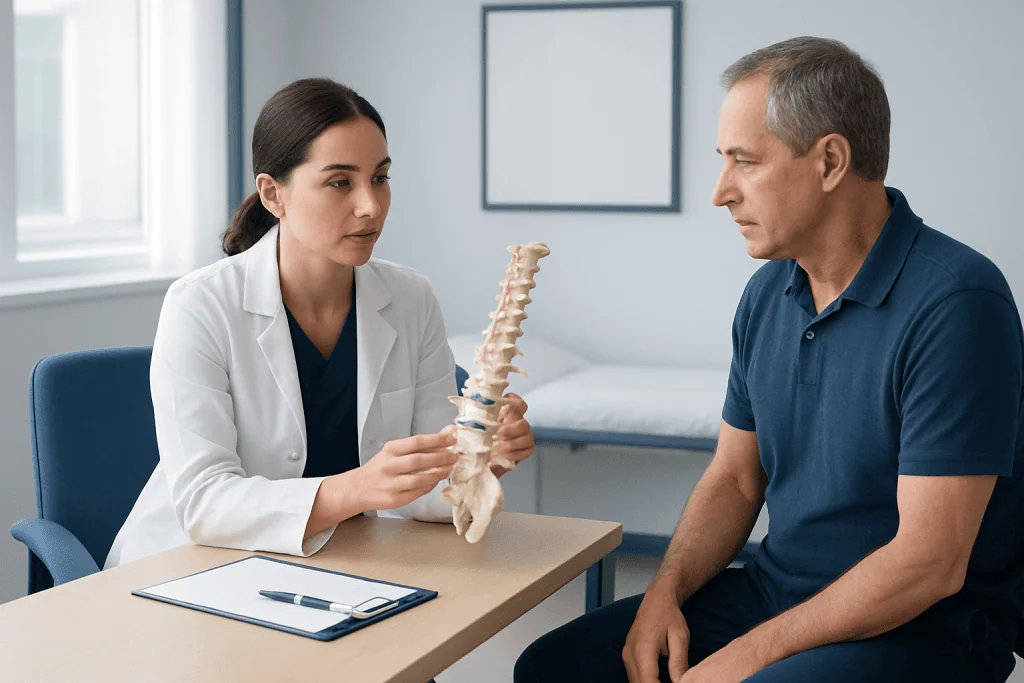
The cervical discs act as cushions between the vertebrae. A disc can bulge, tear, collapse, or develop bone spurs around it. These changes may narrow the spaces used by nerves and the spinal cord. During cervical disc replacement surgery, removal of the disc and any compressing tissue decompresses these structures; the implant then helps maintain disc height and mobility.
Potential candidates commonly have one or two symptomatic levels of cervical disc disease, symptoms that correlate with examination and imaging, and a cervical spine that remains sufficiently stable and mobile. A spine specialist considers the degree of nerve compression, the health of nearby facet joints, spinal alignment, bone quality, previous neck operations, and general health.
Disc replacement may be less appropriate in people with substantial facet arthritis, marked spinal instability or deformity, severe osteoporosis, extensive bone spur formation, infection, allergy to implant materials, or disease involving multiple levels beyond the device indication. Persistent neck pain without clear nerve or spinal cord involvement may also have causes that surgery cannot reliably address. Some people instead benefit from evaluation for cervical disc herniation and tailored non-surgical treatment.
Before recommending surgery, clinicians generally review symptoms, neurological findings, X-rays, magnetic resonance imaging (MRI), and sometimes computed tomography (CT). Non-surgical options can include activity modification, supervised physical therapy, pain-relieving medicines when appropriate, and selected injections. Urgent neurological deterioration may change the timing of treatment.
Step by step: what happens during the procedure
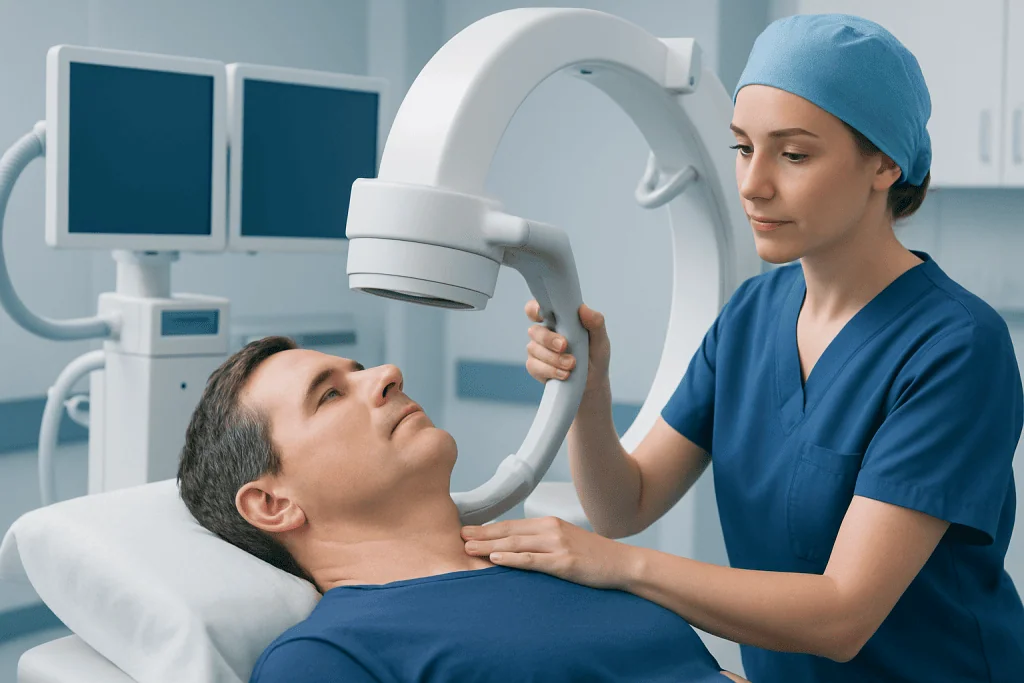
Cervical disc replacement is a major operation in the sense that it involves the spine, general anaesthesia, and placement of a permanent implant. However, it is commonly performed through a relatively small incision on the front or side of the neck rather than through the back muscles. It may be done as a day procedure or with a short hospital stay, depending on the person’s health and the number of levels treated.
After anaesthesia is given, the surgical team positions the patient carefully and confirms the correct spinal level with imaging. The surgeon reaches the cervical spine by gently moving aside soft tissues in the front of the neck. The damaged disc is removed, and any disc fragments or bone spurs causing compression are addressed while protecting the nerves and spinal cord.
The disc space is prepared and measured, then an appropriately sized artificial disc is placed under imaging guidance. The surgeon checks its position and the stability of the construct before closing the incision. The removed tissue may be evaluated when clinically indicated. A single-level operation often takes a few hours, while operative time can be longer for more than one level or complex anatomy.
Patients considering surgery can discuss the procedure, alternative approaches, implant selection, and expected rehabilitation with a spine surgeon. Cervical disc replacement treatment planning should be individualized rather than based on imaging alone.
Benefits, limitations and possible risks
For appropriately selected patients, cervical disc replacement can reduce arm pain and neurological symptoms caused by nerve compression. It may also improve daily function and help preserve movement at the operated level. Compared with fusion, preserving motion may reduce mechanical stress at neighboring levels, although it does not eliminate the possibility of future degeneration or future neck symptoms.
The result depends on the underlying condition, duration and severity of nerve injury, other spinal changes, overall health, and adherence to recovery guidance. Surgery may be very effective for arm symptoms caused by a compressed nerve, but it may not fully resolve long-standing numbness, weakness, or neck pain from several sources. An artificial disc does not restore a completely normal spine.
All surgery carries risks. Possible complications include bleeding, infection, blood clots, reactions to anaesthesia, injury to nerves or the spinal cord, a leak of spinal fluid, and persistent or recurrent symptoms. Risks specific to an anterior neck approach include temporary swallowing difficulty, hoarseness, and injury to nearby structures. Implant movement, wear, bone formation around the implant, or the need for revision surgery are also possible.
The surgical team explains personal risks in context, including how smoking, diabetes, low bone density, medicines, and other conditions may affect healing. Following pre-operative instructions and reporting new symptoms promptly can help support safer care.
Cervical disc replacement recovery timeline and rehabilitation
The cervical disc replacement recovery time differs among individuals. Immediately after surgery, the care team monitors pain control, swallowing, arm and leg strength, walking, and the incision. Many people are encouraged to stand and walk with assistance on the same day or the next day. Some may use a soft collar for comfort if the surgeon recommends it, but collar use is not routine for every patient.
During the first one to two weeks, neck soreness, incision tenderness, fatigue, and mild swallowing discomfort can occur. Gentle walking and light daily activities are often encouraged, while heavy lifting, repetitive overhead movement, driving before it is safe, and high-impact exercise are restricted. The surgeon provides specific limits because these differ by procedure, work demands, and individual healing.
Over the following several weeks, activity is increased gradually. Follow-up appointments and X-rays may be used to assess healing and implant position. A cervical disc replacement surgery rehab protocol may include guided posture work, range-of-motion exercises, shoulder and upper-back strengthening, and a progressive return to function. Rehabilitation should be prescribed by the treating team; forcing neck movement or returning to demanding activity too early can worsen discomfort.
Many people return to sedentary work within a few weeks, whereas physically demanding roles often require more time and staged duties. Full recovery may take several months. Pain, numbness, and weakness can improve at different speeds, especially when a nerve was compressed for a long period before surgery.
How painful is cervical disc replacement?
Pain after cervical disc replacement is expected but is usually managed with a combination of prescribed medicines, ice or other comfort measures when advised, gradual activity, and careful positioning. The pain is commonly related to the incision, throat tissues, and neck muscles rather than the disc itself. Some people notice immediate improvement in shooting arm pain, while others improve more gradually.
Cervical disc replacement recovery pain is often most noticeable in the first days after surgery and generally eases over the following weeks. Swallowing may feel uncomfortable temporarily because the tissues at the front of the neck are moved during the procedure. Muscle tightness and fatigue are also common during the early recovery period.
Severe pain that is worsening rather than improving, new arm or leg weakness, fever, wound drainage, significant neck swelling, trouble breathing, or an inability to swallow fluids needs prompt medical assessment. Patients should use medicines exactly as directed and contact their surgical team before adding over-the-counter medicines or supplements.
How long does it take to recover from neck surgery C2 C3 C4 C5 C6 C7?
Recovery from surgery involving the cervical levels from C2 through C7 cannot be predicted from the level name alone. The cervical spine is made up of several motion segments, and recovery depends more on the number of levels treated, the type of surgery, the amount of nerve or spinal cord compression, general health, and the physical demands of daily life or work.
Disc replacement is more commonly performed at lower cervical levels, such as C3-C4 through C6-C7, when anatomy and device indications are suitable. Surgery near C2-C3 is less commonly treated with standard disc replacement and requires individualized specialist assessment. A person having one uncomplicated level treated may progress differently from someone having multi-level surgery, prior surgery, myelopathy, or significant weakness.
As a general cervical disc replacement recovery timeline, early healing and gradual return to basic routines occur over days to weeks, while strength, endurance, and confidence with movement may continue improving for several months. Follow-up is important because the clinician can adapt restrictions and rehabilitation according to symptoms, imaging, and neurological recovery.
What is life like after cervical disc replacement surgery?
After recovery, many people are able to return to work, exercise, travel, and ordinary home activities with less arm pain and better function. The purpose of the artificial disc is to preserve movement at the treated level, but it does not mean the neck will feel completely unrestricted at all times. Some people continue to have intermittent stiffness or discomfort, particularly after prolonged posture, heavy activity, or poor sleep.
Long-term spinal health includes regular movement, good workstation ergonomics, gradual strengthening, maintaining a healthy body weight, avoiding tobacco, and using safe lifting techniques. Contact or high-impact sports should only be resumed after the surgeon confirms that this is appropriate. Ongoing neck symptoms may also arise from untreated levels, facet joints, muscles, or other conditions, so a new symptom should not automatically be attributed to the implant.
At Acibadem International, multidisciplinary spine specialists in JCI-accredited hospitals assess and treat cervical spine conditions for international patients, including surgical and rehabilitation needs. Continued follow-up with the operating team or a local qualified clinician remains important after returning home.
When to seek medical care
A medical evaluation is appropriate for neck pain accompanied by pain radiating into the shoulder or arm, persistent tingling or numbness, hand clumsiness, or weakness. These symptoms can have several causes, and early assessment helps identify whether a spinal nerve is involved. Progressive weakness, balance problems, changes in walking, or loss of fine hand control require timely medical review because they can suggest spinal cord involvement.
Emergency care is needed for sudden severe weakness, new loss of bladder or bowel control, rapidly worsening balance, difficulty breathing, or symptoms after significant trauma. These signs are not specific to cervical disc disease, but they should not be ignored.
After surgery, patients should contact their surgical team urgently for worsening weakness or numbness, fever, increasing redness or discharge from the wound, substantial neck swelling, chest pain, shortness of breath, or difficulty swallowing or breathing. Regular scheduled follow-up is also essential, even when recovery is going well.
Frequently asked questions
Is cervical disc replacement a major surgery?
Yes. Cervical disc replacement is major surgery because it is performed under general anaesthesia and involves removing a spinal disc and placing an implant near the spinal cord and nerves. It is usually done through the front of the neck, which may allow a shorter recovery than some posterior neck operations, but it still requires careful preparation, follow-up, and rehabilitation.
Who is not a good candidate for cervical disc replacement?
People with marked spinal instability, significant facet joint arthritis, severe osteoporosis, major cervical deformity, infection, or extensive disease across several levels may not be suitable candidates. A surgeon also considers prior neck surgery, implant material considerations, imaging findings, and whether the symptoms clearly arise from the affected disc level.
How long does cervical disc replacement surgery take?
The length of surgery varies with the number of levels treated, anatomy, and surgical complexity. A one-level procedure often takes a few hours, including positioning and anaesthesia-related preparation. The surgical team can provide a more individualized estimate before the operation.
Will I need physical therapy after cervical disc replacement?
Some people benefit from a structured rehabilitation program, while others begin with walking and carefully guided home exercises before formal physical therapy. The timing and content depend on the surgeon’s instructions, symptoms, work goals, and progress at follow-up. Exercises should not be started or advanced without guidance from the treating team.
Can a cervical disc replacement fail?
An artificial disc can have complications such as movement from its intended position, wear, bone formation that limits motion, persistent nerve symptoms, or degeneration at another spinal level. These outcomes are not inevitable, and many people have meaningful symptom improvement. New or returning symptoms should be assessed rather than assumed to be normal recovery.
How soon can someone drive after cervical disc replacement?
Driving should wait until the person can turn their head safely, is no longer taking medicines that impair alertness, and has been cleared by the surgical team. This timing varies and may depend on pain, neck movement, use of a collar, and local driving requirements. Patients should ask their surgeon for specific guidance before driving.
References
- American Academy of Orthopaedic Surgeons
- North American Spine Society
- U.S. Food and Drug Administration
- National Institute of Neurological Disorders and Stroke
This article is for general information only and is not a substitute for professional medical advice. Please consult a qualified doctor about your individual situation.
Joint and spine care in Turkey — expert assessment & treatment
JCI-accredited · board-certified surgeons · reply within 24h
Add us as a Preferred Source to see more of our trusted health content across Google Search, AI Overviews and Discover.

More from the Health Library



Related Specialists

Dt. Ece Büyükbaşaran
Dentistry
Assoc. Prof. Dr. İsmail Yüce
Neurosurgery
Prof. Dr. Ömer Faruk Taşer
Orthopedic Surgery & Traumatology
Assoc. Prof. Dr. Murat İçen
Check Up & Wellness Center