

Chemical Burn on Face: An Evidence-Based Guide for Patients

Immediate irrigation with clean running water is the first and most important step for most facial chemical burns. The severity depends on the substance, concentration, contact time, and whether the eyes, lips, or airways are involved.
Key Takeaways
- Immediate irrigation with clean running water is the first and most important step for most facial chemical burns.
- The severity depends on the substance, concentration, contact time, and whether the eyes, lips, or airways are involved.
- Facial chemical burns may need medical treatment to protect vision, reduce infection risk, and support healing with less scarring.
- Do not apply creams, home remedies, or neutralizing chemicals unless a clinician or poison expert specifically advises it.
- Urgent care is needed for eye exposure, breathing trouble, severe pain, blistering, or burns that look white, brown, black, or numb.
A chemical burn on face should be rinsed right away with plenty of clean water, then assessed based on how deep, painful, and widespread the injury is. Many mild burns heal with careful skin care, but burns involving the eyes, large areas, blistering, or severe pain need prompt medical attention.
Overview: what a chemical burn on face means
A chemical burn on face happens when the skin is damaged by an irritant or corrosive substance such as cleaning products, industrial chemicals, acids, alkalis, hair products, or certain skin treatments. The safest first response is usually to remove the chemical source and rinse the area with plenty of clean running water for an extended period, then seek medical advice if the burn is severe, near the eyes, or not improving.
Facial skin is delicate, and the face also contains structures that need special protection, including the eyes, eyelids, lips, nose, and airways. Even a small amount of a strong chemical can cause significant injury in these areas, so a facial burn is often assessed more carefully than a burn on less sensitive skin.
Chemical burns can range from mild redness and stinging to blistering, skin breakdown, and deeper tissue injury. Some chemicals keep causing damage until they are thoroughly washed away, which is why early irrigation matters so much. Prompt first aid can reduce the depth of injury and improve healing.
Common symptoms and how severity can vary
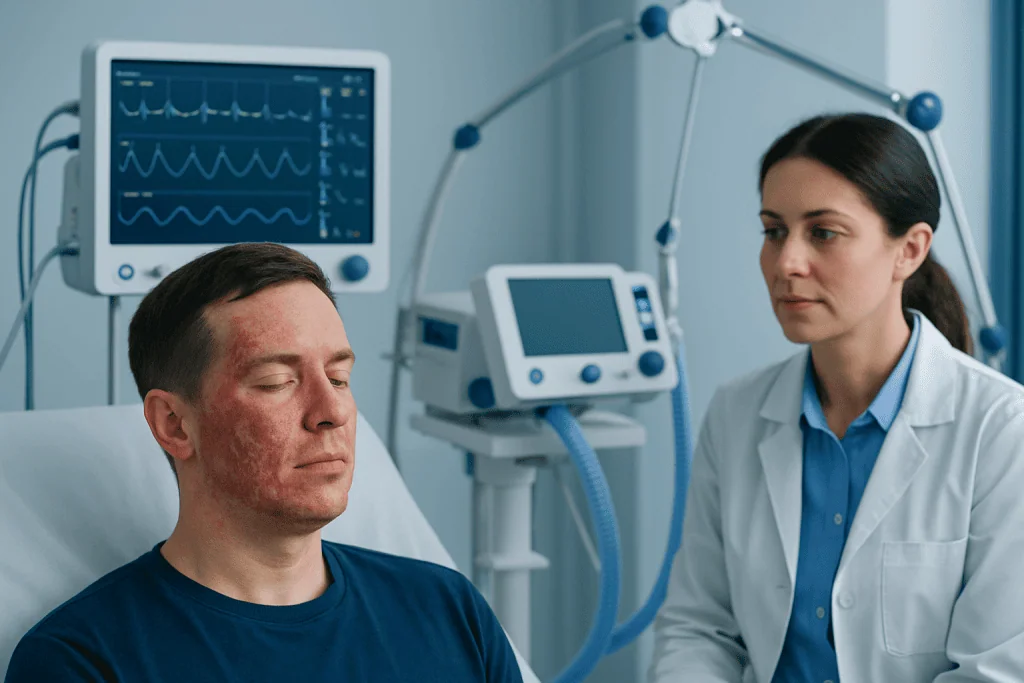
Symptoms of a facial chemical burn may start immediately or become more noticeable over several hours. Common signs include burning pain, redness, swelling, tenderness, watery eyes, peeling skin, and increased sensitivity. If the lips or mouth are affected, speaking, eating, or swallowing may be uncomfortable.
More serious burns can cause blisters, open skin, pale or waxy patches, brown or black discoloration, numbness, or increasing swelling. Some chemicals, especially alkalis such as drain cleaners or cement products, can penetrate deeply and may cause more damage than the surface appearance first suggests.
If a chemical gets into the eyes, symptoms may include severe pain, blurred vision, tearing, redness, light sensitivity, or difficulty opening the eye. Eye exposure should be treated as urgent because vision can be threatened even when the skin injury seems limited. Burns around the nose and mouth also deserve urgent attention if there is coughing, wheezing, hoarseness, or trouble breathing.
What causes facial chemical burns and who is at risk

Many everyday and workplace substances can cause a chemical burn on face. Examples include bleach, oven cleaners, drain cleaners, toilet cleaners, battery acid, pool chemicals, pesticides, industrial solvents, hair relaxers, hair dyes, depilatory creams, strong exfoliating products, and high-strength skincare acids or peels. Accidental splashes are common during cleaning, home improvement, laboratory work, or personal care treatments.
Risk increases when products are highly concentrated, used in poorly ventilated spaces, stored in unmarked containers, or handled without eye and face protection. Children are especially vulnerable because of accidental access to household chemicals. Adults may also be at higher risk in jobs involving manufacturing, construction, cleaning, beauty services, automotive repair, or agriculture.
People with sensitive skin, eczema, or other skin-barrier problems may react more strongly to some products, although an irritation reaction is not always the same as a true chemical burn. In some cases, the face may also develop skin inflammation that overlaps with contact dermatitis or infection. Related skin conditions, including eczema and contact dermatitis, can affect recovery and should be considered during follow-up.
Immediate first aid: what to do and what not to do
The first priority is to stop exposure. Move away from the source, remove contaminated gloves or clothing, and if there is dry chemical powder on the skin, gently brush it off before adding water. Then rinse the face with clean, lukewarm running water right away. Continuous irrigation is usually recommended because it dilutes and removes the chemical from the skin.
Care should be taken to keep contaminated water from running into the unaffected eye or onto other skin. Contact lenses should be removed if they do not come out easily during rinsing. If the eyes are exposed, they should also be irrigated immediately and continuously while urgent medical help is arranged.
It is generally best not to apply butter, oils, toothpaste, makeup, antiseptic solutions, or home remedies. Neutralizing a chemical with another chemical is also not advised unless a poison center or clinician specifically directs it, because the reaction can create heat and worsen the injury. After rinsing, the area can be loosely covered with a clean, non-stick dressing while medical advice is sought if needed.
- Rinse immediately with plenty of clean running water.
- Brush off dry powders before irrigation.
- Remove contaminated clothing or accessories.
- Do not scrub the skin.
- Do not pop blisters.
- Do not apply unadvised creams or household products.
How doctors diagnose a facial chemical burn
Diagnosis begins with the history of exposure: what chemical was involved, how concentrated it was, when it happened, and how long it stayed on the skin. If possible, the product label or safety information can help guide treatment. Clinicians also ask what first aid was already done and whether symptoms involve the eyes, mouth, breathing, or swallowing.
The examination focuses on the depth and extent of skin damage, as well as the function of nearby structures. Facial burns are assessed for redness, blistering, open areas, swelling, pain, sensation changes, and signs of infection. Burns close to the eyes may require an eye exam, and severe cases may need care from specialists such as dermatologists, ophthalmologists, plastic surgeons, or burn specialists.
Additional tests are not always necessary, but they may be used when there is concern about inhalation injury, deeper tissue damage, or complications. If vision symptoms are present, urgent eye evaluation is important. In selected cases, advanced wound care and scar assessment may later involve teams experienced in dermatology care or plastic and reconstructive surgery.
Treatment options and recovery
Treatment depends on the burn depth, location, and the chemical involved. Mild superficial burns may improve with gentle cleansing, protective ointments or dressings recommended by a clinician, pain relief, and close observation. The main goals are to keep the wound clean, maintain moisture balance, protect the skin barrier, and watch for infection or delayed worsening.
More significant burns may need prolonged irrigation, professional wound cleaning, prescription dressings, stronger pain control, or tetanus review depending on the situation. If the burn involves the eyes, treatment may include urgent irrigation, eye drops, and ophthalmology follow-up. Deeper injuries may require procedures to remove damaged tissue, specialized dressings, or reconstructive care if function or appearance is affected.
Healing time varies. Superficial injuries may settle over days to a couple of weeks, while deeper burns can take longer and may leave changes in skin color, texture, or sensitivity. Some patients benefit from scar-management approaches and follow-up for pigmentation changes, especially when the face is involved. In complex cases, options such as burn treatment can help support healing and long-term skin recovery.
Self-care, prevention, and scar awareness
Once a clinician has assessed the injury, careful home care can support recovery. The skin should be kept clean, protected from friction, and managed exactly as advised. Picking at peeling skin or blisters can increase infection risk and worsen scarring. Sun protection is especially important because healing facial skin can darken or discolor more easily after ultraviolet exposure.
Prevention starts with reading labels, wearing protective gloves and eye protection when using strong chemicals, and keeping products in their original containers. Household chemicals should be stored safely away from children and never mixed unless the instructions specifically say this is safe. During skincare treatments, stronger acids, peels, and hair products should be patch-tested and used exactly as directed.
Even after the surface looks better, the skin may remain sensitive for some time. Redness, darkening, or lightening of the skin can persist after healing, especially in deeper burns. If thickened, raised, or tight scars develop, medical review is helpful because early management may improve comfort and appearance. Near the end of recovery, some patients may be guided toward specialist follow-up, and Acibadem International’s multidisciplinary specialists at JCI-accredited hospitals diagnose and treat facial burn injuries for international patients when advanced care is needed.
When to seek medical care
Medical attention should be sought urgently if the chemical has affected the eyes, if there is trouble breathing, if severe swelling develops around the mouth or nose, or if the person has severe pain, blistering, numbness, or skin that looks white, brown, black, or deeply damaged. Large burns, burns in children, and burns caused by strong industrial or household chemicals also deserve prompt evaluation.
Even when the burn seems mild at first, a doctor should assess it if symptoms are worsening, the skin is breaking down, signs of infection appear, or the area is not improving over the next day or two. Infection may cause increasing redness, warmth, pus, fever, or a worsening odor. Follow-up is also important if there are changes in vision, persistent facial swelling, or concern about scarring.
If there is any uncertainty about the chemical involved, contacting a poison information service or emergency medical service can be helpful while rinsing continues. Quick expert advice is especially valuable after exposure to unknown substances, concentrated cleaning agents, or products used in industrial settings.
Frequently asked questions
How long should a chemical burn on face be rinsed?
It should be rinsed immediately and continuously with clean running water, usually for a prolonged period rather than just a quick splash. The exact duration can vary with the chemical and the symptoms, so medical or poison-center advice is helpful, especially for eye exposure or strong chemicals.
Can a mild chemical burn on the face heal at home?
Some mild, superficial burns can heal with careful skin protection and follow-up advice from a clinician. However, the face is a sensitive area, and medical assessment is wise if there is blistering, severe pain, eye involvement, or any concern that the burn is worsening.
Should ice, oils, or toothpaste be used on a facial chemical burn?
No. These can irritate the skin further or trap the chemical against the skin. The safest first step for most exposures is prompt irrigation with clean running water and then professional advice if the burn is significant.
What does an infected facial chemical burn look like?
Possible signs include increasing redness, warmth, swelling, pus, worsening pain, fever, or a bad smell from the wound. If any of these happen, a doctor should review the burn promptly because treatment may be needed.
Will a chemical burn on the face leave a scar?
Superficial burns may heal with little or no lasting mark, while deeper burns are more likely to cause changes in color, texture, or scarring. Early treatment, proper wound care, and sun protection can help reduce long-term skin changes.
Is a chemical burn the same as an allergic reaction?
Not always. A chemical burn is direct tissue injury from a substance, while an allergic or irritant reaction may cause redness, itching, or rash without the same type of burn damage. Sometimes the two can look similar at first, which is one reason medical assessment can be helpful.
This article is for general information only and is not a substitute for professional medical advice. Please consult a qualified doctor about your individual situation.
Explore treatments in Turkey — costs, top hospitals & a free quote
JCI-accredited · board-certified surgeons · reply within 24h
Add us as a Preferred Source to see more of our trusted health content across Google Search, AI Overviews and Discover.

More from the Health Library

Hypochromia — Explained by Medical Evidence, Not Myths

Podophilia: What Patients Need to Know

Ophthalmic: What Patients Need to Know

Lactose Free Milk — Explained by Medical Evidence, Not Myths

Garlic Pills: A Complete Medical Overview

Misoprostol Uses: An Evidence-Based Guide for Patients
Aesthetic Plastic & Reconstructive Surgery Specialists at Acibadem

Dr. Nargız Ibrahımlı
Aesthetic Plastic & Reconstructive Surgery
Dr. Nezail Demirciler
Aesthetic Plastic & Reconstructive Surgery
Dr. Nihal Üstün
Aesthetic Plastic & Reconstructive Surgery
Dr. Nuri Soysal
Aesthetic Plastic & Reconstructive Surgery