Chemotherapy Drugs for Metastatic Colon Cancer: How It Works, Results and What to Expect

Combination chemotherapy is often the first systemic treatment for metastatic colon cancer, sometimes alongside targeted therapy or immunotherapy. The number of treatment cycles is individualized and depends on response, side effects, goals of care and whether surgery may become possible.
Key Takeaways
- Combination chemotherapy is often the first systemic treatment for metastatic colon cancer, sometimes alongside targeted therapy or immunotherapy.
- The number of treatment cycles is individualized and depends on response, side effects, goals of care and whether surgery may become possible.
- Molecular testing of the tumor helps the oncology team select medicines that are more likely to be useful.
- Side effects can often be prevented, monitored and treated; prompt reporting helps the team adjust care safely.
- Survival varies widely, and population statistics cannot predict an individual person's outcome.
Chemotherapy drugs for metastatic colon cancer are commonly used to control cancer that has spread beyond the colon, reduce symptoms and help people live as well as possible for as long as possible. Treatment is individualized according to where the cancer has spread, tumor test results, overall health and personal goals.
Overview: how chemotherapy works for metastatic colon cancer
Chemotherapy drugs for metastatic colon cancer circulate through the bloodstream to reach cancer cells in the colon and in distant sites, such as the liver, lungs, lymph nodes or lining of the abdomen. They work by damaging or interrupting processes cancer cells need to divide. Because these medicines can also affect some healthy fast-growing cells, treatment may cause side effects, but the oncology team monitors these closely.
In metastatic, or stage 4, colon cancer, chemotherapy is usually part of systemic treatment. Its goals may include shrinking or stabilizing tumors, easing cancer-related symptoms, delaying progression and supporting quality of life. For some people whose cancer has spread to a limited area, particularly the liver or lungs, a good response may allow local treatment such as surgery or ablation to be considered.
Modern care is not based on chemotherapy alone. The team may combine it with targeted medicines, and some tumors respond particularly well to immunotherapy. The most appropriate plan depends on detailed tumor testing and the person’s overall clinical situation.
Which chemotherapy drugs may be used?
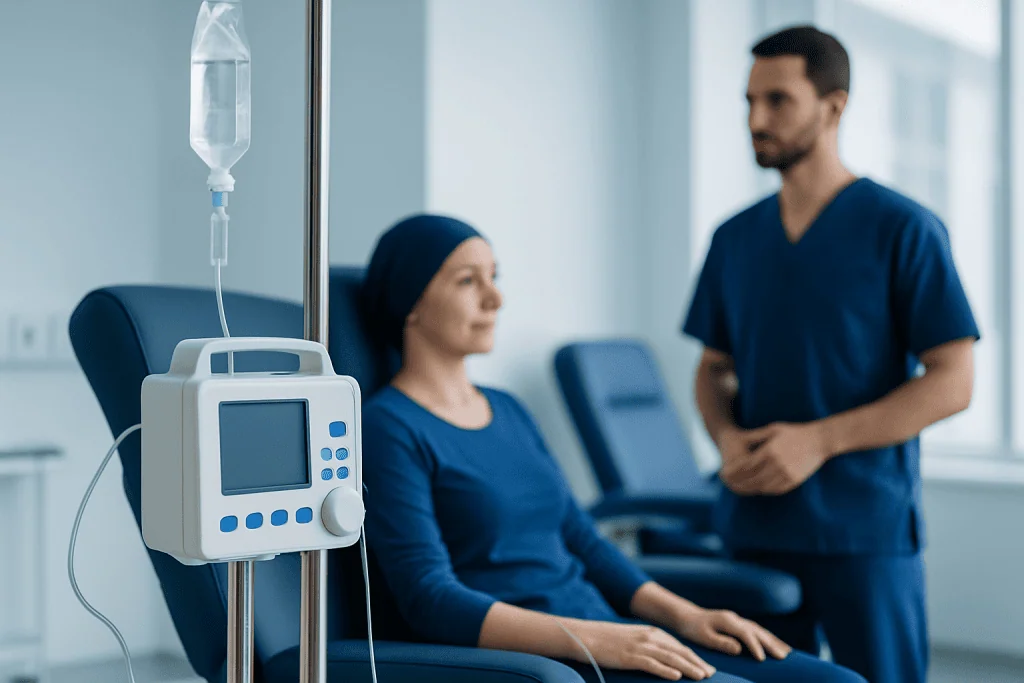
Common chemotherapy medicines for metastatic colon cancer include fluoropyrimidines such as fluorouracil (5-FU) or capecitabine, oxaliplatin and irinotecan. These are often given in combinations. Examples include FOLFOX, which contains 5-FU, leucovorin and oxaliplatin; FOLFIRI, which contains 5-FU, leucovorin and irinotecan; and CAPOX, which combines capecitabine with oxaliplatin.
The choice of regimen is tailored rather than automatic. Doctors consider previous treatments, liver and kidney function, nerve symptoms, bowel function, other health conditions, the extent and location of metastases, and the person’s preferences. A less intensive approach may be appropriate for someone who is frail or who wishes to prioritize fewer treatment effects.
Biomarker testing is central to planning. Tests may assess mismatch repair deficiency or microsatellite instability, RAS and BRAF gene changes, and in selected circumstances other changes that could guide treatment. For example, immunotherapy may be a preferred option for certain mismatch repair-deficient or microsatellite instability-high tumors, while targeted therapies may be considered with chemotherapy for eligible patients.
Who is a candidate and how is treatment planned?

Most people with metastatic colon cancer are assessed for systemic treatment, but candidacy for a specific chemotherapy plan differs from person to person. A medical oncologist reviews symptoms, daily functioning, blood tests, scans, pathology reports and prior treatments. The purpose is to balance the likely benefit of cancer control with the risks and practical demands of treatment.
Before treatment begins, the team usually confirms the diagnosis and stage, reviews tissue or blood-based molecular test results, and evaluates whether metastases might be removable or treatable locally. A multidisciplinary discussion may involve medical oncologists, colorectal surgeons, liver surgeons, radiologists, pathologists, radiation oncologists, dietitians and supportive-care specialists.
Some people may start with chemotherapy to shrink tumors before possible surgery. Others may receive ongoing systemic treatment because surgery is not appropriate or would not remove all visible cancer. Supportive and palliative care can be introduced at any stage; it focuses on symptoms, emotional wellbeing and practical needs and can be provided alongside active cancer treatment.
What happens during a chemotherapy cycle?
Many chemotherapy regimens are delivered in repeating cycles, often every two or three weeks, although schedules vary. Before each cycle, the care team checks blood counts, organ function, symptoms and side effects. Treatment may be delayed or adjusted if blood counts are low or side effects need time to improve.
Some drugs are given through a vein at an infusion center. Regimens that include continuous 5-FU commonly use a small portable pump that delivers medicine over approximately two days, after which it is disconnected. A central venous access device, sometimes called a port, may be recommended when repeated intravenous treatment is expected. Oral capecitabine is taken at home according to a prescribed schedule and still requires regular monitoring.
Scans and tumor marker tests may be repeated at intervals to assess response. Results guide the next step: continuing the current plan, reducing or changing a medicine, considering local therapy, taking a planned treatment break in selected circumstances, or moving to another line of therapy. The plan may change over time as the cancer and the person’s needs change.
Benefits, risks and recovery between treatments
A benefit of chemotherapy is that it can treat cancer in multiple parts of the body at once. Some tumors shrink, while others remain stable for a period. Even when scans do not show major shrinkage, slowing progression or reducing symptoms can be a meaningful treatment result. The likely benefit is reviewed regularly through scans, symptoms and laboratory results.
Possible side effects depend on the medicines used. They may include tiredness, nausea, appetite changes, diarrhea, mouth soreness, lower blood counts and a higher risk of infection. Oxaliplatin can cause tingling, numbness or sensitivity to cold, while irinotecan can cause diarrhea. Doctors may prescribe supportive medicines, modify treatment or refer to other specialists to help manage symptoms.
Recovery after each infusion varies. Many people feel relatively well on some days and more tired or unwell on others, particularly in the days following treatment. Rest, hydration, regular meals when possible, gentle activity and early communication about symptoms can help. There is no single recovery timeline; the team should be informed if symptoms are interfering with eating, drinking, sleep or usual activities.
- Call the treatment team promptly for a fever, chills or feeling suddenly unwell.
- Seek advice for persistent vomiting, severe diarrhea, inability to drink fluids, unusual bleeding or severe pain.
- Report new numbness, shortness of breath, chest pain, confusion or an allergic-type reaction urgently.
How many rounds of chemo for metastatic colon cancer?
There is no fixed number of rounds of chemotherapy for metastatic colon cancer. Treatment is usually organized into cycles, and the oncology team reviews the response after several cycles using scans, blood tests and symptom assessment. If treatment is helping and side effects are manageable, it may continue, sometimes with adjustments or a lower-intensity maintenance approach.
In some situations, chemotherapy is given for a planned period to make surgery or another local treatment possible. In others, it is continued as long as it is controlling the cancer and remains acceptable for the person receiving it. Treatment breaks may be considered for selected patients, but this decision should be made with the oncology team because cancer behavior and treatment goals differ.
Stopping or changing chemotherapy does not mean care stops. The team can discuss another treatment option, symptom-focused care, clinical trials where available, or a plan centered on comfort and quality of life.
Is it worth doing chemo for stage 4 metastatic colon cancer?
Whether chemotherapy is worthwhile in stage 4 metastatic colon cancer is a personal medical decision made with the oncology team. For many people, it can slow cancer growth, reduce symptoms and extend the time before the disease progresses. In a smaller group with limited metastatic disease, it may also contribute to a treatment strategy that includes surgery or other local therapies.
The potential advantages need to be weighed against side effects, appointments, travel, other medical conditions and the person’s priorities. Some people value the possibility of tumor control even if treatment is demanding; others may prefer a less intensive regimen or may decide not to receive cancer-directed treatment. Each choice deserves clear information and supportive care.
Shared decision-making is important. Asking about the expected aim of treatment, alternatives, likely side effects, how success will be measured and what happens if treatment does not work can help patients and families make informed decisions.
How successful is chemo for colon cancer, and what is the survival rate?
Chemotherapy can be successful in different ways in metastatic colon cancer: tumors may shrink, remain stable, symptoms may improve, or the cancer may become suitable for additional local treatment. However, metastatic colon cancer is not always curable with chemotherapy alone. Response varies according to tumor biology, the organs involved, the amount of disease, available treatment options and a person’s general health.
Population survival statistics can provide broad context, but they cannot determine an individual prognosis. Outcomes have improved over time because of better chemotherapy combinations, targeted drugs, immunotherapy for selected tumors, improved surgery and stronger supportive care. A treating oncologist is best placed to explain prognosis in the context of an individual’s scans, pathology and treatment response.
Acibadem International’s multidisciplinary specialists and JCI-accredited hospitals support international patients with individualized assessment and treatment planning for metastatic colon cancer. Patients may benefit from coordinated medical oncology, surgery, imaging, pathology, nutrition and supportive-care input throughout treatment.
When to seek medical care
Anyone with metastatic colon cancer should contact their oncology team about new or worsening symptoms rather than waiting until the next appointment. Early advice can prevent dehydration, infection and other complications, and may make symptoms easier to control. Keep the team’s day and after-hours contact details available during treatment.
Urgent medical assessment is important for fever, shaking chills, severe or persistent diarrhea, repeated vomiting, inability to keep fluids down, new confusion, severe weakness, uncontrolled pain, significant bleeding, chest pain or sudden breathing difficulty. These symptoms can have several causes and should be assessed promptly, especially during chemotherapy.
Emotional distress, sleep problems, appetite changes and financial or practical concerns also deserve medical attention. Oncology social workers, psychologists, palliative-care clinicians, dietitians and patient navigators can provide support alongside cancer treatment.
Frequently asked questions
What is the first-line chemotherapy for metastatic colon cancer?
Common first-line options include FOLFOX, CAPOX or FOLFIRI, sometimes combined with a targeted medicine. The best choice depends on tumor biomarker results, prior treatments, overall health, symptoms and treatment goals. Some people with specific tumor features may be offered immunotherapy instead of standard chemotherapy.
Can chemotherapy cure metastatic colon cancer?
Chemotherapy alone does not usually cure metastatic colon cancer. However, it can shrink or control cancer, relieve symptoms and sometimes help make surgery or other local treatment possible when metastases are limited. A treating oncology team can explain whether long-term disease control or potentially curative local treatment is realistic in an individual case.
How long does chemotherapy take for stage 4 colon cancer?
Treatment is given in cycles, commonly every two or three weeks, and each infusion schedule differs by regimen. Some treatment plans are continued for months, while others change sooner because of response, side effects or a shift in treatment goals. Regular reassessment helps determine how long a particular regimen should continue.
What side effects should be reported immediately during chemotherapy?
Fever, chills, severe diarrhea, repeated vomiting, dehydration, unusual bleeding, chest pain, breathing difficulty or sudden confusion should be reported urgently. New or worsening numbness, severe pain or symptoms that prevent eating and drinking should also be discussed promptly. The oncology team can advise whether urgent evaluation is needed.
Can a person have a break from chemotherapy for metastatic colon cancer?
A treatment break may be appropriate for some people whose cancer is stable and whose care team believes monitoring is safe. It is not suitable for everyone, because cancer can grow during time off treatment. The decision should consider scan results, symptoms, tumor biology, side effects and personal priorities.
Why is molecular testing important in metastatic colon cancer?
Molecular testing looks for tumor characteristics that may affect treatment choices. Results can identify people who may benefit from immunotherapy or particular targeted medicines, and can help avoid treatments that are unlikely to work. Testing may be performed on tumor tissue and, in some cases, with a blood test.
References
- National Cancer Institute
- American Cancer Society
- National Comprehensive Cancer Network
- European Society for Medical Oncology
- World Health Organization
This article is for general information only and is not a substitute for professional medical advice. Please consult a qualified doctor about your individual situation.
Colon Cancer in Turkey — costs, top hospitals & a free quote
JCI-accredited · board-certified surgeons · reply within 24h
Add us as a Preferred Source to see more of our trusted health content across Google Search, AI Overviews and Discover.

Medical Oncology Department
Medical treatment of cancer with chemotherapy, immunotherapy and targeted therapies under a multidisciplinary tumor board.
60 specialists in this unitMore from the Health Library



Related Specialists

Assoc. Prof. Dr. Fatma Tokat
Pathology
Fzt. Türkü Düzel
Physical Medicine & Rehabilitation
Dr. Necdet Durhan
Emergency Service
Dr. Jirayr Ağazaryan
General Surgery