Cherimoya — Explained by Medical Evidence, Not Myths

Cherimoya is an edible tropical fruit with a creamy texture and a naturally sweet taste. Its flesh provides fiber, vitamin C, and minerals, but it is still best viewed as one part of an overall healthy diet.
Key Takeaways
- Cherimoya is an edible tropical fruit with a creamy texture and a naturally sweet taste.
- Its flesh provides fiber, vitamin C, and minerals, but it is still best viewed as one part of an overall healthy diet.
- Cherimoya seeds and skin should not be eaten, crushed, or blended into food because they may be harmful.
- People with diabetes, digestive sensitivity, or food allergies should eat cherimoya thoughtfully and ask a doctor for personalized advice if needed.
- Medical care is important if cherimoya causes trouble breathing, severe vomiting, or signs of an allergic reaction.
Cherimoya is a tropical fruit with fiber, vitamin C, and other nutrients, and it can be part of a balanced diet when eaten in moderation. Medical evidence supports its nutritional value, but the seeds and skin should not be eaten because they contain potentially toxic compounds.
What cherimoya is and what medical evidence says
Cherimoya is a tropical fruit from the species Annona cherimola. It is known for its green, scale-like skin and soft, pale flesh. People often describe the taste as a mix of banana, pineapple, and vanilla. From a medical point of view, cherimoya is best understood as a nutrient-containing fruit rather than a miracle food.
Evidence suggests that cherimoya can contribute useful nutrients such as fiber, vitamin C, and potassium. Like many fruits, it may support a healthy eating pattern when it replaces less nutritious snacks or desserts. However, no good evidence shows that cherimoya alone prevents, treats, or cures disease.
It is also important to separate the edible part from the unsafe parts. The ripe flesh is eaten, but the seeds and peel should not be consumed. Seeds from plants in the Annona family contain compounds that may be toxic, especially if crushed or chewed. For that reason, cherimoya should be prepared carefully.
Cherimoya nutrition and potential health benefits

Cherimoya contains carbohydrates, natural sugars, fiber, and small amounts of protein. It also provides vitamin C and several plant compounds with antioxidant activity. Antioxidants help protect cells from oxidative stress, but this does not mean a single food can deliver a large medical effect on its own.
The fruit’s fiber content may support digestive regularity and can help people feel full after eating. Vitamin C contributes to immune function, skin health, and wound healing. Potassium is involved in fluid balance, muscle function, and normal nerve signaling.
Some articles online make strong claims about cherimoya and blood pressure, inflammation, cancer, or weight loss. These claims are often based on laboratory findings or general nutrition principles rather than direct proof in people eating the fruit as part of daily life. The most evidence-based message is that cherimoya can fit into a balanced diet, alongside vegetables, whole grains, legumes, lean proteins, and other fruits.
- Fiber may help support bowel regularity.
- Vitamin C supports normal immune and skin function.
- Potassium contributes to heart, muscle, and nerve function.
- Natural carbohydrates provide energy.
Possible risks, side effects, and who should be careful
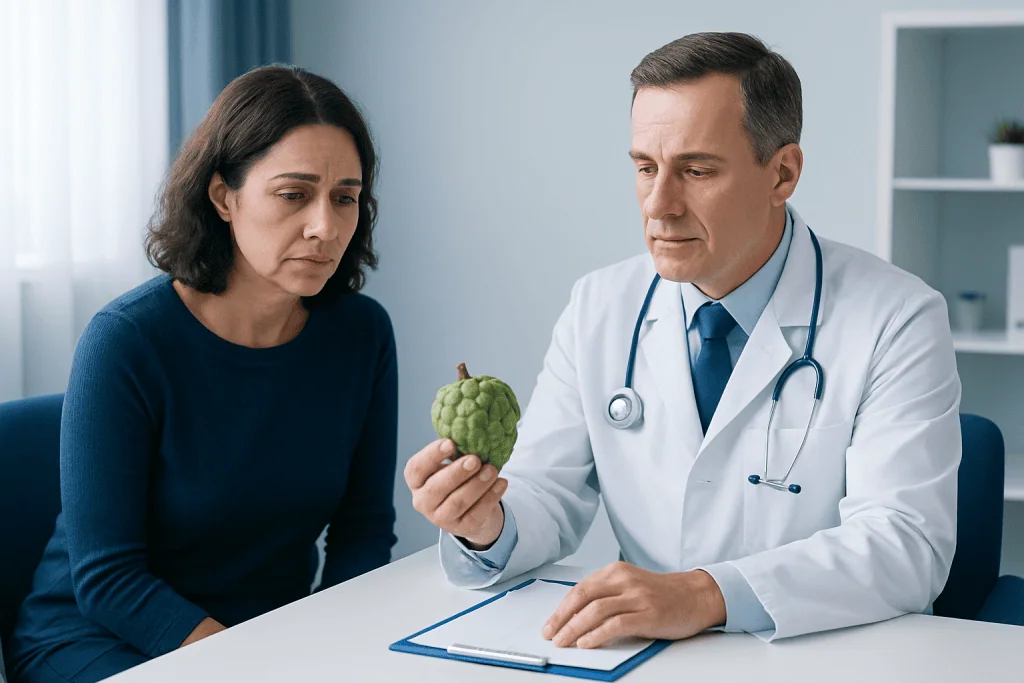
The main safety issue with cherimoya is not the flesh but the seeds and skin. These parts should not be eaten or blended into smoothies. Crushing or chewing the seeds may release toxic substances. If a person accidentally swallows a whole seed, it may pass without harm, but it should never be intentionally consumed.
Because cherimoya is sweet, people with diabetes or prediabetes may want to pay attention to portion size and the rest of the meal. Pairing fruit with protein or healthy fat may help slow absorption. Anyone following a medical nutrition plan should ask a doctor or dietitian how cherimoya fits into it.
Some people may experience bloating, loose stools, or stomach discomfort after eating larger amounts of fruit, especially if they are sensitive to high-fiber foods or certain natural sugars. In rare cases, a food allergy is possible. Symptoms such as hives, swelling of the lips or tongue, wheezing, or trouble breathing need urgent medical attention. People who already live with irritable bowel syndrome may also notice that some fruits are harder to tolerate than others.
How to choose, prepare, and eat cherimoya safely
A ripe cherimoya usually gives slightly when gently pressed, similar to an avocado. If it feels very hard, it may need more time to ripen at room temperature. If it is overly soft, bruised, or leaking, it may be overripe.
Before eating, the fruit should be washed, cut open, and the flesh separated from the seeds. The black seeds should be removed carefully and discarded. The peel should also be discarded rather than eaten. It is safest to eat the flesh with a spoon or to add it to fruit bowls, yogurt, or oatmeal after the seeds have been completely removed.
People making smoothies should take extra care because seeds can be accidentally blended in. Children should be given cherimoya only after all seeds are removed, since the seeds can also be a choking hazard. As with any food, clean preparation and sensible portions are important.
Common myths about cherimoya
One common myth is that cherimoya is a superfood that can detox the body. In reality, the liver, kidneys, lungs, skin, and digestive system already perform the body’s detoxification processes. No single fruit replaces these normal functions or acts as a medical detox treatment.
Another myth is that if a fruit is natural, every part of it must be safe. This is not true for cherimoya. The flesh is eaten, but the seeds and peel should not be consumed. Natural substances can still be harmful, especially in concentrated or crushed form.
There is also confusion between cherimoya and other fruits in the Annona family, such as soursop. Although related plants may share some characteristics, they are not identical foods, and health claims often get mixed together online. People should be cautious about using broad internet claims to make health decisions, especially if they have chronic illness or take regular medications.
Cherimoya in a healthy diet
Cherimoya can be enjoyed as part of a varied diet. It works best as one fruit among many, not as the center of a treatment plan. A balanced pattern that includes plenty of plant foods, enough protein, and limited highly processed foods remains the main evidence-based approach for long-term health.
For many people, a practical way to eat cherimoya is to treat it like a dessert fruit because of its rich, sweet flavor. It may be especially enjoyable in moderate servings. People trying to manage body weight or blood sugar do not necessarily need to avoid it, but portion awareness is useful.
If someone has ongoing digestive symptoms, unexplained abdominal pain, or a condition that affects digestion or the pancreas, medical guidance is more important than food myths. Evaluation may sometimes involve dietary review, blood tests, or gastroenterology assessment to understand symptoms properly. If symptoms include persistent upper abdominal pain after eating, doctors may also assess for conditions such as pancreatitis depending on the overall clinical picture.
When to seek medical care
Most people who eat ripe cherimoya flesh in normal amounts will not need medical care. However, urgent help is needed if a person develops trouble breathing, facial swelling, severe dizziness, or widespread hives after eating the fruit. These can be signs of a serious allergic reaction.
A doctor should also be contacted if cherimoya is followed by repeated vomiting, severe abdominal pain, persistent diarrhea, or concern that seeds were chewed or blended and consumed. Children, pregnant people, older adults, and those with chronic medical conditions may benefit from earlier medical advice if symptoms are significant.
If a person has ongoing digestive issues or wants individualized nutrition guidance, consultation with a qualified clinician can be helpful. In some cases, specialists may recommend nutrition and diet counseling or further evaluation. Acibadem International’s multidisciplinary specialists and JCI-accredited hospitals diagnose and treat digestive and nutrition-related concerns for international patients.
Frequently asked questions
Is cherimoya healthy?
Cherimoya can be a healthy choice when eaten as part of a balanced diet. Its flesh provides fiber, vitamin C, and other nutrients, but it should not be viewed as a cure or special medical treatment.
Can cherimoya seeds be eaten?
No. Cherimoya seeds should not be eaten, crushed, or blended into food because they may contain toxic compounds. The peel should also be discarded.
Is cherimoya good for people with diabetes?
Cherimoya contains natural sugars, so portion size matters for people with diabetes or prediabetes. Many people can still enjoy it in moderation, but it is best to discuss fruit choices with a doctor or dietitian who knows the person's treatment plan.
Can cherimoya cause side effects?
Some people may notice bloating, stomach discomfort, or loose stools, especially if they eat a large amount. Rarely, cherimoya may trigger an allergic reaction, which needs prompt medical attention if symptoms are severe.
What does cherimoya taste like?
Cherimoya has a soft, creamy texture and a sweet flavor often compared to banana, pineapple, pear, or vanilla. Taste varies with ripeness, variety, and freshness.
How should cherimoya be prepared safely?
Wash the fruit, cut it open, and remove all seeds before eating the flesh. Do not eat the skin, and be especially careful when using cherimoya in smoothies so seeds are not accidentally blended.
References
- World Health Organization
- U.S. Food and Drug Administration
- Centers for Disease Control and Prevention
- National Institutes of Health
- Academy of Nutrition and Dietetics
This article is for general information only and is not a substitute for professional medical advice. Please consult a qualified doctor about your individual situation.
Explore treatments in Turkey — costs, top hospitals & a free quote
JCI-accredited · board-certified surgeons · reply within 24h
Add us as a Preferred Source to see more of our trusted health content across Google Search, AI Overviews and Discover.
Check your numbers in seconds
BMI, calories, due date, blood pressure and 30+ more clinical calculators — free, instant, doctor-reviewed ranges.

More from the Health Library

Mds Blood Transfusion — Explained by Medical Evidence, Not Myths

Decaf Coffee: What Patients Need to Know

Buckwheat: What Patients Need to Know

Primordial Dwarfism: An Evidence-Based Guide for Patients

At Home Testosterone Test: An Evidence-Based Guide for Patients