Children’s Physical Therapy: How It Works, Results and What to Expect

Children's physical therapy can support mobility, balance, strength, coordination, pain management and participation in everyday activities. Therapy plans are tailored to the child’s age, diagnosis, abilities, home environment and goals.
Key Takeaways
- Children's physical therapy can support mobility, balance, strength, coordination, pain management and participation in everyday activities.
- Therapy plans are tailored to the child’s age, diagnosis, abilities, home environment and goals.
- Progress is usually measured through functional changes, such as easier walking, safer transfers, improved endurance or greater confidence in play.
- Parents and caregivers are active partners and may receive home activities to safely reinforce therapy goals.
- New severe pain, loss of a previously gained skill, marked weakness or other sudden changes should be assessed promptly by a doctor.
Children's physical therapy is individualized care that helps infants, children and teenagers build movement skills, reduce pain and participate more comfortably in daily life. A pediatric physical therapist assesses how a child moves and creates practical, play-based goals with the family and healthcare team.
Children's Physical Therapy: How It Works
Children’s physical therapy, also called pediatric physical therapy or pediatric physiotherapy, helps babies, children and adolescents improve movement, comfort and independence. It may support a child who has delayed motor milestones, trouble walking or balancing, pain after an injury, weakness, reduced endurance, or a condition affecting muscles, bones, nerves or development.
Unlike many adult rehabilitation programs, pediatric therapy is often organized around play, routines and meaningful activities. A therapist may use games, toys, obstacle courses, stairs, balls, adapted equipment and school- or home-based tasks to help a child practice skills. The aim is not simply to complete exercises, but to make everyday movement safer and more achievable.
The therapist works with the child and family to set realistic functional goals. These may include sitting independently, reaching developmental movement milestones, walking more safely, returning to sport, managing stairs, improving posture, reducing discomfort or taking part in self-care and play. Care may also be coordinated with pediatricians, orthopedic specialists, neurologists, occupational therapists, speech and language therapists, teachers and orthotists when appropriate.
Who May Benefit From Pediatric Physical Therapy?
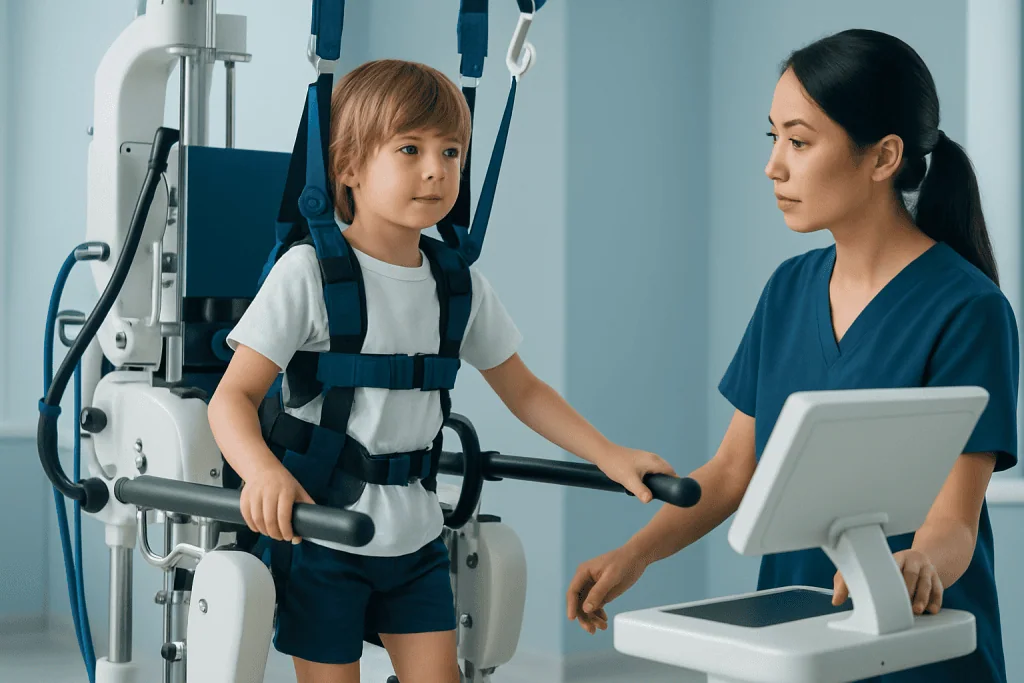
A child may be referred for physical therapy after an illness, injury, surgery or developmental assessment. Some children need short-term rehabilitation, such as after a fracture, sports injury or orthopedic procedure. Others benefit from longer-term support for a condition that affects movement or muscle control.
Common reasons for referral include delayed rolling, sitting, crawling or walking; frequent falls; toe walking; poor balance; joint stiffness; muscle weakness; persistent musculoskeletal pain; altered posture; limited participation in sports or play; and recovery after hospitalization or surgery. Therapy may also be part of care for children with cerebral palsy, neuromuscular conditions, developmental coordination difficulties, scoliosis or other orthopedic and neurologic concerns.
Not every child who develops at a different pace needs therapy. Development varies, and a clinician considers the child’s overall health, age, skills, family concerns and change over time. A pediatrician or qualified specialist can help determine whether assessment is needed and whether pediatric physical therapy is likely to be useful.
- Infants may be assessed for head preference, asymmetry, delayed gross-motor skills or difficulty with positioning.
- School-age children may be referred for pain, coordination challenges, gait changes, injury recovery or reduced physical participation.
- Teenagers may need rehabilitation after sports injuries, surgery, chronic pain or conditions that affect strength and endurance.
What Happens During a Pediatric Physical Therapy Evaluation?
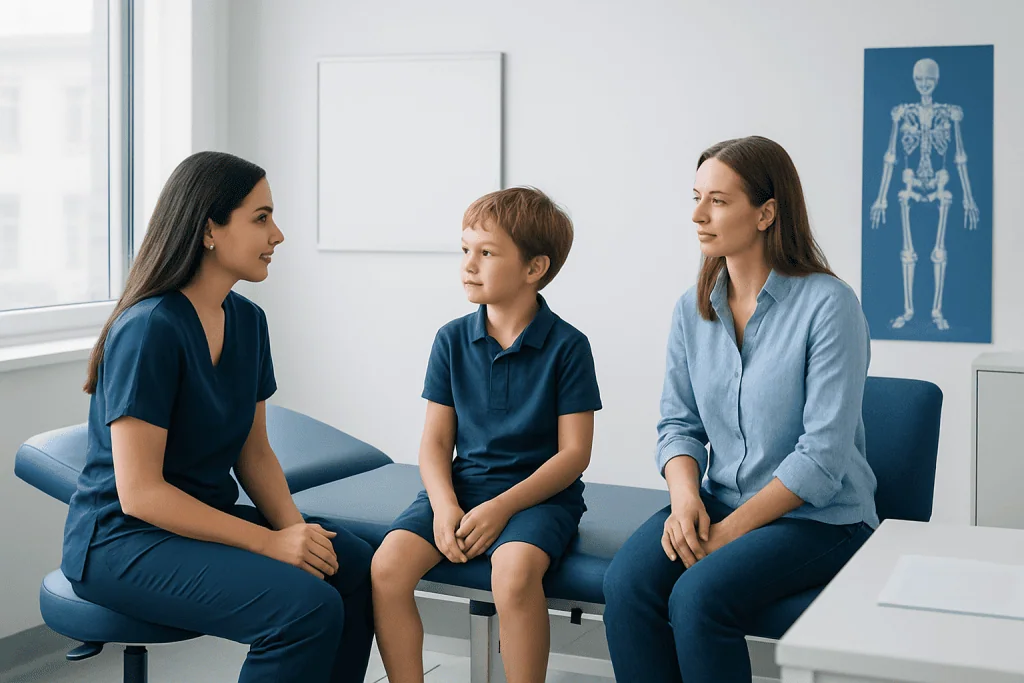
The first visit begins with a detailed conversation. The therapist asks about pregnancy and birth history when relevant, medical diagnoses, surgeries, medications, developmental milestones, school and sport participation, pain, falls, daily activities and the family’s main concerns. Previous reports or imaging results may be helpful, but the therapist may also communicate with the child’s medical team directly with appropriate consent.
Assessment is adapted to the child’s age and comfort. Through observation and guided activities, the therapist may assess posture, walking pattern, range of motion, muscle strength, balance, coordination, endurance, pain behavior and functional skills such as getting up from the floor, climbing stairs, running or transferring between positions. For infants, assessment may focus on spontaneous movement, head and trunk control, symmetry and age-appropriate motor skills.
How long does a pediatric physical therapy evaluation take? An initial evaluation often takes about 45 to 90 minutes, although the exact duration varies with the child’s age, needs, medical complexity and the clinic’s process. The therapist should explain findings in understandable language, discuss priorities and develop goals jointly with the family. Some children need more than one session for a complete assessment, especially if fatigue, anxiety or attention needs limit the first visit.
At the end of the evaluation, the therapist may recommend treatment sessions, home strategies, referral to another specialist, equipment assessment or monitoring without immediate treatment. Families should feel able to ask why a recommendation is being made, how success will be assessed and what role they will have at home.
Step by Step: What Happens in Treatment?
After assessment, treatment is planned around a small number of functional goals. The frequency and setting depend on the child’s needs. Sessions may take place in an outpatient clinic, rehabilitation setting, hospital, school or home environment. Some children attend regularly for a defined period, while others have periodic reviews as they grow or their needs change.
A typical session may begin with a check-in about symptoms, energy levels, recent changes and home practice. The therapist then guides activities that target specific skills, such as strengthening through play, balance work, walking practice, stretching, motor planning, stair practice, safe transfers, endurance activities or gradual return-to-sport exercises. For some children, therapy includes recommendations for orthoses, mobility aids, seating, footwear or adapted activity.
The child’s response is monitored throughout. Activities should be challenging enough to build skill but adjusted for pain, fatigue, developmental level and safety. Parents or caregivers may observe, participate or learn simple activities that fit naturally into daily routines. A home program is usually brief, practical and regularly updated rather than a substitute for professional assessment.
For children recovering from musculoskeletal injury or surgery, rehabilitation may be coordinated with orthopedic care. Physical therapy and rehabilitation can support a structured return to age-appropriate movement, school activities and sport when medically cleared.
Benefits, Risks and Recovery Timeline
The potential benefits of children’s physical therapy depend on the underlying concern and the child’s goals. Therapy may improve mobility, strength, flexibility, balance, coordination, confidence, pain management and ability to participate in home, school, community and play activities. It can also help families understand safe positioning, movement opportunities and ways to support independence.
Physical therapy is generally low risk when it is individualized and delivered by a qualified professional. Temporary muscle soreness or tiredness can occur after new or more demanding activities, particularly during injury rehabilitation. A child may also become frustrated when learning a difficult task. Therapists should adapt the plan, pace and communication style to keep activities safe and achievable.
Recovery is not a single timetable. After a minor injury, a child may progress over weeks, while recovery after surgery or a significant illness may take longer and follow medical restrictions. Children with lifelong developmental or neurologic conditions may use therapy intermittently over months or years as their needs, growth and goals change.
How long should a child do PT for? The appropriate duration is based on the diagnosis, severity, functional goals, progress and family circumstances. Some children need only a few visits for education and a home plan; others benefit from a longer course or scheduled reviews. The therapist should regularly reassess whether therapy is helping, whether goals need adjustment and when it is appropriate to reduce, pause or end formal sessions.
How to Tell Whether Physical Therapy Is Working
How to tell if physical therapy is working? Progress is best judged by meaningful changes in function rather than by a single exercise. Depending on the original goals, families may notice that the child moves with less pain, gets up more easily, falls less often, walks farther, manages stairs more safely, returns to play, needs less assistance or shows greater confidence in movement.
Therapists also use repeated observations and age-appropriate measures to compare skills over time. They may track walking, balance, joint movement, endurance, pain patterns, participation and caregiver reports. In children with complex or lifelong conditions, success may mean maintaining comfort, preventing loss of function, improving safety or making daily care easier rather than reaching a specific milestone quickly.
Progress is rarely perfectly linear. Growth spurts, illness, school demands, changes in sleep, pain flares and motivation can affect performance temporarily. Families should share concerns openly if goals feel unrealistic, exercises are difficult to complete at home, or the child appears to have no improvement after a reasonable agreed review period. The plan can then be adjusted or further medical assessment arranged.
Acibadem International’s multidisciplinary specialists and JCI-accredited hospitals assess and treat children who need coordinated rehabilitation and medical care, including international patients.
What Is a Red Flag in Physical Therapy?
What is a red flag in physical therapy? A red flag is a symptom or change that may suggest the child needs medical review rather than simply continuing the current exercise plan. It does not necessarily mean a serious condition is present, but it should be reported promptly to the therapist, pediatrician or treating specialist.
Examples include new or worsening severe pain, pain that repeatedly wakes the child from sleep, sudden inability to bear weight, a rapid decline in walking or balance, new weakness, loss of a previously acquired movement skill, unexplained fever with significant joint pain or swelling, marked redness or warmth around a joint, or new bowel or bladder control changes. After injury, urgent assessment is also important for obvious deformity, severe swelling, numbness, a cold or pale limb, or uncontrolled pain.
A therapist should also pause and reassess if activities consistently make symptoms worse, the child is unusually fatigued, or there is a mismatch between expected recovery and the child’s progress. Families should not feel they need to decide alone whether a change is important; contacting the care team for advice is appropriate.
When to Seek Medical Care
Parents and caregivers should arrange a medical review if they are concerned about a child’s movement, development, pain, posture, frequent falls or ability to join in everyday activities. Early assessment can clarify whether variation in development is within an expected range or whether supportive therapy, medical investigation or both would be helpful.
Seek urgent medical care for sudden weakness, loss of walking ability, severe pain after an injury, a suspected fracture, difficulty breathing, altered consciousness, new seizures, or symptoms of infection such as fever with a hot, swollen and painful joint. These symptoms need prompt evaluation and should not be managed through home exercises alone.
For non-urgent concerns, a pediatrician can guide referral to the right professional. Bringing a short record of symptoms, videos of the movement concern when safe to obtain, details of injuries and a list of questions can make the appointment more useful. The care team can then recommend the most appropriate next steps for the child and family.
Frequently asked questions
Is children's physical therapy painful?
Children's physical therapy should not involve pushing through severe or worsening pain. Some temporary tiredness or mild muscle soreness can occur after unfamiliar activity, especially during injury recovery. The therapist should adjust activities if pain, fear or fatigue is limiting participation.
How long should a child do PT for?
The length of treatment depends on the child’s diagnosis, goals, response to therapy and daily needs. A child with a minor injury may need a short course, while a child with an ongoing developmental, neurologic or orthopedic condition may benefit from longer-term care or periodic review. The plan should be reassessed regularly with the family.
What is a red flag in physical therapy?
Red flags include new severe pain, sudden weakness, loss of a skill the child previously had, inability to bear weight, rapidly worsening balance, or fever with a painful swollen joint. These changes should be reported promptly to a healthcare professional. Urgent symptoms require timely medical assessment rather than continued exercise.
How long does a pediatric physical therapy evaluation take?
An initial pediatric physical therapy evaluation commonly lasts about 45 to 90 minutes. The time varies according to the child’s age, ability to participate, medical history and complexity of the concern. Follow-up sessions are often shorter, but their length also varies by care setting and treatment plan.
How can a parent tell if physical therapy is working?
Signs of progress may include easier movement, reduced pain, better balance, greater endurance, safer walking, more independence or increased participation in play and school activities. The therapist should use agreed goals and repeated assessments to track change over time. Progress may be gradual and can vary with growth, illness and activity levels.
Can parents do pediatric physical therapy exercises at home?
Home activities can be an important part of care when they are specifically recommended and taught by the child’s therapist. They should be safe, realistic and suited to the child’s needs and family routine. Parents should avoid starting demanding exercises or equipment programs without professional guidance, especially after surgery or injury.
References
- American Physical Therapy Association
- American Academy of Pediatrics
- World Health Organization
- Centers for Disease Control and Prevention
- National Institute of Neurological Disorders and Stroke
This article is for general information only and is not a substitute for professional medical advice. Please consult a qualified doctor about your individual situation.
Explore treatments in Turkey — costs, top hospitals & a free quote
JCI-accredited · board-certified surgeons · reply within 24h
Add us as a Preferred Source to see more of our trusted health content across Google Search, AI Overviews and Discover.

More from the Health Library



Related Specialists

Dr. Ferhat Çetin
Internal Medicine
Prof. Dr. Süleyman Çetinkünar
General Surgery
Dt. Hatice Ağan
Oral & Dental Health
Assoc. Prof. Dr. Mehmet Sürmeli
Otorhinolaryngology