Choledochal Cyst Surgery: Procedure, Recovery and Results

Complete surgical removal is usually recommended because choledochal cysts can cause infection, pancreatitis, stones and later cancer risk. The most common operation removes the extrahepatic bile duct and reconnects bile drainage to the small intestine.
Key Takeaways
- Complete surgical removal is usually recommended because choledochal cysts can cause infection, pancreatitis, stones and later cancer risk.
- The most common operation removes the extrahepatic bile duct and reconnects bile drainage to the small intestine.
- Recovery varies by age, surgical approach and overall health; many patients return gradually to usual activities over several weeks.
- Long-term follow-up remains important after surgery because rare late complications or recurrence-related problems can occur.
- New jaundice, fever, worsening abdominal pain, vomiting or pale stools require timely medical assessment.
Choledochal cyst surgery is the standard treatment for most people with a choledochal cyst. It involves removing the abnormal part of the bile duct and creating a new pathway for bile to flow into the intestine, which can relieve symptoms and lower long-term risks.
Overview: What Choledochal Cyst Surgery Does
Choledochal cyst surgery treats an abnormal widening or cyst-like enlargement of the bile ducts, the tubes that carry bile from the liver to the intestine. In most cases, surgeons remove the affected bile duct tissue rather than simply draining the cyst. This approach addresses the source of bile-flow problems and reduces the risk of complications over time.
The operation is often called choledochal cyst resection or choledochal cyst removal surgery. After the abnormal duct is removed, the surgeon reconstructs the bile drainage system, most commonly by connecting the remaining healthy bile duct to a section of the small intestine. This reconstruction is called a hepaticojejunostomy.
Choledochal cysts may be diagnosed in childhood, but some are first identified in adults during evaluation for abdominal pain, jaundice, pancreatitis or abnormal liver blood tests. The exact procedure depends on the cyst type, its location, previous inflammation, and whether liver or pancreatic ducts are involved.
How It Works and Who May Be a Candidate
Choledochal cyst surgery is usually advised once the diagnosis is confirmed, including for people who have few or no symptoms. Cysts can interfere with normal bile flow and may lead to recurrent inflammation of the bile ducts, gallstones, pancreatitis or liver damage. Importantly, some types are associated with an increased lifetime risk of bile duct cancer, particularly when abnormal tissue remains in place.
Before surgery, a hepatobiliary surgeon reviews imaging and the person’s general health. Ultrasound, magnetic resonance cholangiopancreatography (MRCP), computed tomography and blood tests may be used to map the bile ducts and identify stones, inflammation or other concerns. Endoscopic tests are sometimes needed in selected cases.
Children and adults can be candidates for surgery. In adults, planning may require particular attention to prior episodes of cholangitis, pancreatitis, scarring, stones or associated liver disease. A multidisciplinary team may include hepatobiliary surgeons, gastroenterologists, radiologists, anesthesiologists and pediatric specialists when appropriate.
For people considering specialist evaluation, choledochal cyst surgery can be planned after a careful review of imaging, symptoms and individual surgical risk.
Step by Step: What Happens During the Procedure
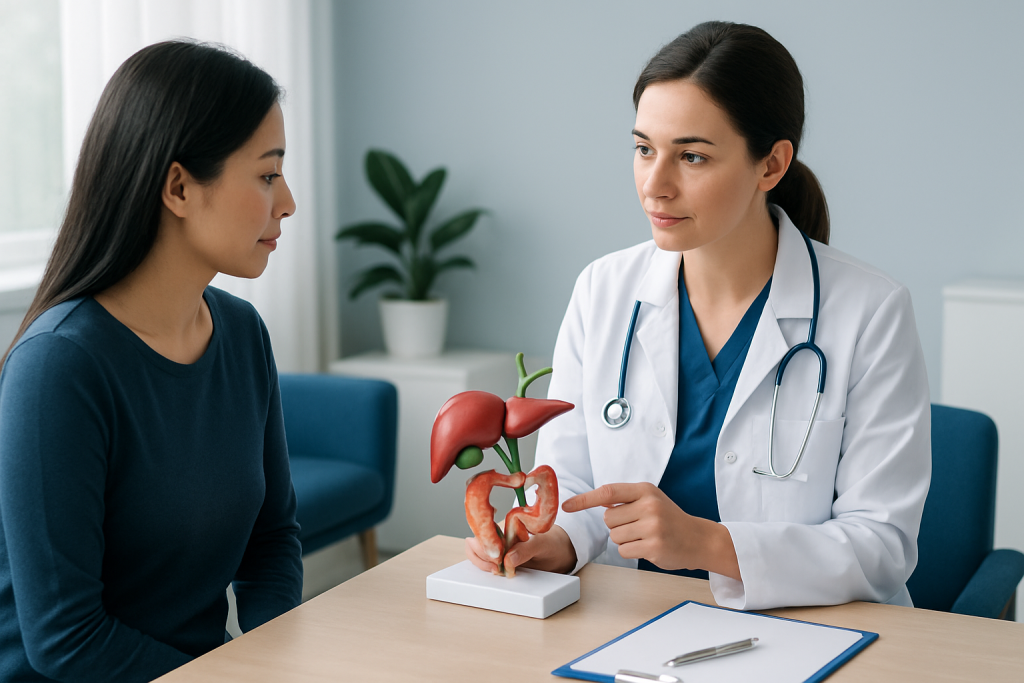
The operation is performed under general anesthesia. Depending on the anatomy and the surgical team’s assessment, it may be done through open surgery, laparoscopic surgery or robotic-assisted surgery. Minimally invasive approaches use smaller incisions, but an open operation may be safest or most effective when anatomy is complex, inflammation is extensive or reconstruction requires broader access.
First, the surgeon identifies the cyst and the nearby bile ducts, blood vessels, pancreas and intestine. The gallbladder is commonly removed at the same time because it shares the abnormal drainage anatomy in many cases. The surgeon then removes the cyst and affected extrahepatic bile duct as completely as safely possible.
Next, the remaining healthy bile ducts from the liver are connected to a loop of small intestine. This allows bile to drain into the digestive tract. If the cyst extends within the liver or involves the pancreatic duct, the operation may need to be adapted; occasionally, additional liver surgery is considered for selected patients.
Removed tissue is examined by a pathologist to look for inflammation, precancerous change or cancer. The operation’s length varies considerably according to cyst type, technique and whether additional procedures are needed.
Recovery Timeline After Choledochal Cyst Surgery
Immediately after surgery, patients are monitored for pain control, fluid balance, bowel function and signs that the new bile drainage connection is healing well. A temporary drain may be used in some cases. Eating normally resumes step by step, beginning with liquids when the care team feels it is appropriate.
Hospital stay depends on age, procedure type and recovery progress. Minimally invasive surgery may allow an earlier discharge for some people, while open surgery or more complex reconstruction can require a longer stay. Before leaving hospital, patients receive guidance on wound care, activity, eating, medicines and follow-up appointments.
At home, fatigue and reduced appetite are common early in recovery. Walking gently and increasing activity gradually can support circulation, lung function and bowel movement. Heavy lifting, strenuous exercise and driving should wait until the surgical team confirms that they are safe. A balanced diet with adequate fluids and protein can support healing.
Follow-up may include liver blood tests and imaging. Ongoing surveillance is individualized, especially for people who had longstanding inflammation, intrahepatic duct involvement or abnormal findings in the removed tissue.
How long does it take to recover from choledochal cyst surgery?
Recovery from choledochal cyst surgery commonly takes several weeks, although complete recovery may take longer after an open operation or a complex reconstruction. Many patients can walk and manage basic daily activities relatively soon after discharge, but stamina typically returns gradually rather than all at once.
For choledochal cyst surgery recovery time for adults, returning to desk-based work may be possible after several weeks if healing is uncomplicated, while physically demanding work can require more time. Children often regain energy differently and should follow pediatric surgical guidance for school, play and sports.
Recovery can be slower if there was infection, pancreatitis, nutritional difficulty, a larger incision or another medical condition. The care team is best placed to give an individual estimate based on the surgical findings and progress at follow-up.
How long should I rest after cyst removal?
After choledochal cyst removal surgery, rest is important, but complete bed rest is usually not the goal. Patients are generally encouraged to take frequent short walks and build activity slowly while allowing time for sleep, pain management and healing. This balance helps reduce stiffness and supports recovery without placing excess strain on the abdomen.
For the first weeks, it is usually sensible to avoid lifting heavy objects, intense abdominal exercise and activities that cause pulling around the incision. The exact restrictions differ for open, laparoscopic and robotic surgery, as well as for children and adults. The surgeon should confirm when it is appropriate to resume work, driving, exercise and sexual activity.
Patients should contact their surgical team if pain is increasing rather than improving, if the wound becomes red or drains fluid, or if eating and drinking remain difficult. These concerns do not always indicate a serious problem, but they deserve prompt assessment.
Benefits, Risks and Long-Term Results
The main benefit of surgery is removal of abnormal bile duct tissue that can cause obstruction, infection and recurrent pancreatitis. It also substantially reduces the cancer risk associated with an untreated choledochal cyst, although it does not always eliminate risk completely. Many patients experience improved bile drainage and fewer cyst-related symptoms after successful reconstruction.
As with any major abdominal operation, possible risks include bleeding, infection, blood clots, anesthesia-related complications and injury to nearby structures. Specific concerns include bile leakage, narrowing at the bile duct-to-intestine connection, cholangitis, bowel obstruction and pancreatitis. The surgical team discusses these risks in relation to the individual’s anatomy and health.
Choledochal cyst recurrence is uncommon after complete removal of the abnormal extrahepatic duct, but late bile duct stones, narrowing or inflammation can occur. Cysts involving ducts inside the liver may require especially careful long-term monitoring. Follow-up helps identify complications early, often before they become severe.
Are choledochal cysts cancerous? Most choledochal cysts are not cancerous when diagnosed. However, the abnormal bile duct lining can develop precancerous changes or cancer over time, which is a key reason complete excision is commonly recommended. Pathology results and ongoing follow-up guide any further care.
Is choledochal cyst curable? When to Seek Medical Care
Is choledochal cyst curable? Complete resection can be a definitive treatment for many people, particularly when the abnormal extrahepatic bile duct is fully removed and bile drainage is reconstructed successfully. Nevertheless, “curable” does not mean follow-up is unnecessary: some patients need long-term review because of their cyst type, duct anatomy or the possibility of late complications.
Medical care should be sought promptly for fever, chills, yellowing of the skin or eyes, new or worsening upper abdominal pain, persistent vomiting, dark urine, pale stools, or itching with jaundice. After surgery, these symptoms may signal impaired bile flow, infection or another complication and should be assessed without delay.
Routine follow-up is also important even when the person feels well. Acibadem International’s multidisciplinary specialists at JCI-accredited hospitals diagnose and treat choledochal cysts for international patients, with care plans guided by imaging, surgical findings and long-term follow-up needs.
Frequently asked questions
What is the usual operation for a choledochal cyst?
The most common operation removes the cyst, the affected extrahepatic bile duct and usually the gallbladder. The surgeon then connects the healthy bile ducts to the small intestine so bile can continue to flow normally.
Can choledochal cyst surgery be performed laparoscopically?
Yes, laparoscopic or robotic techniques may be suitable for some patients and experienced surgical teams. The safest approach depends on the cyst type, anatomy, degree of inflammation and the need for complex reconstruction.
Will a person need lifelong follow-up after surgery?
Many patients are advised to have periodic follow-up, often including liver blood tests and imaging when clinically appropriate. The schedule depends on the type of cyst, completeness of removal, pathology findings and any symptoms after surgery.
What foods should be eaten after choledochal cyst surgery?
Diet is usually reintroduced gradually according to the surgical team’s instructions and the patient’s tolerance. Small, balanced meals with enough fluid and protein may be easier early in recovery; persistent nausea, vomiting or poor intake should be reported.
Can a choledochal cyst come back after it is removed?
A completely removed extrahepatic cyst does not usually grow back. However, some people can develop later problems such as narrowing, stones or inflammation in the remaining bile ducts, and cysts involving intrahepatic ducts may need continuing monitoring.
When can someone return to exercise after choledochal cyst surgery?
Light walking is often encouraged early, but strenuous exercise and heavy lifting should wait until healing has progressed and the surgeon approves it. The timing varies with the surgical approach, incision size and individual recovery.
References
- National Institute of Diabetes and Digestive and Kidney Diseases
- American College of Surgeons
- National Cancer Institute
- European Society for Paediatric Gastroenterology Hepatology and Nutrition
This article is for general information only and is not a substitute for professional medical advice. Please consult a qualified doctor about your individual situation.
Persistent digestive symptoms? Get evaluated in Turkey
JCI-accredited · board-certified surgeons · reply within 24h
Add us as a Preferred Source to see more of our trusted health content across Google Search, AI Overviews and Discover.