Chondromalacia: What Patients Need to Know

Chondromalacia usually causes pain at the front of the knee, especially with stairs, squatting, kneeling, or prolonged sitting. It often develops from overuse, kneecap misalignment, muscle weakness, or repetitive stress rather than a single major injury.
Key Takeaways
- Chondromalacia usually causes pain at the front of the knee, especially with stairs, squatting, kneeling, or prolonged sitting.
- It often develops from overuse, kneecap misalignment, muscle weakness, or repetitive stress rather than a single major injury.
- Diagnosis is based on symptoms, a physical examination, and sometimes imaging to rule out other knee problems.
- Treatment commonly includes activity modification, physical therapy, pain relief measures, and strengthening of the hip and thigh muscles.
- Medical review is important if knee pain persists, worsens, or is associated with swelling, locking, instability, or inability to bear weight.
Chondromalacia is a condition in which the cartilage on the underside of the kneecap becomes softened, irritated, or worn, often leading to pain at the front of the knee. It is common in active people and also in adults with muscle imbalance, overuse, or changes in kneecap tracking, and it is often managed successfully with targeted conservative care.
Overview: what chondromalacia means
Chondromalacia refers to softening and breakdown of the cartilage on the underside of the patella, also called the kneecap. This cartilage normally helps the kneecap glide smoothly over the lower end of the thigh bone when the knee bends and straightens. When it becomes irritated or worn, everyday movement can lead to pain, friction, and a sense of discomfort around or behind the kneecap.
Many people use the term chondromalacia patella to describe this problem. In practice, it is often discussed alongside patellofemoral pain, because both conditions can cause similar symptoms at the front of the knee. Chondromalacia is not always severe, and in many cases symptoms improve with the right combination of rest, rehabilitation, and movement correction.
This condition can affect teenagers, athletes, runners, cyclists, and adults whose work or daily routine involves frequent stair climbing, kneeling, or squatting. It can also occur in people who are less active if the muscles around the hip and knee are not supporting the kneecap well. Understanding the cause matters because treatment is usually focused on reducing pressure on the kneecap and improving joint mechanics.
Symptoms and how it may feel in daily life
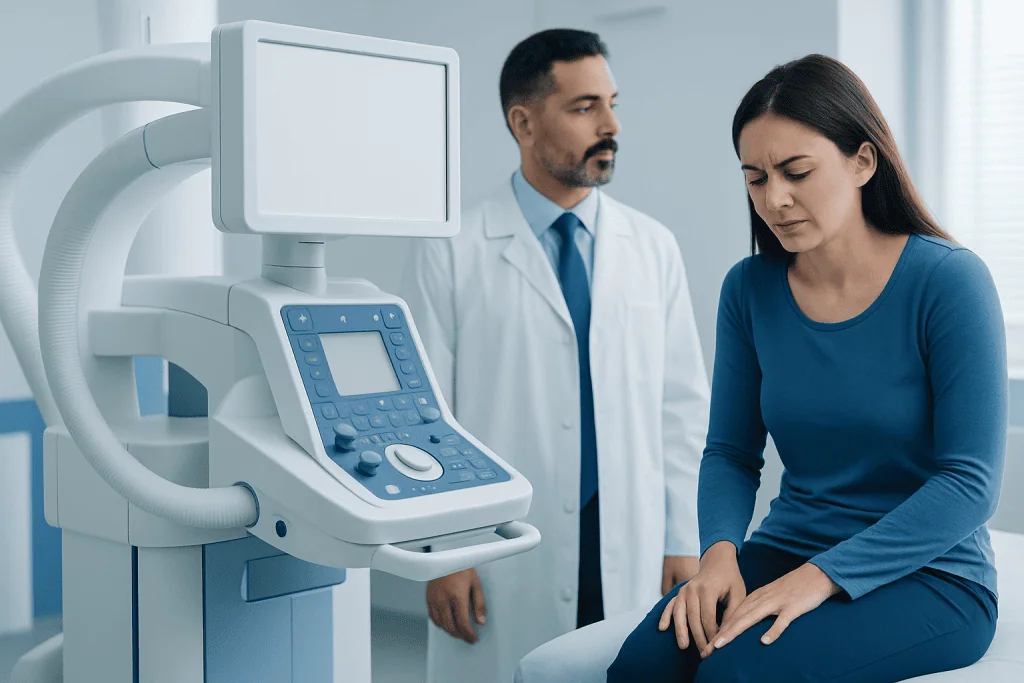
The most common symptom of chondromalacia is a dull, aching pain at the front of the knee or behind the kneecap. The discomfort often becomes more noticeable when walking up or down stairs, squatting, running, kneeling, or standing up after sitting for a long time. Some people describe a “movie theater sign,” meaning knee pain after prolonged sitting with the knee bent.
In addition to pain, there may be a grinding, crackling, or clicking sensation when the knee moves. This does not always mean the damage is severe, but it can suggest that the kneecap is not gliding smoothly. Mild swelling may also occur, especially after exercise or repeated knee bending.
Symptoms can vary from person to person. Some notice only occasional pain with exercise, while others find that routine tasks become uncomfortable. Chondromalacia can overlap with other causes of anterior knee pain, so persistent symptoms should not be self-diagnosed without proper assessment.
- Pain in the front of the knee or behind the kneecap
- Discomfort when climbing stairs or squatting
- Pain after sitting for long periods
- Grinding, crackling, or clicking with movement
- Occasional mild swelling or tenderness
Causes and risk factors

Chondromalacia usually develops when the kneecap is exposed to repeated stress or does not track smoothly in its groove. Instead of gliding centrally during movement, the patella may shift slightly, increasing pressure on certain areas of cartilage. Over time, that stress can irritate and soften the cartilage surface.
Muscle imbalance is a common contributor. Weakness in the quadriceps, hip abductors, or core muscles can change the way the leg aligns during walking, running, or stair climbing. Tightness in the hamstrings, calf muscles, or tissues along the outside of the thigh may also affect kneecap mechanics. In some people, the shape of the kneecap, foot posture, previous injury, or natural differences in limb alignment play a role.
Repetitive loading is another major factor. Activities such as running, jumping, cycling, deep squatting, and kneeling can place frequent pressure on the patellofemoral joint. A direct blow to the knee, prior dislocation, or a sudden increase in training intensity may also trigger symptoms. Excess body weight can further increase load across the joint.
Because several knee conditions can feel similar, doctors may consider other possibilities such as knee pain from tendon problems, inflammation, or early osteoarthritis. A careful evaluation helps distinguish chondromalacia from these related conditions.
How doctors diagnose chondromalacia
Diagnosis begins with a detailed medical history and physical examination. A doctor will usually ask where the pain is felt, what movements make it worse, whether there has been a previous injury, and how symptoms affect exercise and daily activities. They may also assess walking pattern, knee alignment, flexibility, and muscle strength around the hip and thigh.
During the examination, the knee may be checked for tenderness, swelling, crepitus, range of motion, and how the kneecap moves as the leg bends and straightens. Functional tests such as squatting, stepping, or standing on one leg can reveal movement patterns that place excess pressure on the kneecap.
Imaging is not always required at the first visit, especially when symptoms are typical and there are no warning signs. However, X-rays may be used to look at alignment or rule out other bone or joint issues, and MRI may help evaluate cartilage changes or associated soft tissue problems if symptoms are persistent or if the diagnosis is uncertain. In some cases, assessment by an orthopedics and traumatology team is helpful for a more complete plan.
Treatment options and recovery
Most people with chondromalacia improve with conservative treatment. The main goals are to reduce irritation, improve kneecap tracking, restore muscle support, and allow a gradual return to activity. Early management often includes temporary reduction of painful activities, avoiding deep knee bending, and using simple comfort measures such as ice after exercise when advised by a clinician.
Physical therapy is a central part of treatment. Programs usually focus on strengthening the quadriceps, especially the muscles that help stabilize the kneecap, as well as the hip and core. Stretching tight muscles and correcting movement patterns can reduce pressure on the patellofemoral joint. Some patients may also benefit from taping, bracing, footwear adjustments, or guided changes to training technique.
Pain-relieving medicines may be recommended by a doctor for short-term symptom control, but they do not correct the underlying mechanics. If symptoms persist despite rehabilitation, further evaluation may be needed to look for cartilage injury, maltracking, or other knee problems. In selected cases, doctors may discuss advanced options through knee surgery or supportive physical therapy and rehabilitation pathways, depending on the cause and severity.
Surgery is not the first treatment for most patients. It is usually considered only when symptoms remain significant after a structured period of conservative care, or when there is a specific structural problem that may be corrected. The choice depends on the individual, imaging findings, activity goals, and overall knee health.
Self-care, exercise choices, and prevention
Self-care is most effective when it supports, rather than replaces, medical guidance. People with chondromalacia are often advised to reduce or pause activities that trigger sharp pain, then reintroduce movement gradually as symptoms settle. Low-impact exercise, such as swimming, walking on flat surfaces, or using certain stationary bikes under guidance, may be easier on the kneecap than running or repeated jumping.
Improving strength and flexibility can lower the chance of symptoms returning. Regular exercises for the hips, thighs, and core help control leg alignment, while stretching can reduce abnormal pulling forces around the knee. Warm-up before activity, progressive increases in training load, and proper recovery time are also important.
Maintaining a healthy body weight may reduce stress on the knees, especially during stair climbing and squatting. Supportive shoes and attention to exercise form can also help. Prevention does not mean avoiding activity altogether; instead, it means choosing movement patterns that the knee can tolerate and building strength steadily over time.
For patients who need broader assessment of joint function or sports-related movement patterns, referral to sports medicine specialists may be appropriate. Near the end of the care pathway, some international patients choose centers such as Acibadem International, where multidisciplinary specialists in JCI-accredited hospitals evaluate and treat knee conditions with individualized plans.
When to seek medical care
Medical advice is important when front knee pain lasts more than a few weeks, keeps returning, or starts to limit work, sport, or normal daily movement. A professional assessment can confirm whether chondromalacia is likely and can rule out other causes of knee pain that may need different treatment.
Prompt medical review is especially important if the knee becomes noticeably swollen, gives way, locks, cannot be fully bent or straightened, or if pain follows a fall or twisting injury. A person should also seek care if there is redness, fever, inability to bear weight, or rapidly worsening symptoms, as these features may point to a different and more urgent problem.
Early assessment can help prevent prolonged discomfort and unnecessary activity restriction. Because treatment often depends on the specific source of kneecap stress, a tailored plan is usually more helpful than trying multiple unsupervised remedies.
Frequently asked questions
Is chondromalacia the same as arthritis?
Not exactly. Chondromalacia refers to softening or wear of cartilage under the kneecap, while arthritis is a broader term for joint degeneration or inflammation. However, symptoms can overlap, and a doctor may need to distinguish one from the other.
Can chondromalacia go away on its own?
Mild symptoms may improve with rest and reduced knee stress, but the problem often returns if underlying movement or strength issues are not addressed. Many people do well with a structured rehabilitation program. A medical evaluation is helpful if pain persists.
What activities should someone with chondromalacia avoid?
Activities that sharply increase pain, such as deep squatting, repeated kneeling, jumping, or running on hills, may need to be limited temporarily. This does not mean all exercise should stop. Lower-impact activity is often possible while recovery is underway.
Do all patients with chondromalacia need an MRI?
No. Many cases can be assessed through history and physical examination alone, especially when symptoms are typical. MRI may be used if symptoms are persistent, severe, or if another knee problem is suspected.
How long does recovery usually take?
Recovery time varies depending on symptom severity, activity level, and how consistently rehabilitation is followed. Some people improve within weeks, while others need several months of targeted strengthening and movement correction. A gradual return to activity is usually recommended.
Is surgery common for chondromalacia?
Surgery is not common as a first-line treatment. Most patients are treated successfully with activity modification, physical therapy, and symptom control. Surgery is generally reserved for selected cases with persistent symptoms or structural knee problems.
This article is for general information only and is not a substitute for professional medical advice. Please consult a qualified doctor about your individual situation.
Joint and spine care in Turkey — expert assessment & treatment
JCI-accredited · board-certified surgeons · reply within 24h
Add us as a Preferred Source to see more of our trusted health content across Google Search, AI Overviews and Discover.

More from the Health Library
Lychees: A Complete Medical Overview

Donepezil: An Evidence-Based Guide for Patients

Frontal lobe development: Symptoms, Causes, and Treatment — Complete Patient Guide

Jaundice: An Evidence-Based Guide for Patients

Placenta: An Evidence-Based Guide for Patients