Clamshell Exercise — Explained by Medical Evidence, Not Myths

The clamshell exercise mainly targets the hip abductors and external rotators, including the gluteal muscles. It may help improve pelvic control and lower-limb mechanics, especially in rehabilitation programs.
Key Takeaways
- The clamshell exercise mainly targets the hip abductors and external rotators, including the gluteal muscles.
- It may help improve pelvic control and lower-limb mechanics, especially in rehabilitation programs.
- Correct technique matters more than doing many repetitions or using strong resistance too early.
- It is not a cure-all and may be less effective if used alone without other strength and movement training.
- Pain during or after the exercise should be assessed, especially if symptoms are sharp, worsening, or persistent.
The clamshell exercise is a simple side-lying movement used to strengthen the hip muscles, especially the gluteus medius and other pelvic stabilizers. Medical evidence supports it as one helpful exercise for some people with hip, knee, or movement-related pain, but its value depends on correct form, appropriate progression, and using it as part of a broader rehabilitation plan.
What is the clamshell exercise?
The clamshell exercise is a side-lying hip strengthening movement. A person lies on one side with the knees bent and feet together, then lifts the top knee while keeping the feet in contact, similar to a clam opening. This movement is designed to activate muscles on the outside and back of the hip, especially the gluteus medius, gluteus minimus, and other hip external rotators.
In rehabilitation and exercise medicine, the clamshell exercise is often used to support pelvic stability. These muscles help control the position of the pelvis and thigh during walking, stair climbing, standing on one leg, and many sports movements. When they are weak or poorly coordinated, the leg may move inward excessively, which can contribute to strain around the hip, knee, or lower back in some people.
Medical evidence does not suggest that clamshells are a miracle exercise. Instead, they are best understood as one useful tool. For some people, they can be an effective starting exercise because they are low impact, easy to learn, and can be adapted without heavy equipment. However, they usually work best when combined with other strengthening, balance, and functional exercises rather than used in isolation.
How it works and which muscles it targets
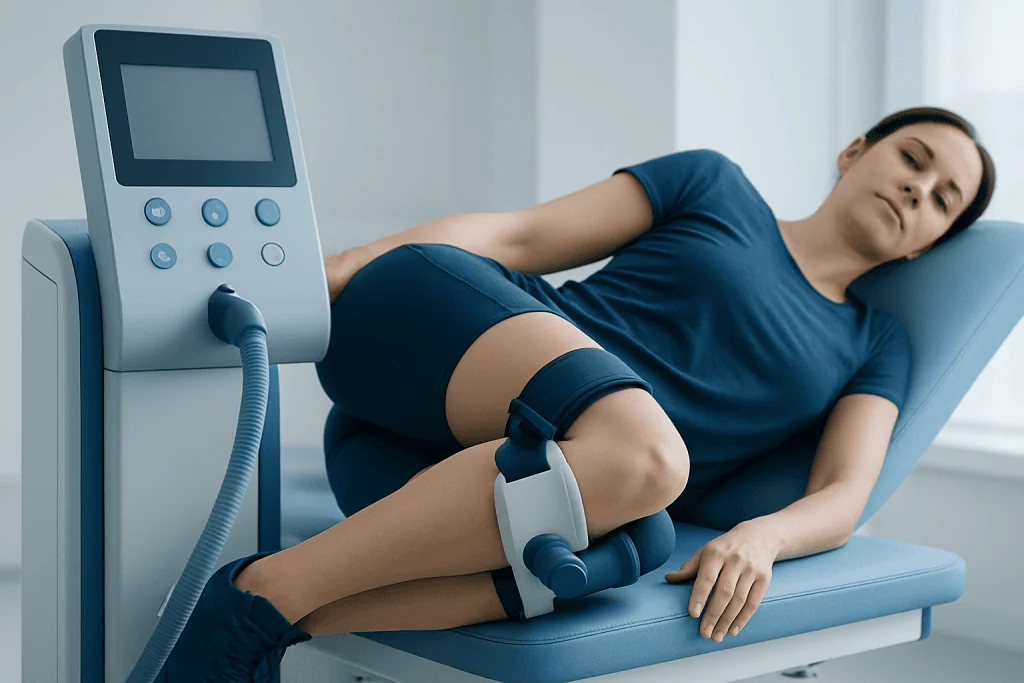
The clamshell exercise primarily trains hip abduction and external rotation. In simple terms, it helps the body control the thigh as it moves away from the midline and rotates outward. The main muscle commonly discussed is the gluteus medius, which plays a major role in keeping the pelvis level during single-leg activities such as walking or running.
Other muscles may also contribute, including the gluteus minimus and deeper hip rotators. Depending on body position, technique, and resistance, the exercise may recruit these muscles to different degrees. Because the trunk and pelvis should remain stable while the top knee lifts, the movement also encourages awareness of posture and movement control, not just muscle force.
Evidence from rehabilitation research suggests that targeted hip strengthening may be helpful in conditions linked to altered lower-limb mechanics. These may include some cases of lateral hip pain, knee pain related to tracking or loading patterns, and movement dysfunction after injury. Still, a person’s pain does not always mean that hip weakness is the only cause, which is why exercise choice should be individualized.
For people dealing with broader joint or spine symptoms, doctors may also assess related conditions such as lower back pain or knee pain to understand whether a clamshell program is likely to help as part of overall care.
Potential benefits according to medical evidence

The most evidence-based benefit of the clamshell exercise is improved activation and strengthening of specific hip muscles. In clinical practice, this can be relevant when a rehabilitation professional is trying to improve pelvic control, reduce excessive inward knee movement, or rebuild strength after inactivity or injury. It may be especially useful early in a program because it can be performed with body weight alone and progressed gradually.
Some people may notice improved comfort during walking, stair use, or exercise when clamshells are included in a structured strengthening plan. This is not because the movement directly fixes every painful condition, but because better hip muscle performance can improve how force is managed through the lower body. The effect is often greatest when exercises are chosen after an assessment and matched to the person’s symptoms and activity goals.
At the same time, the evidence does not support common myths. Clamshells do not reliably “reshape” the body in a specific spot, and they are not enough by themselves to prevent all injuries. They also do not replace more functional exercises such as standing hip work, squats, step-based training, or gait retraining when those are appropriate. In many rehabilitation plans, clamshells are simply an entry-level exercise that prepares a person for more demanding movement.
- May improve hip muscle strength and endurance
- May support pelvic and lower-limb control
- Can be used in early rehabilitation with low joint load
- Often works best alongside progressive functional exercise
How to do the clamshell exercise correctly
To perform a basic clamshell, the person lies on one side with the head supported, hips stacked, knees bent, and feet aligned with the body. The heels stay together while the top knee lifts upward as far as possible without rolling the pelvis backward. The movement should be slow and controlled, followed by a gradual return to the starting position.
The goal is to move from the hip rather than twisting the trunk. A common mistake is opening the knee by rocking the pelvis backward, which reduces the intended work of the hip muscles. Another frequent error is allowing the waist to collapse or the shoulders to rotate. It can help to keep one hand on the top hip to feel whether the pelvis stays steady.
People often begin without added resistance and focus on quality first. Once the movement is controlled and symptom-free, a resistance band above the knees may be added. The number of repetitions and sets should fit the person’s current strength, pain level, and rehabilitation goals. A clinician or physiotherapist may also suggest related exercises such as bridge variations, side-stepping, or physical therapy and rehabilitation to build a more complete program.
If the exercise causes pinching at the front of the hip, pain along the side of the hip, or discomfort that worsens after exercise, form or exercise selection may need adjustment. In those situations, a professional review is helpful rather than pushing through pain.
Who may benefit and when it may be less useful
The clamshell exercise may be helpful for people who need gentle hip strengthening, particularly early in recovery or after long periods of reduced activity. It is often used in rehabilitation programs for certain patterns of hip weakness, movement-related knee pain, and some overuse problems. It may also be appropriate for older adults who need a low-impact starting point before progressing to standing exercises.
However, it may be less useful if a person already has good side-lying hip strength but has pain linked to different factors, such as training errors, joint irritation, or poor tolerance of load. In these cases, repeating clamshells alone may not address the underlying problem. Some people also find that the exercise does not transfer well to real-life movement unless it is paired with standing and functional strengthening.
For patients with persistent pain, clinicians may look for conditions such as hip pain patterns related to tendons, joints, posture, gait, or the lower back. If symptoms are more complex, an individualized rehabilitation plan may include imaging, movement assessment, or specialist review. When needed, care may involve orthopedic rehabilitation or a broader musculoskeletal evaluation.
Common mistakes, safety tips, and progression
One of the most common myths is that more resistance always means better results. In reality, adding a strong band too early often leads to compensation, especially rolling backward through the pelvis. This can reduce the intended benefit and sometimes provoke symptoms. A better approach is to master the movement first, then progress resistance, repetitions, time under tension, or exercise complexity.
Another misconception is that muscle burning always equals good technique. While mild muscular fatigue can be expected, sharp pain, catching, numbness, or pain that lingers significantly afterward is not the goal. The exercise should feel targeted and controlled, usually around the outer hip or buttock rather than the lower back or front of the hip.
Useful progression options may include longer holds at the top, resistance bands, side-lying leg lifts, bridges, side-stepping, step-downs, or single-leg balance work. These progressions help shift from isolated muscle activation toward movements that better reflect daily activity. Some people recovering from injury may also benefit from coordinated care that includes sports injuries rehabilitation if return to exercise or sport is a goal.
- Keep the pelvis stacked and stable
- Lift the knee only as far as control is maintained
- Avoid twisting the trunk or arching the lower back
- Progress gradually and stop if symptoms worsen
When to seek medical care
The clamshell exercise is generally low risk, but it is not appropriate to self-manage every type of pain with exercise alone. Medical review is sensible if a person has severe hip or knee pain, pain after a fall or sports injury, visible swelling, locking, giving way, fever, or inability to bear weight. These signs may suggest a problem that needs diagnosis before beginning or continuing exercise.
It is also wise to seek professional guidance if pain has lasted for several weeks, keeps returning, disturbs sleep, or limits work, walking, or exercise. A doctor or physiotherapist can assess whether the pain is coming from the hip joint, surrounding tendons, the lower back, or another structure. This helps prevent over-reliance on one exercise when a broader treatment plan may be needed.
Near the end of a patient’s care journey, multidisciplinary assessment can be especially valuable. Acibadem International’s specialists and JCI-accredited hospitals diagnose and treat musculoskeletal conditions for international patients, including evaluation of persistent hip, knee, and spine-related symptoms when rehabilitation needs to be individualized.
Frequently asked questions
What does the clamshell exercise do?
The clamshell exercise strengthens muscles on the outside and back of the hip, especially those that help stabilize the pelvis. It is commonly used in rehabilitation to improve control during walking, stair climbing, and other daily movements.
Is the clamshell exercise good for knee pain?
It can be helpful for some people with knee pain, particularly when poor hip control contributes to knee loading patterns. However, knee pain has many causes, so clamshells are usually most effective when included in a broader treatment plan after assessment.
Should the clamshell exercise hurt?
It should not cause sharp or worsening pain. Mild muscle effort or fatigue in the outer hip may be expected, but persistent pain in the hip, groin, knee, or lower back suggests that technique, resistance, or exercise choice may need to change.
How often should a person do clamshell exercises?
The right frequency depends on the person's strength, symptoms, and overall program. Many people use them several times per week, but a clinician can advise the safest schedule based on recovery, fatigue, and treatment goals.
Are clamshell exercises enough on their own?
Usually not. They are often a useful starting exercise, but most people benefit from progressing to standing, balance, and functional strengthening exercises that better match daily activities or sport.
Who should avoid clamshell exercises?
People with severe pain, recent injury, suspected fracture, significant swelling, or unexplained symptoms should seek medical advice before continuing. The exercise may also need modification or replacement if it repeatedly causes groin pain, side-hip irritation, or low back discomfort.
References
- American Academy of Orthopaedic Surgeons
- American Physical Therapy Association
- National Institute for Health and Care Excellence
- MedlinePlus
- National Center for Biotechnology Information
This article is for general information only and is not a substitute for professional medical advice. Please consult a qualified doctor about your individual situation.
Joint and spine care in Turkey — expert assessment & treatment
JCI-accredited · board-certified surgeons · reply within 24h
Add us as a Preferred Source to see more of our trusted health content across Google Search, AI Overviews and Discover.

More from the Health Library

Emdena: What Patients Need to Know

Nebulizer and Infants: An Evidence-Based Guide for Patients

Pimple But: What Patients Need to Know

Bakers Cyst: What Patients Need to Know

Clopidogrel: An Evidence-Based Guide for Patients