Clavicle: A Complete Medical Overview

The clavicle links the chest to the shoulder and helps keep the arm positioned away from the body. Common clavicle problems include fractures, acromioclavicular joint injuries, arthritis, and overuse-related pain.
Key Takeaways
- The clavicle links the chest to the shoulder and helps keep the arm positioned away from the body.
- Common clavicle problems include fractures, acromioclavicular joint injuries, arthritis, and overuse-related pain.
- Diagnosis usually relies on a physical exam and imaging such as X-ray, with CT or MRI in selected cases.
- Many clavicle injuries heal with rest, support, pain control, and physiotherapy, while some need surgery.
- Medical assessment is important after falls, sports injuries, visible deformity, numbness, or trouble moving the arm.
The clavicle, or collarbone, is a long bone that connects the breastbone to the shoulder and helps support arm movement, posture, and protection of nearby nerves and blood vessels. Most clavicle concerns involve fracture, joint sprain, overuse pain, or arthritis, and treatment depends on the cause, severity, and the person’s activity needs.
Overview: what the clavicle is and why it matters
The clavicle is the medical name for the collarbone. It is a slender, S-shaped bone that sits horizontally at the top of the chest, connecting the breastbone (sternum) to the shoulder blade through the acromion. Although it looks small, it plays a major role in shoulder mechanics by helping the arm move freely and keeping the shoulder in a stable position.
The clavicle also acts as a strut, holding the shoulder out from the chest wall so the arm can lift, reach, and rotate efficiently. In addition, it offers some protection to important structures that pass beneath it, including blood vessels and parts of the brachial plexus, the network of nerves that supplies the arm.
Clavicle concerns are common across all ages. Children and athletes often experience injuries from falls or contact sports, while adults may develop pain from joint wear, repetitive strain, or previous trauma. Understanding the clavicle as both a bone and a key part of the shoulder girdle helps explain why even a seemingly simple injury can affect daily tasks such as dressing, driving, carrying, or sleeping comfortably.
Anatomy and function of the clavicle
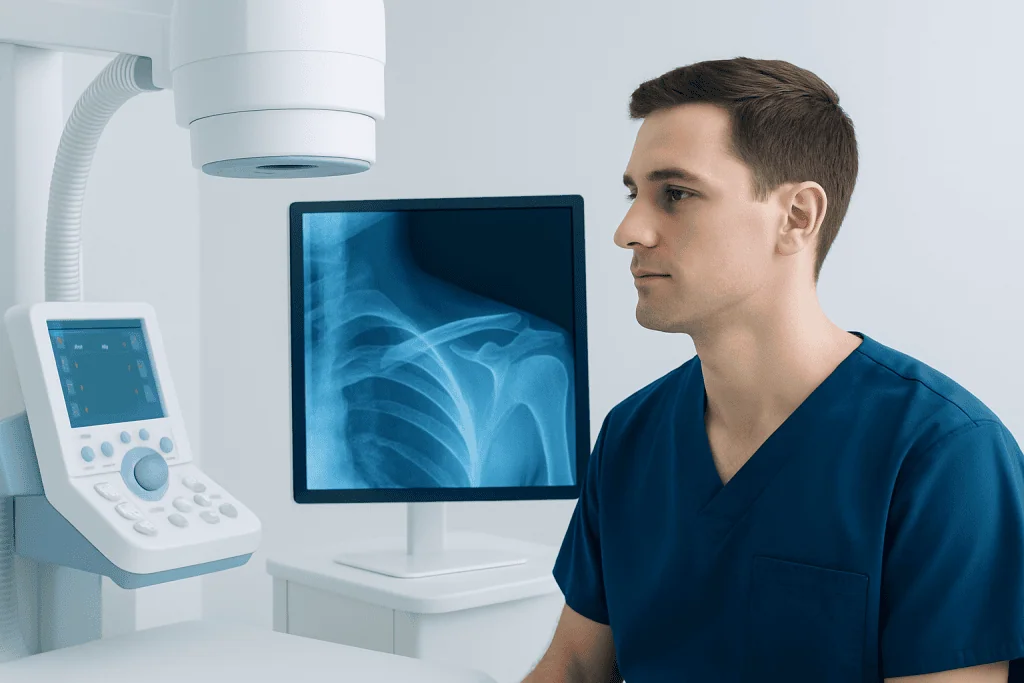
The clavicle has two ends and a shaft in the middle. The inner end joins the sternum at the sternoclavicular joint, while the outer end meets the acromion of the shoulder blade at the acromioclavicular joint. Strong ligaments anchor these joints and help maintain shoulder alignment during movement.
Muscles attached to the clavicle include parts of the deltoid, trapezius, pectoralis major, sternocleidomastoid, and subclavius. Because these muscles pull in different directions, a broken clavicle can shift position depending on where the injury occurs. This is one reason doctors assess both the location of pain and the pattern seen on imaging.
The clavicle supports several important functions:
- It stabilizes the shoulder girdle.
- It helps transmit force from the arm to the trunk.
- It allows efficient shoulder elevation and rotation.
- It contributes to posture and upper body symmetry.
- It protects nearby nerves and blood vessels.
Most clavicle fractures occur in the middle third of the bone, where its shape and mechanical stress make it more vulnerable. Injuries at either end may affect the nearby joints instead and can sometimes behave differently in terms of stability, healing, and treatment planning.
Common clavicle problems and symptoms

The best-known clavicle injury is a clavicle fracture, often caused by a fall onto the shoulder, a direct blow, or a sports collision. Symptoms may include sudden pain, swelling, bruising, difficulty lifting the arm, and sometimes a visible bump or change in shoulder shape. In some cases, there may be a grinding sensation with movement.
Not all clavicle pain is a fracture. The acromioclavicular joint can be sprained or separated, especially after a fall onto the point of the shoulder. This may cause pain at the outer end of the collarbone, tenderness over the joint, and discomfort when reaching across the body. Over time, this joint can also develop arthritis, especially after prior injury.
The sternoclavicular joint at the inner end of the clavicle can also be injured, though this is less common. Pain in this area may follow trauma, repetitive stress, inflammatory conditions, or joint degeneration. Because important structures lie behind the upper chest, swelling or deformity near this joint should be assessed carefully.
Other causes of collarbone-region pain include muscle strain, poor posture, neck-related referred pain, and less commonly infection or bone lesions. Symptoms that deserve prompt attention include numbness, tingling, weakness, shortness of breath, skin tenting over the bone, or severe deformity. When shoulder symptoms are the main issue, doctors may also look for related problems such as a rotator cuff tear.
Causes and risk factors
Trauma is the leading cause of clavicle injury. Falls from standing height, bicycle accidents, skiing injuries, road traffic incidents, and contact sports commonly place direct force through the shoulder. Children and teenagers are especially prone to fractures because of high activity levels, while older adults may be at higher risk after falls, particularly if bone strength is reduced.
Repetitive use can also contribute to pain around the clavicle and its joints. Activities involving frequent overhead motion, weight training, heavy lifting, or repetitive pushing may stress the acromioclavicular joint and surrounding soft tissues. Poor shoulder mechanics, muscle imbalance, and previous injuries can increase this strain over time.
Several factors may make clavicle problems more likely or more complex:
- Participation in contact or high-impact sports
- Falls, especially in older age
- Previous shoulder or collarbone injury
- Bone weakness related to osteoporosis or low bone density
- Repetitive overhead work or athletic training
- Inflammatory joint disease or degenerative arthritis
In newborns, a clavicle fracture can occasionally occur during birth. In adults, unexplained clavicle pain without injury is less common and may require evaluation for infection, inflammatory disease, or other underlying conditions. The cause guides treatment, so a careful history is an important part of assessment.
How doctors diagnose clavicle conditions
Diagnosis begins with a clinical examination. A doctor asks how the symptoms started, where the pain is located, and whether there are any signs of nerve or circulation problems such as numbness, color change, or weakness. The shoulder, collarbone, upper chest, and neck are examined for tenderness, swelling, movement limits, and deformity.
X-ray is usually the first imaging test for suspected clavicle fracture or joint injury. It shows whether the bone is broken, whether the pieces have shifted, and whether the nearby joints are involved. In more complex injuries, CT can provide a clearer view of fracture pattern or sternoclavicular joint position. MRI may be used when soft tissue injury, ligament damage, or another shoulder problem is suspected.
Doctors also consider whether the pain may be coming from nearby structures rather than the clavicle itself. Shoulder impingement, tendon injury, neck conditions, or chest wall problems can produce similar symptoms. If the history or examination suggests wider shoulder involvement, evaluation may overlap with conditions such as shoulder impingement syndrome.
Prompt diagnosis matters because treatment differs between a simple, stable fracture and a displaced fracture or joint injury. Early evaluation also helps identify uncommon but important complications, including skin compromise, nerve irritation, or blood vessel injury.
Treatment options and recovery
Treatment depends on the type of clavicle problem, its location, and how much it affects function. Many uncomplicated clavicle fractures heal well without surgery. Non-surgical care commonly includes a sling for comfort, ice, activity modification, and pain relief as advised by a doctor. Gentle movement of the elbow, wrist, and hand is usually encouraged early, followed by gradual shoulder rehabilitation.
Joint sprains and mild acromioclavicular injuries are also often treated conservatively. Recovery may involve short-term support, avoiding aggravating movements, and a physiotherapy program to restore range of motion, strength, posture, and shoulder control. When symptoms are due to associated tendon or shoulder tissue problems, structured rehabilitation may overlap with physical therapy and rehabilitation.
Surgery may be considered if the clavicle fracture is significantly displaced, shortened, open, associated with threatened skin, or linked to nerve or blood vessel concerns. Some athletes and highly active individuals may also discuss surgical repair depending on the fracture pattern and functional goals. Surgical approaches can include fixation with plates or other devices under the broader field of orthopedic surgery.
Recovery time varies. Children often heal faster than adults, and stable injuries recover more quickly than complex ones. Even after the bone heals, shoulder stiffness or weakness can persist if rehabilitation is delayed. A doctor may recommend follow-up imaging, progressive exercises, and a staged return to work or sports to reduce the risk of re-injury.
Prevention and self-care
Not every clavicle injury can be prevented, but practical steps can lower risk. Wearing appropriate protective gear for cycling and contact sports, improving training technique, and maintaining shoulder strength and flexibility all help support safer movement. Good posture and balanced upper-body conditioning may reduce strain on the collarbone region and acromioclavicular joint.
Fall prevention is especially important for older adults. Supportive footwear, home safety measures, vision checks, and attention to balance can reduce injury risk. For people with low bone density, discussing bone health with a clinician may be useful because stronger bones are less likely to fracture after minor trauma.
Self-care after a minor injury or during recovery often includes:
- Resting the shoulder and avoiding painful lifting
- Using cold packs for short periods in the first days after injury
- Following medical advice on slings or supports
- Sleeping in a position that reduces pressure on the affected side
- Starting prescribed exercises at the right stage of healing
It is best not to return to heavy activity too soon, even if pain improves quickly. Healing tissues need time to regain strength. If pain persists, movement remains limited, or a visible deformity appears after trauma, medical review is recommended rather than relying on home care alone.
When to seek medical care
Medical care is recommended after any significant blow, fall, or sports injury that causes collarbone pain, swelling, or difficulty moving the arm. A visible bump, shoulder droop, or strong tenderness over the clavicle may suggest a fracture or joint injury that should be assessed with examination and imaging.
Urgent assessment is important if there is numbness, tingling, weakness in the arm, unusual coldness or color change in the hand, broken skin, or pain with breathing. These symptoms do not always mean a serious complication, but they need prompt evaluation to rule out injury to nearby nerves, blood vessels, or the chest area.
People should also seek care for ongoing clavicle pain without a clear injury, especially if symptoms interfere with sleep, work, or sports. Persistent pain may reflect arthritis, overuse, or a shoulder condition that benefits from targeted treatment. In some cases, imaging and specialist review through orthopedics and traumatology can clarify the diagnosis and guide next steps.
For international patients, Acibadem International’s multidisciplinary specialists and JCI-accredited hospitals diagnose and treat clavicle and shoulder conditions using individualized assessment, imaging, rehabilitation, and surgical care when needed.
Frequently asked questions
Is the clavicle the same as the collarbone?
Yes. Clavicle is the medical term for the collarbone. It is the long, curved bone that connects the breastbone to the shoulder.
What is the most common clavicle injury?
A clavicle fracture is the most common injury involving this bone. It often happens after a fall onto the shoulder, a direct hit, or a sports accident.
Can a broken clavicle heal without surgery?
Many clavicle fractures heal well without surgery, especially if the bone remains reasonably aligned. A doctor usually considers the fracture location, amount of displacement, skin condition, and the patient’s activity needs before recommending treatment.
How long does clavicle recovery usually take?
Recovery time depends on age, injury type, and whether surgery is needed. Children may heal faster, while adults often need several weeks for bone healing and additional time for strength and shoulder motion to fully return.
What does clavicle pain feel like?
Clavicle pain may feel sharp after an injury or more aching with overuse or arthritis. It can be accompanied by swelling, bruising, tenderness, pain when lifting the arm, or discomfort at one end of the collarbone.
When is clavicle pain an emergency?
Urgent care is important if clavicle pain follows major trauma or comes with deformity, skin tenting, numbness, arm weakness, breathing pain, or changes in hand color or temperature. These signs may indicate a more serious injury that needs prompt medical evaluation.
References
- American Academy of Orthopaedic Surgeons
- National Institute of Arthritis and Musculoskeletal and Skin Diseases
- MedlinePlus
- OrthoInfo
- National Health Service
This article is for general information only and is not a substitute for professional medical advice. Please consult a qualified doctor about your individual situation.
Joint and spine care in Turkey — expert assessment & treatment
JCI-accredited · board-certified surgeons · reply within 24h
Add us as a Preferred Source to see more of our trusted health content across Google Search, AI Overviews and Discover.