Clinical Neurophysiology vs Neurology: What Is the Difference?

Neurology is a medical specialty that diagnoses and treats nervous system disorders. Clinical neurophysiology is a subspecialty focused on measuring brain, nerve, spinal cord, and muscle function.
Key Takeaways
- Neurology is a medical specialty that diagnoses and treats nervous system disorders.
- Clinical neurophysiology is a subspecialty focused on measuring brain, nerve, spinal cord, and muscle function.
- Tests such as EEG, EMG, nerve conduction studies, evoked potentials, and sleep-related studies are common in clinical neurophysiology.
- Neurologists often use neurophysiology test results to confirm a diagnosis and guide treatment.
- Some doctors are trained in both neurology and clinical neurophysiology.
- The two fields are complementary and often work together in patient care.
Clinical neurophysiology and neurology are closely related but not the same. Neurology focuses on diagnosing and treating disorders of the brain, spinal cord, nerves, and muscles, while clinical neurophysiology focuses on testing how those parts of the nervous system function.
Overview: How the Two Fields Differ
People often hear the terms neurology and clinical neurophysiology together, which can make them sound interchangeable. In practice, they overlap but have different roles. Neurology is the broad medical specialty concerned with diseases of the brain, spinal cord, peripheral nerves, and muscles. A neurologist evaluates symptoms, makes diagnoses, prescribes treatment, and follows patients over time.
Clinical neurophysiology is a more focused field. It studies how the nervous system works by using specialized tests to measure electrical activity and signal transmission in the brain, spinal cord, nerves, and muscles. These tests help show whether a nerve pathway is working normally, whether a seizure-like event is linked to abnormal brain activity, or whether a muscle problem may actually be related to nerve damage.
In simple terms, a neurologist looks at the whole clinical picture, including medical history, examination, imaging, and laboratory results. A clinical neurophysiologist provides functional testing that can support, refine, or sometimes rule out a suspected diagnosis. Many specialists train in neurology first and then complete additional training in clinical neurophysiology.
Because these fields are closely connected, patients may see both specialists during the same episode of care. This is common for conditions such as epilepsy, neuropathy, movement disorders, sleep-related neurological problems, and nerve compression syndromes like carpal tunnel syndrome.
What a Neurologist Does
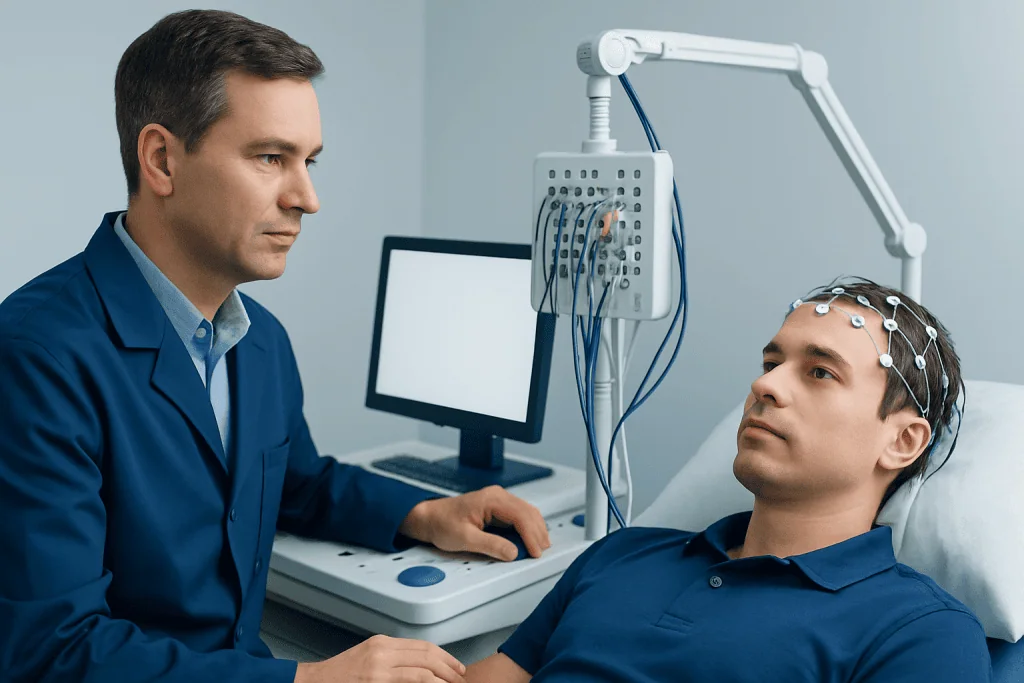
A neurologist is a physician who diagnoses and manages disorders affecting the nervous system. This includes common conditions such as headaches, migraines, stroke, epilepsy, multiple sclerosis, Parkinson disease, dementia, neuropathy, muscle disorders, and many causes of dizziness, weakness, numbness, or balance problems.
During an appointment, a neurologist usually begins with a detailed medical history and a neurological examination. This exam may assess strength, reflexes, sensation, coordination, vision, speech, memory, and walking pattern. Based on these findings, the neurologist decides which tests are most useful and whether treatment should begin right away.
Neurologists may order brain or spine imaging, blood tests, cerebrospinal fluid studies, or neurophysiology tests. They also guide long-term treatment, which can include medicines, lifestyle measures, rehabilitation, or referral to other specialists. For some patients, care may involve advanced services such as deep brain stimulation or stroke-focused interventions, depending on the diagnosis.
Importantly, neurology is not only about diagnosis. It is also about helping patients manage symptoms, reduce complications, and maintain quality of life. A neurologist often coordinates care across multiple disciplines when a condition affects movement, sleep, thinking, pain, or daily function.
What Clinical Neurophysiology Does

Clinical neurophysiology is centered on testing nervous system function. Rather than mainly prescribing treatment, the clinical neurophysiologist performs or interprets tests that record electrical signals from the brain, spinal cord, nerves, and muscles. These studies can reveal patterns that are not visible on a physical examination alone.
One of the best-known examples is an electroencephalogram, or EEG, which records brain wave activity. EEG is commonly used when a person has seizures, unexplained episodes of staring or loss of awareness, or when epilepsy is suspected. Other neurophysiology tests examine nerve and muscle function, which can help clarify whether symptoms such as tingling, weakness, cramps, or muscle twitching come from a nerve disorder, a muscle disorder, or both.
Clinical neurophysiology can be especially helpful when symptoms are difficult to localize. For example, numbness in the hand may come from a compressed nerve at the wrist, nerve root irritation in the neck, or a more widespread nerve disorder. Functional testing helps narrow the possibilities and can complement imaging findings.
In some centers, clinical neurophysiologists also contribute to sleep-related neurological testing, intraoperative monitoring during surgery, and specialized assessments for conditions involving the spinal cord or neuromuscular junction. Their work supports accurate diagnosis and helps the wider care team choose the most appropriate next step.
Common Tests in Clinical Neurophysiology
Several tests fall under the umbrella of clinical neurophysiology. Each one measures a different part of nervous system function, and the choice depends on the person’s symptoms and examination findings.
Common examples include:
- EEG: records electrical activity in the brain and helps evaluate seizures, epilepsy, altered awareness, and some sleep-related events.
- EMG: electromyography assesses the electrical activity of muscles and can help identify nerve or muscle disease.
- Nerve conduction studies: measure how quickly and effectively electrical signals travel through peripheral nerves.
- Evoked potentials: test how the brain responds to visual, auditory, or sensory stimulation.
- Sleep-related neurophysiology studies: may be used when there is concern for certain sleep disorders with neurological features.
- Intraoperative neurophysiological monitoring: helps monitor nervous system function during some surgeries.
These tests are usually used alongside a clinical assessment, not as standalone answers. A normal result does not always exclude disease, and an abnormal result must be interpreted in context. That is why communication between the testing specialist and the treating neurologist is important.
Patients are sometimes worried that these studies will be painful or unsafe. Most are well tolerated, and many are noninvasive. Some, such as nerve conduction studies and EMG, can be uncomfortable for a short time, but they are commonly performed and generally considered safe when carried out by trained professionals.
When a Patient Might See One or Both Specialists
A person may first see a neurologist because of symptoms such as headaches, fainting-like episodes, tremor, weakness, numbness, memory concerns, or poor balance. After the evaluation, the neurologist may recommend neurophysiology testing to gather more detailed functional information. In that case, the patient benefits from both specialties working together.
Sometimes the referral starts the other way around. A primary care doctor, orthopedic specialist, rehabilitation physician, or surgeon may request nerve conduction studies or EMG when symptoms suggest a compressed nerve or neuromuscular problem. If the findings point to a broader neurological condition, a neurologist may then become involved for diagnosis and treatment planning.
Examples of situations where both fields commonly overlap include:
- Suspected epilepsy or unexplained seizure-like events
- Peripheral neuropathy causing burning, tingling, or numbness
- Nerve compression syndromes such as wrist or elbow entrapment
- Muscle weakness where a muscle disease or nerve disease is being considered
- Possible motor neuron disorders
- Sleep disorders with neurological symptoms
Patients do not need to decide on their own which specialist is most appropriate. The referring doctor or neurology team usually guides this process. In many hospitals, these services are integrated, making the transition between consultation and testing straightforward.
How Diagnosis and Treatment Work Together
The difference between neurology and clinical neurophysiology becomes clearer when thinking about the full patient journey. Diagnosis often starts with symptoms and examination. Clinical neurophysiology can then supply objective measurements of how nerves, muscles, or brain circuits are functioning. The neurologist combines those results with imaging, blood tests, and the overall clinical picture.
For example, a person with hand numbness may have symptoms suggesting nerve compression. Nerve conduction studies can show whether the median nerve is affected at the wrist and how severe the problem is. This helps guide treatment, which may range from splinting and activity changes to rehabilitation or a procedure such as carpal tunnel release surgery when appropriate.
In another example, someone with blackout episodes may have an EEG to look for abnormal brain activity. If epilepsy is confirmed or strongly suspected, the neurologist develops a treatment plan and discusses safety, triggers, and follow-up. For carefully selected patients with difficult-to-control seizures, care may also involve specialized epilepsy surgery assessment in advanced centers.
This partnership matters because treatment decisions should not be based on a test alone. A result becomes meaningful only when interpreted in the context of symptoms, timing, examination findings, and the person’s overall health. That is why the two fields are best viewed as complementary rather than competing specialties.
Choosing the Right Specialist and What to Expect
If a person is unsure whether they need a neurologist or a clinical neurophysiology test, the most practical first step is usually a medical evaluation. A primary care doctor or neurologist can decide whether symptoms are likely to benefit from specialized testing. This helps avoid unnecessary procedures and ensures that the right test is selected for the right reason.
At a neurology visit, patients can expect questions about when symptoms began, how they have changed, what makes them better or worse, and whether there is a family history of neurological disease. A focused examination follows. If neurophysiology testing is recommended, the team usually explains the purpose of the test, how to prepare, and what the experience may feel like.
It is helpful for patients to bring a list of medications, previous test results, and a record of symptoms, especially if episodes come and go. For seizure-like events, sleep-related behaviors, or tremor, video recordings captured safely at home can sometimes be useful for the treating doctor. Questions are always appropriate, particularly about what the test can and cannot show.
In international centers, the evaluation may involve several specialists working together. Acibadem International’s multidisciplinary specialists and JCI-accredited hospitals diagnose and treat neurological conditions for international patients, with access to neurology consultation, neurophysiology testing, imaging, and rehabilitation when needed.
When to Seek Medical Advice
Symptoms involving the nervous system should not be ignored if they are new, persistent, or worsening. Medical advice is appropriate for repeated headaches, unexplained fainting or blackout episodes, ongoing numbness or tingling, tremor, muscle weakness, changes in balance, memory concerns, or episodes that may represent seizures.
Urgent care is especially important for sudden weakness on one side, trouble speaking, sudden vision loss, severe new confusion, a first seizure, or a sudden severe headache unlike usual headaches. These symptoms can signal a medical emergency and should be assessed immediately.
Even when symptoms are not urgent, early evaluation can be helpful. Timely neurological assessment and, when indicated, neurophysiology testing may allow a clearer diagnosis, more appropriate treatment, and better planning for recovery or long-term management.
For many patients, the key point is reassuring: neurology and clinical neurophysiology are partners in care. One focuses on diagnosing and treating nervous system disorders, while the other provides the functional testing that helps make those decisions more precise.
Frequently asked questions
Is clinical neurophysiology the same as neurology?
No. Neurology is the broader medical specialty that diagnoses and treats disorders of the nervous system, while clinical neurophysiology is a subspecialty focused on testing how the nervous system functions. The two fields often work closely together.
What does a clinical neurophysiologist do?
A clinical neurophysiologist performs or interprets tests such as EEG, EMG, nerve conduction studies, and evoked potentials. These tests help identify problems affecting the brain, nerves, spinal cord, muscles, or nerve-to-muscle communication.
Do I need a neurologist before having an EEG or EMG?
Not always, but many people are referred for these tests by a neurologist or another doctor. The best route depends on the symptom and local practice. A medical assessment helps determine which test, if any, is most appropriate.
Can neurophysiology tests diagnose a condition by themselves?
Usually not on their own. These tests provide important functional information, but results need to be interpreted alongside symptoms, examination findings, imaging, and other investigations. A normal or abnormal test result is only one part of the overall diagnosis.
Are EEG and EMG painful?
EEG is generally painless because it records brain activity through sensors placed on the scalp. EMG and nerve conduction studies can cause brief discomfort, but they are commonly performed and usually well tolerated.
Why would a neurologist order nerve conduction studies or EMG?
These tests are often used when there is numbness, tingling, weakness, muscle cramps, or suspected nerve compression. They can help show whether symptoms are coming from a peripheral nerve, a nerve root, the neuromuscular junction, or the muscle itself.
References
- American Academy of Neurology
- International Federation of Clinical Neurophysiology
- National Institute of Neurological Disorders and Stroke
- MedlinePlus
- National Health Service
This article is for general information only and is not a substitute for professional medical advice. Please consult a qualified doctor about your individual situation.
Clinical Neurophysiology in Turkey — costs, top hospitals & a free quote
JCI-accredited · board-certified surgeons · reply within 24h
Add us as a Preferred Source to see more of our trusted health content across Google Search, AI Overviews and Discover.

Neurology
Diagnosis and treatment of disorders of the brain, spinal cord, nerves and muscles.
51 specialists in this unitMore from the Health Library



Related Specialists

Dr. Funda Aybar Susur
Gynecology & Obstetrics
Dr. Rafiga Gasimova
Gynecology & Obstetrics
Dr. Emre Furkan Aydin
Emergency Service
Dt. Kübra Aycan Tavuz
Oral & Dental Health