CLL Chemotherapy: How It Works, Results and What to Expect

CLL does not always need immediate treatment; active monitoring can be appropriate for early, stable disease. Chemotherapy may be combined with immunotherapy, but targeted medicines are often preferred for many people with CLL.
Key Takeaways
- CLL does not always need immediate treatment; active monitoring can be appropriate for early, stable disease.
- Chemotherapy may be combined with immunotherapy, but targeted medicines are often preferred for many people with CLL.
- Treatment decisions are guided by symptoms, blood counts, genetic testing, prior treatment, and general health.
- Chemotherapy can lower blood cell counts and increase infection risk, so regular monitoring and supportive care are important.
- CLL is usually managed as a long-term condition, and outcomes vary widely between individuals.
CLL chemotherapy uses medicines that damage or stop the growth of leukemia cells. It is now used selectively, often in combination with targeted medicines or immunotherapy, because treatment is tailored to a person’s disease features, overall health, and treatment goals.
CLL chemotherapy: an overview
CLL chemotherapy is a treatment approach that uses anti-cancer medicines to reduce the number of chronic lymphocytic leukemia (CLL) cells in the blood, bone marrow, lymph nodes, and spleen. It may help control symptoms, improve blood counts, shrink enlarged lymph nodes, and bring the disease into remission. A remission means there is no detectable active disease or that disease levels have become very low; it does not always mean CLL has been permanently cured.
Not everyone diagnosed with CLL needs treatment right away. Many people have slowly changing disease without symptoms and are monitored through regular appointments, blood tests, and examinations. This approach, sometimes called active surveillance or watchful waiting, avoids treatment side effects until there is a clear medical reason to begin therapy.
In current CLL care, chemotherapy is no longer the standard first option for every patient. Targeted therapies and antibody-based treatments have changed treatment planning substantially. However, chemotherapy-containing regimens can still be considered in selected situations, particularly for fit patients with certain favorable disease characteristics. A hematologist-oncologist can explain whether chemotherapy has a role in an individual treatment plan.
How chemotherapy works in CLL
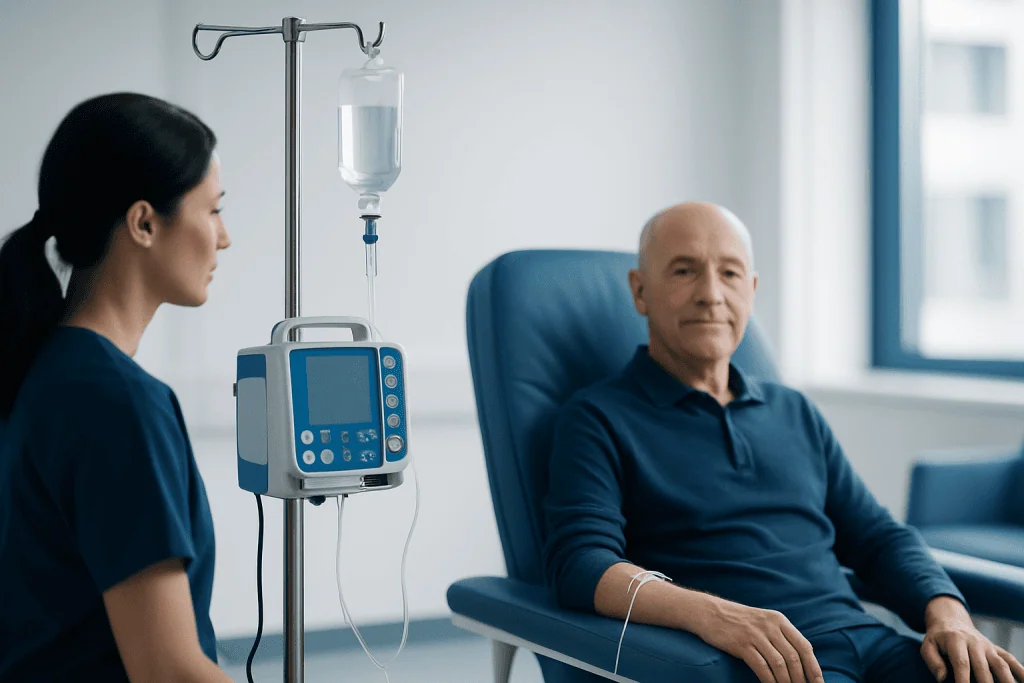
Chemotherapy medicines circulate through the bloodstream and interfere with the ability of rapidly dividing cells to grow and reproduce. In CLL, these medicines aim to reduce abnormal B lymphocytes, the white blood cells that accumulate in blood, marrow, lymph nodes, and other tissues. Different chemotherapy drugs act in different ways, and they are often given as combinations rather than alone.
Some CLL regimens combine chemotherapy with a monoclonal antibody, a type of immunotherapy that attaches to proteins on leukemia cells and helps the immune system recognize and remove them. This is known as chemoimmunotherapy. Examples historically used in appropriate patients include combinations based on fludarabine, cyclophosphamide, bendamustine, or chlorambucil, together with an antibody medicine.
Before choosing treatment, clinicians test the leukemia cells for features that affect response and safety. Important tests may include TP53 mutation testing and fluorescence in situ hybridization (FISH), which can identify changes involving chromosome 17p. People with TP53 disruption generally do not benefit as well from standard chemoimmunotherapy and are usually considered for other approaches.
Who may be a candidate for CLL chemotherapy?

The need for treatment is based on evidence that CLL is active or causing problems, not simply on the diagnosis or white blood cell count alone. Reasons to consider therapy can include worsening anemia or low platelet counts due to marrow involvement, large or painful lymph nodes or spleen, persistent disease-related fever, drenching night sweats, unintended weight loss, marked fatigue, or rapidly increasing lymphocyte counts.
Whether chemotherapy is suitable also depends on age, fitness, kidney and liver function, infection history, other medical conditions, and personal preferences. Some people may be better suited to oral targeted medicines, which work on specific pathways that help CLL cells survive. Others may receive antibody therapy or other strategies based on their disease biology and prior treatments.
A specialist will usually review blood tests, physical findings, imaging when needed, bone marrow findings in selected cases, and molecular or genetic results. The discussion should also include practical issues such as the expected treatment duration, whether medicines are infused or taken by mouth, possible effects on daily activities, and the monitoring plan.
What happens during CLL chemotherapy?
CLL chemotherapy is commonly delivered in planned cycles. A cycle includes treatment days followed by time for the body to recover, and the overall course may involve several cycles. The exact schedule depends on the medicines used. Some drugs are given through a vein at an infusion center, while others may be tablets. A central venous access device is sometimes used, but it is not necessary for every patient.
Before treatment begins, the care team usually performs blood tests and may screen for infections such as hepatitis B. Vaccination status, kidney function, medications, and infection risks are reviewed. People at risk of tumor lysis syndrome, a rapid release of substances from dying cancer cells that can affect the kidneys and heart, may need extra blood tests, preventive medicines, and hydration.
On infusion days, premedication may be given to reduce nausea or infusion reactions. Nurses monitor for symptoms during treatment and provide guidance on home medicines, food safety, hydration, and urgent symptoms to report. Blood counts are checked regularly, and treatment may be delayed or adjusted if side effects or low counts make this necessary.
The plan is individualized throughout treatment. If CLL does not respond as expected, returns after remission, or develops new genetic features, the team may recommend a different therapy rather than repeating the same regimen.
Benefits, risks, and recovery timeline
The main potential benefit of CLL chemotherapy is disease control. When treatment works, lymph nodes and spleen enlargement may decrease, blood counts can improve, and symptoms such as fatigue, pressure from enlarged organs, night sweats, or weight loss may ease. Responses can last for different lengths of time, depending on the regimen and the biology of the leukemia.
Side effects vary with the medicine and the individual. Common concerns include tiredness, nausea, appetite changes, mouth soreness, hair thinning or loss with some drugs, and changes in bowel habits. Chemotherapy can also suppress the bone marrow, causing low neutrophils, red blood cells, or platelets. This may raise the risk of infection, anemia-related breathlessness or fatigue, and bruising or bleeding.
Recovery between cycles often involves gradual improvement in energy and blood counts, although fatigue can persist for weeks or longer after the final treatment. People should keep scheduled blood tests, take prescribed preventive medicines, avoid close contact with people who are ill where possible, and ask their team before using supplements or new over-the-counter medicines.
- Contact the treatment team promptly for fever, chills, new cough, shortness of breath, or feeling suddenly unwell.
- Report unusual bruising, bleeding, severe diarrhea, persistent vomiting, painful mouth sores, or a new rash.
- Ask about vaccines, since live vaccines may not be appropriate during or after certain CLL treatments.
How do you know your CLL is progressing?
CLL progression is assessed through a combination of symptoms, physical examination, and repeat blood tests. A rising lymphocyte count can be one sign, but it does not automatically mean treatment is needed. Clinicians look for the overall pace of change and whether CLL is affecting blood production, organs, or quality of life.
Possible signs of clinically important progression include enlarging lymph nodes, a growing spleen that causes fullness or discomfort, worsening anemia, falling platelet counts, persistent fatigue that limits usual activities, recurrent infections, fever without infection, drenching night sweats, or unintentional weight loss. These symptoms can also have causes unrelated to CLL, so they should be evaluated rather than assumed to be disease progression.
Regular follow-up is the safest way to identify changes early. A person on active monitoring should tell their hematology team about new symptoms between appointments, especially if they are persistent or worsening.
How successful is treatment for CLL?
Treatment for CLL can be very effective at controlling the disease, relieving symptoms, and producing remissions. However, success is measured in several ways, including response depth, how long disease control lasts, side effects, daily functioning, and whether treatment matches the person’s health needs and preferences. CLL is often a long-term condition with periods of treatment and observation.
Outcomes differ considerably based on genetic and molecular features, stage and activity of disease, age and general health, and response to earlier therapy. Modern targeted medicines have expanded options for people whose CLL has higher-risk features or has returned after treatment. For this reason, updated genetic testing may be important before each new treatment decision.
A clinician can provide the most meaningful outlook after reviewing an individual’s test results. General survival figures cannot reliably predict what will happen for one person, and they may not reflect the newest treatment approaches.
What is the best chemo for CLL?
There is no single best chemotherapy for every person with CLL. The most appropriate treatment is determined by the leukemia’s genetic features, whether treatment has been used before, kidney function, fitness level, coexisting health conditions, and the person’s preferences. In many current treatment settings, a targeted therapy rather than chemotherapy is preferred.
Chemoimmunotherapy may still be discussed for selected younger or physically fit people with favorable risk markers, particularly when the treating team expects a meaningful, time-limited benefit. In contrast, people with TP53 mutation or deletion 17p are generally directed away from conventional chemotherapy because it is less likely to provide durable disease control.
It is helpful to ask the hematologist why a particular regimen is recommended, what alternatives exist, how long treatment is expected to last, and what monitoring will be required. A second specialist opinion can also be reasonable when treatment choices are complex.
What is the life expectancy for someone with stage 4 CLL?
Stage 4 CLL commonly refers to Rai stage IV, which means CLL is associated with a low platelet count. It is considered advanced-stage disease, but the outlook still varies greatly. Unlike many solid cancers, CLL stage alone does not fully determine prognosis, and some people respond well to treatment and live with the condition for many years.
Life expectancy is influenced by factors beyond stage, including genetic findings such as TP53 status and IGHV mutation status, response to treatment, overall health, infections, and access to appropriate follow-up care. Newer targeted and immune-based therapies have improved treatment options, including for many people with higher-risk disease.
Because prognosis is personal and changes with treatment response, the treating hematologist is best placed to discuss it. They can interpret stage alongside laboratory results, genetics, symptoms, and the latest available treatments in a supportive and realistic way.
When to seek medical care
A person with known CLL should contact their healthcare team promptly if they develop a fever, chills, persistent cough, shortness of breath, painful urination, or other signs of infection. Infections can become more serious when CLL itself or its treatment affects immune function. Urgent medical assessment is also important for significant bleeding, black stools, sudden severe weakness, chest pain, confusion, or rapidly worsening breathlessness.
New enlarged lymph nodes, abdominal fullness, ongoing night sweats, unexplained weight loss, or increasing fatigue should be reported at a routine or earlier review. These changes do not necessarily mean CLL is progressing, but they deserve assessment. People should not wait for their next scheduled appointment if they feel significantly unwell.
Acibadem International’s multidisciplinary specialists and JCI-accredited hospitals support diagnosis and individualized treatment planning for international patients with CLL. Care may include hematology assessment, laboratory and genetic testing, supportive care, and coordinated oncology services.
Frequently asked questions
Does every person with CLL need chemotherapy?
No. Many people with early or stable CLL do not need immediate treatment and are followed with regular check-ups. Treatment begins when there is evidence that the disease is causing symptoms, affecting blood counts, enlarging organs, or progressing in a clinically significant way.
Is chemotherapy still used for CLL?
Yes, but it is used more selectively than in the past. Targeted therapies and antibody-based treatments are commonly preferred for many patients, while chemotherapy-containing treatment may be appropriate in specific clinical situations.
Can CLL chemotherapy cure the disease?
Chemotherapy can produce remission and provide meaningful disease control, but CLL is usually considered a long-term condition rather than one that is routinely cured with standard chemotherapy. Treatment goals are individualized and may include controlling symptoms, restoring blood counts, and extending remission.
How long does CLL chemotherapy take?
The duration depends on the regimen, treatment response, and side effects. Chemotherapy-containing regimens are often given in cycles over several months, with recovery periods between treatments. The treating team can provide a personalized schedule.
Can chemotherapy make CLL worse?
Chemotherapy is intended to control CLL, but it can temporarily lower healthy blood cell counts and weaken immune defenses. This can increase infection and bleeding risks, which is why close blood-test monitoring and prompt reporting of symptoms are important.
What should a person ask before starting CLL treatment?
Useful questions include why treatment is needed now, what genetic test results mean, whether chemotherapy or targeted therapy is recommended, and what side effects are expected. It is also important to ask about infection prevention, monitoring visits, treatment duration, and what symptoms require urgent contact with the care team.
References
- National Cancer Institute
- American Cancer Society
- Leukemia & Lymphoma Society
- European Society for Medical Oncology
- National Comprehensive Cancer Network
This article is for general information only and is not a substitute for professional medical advice. Please consult a qualified doctor about your individual situation.
Chemotherapy in Turkey — costs, top hospitals & a free quote
JCI-accredited · board-certified surgeons · reply within 24h
Add us as a Preferred Source to see more of our trusted health content across Google Search, AI Overviews and Discover.

Medical Oncology Department
Medical treatment of cancer with chemotherapy, immunotherapy and targeted therapies under a multidisciplinary tumor board.
60 specialists in this unit