Club Foot: An Evidence-Based Guide for Patients
Club foot is present at birth and affects the position of the foot and ankle. It is usually diagnosed with a physical exam soon after delivery and may sometimes be suspected during pregnancy ultrasound.
Key Takeaways
- Club foot is present at birth and affects the position of the foot and ankle.
- It is usually diagnosed with a physical exam soon after delivery and may sometimes be suspected during pregnancy ultrasound.
- The Ponseti method, which uses serial casting followed by bracing, is the standard first-line treatment.
- Early treatment often leads to very good function, but follow-up is important because recurrence can happen.
- Parents should seek medical care promptly after birth so treatment can begin at the right time.
Club foot is a common congenital condition in which one or both feet are twisted inward and downward at birth. In most cases, early treatment with gentle stretching, casting, and bracing can correct the foot position and support healthy walking and development.
Overview: What club foot means
Club foot is a birth condition in which a baby’s foot points downward and turns inward more than usual. The medical term is congenital talipes equinovarus. It can affect one foot or both feet, and it develops before birth as the bones, muscles, tendons, and ligaments of the lower leg and foot form in a different position.
Although the appearance can be striking, club foot is treatable. In many children, the foot can be corrected without major surgery when treatment starts early. The main goals are to place the foot in a more normal position, help the child wear regular shoes, and support comfortable standing, walking, and activity as they grow.
Club foot is different from a foot that is simply flexible or temporarily turned inward because of the baby’s position in the womb. In club foot, the foot is typically stiffer and harder to move into a normal position by hand. A specialist can distinguish true club foot from other foot position differences in newborns.
Signs and symptoms
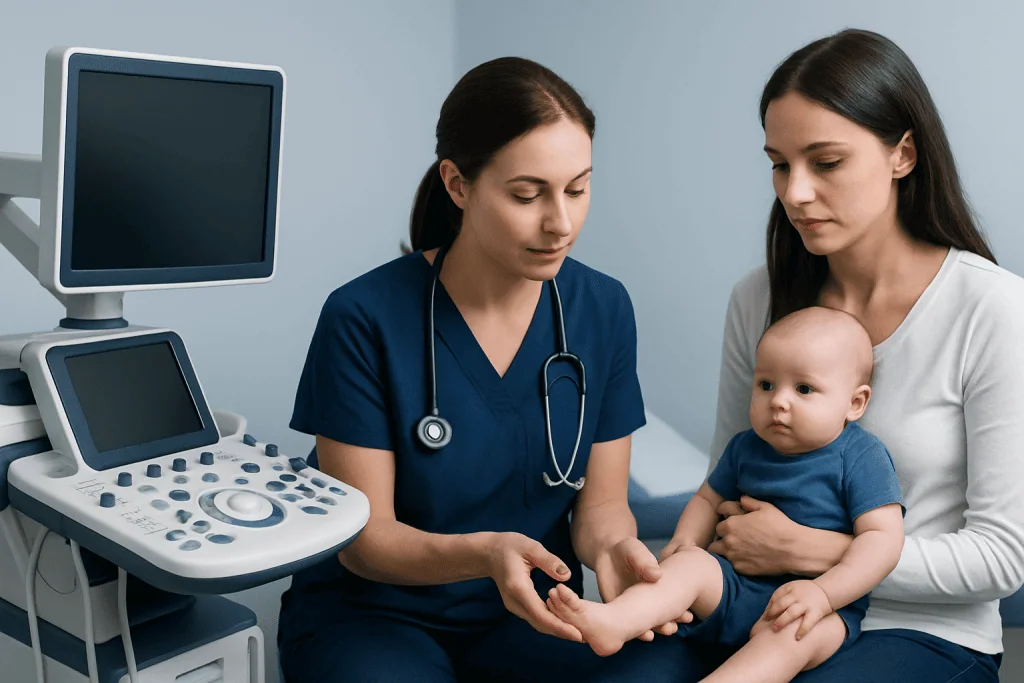
The main sign of club foot is the way the foot looks at birth. The front of the foot may turn inward, the heel may point down, and the sole may face partly upward or inward. The calf on the affected side may also be smaller, especially if only one foot is involved.
Club foot itself is not usually painful in a newborn. However, if it is not treated, the child may later have trouble standing or walking normally. Untreated club foot can make it difficult to wear standard shoes and may lead to pressure areas, limping, or pain with activity over time.
Common features doctors look for include:
- Inward turning of the front of the foot
- Downward pointing ankle and heel
- A high arch or tight Achilles tendon
- Reduced flexibility of the foot
- A smaller calf on the affected side
Some babies have isolated club foot, meaning it occurs on its own. Others may have club foot along with another condition affecting the nerves, muscles, spine, or overall development. This is one reason a careful medical assessment is important after diagnosis.
Causes and risk factors
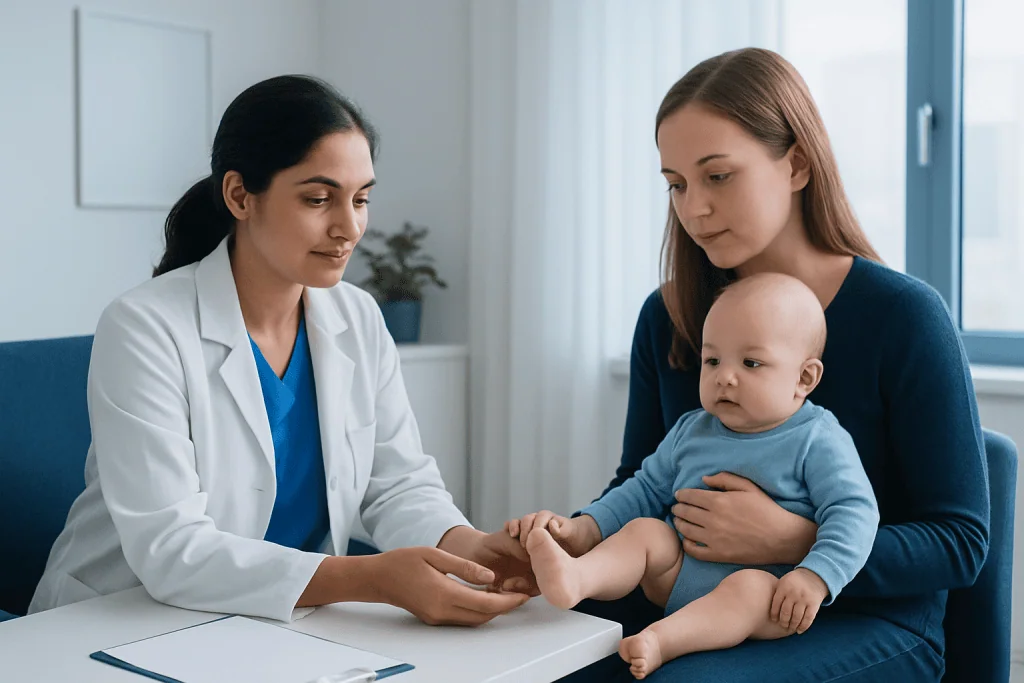
The exact cause of club foot is not always known. In many cases, it appears to result from a combination of genetic and environmental influences during fetal development. It is not usually caused by anything a parent did or did not do during pregnancy.
Club foot can run in families, which suggests a hereditary component. It is also seen more often in boys than girls. In some children, club foot occurs as part of a broader neuromuscular or syndromic condition rather than as an isolated finding.
Doctors may consider whether club foot is linked with another diagnosis if there are additional physical findings or developmental concerns. Related conditions can include certain nerve and muscle disorders or spinal conditions such as spina bifida. When club foot is associated with another medical problem, treatment may still be effective, but the care plan may need to be more individualized.
Risk factors do not reliably predict which baby will have club foot, and many affected babies have no known family history. Because of this, the focus is usually on early recognition and treatment rather than prevention during pregnancy.
How club foot is diagnosed
Club foot is often diagnosed soon after birth during a physical examination. The doctor assesses the position of the foot, how stiff it is, and whether it can be gently moved toward a more typical alignment. The overall leg shape, hip exam, and neurologic status are also important parts of the assessment.
Sometimes club foot is suspected before birth on a routine prenatal ultrasound. An ultrasound can suggest the diagnosis, but the full evaluation usually happens after delivery. Prenatal detection can still be helpful because it allows families to prepare for specialist follow-up soon after the baby is born.
X-rays are not always needed at the beginning, especially in very young infants whose bones are still developing. Imaging may be used in selected cases if the diagnosis is uncertain, if treatment response is unusual, or if another bone or joint issue is suspected. If doctors are concerned about an associated neurologic or structural condition, they may recommend further evaluation or MRI for a more complete assessment.
The diagnosis also includes deciding whether the club foot is idiopathic, meaning isolated and not linked to another disorder, or non-idiopathic, meaning associated with a broader medical condition. This distinction helps guide treatment expectations and follow-up.
Treatment options and what to expect
The standard first-line treatment for most babies with club foot is the Ponseti method. This approach uses a series of gentle foot manipulations and plaster casts, changed regularly over several weeks, to gradually move the foot into a corrected position. It is widely used because it is effective and avoids extensive surgery in many cases.
After the casting phase, many babies need a minor procedure called an Achilles tenotomy, in which the tight heel cord is released to improve ankle position. This is commonly done in infants and is usually followed by a final cast for a short period. Once correction is achieved, the child wears a brace to help keep the foot in the corrected position as they grow.
Bracing is a very important part of treatment. Even when the foot looks corrected, the tissues can tend to pull it back inward. A brace is usually worn full-time at first and then during sleep for a longer period, based on the specialist’s plan. Families who understand the purpose of bracing often find it easier to stay consistent and reduce the chance of recurrence.
Some children need further treatment if the foot is very stiff, returns after initial correction, or is associated with another condition. Depending on the child’s needs, care may involve pediatric orthopedic care, physical therapy and rehabilitation, or surgery in selected cases. In experienced centers, the care plan is tailored to both the foot itself and the child’s overall growth and mobility.
Daily care, follow-up, and long-term outlook
Parents and caregivers play a central role in club foot treatment, especially during the bracing phase. Keeping follow-up appointments, watching for pressure marks from casts or braces, and asking questions early can make treatment smoother. If a cast becomes wet, slips, or seems to cause swelling or skin irritation, the care team should be contacted promptly.
Most children treated early can walk, run, and play well. The affected foot and calf may remain slightly smaller than the other side, and some stiffness can persist, but function is often very good. Long-term follow-up helps the specialist check whether the correction is holding as the child grows.
Recurrence is one of the most important issues to watch for. A foot that begins turning inward again, reduced upward ankle movement, or problems fitting into shoes may suggest the need for reassessment. Early action can often correct a recurrence more easily than waiting.
For families seeking coordinated care, Acibadem International’s multidisciplinary specialists and JCI-accredited hospitals diagnose and treat club foot for international patients, including evaluation by pediatric orthopedic specialists when needed.
When to seek medical care
Medical care should be sought promptly if a newborn’s foot appears twisted inward and downward or seems difficult to move into a normal position. Early referral matters because treatment is usually most effective when started in the first weeks of life.
Parents should also contact a doctor if a child previously treated for club foot begins to show signs of recurrence. These signs can include the foot turning inward again, trouble placing the heel down, changes in walking pattern, or discomfort with shoes or activity.
Urgent advice is also appropriate if there are concerns during treatment, such as swollen toes, unusual fussiness, skin sores, fever, or a cast that slips or feels too tight. A qualified pediatrician or orthopedic specialist can decide whether the child needs an urgent review and can help guide the next steps safely.
Frequently asked questions
Is club foot curable?
Club foot is highly treatable, and many children achieve good foot function with early care. The foot may still be somewhat smaller or stiffer than usual, but most children can walk, run, and take part in normal activities. Ongoing follow-up is important because the condition can recur as a child grows.
Can club foot be seen before birth?
Yes, club foot is sometimes suspected on a prenatal ultrasound. However, ultrasound cannot always confirm how severe it is, so the full diagnosis is usually made after birth with a physical examination. Prenatal recognition mainly helps families plan early specialist follow-up.
Does club foot always need surgery?
No. Most babies are first treated with the Ponseti method, which uses casting and bracing rather than major surgery. A small procedure to release the tight Achilles tendon is common, but extensive surgery is not needed in every child.
Is club foot painful for babies?
Club foot is not usually painful in newborns. The main concern is the abnormal position and stiffness of the foot, which can affect walking and comfort later if left untreated. Treatment aims to correct the position before those problems develop.
What happens if club foot comes back?
Recurrence can happen, especially if bracing is difficult to maintain or the foot is particularly stiff. If the foot starts turning inward again, the specialist may recommend repeat casting, brace adjustments, or other treatments depending on the child's age and exam findings. Early reassessment usually gives the best chance of correcting a recurrence effectively.
Can a child with club foot play sports later in life?
Many children treated successfully for club foot go on to play sports and stay physically active. The exact outcome depends on severity, whether one or both feet are affected, and how well the correction is maintained over time. Regular follow-up helps support the best possible long-term function.
References
- American Academy of Orthopaedic Surgeons
- American Academy of Pediatrics
- National Institute of Arthritis and Musculoskeletal and Skin Diseases
- National Health Service
- MedlinePlus
This article is for general information only and is not a substitute for professional medical advice. Please consult a qualified doctor about your individual situation.
Explore treatments in Turkey — costs, top hospitals & a free quote
JCI-accredited · board-certified surgeons · reply within 24h
Add us as a Preferred Source to see more of our trusted health content across Google Search, AI Overviews and Discover.

More from the Health Library
Endomorph Body Type: An Evidence-Based Guide for Patients

Sore Chest When Swallowing: A Complete Medical Overview

Drinks High in Magnesium: What Patients Need to Know
Planters wart salicylic acid: Symptoms, Causes, and Treatment — Complete Patient Guide

Propylene Glycol — Explained by Medical Evidence, Not Myths