Colon Cancer Screening: Tests, Age, and Risk Factors
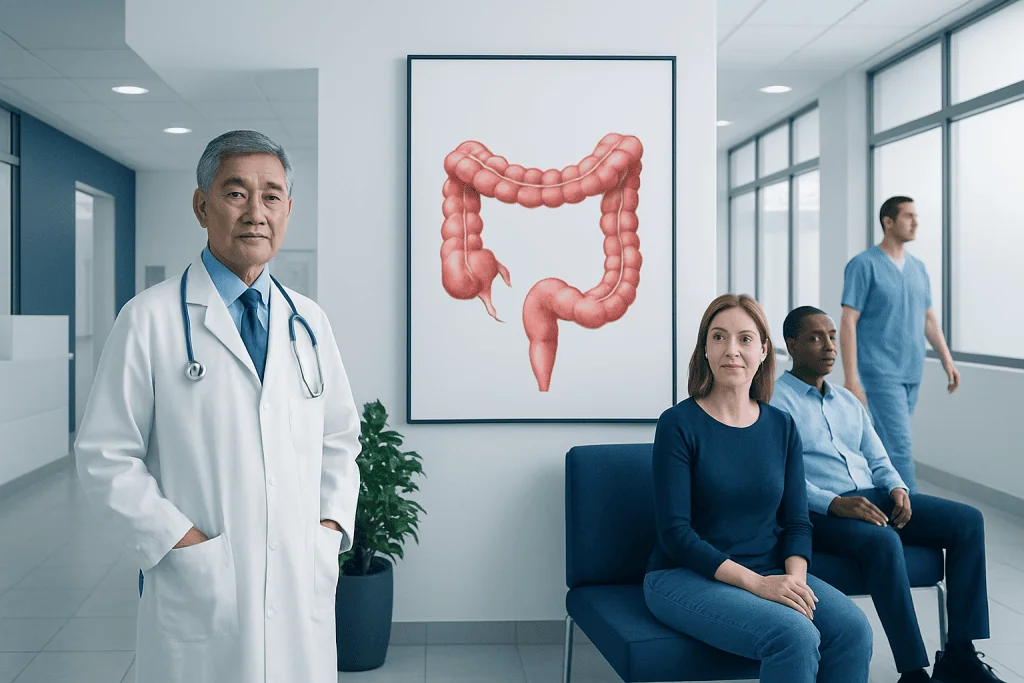
Colon cancer screening can prevent cancer by finding and removing precancerous polyps. Many adults at average risk are advised to begin screening at age 45, but timing depends on personal and family history.
Key Takeaways
- Colon cancer screening can prevent cancer by finding and removing precancerous polyps.
- Many adults at average risk are advised to begin screening at age 45, but timing depends on personal and family history.
- Screening options include stool-based tests, colonoscopy, and other imaging-based exams.
- People with higher risk may need earlier and more frequent screening.
- Any positive non-colonoscopy screening test usually needs follow-up colonoscopy.
Colon cancer screening is used to detect precancerous polyps and early-stage cancer, often before any symptoms appear. Knowing which tests are available, when to start, and how risk factors change recommendations can help people make informed decisions with their doctor.
Overview of Colon Cancer Screening
Colon cancer screening refers to tests used to look for cancer or precancerous growths in the colon and rectum before symptoms develop. It is one of the most effective ways to reduce the risk of colorectal cancer because some tests can find polyps that can be removed before they turn into cancer. Screening can also detect cancer at an earlier stage, when treatment is often simpler and more successful.
The colon and rectum are parts of the large intestine, so the term “colorectal cancer screening” is also commonly used. In everyday use, many people say colon cancer screening to describe the full range of screening for both the colon and rectum. A doctor may recommend one of several approved screening methods based on age, overall health, medical history, and personal preference.
Most people with early colorectal cancer have no warning signs. That is why screening matters even when a person feels completely well. Rather than waiting for symptoms such as rectal bleeding, a change in bowel habits, or unexplained weight loss, screening aims to find problems early or prevent them altogether.
Who Should Be Screened and At What Age
For adults at average risk, screening often begins at age 45. Average risk generally means there is no personal history of colorectal cancer, no history of certain types of colon polyps, no inflammatory bowel disease, and no strong family history suggesting inherited risk. Screening then continues at regular intervals, depending on the test used and the person’s health status.
Some people need to start earlier than age 45. This includes those with a first-degree relative, such as a parent, sibling, or child, who has had colorectal cancer or advanced polyps. Earlier screening may also be advised for people with inherited syndromes such as Lynch syndrome or familial adenomatous polyposis, or for those with long-standing ulcerative colitis or Crohn’s disease affecting the colon.
The upper age limit for screening is individualized. For older adults, doctors consider overall health, prior screening history, and life expectancy. A healthy person who has never been screened may still benefit from screening later in life, while someone with serious medical conditions may not benefit from routine testing in the same way. Decisions are best made together with a qualified doctor.
Screening Tests for Colon Cancer
There is no single best test for everyone. Screening options fall into two main groups: stool-based tests and visual exams of the colon. Stool-based tests look for hidden blood or abnormal DNA markers in a stool sample. These tests are noninvasive and can be done at home, but they need to be repeated more often and a positive result usually means a colonoscopy is needed.
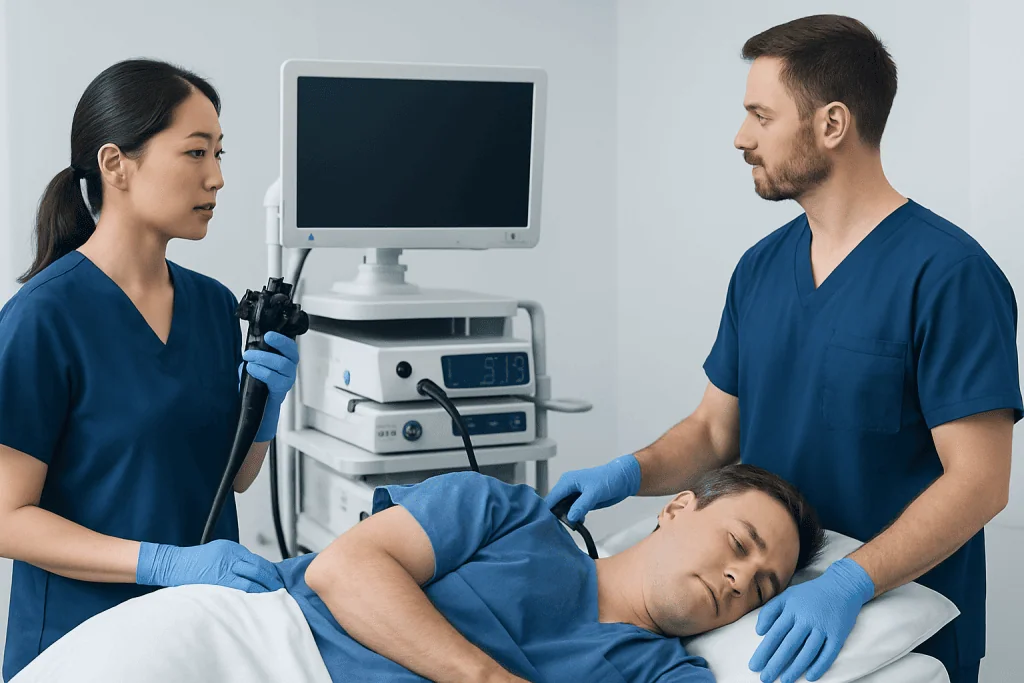
Colonoscopy is the most complete screening test because it allows a doctor to examine the entire colon using a flexible camera. If polyps are found, they can often be removed during the same procedure. This makes colonoscopy both a screening and a preventive tool. It usually requires bowel preparation beforehand and sedation on the day of the test.
Other visual tests may include CT colonography, sometimes called virtual colonoscopy, and flexible sigmoidoscopy. CT colonography uses imaging to look for larger polyps or cancers, while sigmoidoscopy examines only the lower part of the colon. These options may be suitable in certain situations, but if they show an abnormality, follow-up colonoscopy is generally recommended.
- Stool tests: fecal immunochemical test, stool DNA test, and other approved at-home options
- Visual tests: colonoscopy, CT colonography, and flexible sigmoidoscopy
- Follow-up: any abnormal result usually needs medical review and often colonoscopy
Symptoms and Risk Factors That Matter
Screening is intended for people without symptoms, but understanding warning signs is still important. Symptoms that deserve medical attention include blood in the stool, persistent changes in bowel habits, ongoing abdominal pain, unexplained iron deficiency anemia, fatigue, or unintended weight loss. These signs do not always mean cancer, but they should be evaluated promptly rather than treated as routine screening issues.
Risk factors for colorectal cancer include increasing age, a personal history of polyps, a family history of colorectal cancer, and inherited genetic syndromes. Long-standing inflammatory bowel disease, especially ulcerative colitis and Crohn’s colitis, can also raise risk. Some lifestyle factors are linked with higher risk as well, including smoking, heavy alcohol use, physical inactivity, obesity, and diets high in processed or red meat.
Having a risk factor does not mean a person will develop cancer, and some people who develop colorectal cancer have no known risk factors at all. Still, risk factors help doctors decide when screening should start and how often it should be repeated. If there is concern about symptoms or diagnosis rather than routine prevention, a doctor may also evaluate for related conditions such as colon cancer or rectal cancer.
How Doctors Assess Risk and Make a Diagnosis
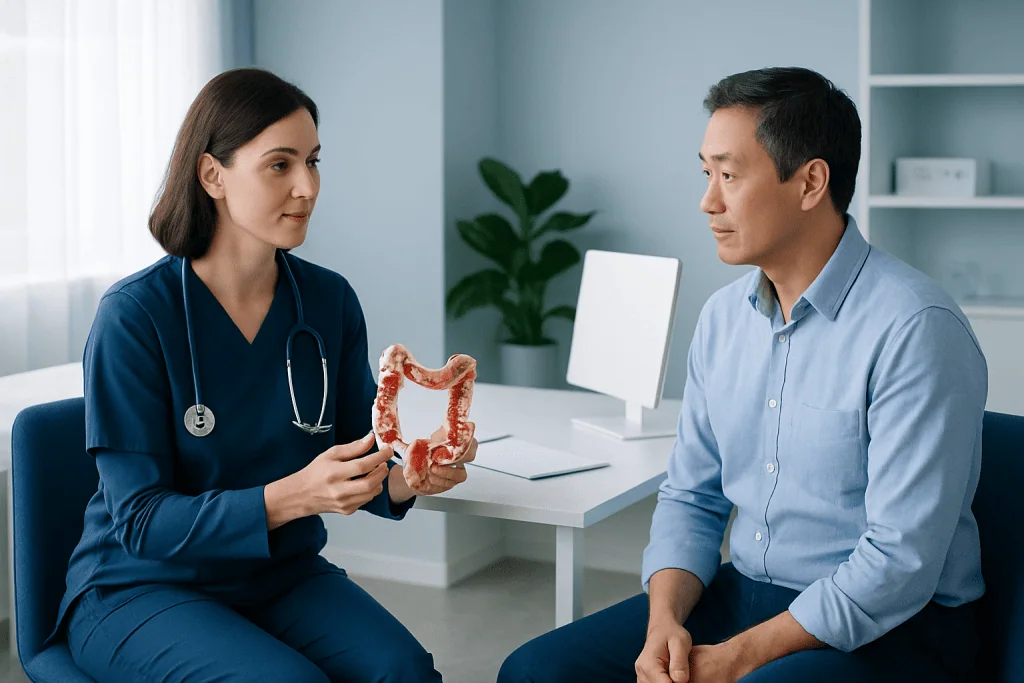
Before recommending a screening plan, a doctor will usually ask about personal medical history, family history, prior colon polyps, bowel disease, and any current symptoms. This helps separate average-risk screening from higher-risk evaluation. In many cases, a person who thought they needed only routine screening may actually need earlier or more frequent testing because of a family pattern or previous findings.
If a screening test is abnormal, the next step is often a diagnostic colonoscopy. During this procedure, suspicious tissue can be sampled with a biopsy, and some polyps can be removed. A pathologist then studies the tissue under a microscope to determine whether it is benign, precancerous, or cancerous. This is the key step in confirming a diagnosis.
If cancer is found, additional tests may be needed to understand how far it has spread. These can include blood tests, imaging, and specialist evaluation. Depending on the findings, care may involve biopsy confirmation, PET-CT imaging in selected cases, and referral to a team experienced in gastrointestinal cancers.
Treatment and Follow-Up After Screening Findings
Not every abnormal screening result means cancer. Many findings are noncancerous polyps, and removing them can prevent future cancer from developing. Follow-up plans depend on the number, size, and type of polyps found, as well as the quality of bowel preparation and whether the colon was fully examined. A doctor will recommend when the next colonoscopy or other surveillance test should be scheduled.
If colorectal cancer is diagnosed, treatment depends on the stage, exact location, and the patient’s overall health. Common approaches may include surgery, chemotherapy, radiation therapy for some rectal cancers, targeted therapy, or a combination of these. People may also be evaluated for inherited risk if their age, family history, or tumor features suggest a genetic cause.
Care is often best planned by a multidisciplinary team that may include gastroenterologists, colorectal surgeons, medical oncologists, radiation oncologists, radiologists, and pathologists. For international patients, Acibadem International’s multidisciplinary specialists in JCI-accredited hospitals diagnose and treat colorectal conditions with coordinated care. In selected cases, treatment may include colon cancer treatment or a tailored plan for bowel cancer.
Prevention, Self-Care, and When to See a Doctor
Screening is only one part of prevention. Everyday habits may also help lower colorectal cancer risk. A balanced diet rich in vegetables, fruits, whole grains, and fiber, along with regular physical activity, can support bowel health. Avoiding smoking, limiting alcohol, and maintaining a healthy weight are also sensible preventive steps.
People can make screening easier by discussing options early and choosing a test they are willing to complete on time. For home stool tests, careful sample collection and returning the kit promptly are important. For colonoscopy, good bowel preparation matters because it helps doctors see the lining of the colon clearly and reduces the chance that polyps will be missed.
A doctor should be consulted if there are symptoms such as rectal bleeding, ongoing changes in bowel habits, unexplained abdominal discomfort, or iron deficiency anemia. Medical advice is also important for anyone with a family history of colorectal cancer or polyps, or with a personal history of inflammatory bowel disease. Early evaluation can clarify whether routine screening is enough or whether more detailed testing is needed.
Frequently asked questions
At what age should colon cancer screening start?
Many adults at average risk are advised to start colon cancer screening at age 45. Some people need to begin earlier because of family history, inherited syndromes, inflammatory bowel disease, or a personal history of certain polyps. A doctor can help decide the right starting age.
What is the best test for colon cancer screening?
There is no single best test for everyone. Colonoscopy is very comprehensive because it can both find and remove polyps, but stool-based tests are also effective when done on schedule. The best test is often the one that matches the person’s risk level, preferences, and ability to complete follow-up if needed.
Can colon cancer screening prevent cancer?
Yes, some screening methods can help prevent cancer by finding and removing precancerous polyps before they become malignant. Screening can also detect cancer at an earlier stage, when treatment may be more manageable. This is one reason regular screening is so valuable.
Do people need screening if they have no symptoms?
Yes. Screening is designed for people who feel well and have no symptoms, because early colorectal cancer often causes no warning signs. Waiting for symptoms may mean a problem is found later than it could have been.
What happens if a stool test is positive?
A positive stool test does not automatically mean cancer is present. It means more evaluation is needed, and the next step is usually a colonoscopy to look directly at the colon and identify the cause of the abnormal result. Follow-up should not be delayed.
How often should colon cancer screening be repeated?
The interval depends on the type of screening test and the individual’s risk level. Stool-based tests are generally repeated more often than colonoscopy, while people with polyps or higher risk may need closer follow-up. A doctor will recommend a schedule based on current guidelines and personal history.
References
- World Health Organization
- American Cancer Society
- U.S. Preventive Services Task Force
- National Cancer Institute
- Centers for Disease Control and Prevention
This article is for general information only and is not a substitute for professional medical advice. Please consult a qualified doctor about your individual situation.
Colon Cancer in Turkey — costs, top hospitals & a free quote
JCI-accredited · board-certified surgeons · reply within 24h
Add us as a Preferred Source to see more of our trusted health content across Google Search, AI Overviews and Discover.

Medical Oncology Department
Medical treatment of cancer with chemotherapy, immunotherapy and targeted therapies under a multidisciplinary tumor board.
60 specialists in this unit