

Colorectal Cancer: Screening Tests, Colonoscopy, and Treatment Choices

Colorectal cancer can develop from polyps in the colon or rectum, and screening can often find these changes before symptoms appear. Colonoscopy is both a diagnostic test and a treatment tool because doctors can remove many polyps during the procedure.
Key Takeaways
- Colorectal cancer can develop from polyps in the colon or rectum, and screening can often find these changes before symptoms appear.
- Colonoscopy is both a diagnostic test and a treatment tool because doctors can remove many polyps during the procedure.
- Symptoms such as rectal bleeding, persistent bowel changes, unexplained weight loss, or ongoing abdominal discomfort should be discussed with a doctor.
- Treatment depends on the cancer stage, location, genetic features, and the patient’s overall health and preferences.
- Surgery, chemotherapy, radiation therapy, targeted therapy, and immunotherapy may be used alone or in combination.
- Healthy lifestyle choices and regular follow-up can reduce risk and support recovery, but they do not replace recommended screening.
Colorectal cancer is a cancer of the colon or rectum that is often more treatable when found early through screening. Understanding screening tests, colonoscopy, diagnosis, and treatment choices can help patients make informed decisions with their medical team.
Overview
Colorectal cancer is a cancer that starts in the colon or rectum, which are parts of the large intestine. The colon absorbs water and nutrients from digested food, while the rectum stores stool before it leaves the body. Because these organs are closely connected, cancers of the colon and rectum are often discussed together, although treatment can differ depending on the exact location.
Many colorectal cancers begin as polyps, which are small growths on the inner lining of the colon or rectum. Most polyps are not cancer, but some types can slowly change over time and become cancerous. This slow development is one reason screening is so valuable: it can detect polyps before they turn into cancer or find cancer at an earlier stage when treatment is often more effective.
Colorectal cancer can affect people with no symptoms, no family history, and no obvious risk factors. For this reason, screening recommendations are based on age and personal risk. People with a family history, inflammatory bowel disease, certain inherited syndromes, or previous polyps may need screening earlier or more often than average-risk adults.
Symptoms
Early colorectal cancer may not cause any symptoms. When symptoms do occur, they can be similar to common digestive problems such as hemorrhoids, irritable bowel syndrome, or infections. However, persistent or unexplained changes should always be assessed by a qualified doctor, especially if they are new or worsening.
Possible symptoms include blood in or on the stool, bleeding from the rectum, a change in bowel habits, constipation or diarrhea that does not go away, a feeling that the bowel does not empty completely, narrower stools than usual, abdominal pain or cramping, bloating, fatigue, or unexplained weight loss. Some people develop iron-deficiency anemia because of slow blood loss, which may cause tiredness, weakness, dizziness, or shortness of breath with activity.
The symptoms may vary depending on whether the cancer is in the right side of the colon, left side of the colon, or rectum. Right-sided colon cancers may be associated more often with anemia and fatigue, while left-sided or rectal cancers may be more likely to cause visible bleeding or changes in stool pattern. These patterns are not strict, so medical evaluation is important for any concerning symptom.
Causes and Risk Factors
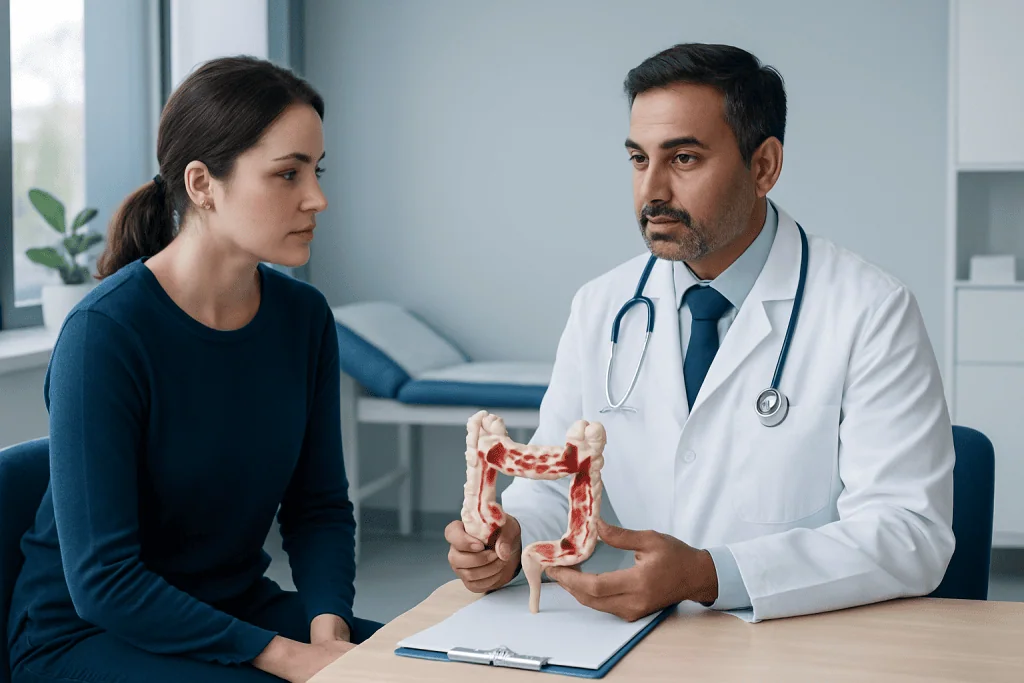
Colorectal cancer develops when cells in the lining of the colon or rectum acquire changes in their DNA that allow them to grow in an uncontrolled way. These changes may happen gradually over many years. Some are related to age and random cell changes, while others are influenced by inherited genes, medical conditions, or lifestyle factors.
Risk factors can include increasing age, a personal history of colorectal polyps or colorectal cancer, a family history of colorectal cancer, and inherited conditions such as Lynch syndrome or familial adenomatous polyposis. Long-standing inflammatory bowel diseases, including ulcerative colitis and Crohn’s colitis, can also increase risk and may require a personalized surveillance plan.
Lifestyle and health factors can also play a role. These may include a diet high in processed meats, low physical activity, excess body weight, smoking, and heavy alcohol use. Type 2 diabetes and certain metabolic conditions may also be associated with higher risk. Having one or more risk factors does not mean a person will develop colorectal cancer, and having no risk factors does not eliminate the need for screening.
- Average-risk adults should follow screening guidance recommended in their country or by their doctor.
- People with a strong family history or inherited syndrome should ask about genetic counseling and earlier screening.
- Patients with inflammatory bowel disease should discuss colon surveillance with a gastroenterologist.
Screening Tests and Colonoscopy
Screening is used to look for colorectal cancer or precancerous polyps before symptoms develop. The best test depends on a person’s risk level, health status, preferences, and access to testing. A doctor can help explain the benefits and limits of each option and decide how often testing should be repeated.
Stool-based tests look for hidden blood or abnormal DNA markers in a stool sample collected at home. These tests are noninvasive and do not require sedation, but they must be repeated at recommended intervals. If a stool test result is abnormal, a colonoscopy is usually needed to find the cause and remove polyps if present.
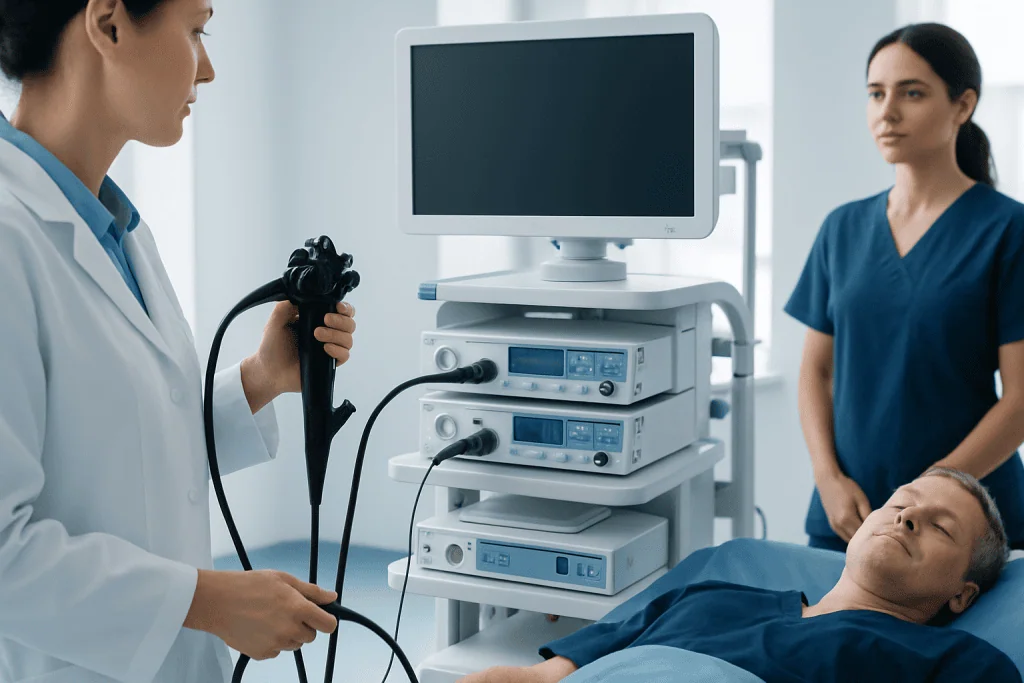
Colonoscopy allows the doctor to examine the entire colon and rectum using a flexible tube with a camera. Before the procedure, the bowel must be cleaned with a preparation solution so the lining can be seen clearly. During colonoscopy, many polyps can be removed, and tissue samples can be taken for laboratory analysis. Sedation or anesthesia is commonly used so the patient is comfortable.
Other screening options may include flexible sigmoidoscopy, which examines the rectum and lower colon, or CT colonography, sometimes called virtual colonoscopy. Each method has advantages and limitations. Colonoscopy is often considered a central test because it can both detect and remove polyps, but the right choice should be individualized.
Diagnosis and Staging
If a suspicious area is found during colonoscopy, a biopsy is taken and examined by a pathologist. This confirms whether cancer cells are present and helps identify the cancer type. Most colorectal cancers are adenocarcinomas, meaning they start in gland-forming cells of the colon or rectal lining.
After diagnosis, doctors determine the stage, which describes how far the cancer has grown or spread. Staging may include physical examination, blood tests, imaging such as CT, MRI, or PET-CT when appropriate, and evaluation of nearby lymph nodes. For rectal cancer, pelvic MRI and endorectal ultrasound may be used to understand how deeply the tumor has grown and whether nearby structures are involved.
Blood tests may include a tumor marker called carcinoembryonic antigen, or CEA, which can help monitor some patients over time. It is not used alone to diagnose colorectal cancer because it can be normal in some cancers and elevated for other reasons. Many tumors are also tested for molecular features, such as mismatch repair deficiency or microsatellite instability, because these results may guide immunotherapy decisions and indicate whether genetic counseling is needed.
Treatment Options
Treatment for colorectal cancer is personalized. The plan depends on whether the cancer is in the colon or rectum, its stage, molecular features, the patient’s general health, and the goals of care. A multidisciplinary team may include gastroenterologists, colorectal surgeons, medical oncologists, radiation oncologists, radiologists, pathologists, oncology nurses, dietitians, and rehabilitation specialists.
Surgery is the main treatment for many early and localized colon cancers. The surgeon removes the cancerous section of bowel along with nearby lymph nodes, then reconnects the bowel when possible. Some very early cancers or advanced polyps may be removed during colonoscopy or with local surgical techniques, depending on depth and pathology findings.
Rectal cancer treatment often requires careful planning because the rectum is located in the pelvis near important nerves, muscles, and organs. Treatment may include radiation therapy, chemotherapy, or both before surgery to shrink the tumor and improve the chance of preserving function. In selected cases with specific tumor features and an excellent response to treatment, close observation may be discussed, but this approach requires strict follow-up and specialist expertise.
Chemotherapy may be recommended after surgery to lower the risk of recurrence, or before surgery in some cases. For advanced or metastatic colorectal cancer, treatment may include chemotherapy, targeted therapy, immunotherapy for certain molecular profiles, surgery or ablation for selected metastases, and supportive care to maintain comfort and quality of life. Patients should ask their doctor about the purpose of each treatment, expected benefits, possible side effects, and how treatment will be monitored.
Prevention, Self-care, and Follow-up
Not all colorectal cancer can be prevented, but screening can reduce risk by finding and removing precancerous polyps. People should follow the screening schedule recommended for their age and risk group, even if they feel well. Those who have had polyps or colorectal cancer usually need a tailored follow-up schedule.
Healthy daily habits may help lower risk and support overall wellbeing. These include eating a balanced diet rich in vegetables, fruits, legumes, and whole grains; limiting processed meats; staying physically active; maintaining a healthy weight; avoiding tobacco; and limiting alcohol. Patients who are undergoing treatment should discuss diet and activity with their care team because needs may change during chemotherapy, radiation, or recovery after surgery.
After treatment, follow-up is important to check for recurrence, manage side effects, and support bowel function, nutrition, emotional wellbeing, and return to daily life. Follow-up may include clinic visits, colonoscopy, imaging, blood tests, and symptom review. The schedule depends on the original cancer stage, treatments received, and individual health factors.
When to See a Doctor
A person should seek medical advice if they notice rectal bleeding, blood in the stool, unexplained anemia, persistent abdominal pain, a lasting change in bowel habits, unintended weight loss, or ongoing fatigue. These symptoms do not always mean cancer, but they should not be ignored. A timely evaluation can identify the cause and guide appropriate treatment.
People should also speak with a doctor about screening if they are approaching the recommended starting age in their country, have never been screened, or are unsure when their next test is due. Anyone with a parent, sibling, or child who had colorectal cancer or advanced polyps should ask whether earlier screening is needed. A family history of multiple cancers or cancer at a young age may warrant genetic counseling.
Patients diagnosed with colorectal cancer may benefit from a multidisciplinary review of treatment options. Acibadem International’s JCI-accredited hospitals and multidisciplinary specialists diagnose and treat colorectal cancer for international patients, including evaluation, surgery, oncology care, and follow-up planning. Individual recommendations should always be based on a full medical assessment.
Frequently asked questions
At what age should colorectal cancer screening begin?
Screening age depends on national guidelines and individual risk. Many average-risk adults are advised to begin screening in midlife, while people with a family history, inherited syndrome, or inflammatory bowel disease may need earlier or more frequent testing. A doctor can recommend the most appropriate schedule.
Is colonoscopy painful?
Most patients receive sedation or anesthesia during colonoscopy, so discomfort is usually minimal during the procedure. Some bloating or gas may occur afterward and typically improves quickly. The bowel preparation is often the part patients find most inconvenient, but it is important for a clear and accurate exam.
If a stool test is normal, is colonoscopy still needed?
For average-risk people, a normal stool test may be enough until the next recommended screening interval. However, colonoscopy may still be needed if symptoms are present, if the person is at higher risk, or if a previous test was abnormal. Screening plans should be individualized with a healthcare professional.
Can colorectal cancer be cured?
Many colorectal cancers can be treated successfully, especially when found early. Outcomes depend on the stage, tumor biology, treatment response, and overall health. Even when cancer is advanced, modern treatments can help control disease, relieve symptoms, and support quality of life.
Will colorectal cancer surgery require a permanent stoma?
Not everyone needs a stoma, and many stomas are temporary. The need depends on the tumor’s location, the type of surgery, healing considerations, and whether the anal sphincter can be safely preserved. A colorectal surgeon can explain the likely options before surgery.
What is the difference between colon cancer and rectal cancer?
Colon cancer starts in the colon, while rectal cancer starts in the rectum, the final section of the large intestine. They are related diseases, but rectal cancer often needs additional imaging and may be treated with radiation and chemotherapy before surgery. The exact location influences the treatment plan.
References
- World Health Organization
- American Cancer Society
- National Cancer Institute
- European Society for Medical Oncology
- U.S. Preventive Services Task Force
This article is for general information only and is not a substitute for professional medical advice. Please consult a qualified doctor about your individual situation.
Persistent digestive symptoms? Get evaluated in Turkey
JCI-accredited · board-certified surgeons · reply within 24h
Add us as a Preferred Source to see more of our trusted health content across Google Search, AI Overviews and Discover.

Medical Oncology Department
Medical treatment of cancer with chemotherapy, immunotherapy and targeted therapies under a multidisciplinary tumor board.
60 specialists in this unitMore from the Health Library



Related Specialists

Assoc. Prof. Dr. Muharrem Koçyiğit
Anesthesiology
Prof. Dr. Gamze Uğurluer Sümer
Radiation Oncology
Gizem Adlı
Physical Medicine & Rehabilitation
Prof. Dr. Uğur Işık
Pediatric Neurology