Colovesical Fistula — Explained by Medical Evidence, Not Myths
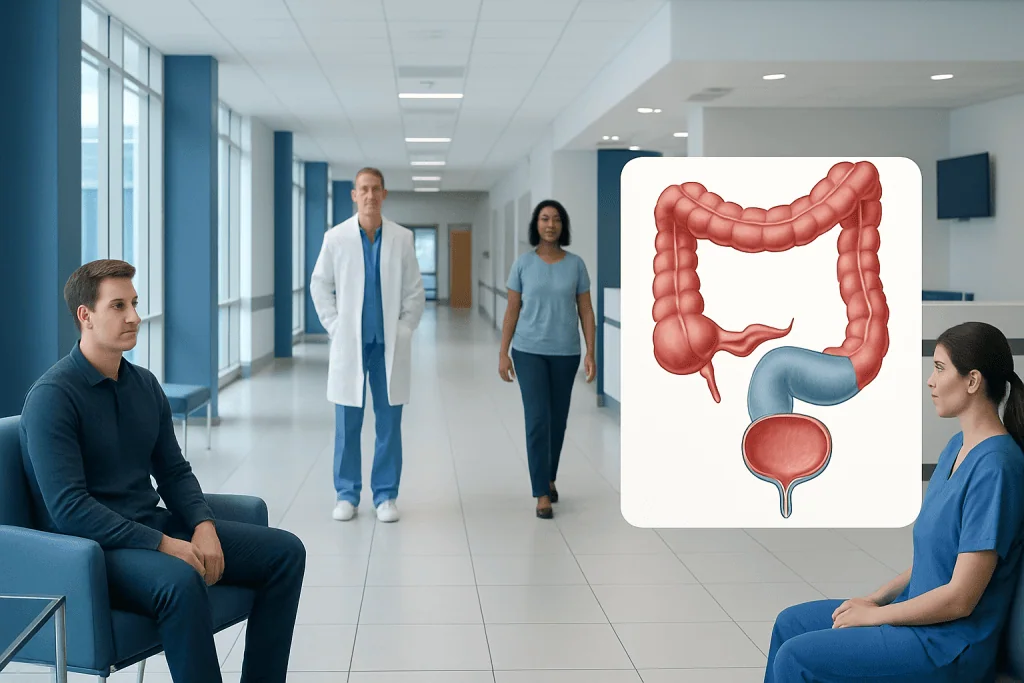
A colovesical fistula connects the colon and bladder, allowing bowel contents or gas to enter the urinary tract. Common clues include recurrent urinary tract infections, pneumaturia (air in urine), fecaluria, and urinary urgency or burning.
Key Takeaways
- A colovesical fistula connects the colon and bladder, allowing bowel contents or gas to enter the urinary tract.
- Common clues include recurrent urinary tract infections, pneumaturia (air in urine), fecaluria, and urinary urgency or burning.
- Diverticulitis is the most common cause, but Crohn’s disease, cancer, prior surgery, radiation, or trauma can also lead to it.
- Diagnosis usually combines history, urine testing, CT imaging, and sometimes cystoscopy or colonoscopy.
- Treatment depends on the cause and the person’s overall health, but many patients ultimately need surgery to close the fistula and treat the diseased bowel segment.
- Early medical evaluation helps prevent ongoing infection and guides safe, timely care.
A colovesical fistula is an abnormal passage between the colon and the bladder. It most often develops as a complication of diverticular disease and typically causes repeated urinary infections, air in the urine, and urinary symptoms that do not fully resolve until the fistula is treated.
Overview: what a colovesical fistula is
A colovesical fistula is an abnormal tunnel between the colon and the bladder. In simple terms, a section of bowel becomes attached to the bladder wall and a small passage forms, allowing gas, bacteria, and sometimes stool particles to enter the urinary tract. This is why the condition often presents with unusual urinary symptoms rather than bowel symptoms alone.
Medical evidence shows that this is usually not a condition that heals on its own when a persistent structural connection has formed. The symptoms may come and go, especially if antibiotics temporarily reduce infection, but the fistula itself often remains until the underlying cause is addressed. For many people, the most important step is recognizing the pattern: urinary infections that keep returning, air in the urine, or urine with an unusual odor or cloudiness.
Although the name may sound alarming, a colovesical fistula is a recognized and treatable medical problem. Care is guided by the cause, the severity of symptoms, the presence of infection, and the patient’s general health. Specialists in gastroenterology, colorectal surgery, and urology may all be involved because the condition sits at the overlap of digestive and urinary health.
Symptoms and how the condition may feel
The symptoms of a colovesical fistula can be distinctive. Many patients develop repeated urinary tract infections that improve with treatment and then return. Some notice pneumaturia, which means passing air during urination, or fecaluria, which refers to stool-like material in the urine. These findings are highly suggestive and often prompt further investigation.
Other symptoms may be more general and can overlap with common bladder infections. These include burning with urination, urinary urgency, frequent urination, lower abdominal discomfort, cloudy or foul-smelling urine, and pelvic pressure. Some people also have bowel-related symptoms such as abdominal pain, a history of diverticulitis, or changes in bowel habits.
Symptoms vary depending on the size of the fistula, whether active inflammation is present, and the underlying cause. A person with a fistula related to diverticulitis may remember prior episodes of left lower abdominal pain or fever. Others may first seek care from a urologist because the urinary symptoms are the most disruptive part of daily life.
- Recurrent urinary tract infections
- Air bubbles or gas during urination
- Cloudy, dark, or strong-smelling urine
- Burning or discomfort when passing urine
- Urgency or increased urinary frequency
- Lower abdominal or pelvic pain
- Rarely, blood in the urine or fever
Causes and risk factors
The most common cause of a colovesical fistula is diverticular disease, especially when diverticulitis leads to repeated inflammation or a small abscess near the bladder. Over time, chronic inflammation can cause the colon to adhere to the bladder and eventually form a passage between them. This explains why many cases are found in adults with a history of recurrent or complicated diverticulitis.
Other causes are less common but important. They include inflammatory bowel disease such as Crohn’s disease, colorectal or bladder cancer, prior pelvic surgery, radiation therapy, traumatic injury, or severe infections. In each situation, the mechanism is similar: inflammation, tissue damage, or tumor growth weakens the normal barrier between nearby organs.
Risk factors depend on the underlying disease rather than the fistula itself. A history of repeated diverticulitis attacks, complicated inflammatory bowel disease, pelvic radiation, prior operations in the lower abdomen, and longstanding inflammatory conditions may increase risk. Men are diagnosed more often than women, partly because the uterus usually separates the colon and bladder in many women, though fistulas can still occur after hysterectomy or other pelvic changes.
How doctors diagnose a colovesical fistula
Diagnosis begins with a careful history and physical examination. Doctors often suspect a colovesical fistula when a patient reports air in the urine, recurrent urinary infections with mixed bacteria, or persistent urinary symptoms that do not match a typical uncomplicated infection. A urine test and urine culture can help identify infection, but these tests alone do not show where the connection is located.
Imaging is central to diagnosis. A CT scan of the abdomen and pelvis is commonly used because it can show inflammation, air in the bladder, thickening of nearby bowel or bladder walls, and signs of the fistula or its underlying cause. In some cases, contrast studies may help define the tract more clearly. Cystoscopy allows a urologist to look inside the bladder, while colonoscopy may be used to evaluate the colon and rule out cancer or other bowel disease.
Because more than one condition can mimic this problem, diagnosis is often based on the full clinical picture rather than a single test. The goal is not only to confirm the fistula but also to determine why it formed. That step is important because treatment differs if the cause is diverticulitis, inflammatory bowel disease, prior radiation, or malignancy. Imaging such as MRI may occasionally be used in selected cases when soft tissue detail is especially helpful.
Treatment options and what recovery may involve
Treatment is individualized. If there is an active urinary or abdominal infection, the first priority is controlling infection with appropriate antibiotics and supportive care. Doctors also assess nutrition, inflammation, kidney function, and any underlying bowel disease. In frail patients or those with major surgical risks, conservative management may be considered temporarily, but this usually aims to stabilize symptoms rather than definitively close the fistula.
For many patients, surgery is the main treatment because it addresses both the abnormal connection and the diseased portion of colon that caused it. The exact operation depends on the location, the amount of inflammation, and the person’s overall health. A typical approach involves removing the affected bowel segment, repairing the bladder if needed, and restoring healthy anatomy. Depending on the case, surgeons may use open or minimally invasive techniques such as robotic surgery.
When the cause is inflammatory bowel disease or cancer, management also includes treating the underlying condition. That may involve medical therapy, oncology care, or additional procedures. Preoperative and postoperative evaluation may include colonoscopy to assess the colon, especially if the diagnosis is uncertain or there is concern about a tumor.
Recovery varies. Some people need a temporary bladder catheter after surgery so the bladder can heal. Follow-up usually focuses on infection control, wound healing, bowel function, and confirmation that urinary symptoms have resolved. Near the end of the treatment pathway, multidisciplinary teams such as those at Acibadem International can help diagnose and manage colovesical fistula for international patients in JCI-accredited hospitals.
Prevention and self-care
There is no guaranteed way to prevent every colovesical fistula because prevention depends on the disease that causes it. However, good medical follow-up for recurrent diverticulitis, inflammatory bowel disease, or pelvic conditions may reduce the chance of complications. Prompt attention to persistent abdominal pain, fever, or repeated urinary infections can also help problems be evaluated before they become more advanced.
Self-care should focus on safety and symptom monitoring rather than trying to treat the fistula at home. Drinking adequate fluids may support urinary health unless a doctor has advised fluid restriction. Taking antibiotics exactly as prescribed is important when an infection is present, but patients should know that repeated courses of antibiotics alone may not fix a structural connection between the bowel and bladder.
It may help to keep a record of symptoms such as air in urine, frequency of infections, bowel changes, fever, or abdominal pain. This timeline can help doctors identify patterns and decide on testing. People should avoid delaying assessment if symptoms keep returning, because long-term inflammation and repeated infections can make treatment more complex.
When to seek medical care
Medical care is appropriate if a person has recurrent urinary tract infections, especially if urine contains air bubbles, appears stool-like, or has a strong foul odor that does not fit a routine infection. Evaluation is also important when urinary urgency, burning, or pelvic discomfort keeps coming back despite treatment. These are not symptoms to ignore or self-diagnose.
Urgent medical attention is needed for fever, chills, severe abdominal pain, vomiting, inability to urinate, confusion, or signs of dehydration. These can suggest a more serious infection or another complication that needs prompt care. Anyone with a known history of complicated diverticulitis, Crohn’s disease, colorectal cancer, or recent pelvic surgery should mention that history when seeking help.
A patient may be evaluated by a primary care doctor first, but referral to specialists is common. Depending on the findings, care may involve urology, gastroenterology, colorectal surgery, and imaging specialists. In some cases, bladder evaluation such as cystoscopy is used alongside bowel assessment to plan the safest treatment approach.
Frequently asked questions
Is a colovesical fistula an emergency?
Not every colovesical fistula is an immediate emergency, but it should be medically evaluated without delay. Urgent care is especially important if there is fever, severe pain, vomiting, weakness, confusion, or signs of a significant infection.
Can a colovesical fistula heal without surgery?
A true persistent fistula often does not close on its own, especially when it is caused by chronic inflammation or diseased bowel tissue. Some patients may be managed conservatively for a period of time, but many eventually need surgery for definitive treatment.
What is the most common cause of colovesical fistula?
The most common cause is diverticulitis related to diverticular disease. Repeated inflammation near the bladder can lead the colon and bladder to adhere to each other and form an abnormal connection.
What does pneumaturia mean?
Pneumaturia means passing air or gas during urination. It is one of the most characteristic symptoms of a colovesical fistula, although doctors still need testing to confirm the cause.
How is a colovesical fistula diagnosed?
Doctors usually combine symptom history, urine testing, and imaging such as a CT scan of the abdomen and pelvis. Depending on the situation, cystoscopy, colonoscopy, or other studies may be used to confirm the fistula and identify its cause.
Is colovesical fistula related to cancer?
Sometimes, but not always. Most cases are linked to diverticular disease, yet colorectal cancer or bladder cancer can also cause a fistula, which is why evaluating the underlying cause is an important part of diagnosis.
References
- National Institute of Diabetes and Digestive and Kidney Diseases
- American College of Gastroenterology
- American Urological Association
- National Health Service
- Mayo Clinic
This article is for general information only and is not a substitute for professional medical advice. Please consult a qualified doctor about your individual situation.
Persistent digestive symptoms? Get evaluated in Turkey
JCI-accredited · board-certified surgeons · reply within 24h
Add us as a Preferred Source to see more of our trusted health content across Google Search, AI Overviews and Discover.

More from the Health Library

Skin Ulcer: An Evidence-Based Guide for Patients

High Altitude Pulmonary Edema — Explained by Medical Evidence, Not Myths

Allergy Shots: What Patients Need to Know

Bakuchiol: An Evidence-Based Guide for Patients

Fight or Flight — Explained by Medical Evidence, Not Myths