Colposcopy: Candidacy, Procedure Steps, and Recovery Timeline
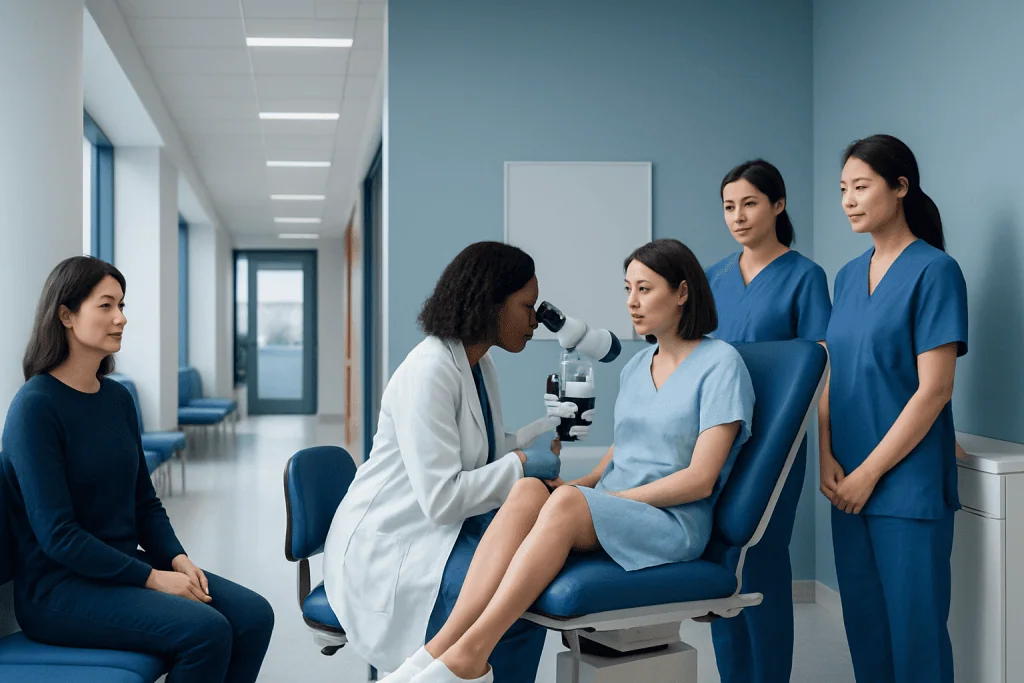
Colposcopy is commonly recommended after an abnormal Pap test or a positive HPV test. The procedure uses a magnifying device to examine the cervix and may include a small biopsy.
Key Takeaways
- Colposcopy is commonly recommended after an abnormal Pap test or a positive HPV test.
- The procedure uses a magnifying device to examine the cervix and may include a small biopsy.
- Most people can return to normal daily activities soon after the exam, especially if no biopsy is taken.
- Mild spotting or cramping can happen after colposcopy, but heavy bleeding, fever, or severe pain should be checked promptly.
- Colposcopy does not treat abnormal cells by itself; it helps diagnose changes and guide next steps.
Colposcopy is a diagnostic procedure that allows a doctor to closely examine the cervix, vagina, and sometimes the vulva after an abnormal screening result or concerning symptoms. It is usually done in an outpatient setting, takes a short time, and helps decide whether a biopsy or follow-up treatment is needed.
Overview: what colposcopy is and why it is done
Colposcopy is a procedure used to examine the cervix, vagina, and in some cases the vulva with a special magnifying instrument called a colposcope. The colposcope stays outside the body and gives the doctor a clearer view of tissue that may need closer assessment. It is most often recommended after an abnormal cervical screening result, such as a Pap test showing cell changes or a test that detects high-risk human papillomavirus (HPV).
The main purpose of colposcopy is to identify areas of abnormal tissue and decide whether a biopsy is needed. A biopsy means taking a very small sample of tissue to be checked under a microscope. This helps distinguish harmless changes from conditions that may need monitoring or treatment, including precancerous changes sometimes referred to as cervical cancer-related abnormalities.
Although the idea of further testing can feel stressful, colposcopy is a routine outpatient procedure. In many cases, it confirms that changes are mild and can be safely watched. When more significant changes are found, the procedure helps doctors plan timely care, which may include close follow-up or treatment such as colposcopy and cervical biopsy.
Who may need a colposcopy
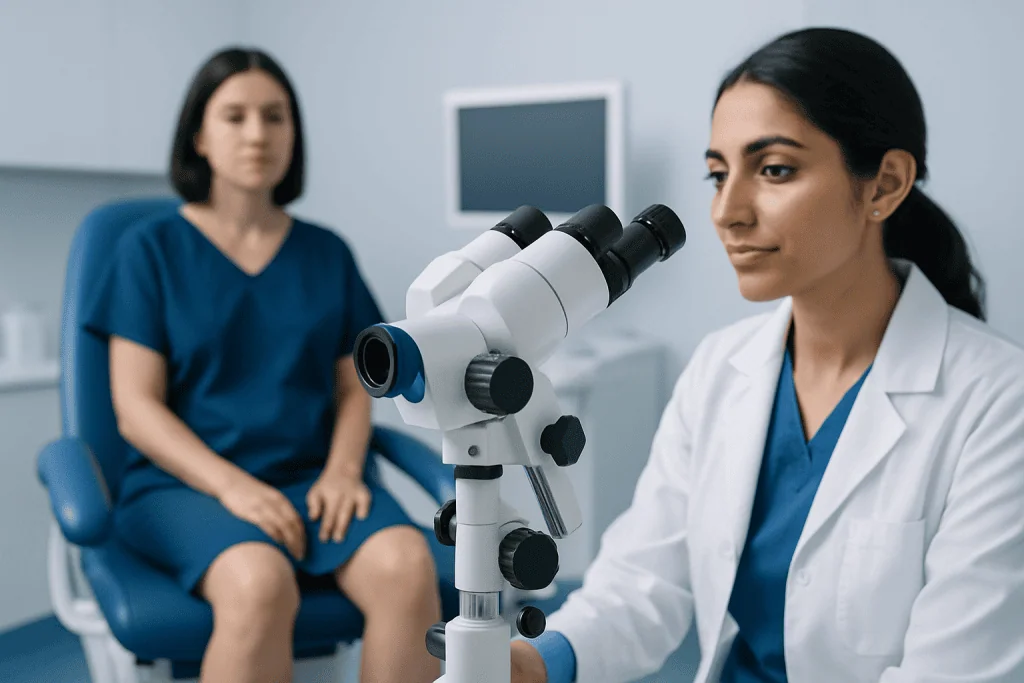
A doctor may recommend colposcopy for several reasons. The most common reason is an abnormal Pap test, especially when the result suggests changes in cervical cells that need a closer look. It may also be advised after a positive test for high-risk HPV, because some HPV types are linked with a higher chance of cell changes over time.
Colposcopy can also be helpful when a person has symptoms or examination findings that need clarification. These may include bleeding after sex, unexplained bleeding between periods, a visible abnormal area on the cervix, or persistent inflammation. In some cases, it is used to monitor known abnormalities such as cervical dysplasia or to evaluate tissue changes linked to HPV infection.
Not everyone with an abnormal screening test needs the same next step. The decision depends on age, screening history, pregnancy status, symptoms, and the exact test result. A gynecologist or another qualified clinician will explain why colposcopy is appropriate and whether any alternatives or follow-up intervals are suitable.
How the procedure works: step by step
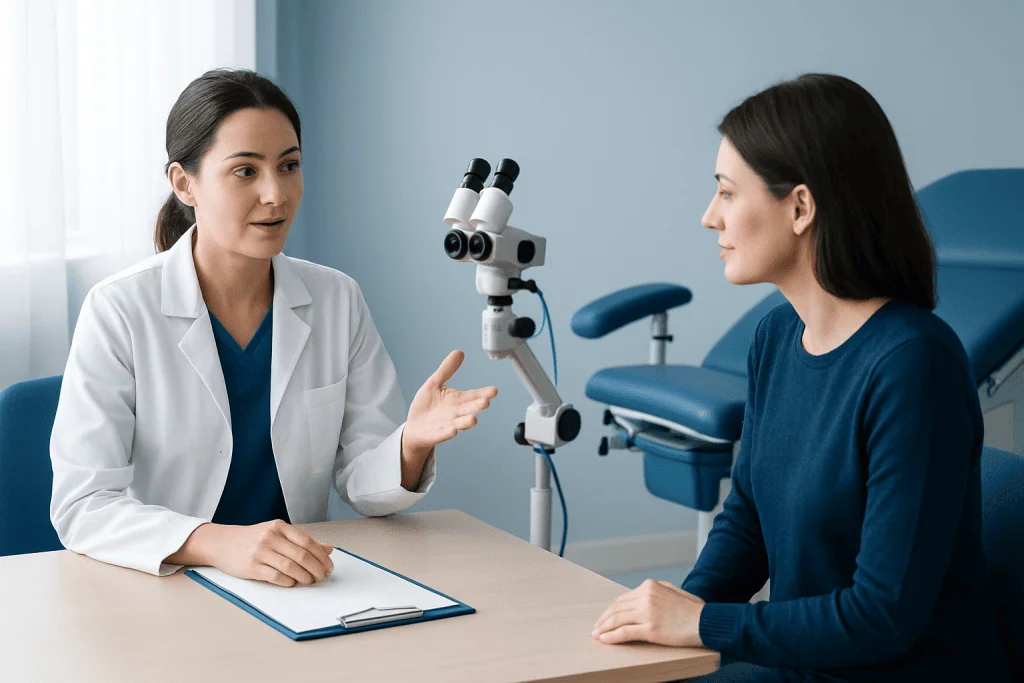
Colposcopy is usually done in a clinic or hospital outpatient department. Before the procedure, the patient is asked to lie on an examination table in a similar position to a pelvic exam. A speculum is gently placed in the vagina so the cervix can be seen. The colposcope is positioned just outside the vaginal opening and does not touch the body.
The doctor then applies solutions, commonly dilute acetic acid and sometimes iodine, to highlight abnormal cells. These solutions may cause a brief stinging or cool sensation. The doctor looks for patterns in the tissue surface and blood vessels that can suggest irritation, infection, low-grade changes, or more significant abnormalities.
If an area looks suspicious, a small biopsy may be taken from the cervix, vagina, or vulva. Some people feel a pinch, pressure, or short cramp when this happens. If a sample is taken from inside the cervical canal, there may be stronger cramping for a short time. The whole appointment often lasts around 10 to 20 minutes for the examination itself, though the visit may be longer when preparation and discussion are included.
Depending on the findings, the next step may be observation, repeat screening, or treatment to remove abnormal tissue. When this is needed, options can include procedures such as LEEP or cone biopsy, but only after biopsy results and clinical assessment support that approach.
Preparing for colposcopy and what to expect during the visit
Preparation is usually simple. Many clinicians advise avoiding vaginal creams, tampons, douching, and sexual intercourse for a short time before the procedure, because these can make it harder to see the cervix clearly. Scheduling the test for a day when menstrual bleeding is not heavy may also help, although the exact timing depends on the reason for the exam.
It can be helpful to ask in advance whether a biopsy is likely and whether pain relief before the visit is appropriate. Some patients prefer to bring a sanitary pad because mild spotting can happen afterward, especially if a biopsy is taken. Wearing comfortable clothing and planning a low-stress schedule for the rest of the day may also make the experience easier.
During the visit, most people remain awake and do not need anesthesia for a standard colposcopy. The examination may feel similar to a pelvic exam, with some pressure from the speculum and brief discomfort if samples are taken. Patients are usually encouraged to ask questions before and after the procedure so they understand what was seen and when results should be expected.
Results, benefits, and possible risks
One of the main benefits of colposcopy is that it gives a more detailed view than routine screening alone. It helps locate abnormal tissue and supports accurate biopsy sampling. This can prevent both undertreatment and unnecessary treatment by clarifying whether changes are mild, moderate, severe, or unrelated to precancer.
Sometimes the doctor can discuss the visual impression immediately after the exam, but biopsy results usually take longer because the tissue must be examined in a laboratory. Results may show normal tissue, inflammation, HPV-related changes, precancerous abnormalities, or less commonly cancer. Follow-up depends on these findings and on the patient’s overall screening history.
Colposcopy is generally safe, but like any procedure it has some risks. These include temporary discomfort, light bleeding, spotting, dark discharge if a paste is used to control bleeding, and mild cramping. Infection is uncommon. Serious complications are rare, but heavy bleeding, fainting, worsening pelvic pain, or signs of infection should be assessed by a doctor.
- Benefits: better visualization, targeted biopsy, clearer treatment planning
- Common temporary effects: spotting, mild cramps, dark discharge
- Less common risks: infection, heavier bleeding after biopsy
- Rare but important concerns: severe pain, fever, very heavy bleeding
Recovery timeline and self-care after colposcopy
Recovery depends largely on whether a biopsy was taken. If there is no biopsy, many people feel well enough to return to work, school, or other routine activities right away. There may be little or no bleeding, and any mild discomfort often settles quickly. If a biopsy is taken, light spotting or brown-black discharge can last for a few days.
For the first 24 to 48 hours, mild cramping may come and go. Some clinicians recommend avoiding tampons, sexual intercourse, and swimming or baths for a short period after a biopsy, while the tissue heals. Pads are often preferred if there is spotting. The exact instructions may vary depending on the area sampled and whether additional procedures were done.
Most biopsy-related symptoms improve within several days, though complete surface healing can take longer. Results are often available within one to two weeks, depending on the laboratory. If treatment is recommended after the biopsy result, the care team will explain the timeline and whether monitoring or a procedure is best.
Near the end of the care pathway, some patients may choose follow-up and treatment through centers experienced in women’s health. Acibadem International’s multidisciplinary specialists and JCI-accredited hospitals diagnose and treat cervical abnormalities for international patients when further evaluation is needed.
When to seek medical care
Most people recover without problems, but some symptoms should not be ignored. Medical advice should be sought if there is heavy bleeding, severe abdominal or pelvic pain, fever, chills, foul-smelling vaginal discharge, or dizziness that does not improve. These symptoms can suggest bleeding or infection that needs prompt assessment.
It is also important to contact a doctor if recovery instructions are unclear, if test results have not arrived within the expected time, or if anxiety about the findings is making it hard to cope. Follow-up is an essential part of care after colposcopy, because the procedure guides decisions about repeat testing, observation, or treatment.
Even when the results are reassuring, future screening should continue as advised. Regular cervical screening remains the best way to detect cell changes early and reduce the risk of more serious disease over time.
Frequently asked questions
Is colposcopy painful?
Colposcopy is often described as uncomfortable rather than painful. The speculum can cause pressure, and the solutions applied to the cervix may sting briefly. If a biopsy is taken, there may be a short pinch or cramp.
How long does a colposcopy take?
The examination itself is usually short and often takes about 10 to 20 minutes. The full visit may take longer because it includes preparation, discussion, and sometimes time for recovery after a biopsy.
Can someone go back to work after colposcopy?
Most people can return to normal activities the same day, especially if no biopsy is taken. If a biopsy is done, mild cramping or spotting may make a lighter schedule more comfortable for the rest of the day.
What does it mean if a biopsy is needed during colposcopy?
A biopsy does not automatically mean cancer is present. It means the doctor saw an area that needs microscopic examination to determine whether the cells are normal, inflamed, HPV-related, or precancerous.
How long does bleeding last after colposcopy?
If no biopsy is taken, there may be little or no bleeding. After a biopsy, light spotting or dark discharge may last a few days. Heavy bleeding is not typical and should be reported to a doctor.
Can colposcopy detect cervical cancer?
Colposcopy can help identify areas that look abnormal and guides where to take a biopsy. The biopsy result, not the visual exam alone, is what confirms whether cancer or precancerous changes are present.
References
- World Health Organization
- American College of Obstetricians and Gynecologists
- National Cancer Institute
- Centers for Disease Control and Prevention
- American Society for Colposcopy and Cervical Pathology
This article is for general information only and is not a substitute for professional medical advice. Please consult a qualified doctor about your individual situation.
Oncology care in Turkey — second opinion and treatment plan
JCI-accredited · board-certified surgeons · reply within 24h
Add us as a Preferred Source to see more of our trusted health content across Google Search, AI Overviews and Discover.

More from the Health Library



Related Specialists

Prof. Dr. Abdullah Zorluoğlu
General Surgery
Prof. Dr. Serhat Çelikel
Pulmonology
Dt. Selen Burçak Şimşek
Oral & Dental Health
Dr. Alper Gölpınar
Orthopedic Surgery & Traumatology