Compartment Syndrome: Diagnosis, Outlook, and Modern Treatment Approaches

Compartment syndrome happens when pressure rises inside a muscle compartment and limits circulation. Acute compartment syndrome needs urgent medical evaluation because delayed treatment can lead to permanent tissue damage.
Key Takeaways
- Compartment syndrome happens when pressure rises inside a muscle compartment and limits circulation.
- Acute compartment syndrome needs urgent medical evaluation because delayed treatment can lead to permanent tissue damage.
- Chronic exertional compartment syndrome usually causes pain or tightness during exercise and improves with rest.
- Diagnosis is based on symptoms, examination, and sometimes pressure measurements or imaging to rule out other causes.
- Treatment depends on the type and may include rest, activity changes, physical therapy, or surgery.
Compartment syndrome is a condition in which pressure builds up inside a closed muscle space, reducing blood flow and threatening muscle and nerve health. Acute cases are a medical emergency, while chronic exertional cases are usually linked to exercise and often improve with activity changes or targeted treatment.
Overview
Compartment syndrome is a condition where pressure increases within a closed space in the body, usually in the arms or legs. These spaces, called compartments, contain muscles, nerves, and blood vessels surrounded by a tough layer of tissue called fascia. Because fascia does not stretch easily, rising pressure can quickly reduce blood flow and affect how the muscles and nerves work.
There are two main forms. Acute compartment syndrome develops suddenly, often after an injury, fracture, crush event, or sometimes after surgery or a tight cast. This form is considered an emergency because tissue damage can happen within hours. Chronic exertional compartment syndrome, also called exercise-induced compartment syndrome, develops more gradually and is usually related to repetitive activity such as running.
The outlook depends heavily on early recognition. Many people recover well when the cause is identified promptly and treatment is started without delay. Understanding the difference between emergency symptoms and exercise-related symptoms helps people seek the right care at the right time.
How compartment syndrome feels and common symptoms
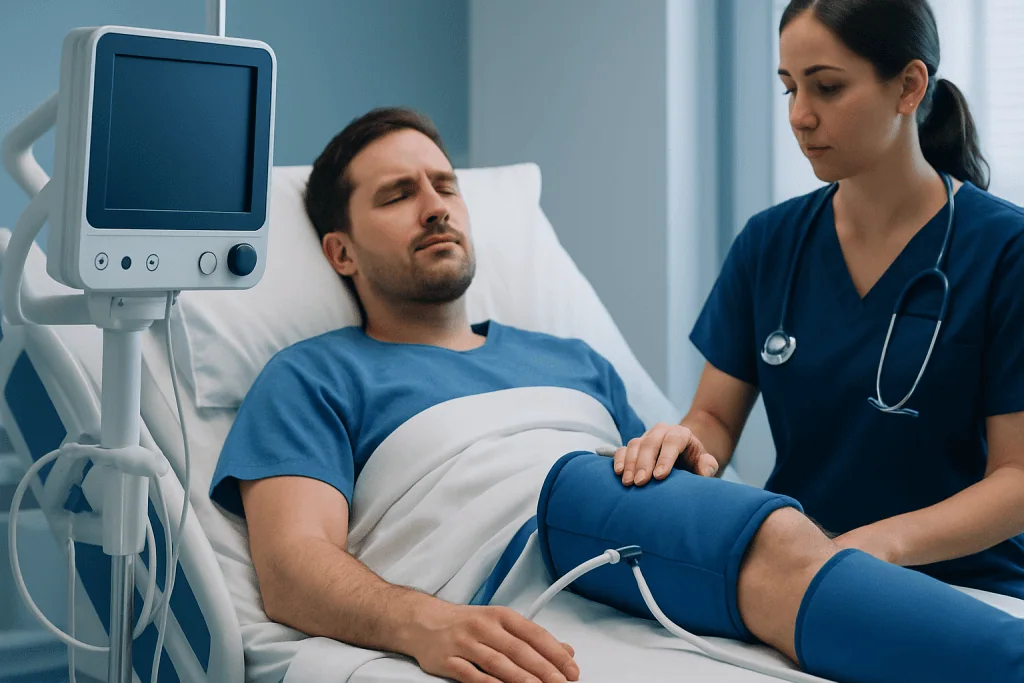
Symptoms vary depending on whether the condition is acute or chronic. Acute compartment syndrome usually causes severe pain that seems out of proportion to the injury. The pain may worsen when the affected muscles are stretched, and the area can feel tense, swollen, or unusually firm.
Other symptoms may include numbness, tingling, weakness, or a sense of tightness. In more advanced cases, the person may have difficulty moving the limb normally. Although changes in skin color or pulse can occur, these are often late findings, so they should not be waited for before getting help.
Chronic exertional compartment syndrome often follows a more predictable pattern. Pain, cramping, burning, tightness, or weakness may start after a certain amount of exercise and improve with rest. The symptoms often return when the same activity is resumed, which can make sports or regular training difficult to continue.
- Sudden severe pain after injury may suggest acute compartment syndrome.
- Exercise-triggered pain that eases with rest may point to chronic exertional compartment syndrome.
- Numbness, tingling, or weakness deserve medical assessment, especially if they are new or worsening.
Why it happens: causes and risk factors

Acute compartment syndrome most often follows an event that causes bleeding or swelling inside a compartment. Common triggers include fractures, blunt trauma, crush injuries, severe bruising, burns, or restoring blood flow after a period of poor circulation. It can also happen when a cast, bandage, or dressing is too tight, or after intense muscle swelling from overexertion.
Chronic exertional compartment syndrome is usually linked to repeated impact or repetitive muscle use. It is seen more often in runners, dancers, military recruits, and athletes who do activities involving repeated leg motion. The exact reason is not always clear, but exercise can temporarily increase muscle volume and pressure inside a compartment.
Some conditions may be confused with compartment syndrome because they cause similar leg pain, including stress fractures, tendon problems, shin splints, or sciatica. Because symptoms can overlap, a careful evaluation is important. Risk factors such as recent injury, intense exercise, anticoagulant use, or a history of limb surgery can help guide the diagnosis.
How doctors diagnose compartment syndrome
Diagnosis begins with a medical history and physical examination. A doctor will ask when symptoms began, whether they started after trauma or exercise, and whether there is numbness, weakness, or increasing pain. In acute cases, time is especially important, so diagnosis is often made clinically when the pattern strongly suggests rising compartment pressure.
If the diagnosis is uncertain, compartment pressure measurement may be used. This involves placing a small needle or catheter into the compartment to measure pressure directly. The test can be especially helpful in chronic exertional compartment syndrome, where pressures may be checked before and after exercise.
Imaging tests do not diagnose compartment syndrome by themselves, but they may help rule out other causes of pain or identify associated injuries. Depending on the situation, doctors may use X-rays for fractures, ultrasound for soft tissue issues, or MRI to look at muscles and surrounding structures. Blood tests may also be used if muscle damage is suspected.
Treatment approaches and what recovery may involve
Treatment depends on the type of compartment syndrome and how severe it is. Acute compartment syndrome usually requires emergency surgery called fasciotomy. In this procedure, the surgeon opens the fascia to relieve pressure and restore blood flow. Tight casts or dressings are loosened or removed right away, but these measures alone are not enough if pressure remains dangerously high.
Chronic exertional compartment syndrome is often managed first with non-surgical approaches. These may include reducing or modifying activity, changing training surfaces, reviewing footwear, trying physical therapy, and correcting running or movement mechanics. Some people improve when they switch to lower-impact activities or follow a structured physical therapy and rehabilitation plan.
If symptoms persist and continue to limit daily life or sports despite conservative care, surgery may be considered. A planned fasciotomy for chronic exertional compartment syndrome can reduce pressure during exercise and improve function in selected patients. When surgery is needed, ongoing follow-up and rehabilitation help support a gradual return to activity. In complex injury cases, care may involve orthopedic rehabilitation and specialist monitoring.
Outlook, prevention, and self-care
The outlook is generally best when compartment syndrome is recognized early. Acute compartment syndrome can lead to lasting muscle or nerve injury if treatment is delayed, but prompt surgery often improves the chance of preserving function. Recovery depends on the extent of tissue stress before treatment, the underlying injury, and the person’s overall health.
For chronic exertional compartment syndrome, many people can return to activity with a combination of training changes, symptom monitoring, and rehabilitation. Some need surgery if non-surgical treatment does not give enough relief. Recovery is not always immediate, and return to sport is usually gradual rather than rushed.
Prevention is not always possible, especially after accidents, but some steps can reduce risk or support early detection:
- Seek assessment after significant limb injuries, especially fractures or crush injuries.
- Make sure casts, splints, or wraps do not feel overly tight and report worsening pain promptly.
- Increase exercise intensity gradually rather than suddenly.
- Stop activity and rest if repeated exercise causes the same pain, tightness, or numbness.
- Follow rehabilitation advice carefully after injury or surgery.
When to seek medical care
Immediate medical care is needed if severe limb pain develops after an injury, especially if the pain is getting worse, feels out of proportion, or is accompanied by tight swelling, numbness, tingling, or weakness. Acute compartment syndrome should not be watched at home, because waiting can increase the risk of permanent damage.
A medical review is also important for recurring exercise-related leg or arm pain that reliably appears with activity and improves with rest. While chronic exertional compartment syndrome is not usually an emergency, it can interfere with function and may be confused with other conditions that need different treatment.
Care is often coordinated by emergency physicians, orthopedic surgeons, sports medicine specialists, rehabilitation professionals, and imaging teams. When advanced assessment or treatment is needed, Acibadem International’s multidisciplinary specialists and JCI-accredited hospitals diagnose and treat compartment syndrome for international patients. In some cases, related muscle or tendon injuries may also need evaluation with services such as orthopedics and traumatology.
Frequently asked questions
Is compartment syndrome an emergency?
Acute compartment syndrome is a medical emergency because rising pressure can quickly reduce blood flow to muscles and nerves. Prompt treatment is important to help prevent permanent tissue damage. Chronic exertional compartment syndrome is different and is usually not an emergency, but it still deserves medical evaluation.
What is the difference between acute and chronic compartment syndrome?
Acute compartment syndrome starts suddenly, often after trauma, a fracture, or severe swelling, and usually causes intense pain and increasing pressure in the limb. Chronic exertional compartment syndrome tends to happen during repetitive exercise and improves with rest. The treatment approach and urgency are different for each type.
Can compartment syndrome go away on its own?
Chronic exertional compartment syndrome may improve with rest, activity changes, and rehabilitation, especially if symptoms are mild. Acute compartment syndrome should not be expected to resolve on its own and needs urgent medical attention. Any sudden severe pain with swelling or numbness should be assessed promptly.
How is compartment syndrome tested?
Doctors diagnose compartment syndrome using the symptom pattern, physical examination, and sometimes direct pressure measurements within the affected compartment. In exercise-related cases, pressures may be measured before and after activity. Imaging may also be used to look for fractures or other conditions that can mimic the symptoms.
Does every case need surgery?
No. Acute compartment syndrome usually requires urgent surgery to relieve pressure. Chronic exertional compartment syndrome may first be treated with exercise modification, rehabilitation, and biomechanical review, with surgery considered if symptoms continue to limit activity.
What are the early warning signs to watch for?
Worsening pain, a tight or firm feeling in the muscle, pain with stretching, numbness, tingling, or weakness can all be warning signs. After an injury, pain that seems much worse than expected should be taken seriously. In exercise-related cases, repeated pain that starts at a predictable point during activity is also worth discussing with a doctor.
References
- American Academy of Orthopaedic Surgeons
- National Institutes of Health
- MedlinePlus
- Merck Manual Professional Edition
- American College of Sports Medicine
This article is for general information only and is not a substitute for professional medical advice. Please consult a qualified doctor about your individual situation.
Explore treatments in Turkey — costs, top hospitals & a free quote
JCI-accredited · board-certified surgeons · reply within 24h
Add us as a Preferred Source to see more of our trusted health content across Google Search, AI Overviews and Discover.