

Composite bonding in Turkey: Hospitals, Safety & What to Expect

Composite bonding adds tooth-coloured resin to selected areas of a tooth and usually preserves natural enamel. It may be suitable for minor cosmetic concerns when teeth and gums are healthy and the bite is stable.
Key Takeaways
- Composite bonding adds tooth-coloured resin to selected areas of a tooth and usually preserves natural enamel.
- It may be suitable for minor cosmetic concerns when teeth and gums are healthy and the bite is stable.
- The procedure is commonly completed in one visit per treatment area, often without injections or extensive drilling.
- Bonded resin can stain, chip, wear, or detach over time and may need polishing, repair, or replacement.
- Patients travelling for care should allow time for assessment, treatment, bite review, and practical aftercare planning.
Composite bonding in Turkey is a cosmetic dental procedure that uses tooth-coloured resin to improve small chips, gaps, uneven edges, discoloration, or tooth shape. Safety depends less on location alone and more on a thorough dental assessment, appropriate materials, infection-control standards, clear treatment planning, and reliable aftercare.
Overview: Is Composite Bonding in Turkey Safe?
Composite bonding in Turkey can be a safe and conservative way to refine the appearance of teeth when it is performed following a careful examination by a qualified dental professional. The treatment uses a tooth-coloured composite resin that is shaped and hardened directly on the tooth. It is commonly considered for small chips, uneven edges, narrow gaps, mild shape differences, and localized discoloration.
For international patients, safety should be assessed through the clinical process rather than promotional claims. A responsible plan includes an oral examination, assessment of gum health and tooth structure, bite evaluation, discussion of realistic outcomes, written information about materials and aftercare, and a plan for future maintenance. Patients can explore the broader treatment process through composite bonding treatment information.
Composite bonding is not the same as a crown or veneer. It generally involves adding material rather than removing substantial tooth structure. This makes it an appealing option for suitable patients, but it also means the result depends on meticulous technique, the condition of the teeth, and habits such as biting hard objects or grinding the teeth.
How Composite Bonding Works
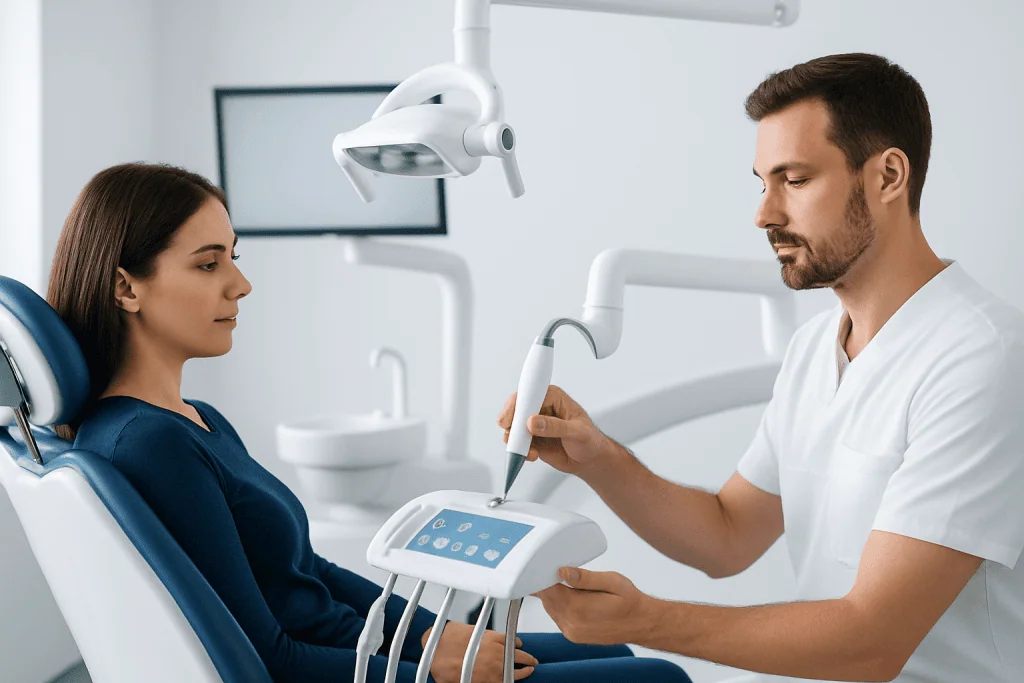
Composite resin is a durable restorative material made to blend with natural tooth shades. The dentist selects a colour that suits the surrounding teeth, then applies the resin in small layers. Each layer is shaped to create a natural contour and cured with a dental light before the surface is refined and polished.
In many cases, little or no enamel removal is needed. A mild surface preparation may be used to help the resin adhere securely. This conservative approach can be useful when the goal is to make a limited cosmetic improvement while retaining as much healthy tooth tissue as possible.
The final result should support comfortable speech, eating, and biting. For that reason, the dentist checks the contact points between teeth and the way upper and lower teeth meet. A natural-looking result is not only about colour and shape; it also needs to work comfortably within the patient’s bite.
Who May Be a Suitable Candidate?

Composite bonding may be considered for adults and older adolescents whose teeth and gums are healthy and who have realistic expectations. It is often used for small-to-moderate changes, such as repairing a chipped front tooth, closing a limited gap, lengthening worn edges, smoothing irregular contours, or improving the appearance of a single discoloured area.
A dentist will first check for tooth decay, gum inflammation, loose restorations, cracks, and signs of infection. Cosmetic work is usually delayed until these concerns are treated. Patients with active gum disease may need periodontal care before any bonding is placed, because healthy gums help frame the visible result and support long-term oral health.
Bonding may be less suitable when a tooth is severely damaged, has extensive decay, has a large old filling, or needs stronger coverage. Significant crowding, bite problems, or grinding may also require a different or combined approach, such as orthodontic treatment, a protective night guard, or another restoration. The best option is based on the individual tooth, not on a standard cosmetic package.
What Happens During the Procedure?
The appointment begins with a consultation and examination. The dentist discusses the patient’s goals, reviews dental and medical history, examines the teeth and gums, and may take photographs, digital scans, or X-rays when clinically indicated. These records help identify hidden decay, root concerns, or bite issues that cannot always be seen during a visual examination.
Before treatment, the dentist and patient agree on the teeth to be treated, the desired level of change, and the limitations of resin bonding. Whitening, if desired, is usually planned before bonding because composite resin does not lighten in the same way natural enamel does. The shade is then selected to match the intended tooth colour.
During bonding, the tooth is cleaned and isolated to keep the working area dry. The surface is prepared, a bonding agent is applied, and composite resin is built up gradually. The material is hardened with a curing light, then carefully shaped, smoothed, and polished. Local anaesthetic is often unnecessary, although it may be used if the tooth requires preparation near a sensitive area.
At the end of the visit, the dentist checks the bite and makes small adjustments if needed. Patients should be told how to care for the new bonding, what sensations are expected, and how to arrange review or repair if a concern develops after returning home.
Benefits, Limitations and Possible Risks
A principal benefit of composite bonding is that it can improve selected cosmetic concerns with limited alteration of the natural tooth. It can often be completed efficiently and is repairable if a small area chips or wears. The resin can also be adjusted or polished during future dental visits when appropriate.
However, composite resin is not as resistant to staining or wear as natural enamel or some laboratory-made ceramic restorations. Coffee, tea, red wine, tobacco, and highly pigmented foods may gradually affect its colour. It may also chip when exposed to hard biting forces, particularly in people who bite pens, chew ice, use teeth to open packages, or grind their teeth.
Possible risks include temporary sensitivity, roughness at the edge of the restoration, changes in colour over time, plaque accumulation if contours are not ideal, and fracture or detachment of the bonded area. Rarely, unnoticed decay, gum problems, or a bite issue can affect the outcome. Careful diagnosis, precise technique, and routine follow-up reduce these risks but cannot remove them entirely.
- Bonding generally works best for modest cosmetic changes rather than major reconstruction.
- Teeth affected by grinding may require a custom night guard to help protect the restoration.
- Existing dental disease should be treated before elective cosmetic bonding.
- Repairs and maintenance are a normal part of the long-term care of composite restorations.
Recovery Timeline and Everyday Care
There is usually no major recovery period after composite bonding. Most people can return to normal daily activities immediately after the appointment. The tooth may feel slightly different at first because its shape has changed, but this sensation commonly settles as the mouth adapts.
Patients should follow the dentist’s specific advice about eating after treatment. It is sensible to avoid biting very hard foods directly with newly bonded front teeth for the first day and to avoid testing the restoration by biting nails, ice, pens, or packaging. If the bite feels high, uneven, or uncomfortable, the dentist should be contacted promptly; a simple adjustment may be needed.
Daily care includes brushing twice daily with fluoride toothpaste, cleaning between teeth, attending regular dental examinations, and arranging professional cleaning as recommended. A non-abrasive toothpaste and soft toothbrush can help preserve the polished surface. Smoking cessation and limiting strongly staining drinks can also help maintain the appearance of the resin.
Patients travelling from abroad should plan enough time for consultation, treatment, and a final bite review before departure. They should also keep copies of their treatment summary and material information, and identify a local dentist who can provide routine follow-up if necessary.
Hospitals, Travel Planning and Quality Considerations
For patients considering treatment abroad, it is important to distinguish between a cosmetic consultation and a complete dental assessment. A suitable provider should explain who will carry out the examination and procedure, how X-rays or scans are used when needed, what infection-prevention measures are followed, and what happens if treatment reveals decay, gum disease, or a more complex dental problem.
Hospital-based dental services may be particularly helpful for people who have medical conditions, complex dental histories, anxiety requiring additional support, or a need for coordinated specialist care. International patients can ask about clinician qualifications, language support, written consent, medical records, follow-up arrangements, accommodation planning, and the timing needed before flying home.
JCI accreditation refers to standards for quality and patient safety in healthcare organizations. It can be one useful consideration when evaluating a hospital, although it does not replace an individual discussion of the dentist’s assessment, the proposed treatment, and the patient’s personal suitability. Acibadem International’s multidisciplinary specialists and JCI-accredited hospitals provide assessment and dental care for international patients, with coordination support for treatment planning and travel arrangements.
When to Seek Medical or Dental Care
Patients should contact a dentist promptly if a bonded tooth becomes painful, develops persistent sensitivity, feels loose, has a sharp or rough edge, or if the bite no longer feels comfortable. A chipped or detached area is usually not an emergency, but it should be assessed to prevent irritation, further damage, or food trapping around the tooth.
Urgent dental assessment is important for facial swelling, fever, severe toothache, trauma that loosens or displaces a tooth, uncontrolled bleeding, or difficulty swallowing or breathing. These symptoms may indicate infection or injury that needs prompt care and are not problems that should be managed with cosmetic treatment alone.
Regular dental reviews remain important after composite bonding. They allow the dentist to monitor the restoration, check gum health and bite function, remove surface staining if appropriate, and discuss whether repair or replacement is needed over time.
Frequently asked questions
How long does composite bonding usually last?
The lifespan varies with the size and location of the bonding, bite forces, oral hygiene, dietary staining, and personal habits. Composite resin may need polishing, repair, or replacement over time, especially on biting edges. A dentist can provide a more individualized estimate after examining the teeth and bite.
Is composite bonding painful?
Composite bonding is often comfortable because it usually requires little or no drilling into the tooth. Some people may experience short-lived sensitivity, especially if a tooth already has sensitivity or if bonding is close to the gumline. Local anaesthetic can be used when clinically appropriate.
Can composite bonding fix gaps between teeth?
It can help close small gaps in selected cases by adding resin to one or both teeth. The dentist must assess gum health, tooth proportions, and the bite to ensure the result is natural-looking and easy to clean. Larger gaps or significant tooth misalignment may be better managed with orthodontic treatment or another approach.
Will composite bonding stain?
Yes, composite resin can gradually pick up stains from tobacco and strongly coloured foods and drinks. Regular cleaning, good oral hygiene, and avoiding smoking can help reduce staining. A dentist may be able to polish superficial staining, but deeply discoloured or worn bonding may eventually need replacement.
Can teeth be whitened after composite bonding?
Whitening treatments affect natural tooth enamel but do not reliably lighten composite resin. For this reason, patients considering whitening often complete it before the bonding shade is chosen. If natural teeth are whitened later, the bonded areas may no longer match and could require adjustment or replacement.
What should international patients ask before composite bonding in Turkey?
They should ask who will perform the treatment, whether a full dental examination and bite assessment are included, what materials will be used, and how follow-up will be handled. It is also helpful to ask for a written treatment plan, consent information, copies of records, and enough time for a final review before travel home.
References
- World Health Organization
- FDI World Dental Federation
- American Dental Association
- National Health Service
- Joint Commission International
This article is for general information only and is not a substitute for professional medical advice. Please consult a qualified doctor about your individual situation.
Composite Bonding in Turkey — costs, top hospitals & a free quote
JCI-accredited · board-certified surgeons · reply within 24h
Add us as a Preferred Source to see more of our trusted health content across Google Search, AI Overviews and Discover.

Dental & Oral Health
Full-scope dental care from implants and aesthetics to oral and maxillofacial surgery.
158 specialists in this unitMore from the Health Library



Related Specialists

Dr. Zekai Tarım
Pulmonary Medicine
Prof. Dr. Erdoğan Ertüngealp
Gynecology & Obstetrics
Fzt. Alperen Mustafa Oğuz
Physical Medicine & Rehabilitation
Prof. Dr. Bilgi Baca
General Surgery