Composite Veneers: An Evidence-Based Guide for Patients

Composite veneers can improve tooth color, shape, small chips, and minor gaps in a minimally invasive way. They are usually completed in one visit, but they are more prone to staining, chipping, and wear than porcelain veneers.
Key Takeaways
- Composite veneers can improve tooth color, shape, small chips, and minor gaps in a minimally invasive way.
- They are usually completed in one visit, but they are more prone to staining, chipping, and wear than porcelain veneers.
- A dental examination is essential to check for decay, gum disease, grinding, and bite problems before treatment.
- Good oral hygiene, regular dental follow-up, and avoiding harmful habits help composite veneers last longer.
- Pain, swelling, tooth sensitivity that persists, or signs of infection should be assessed by a dentist.
Composite veneers are thin layers of tooth-colored resin applied to the front of teeth to improve appearance. They can be a conservative option for selected patients, but long-term results depend on tooth health, bite, oral hygiene, and realistic expectations.
What are composite veneers?
Composite veneers are thin, tooth-colored layers of resin placed on the front surface of teeth to improve their appearance. They are used to address concerns such as discoloration, uneven edges, small chips, worn areas, slight spacing, or mildly irregular shape. In many cases, they can be placed directly on the tooth in a single appointment.
Compared with porcelain veneers, composite veneers usually require less removal of natural tooth structure. That makes them a more conservative option for some patients. However, they are generally less resistant to staining and wear, so they may need polishing, repair, or replacement sooner over time.
Composite veneers are best viewed as a cosmetic-restorative treatment rather than a one-size-fits-all solution. A dentist evaluates the health of the teeth and gums, the bite, and the patient’s goals before recommending them. For some people, alternatives such as whitening, orthodontic treatment, or other forms of dental treatment may be more suitable.
Who may benefit from composite veneers?
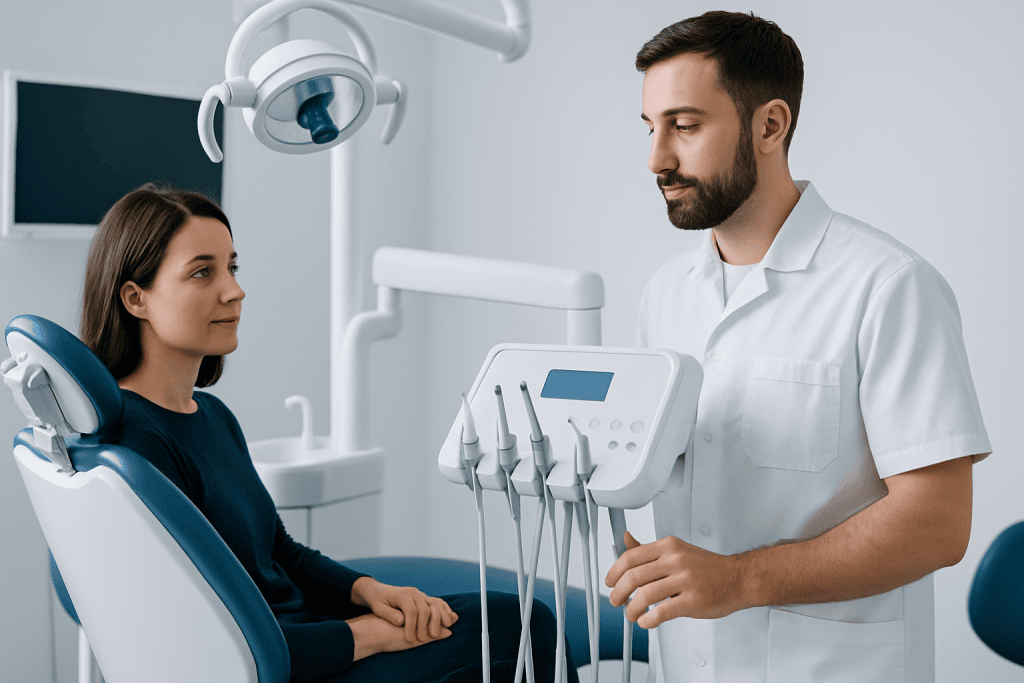
Composite veneers may be helpful for adults who want to improve the visible surface of front teeth without extensive dental work. They are commonly considered when teeth are healthy overall but have aesthetic concerns that are difficult to correct with cleaning alone. These concerns may include mild discoloration, surface defects, short or uneven edges, and small gaps between teeth.
They may also be useful when a patient prefers a reversible or more conservative approach than full crowns. In selected cases, composite can be shaped and refined directly on the tooth, making it easier to adjust appearance during the appointment. Minor chips or fractures may also be restored with composite if the tooth remains structurally sound.
Composite veneers are not ideal for every situation. They may be less appropriate if teeth are severely crowded, heavily restored, significantly discolored, weakened, or exposed to strong grinding forces. Patients with untreated gum disease or active tooth decay usually need those problems addressed first to protect both oral health and the lifespan of the veneers.
How the procedure is planned and performed

Planning begins with a dental examination, discussion of goals, and review of oral health. The dentist checks for cavities, cracked fillings, gum inflammation, enamel quality, and the way the upper and lower teeth meet. Photographs, X-rays, or study models may be used to assess smile design and help explain what composite veneers can and cannot achieve.
During the procedure, the tooth surface is cleaned and prepared. In some cases, little or no enamel is removed; in others, a small amount is reshaped to improve fit and appearance. The tooth is then conditioned with bonding materials, and the composite resin is added in layers. The dentist sculpts the shape, hardens the material with a curing light, and polishes it for a natural finish.
The process is often completed in one visit, especially when only a small number of front teeth are treated. Color matching is an important part of the procedure, and the final result depends on both the material and the clinician’s technique. If deeper issues such as infection or a damaged nerve are found, treatment such as root canal treatment may be needed before cosmetic work is considered.
Benefits, limitations, and possible risks
The main benefits of composite veneers are conservation of tooth structure, same-day treatment in many cases, and the ability to repair small defects relatively easily. They can provide a noticeable cosmetic improvement while preserving more of the natural tooth than more invasive restorations. They may also be adjusted over time if the smile design needs refinement.
Still, composite veneers have limitations. They are usually less durable than porcelain and may discolor from coffee, tea, red wine, tobacco, and pigmented foods. They can also chip, lose polish, or show edge wear, particularly in people who bite nails, chew ice, or clench and grind their teeth.
There are also clinical risks to consider. If veneers are placed on teeth with untreated decay, cracks, bite problems, or periodontal inflammation, symptoms can worsen and the result may fail earlier. Some people experience temporary sensitivity after bonding. If there is significant damage, cavities under old restorations, or deep structural loss, options such as dental crown restoration may provide better support than a veneer alone.
- Benefits: conservative, repairable, often completed quickly
- Limitations: can stain, chip, and wear sooner than porcelain
- Risks: sensitivity, bonding failure, poor aesthetic match, shortened lifespan if oral disease or bite issues are present
How long do composite veneers last?
Composite veneers do not last forever, and their lifespan varies from person to person. Longevity depends on the amount of material placed, the quality of the bonding, the condition of the tooth underneath, daily oral hygiene, eating habits, and whether the patient grinds or clenches. With regular maintenance, some can remain functional and attractive for years, but touch-ups are common.
Over time, the surface may lose shine or pick up stains. Minor chips can often be repaired without replacing the entire veneer, which is one practical advantage of composite. However, repeated repairs may gradually affect appearance or edge strength, and a more comprehensive replacement may eventually be recommended.
Regular dental reviews help detect early wear, rough edges, or plaque retention around the margins. Professional polishing can improve the finish and appearance in some cases. A dentist may also check for related concerns such as decay or tooth decay around the bonded area, especially if cleaning around the veneers has become difficult.
Aftercare and protecting the result
Aftercare plays a major role in how composite veneers look and function over time. Patients are usually advised to brush twice daily with a non-abrasive fluoride toothpaste, clean between teeth every day, and attend routine dental checkups. Good plaque control helps protect the edges of the veneers and lowers the risk of gum inflammation or cavities.
It is also sensible to limit habits that can chip or stain the material. Biting hard objects, opening packages with the teeth, and frequent exposure to tobacco or darkly pigmented drinks can shorten the cosmetic lifespan. If beverages such as coffee or tea are consumed, rinsing with water afterward may help reduce surface staining.
For people who clench or grind, a dentist may recommend a custom night guard to protect both the veneers and the natural teeth. Patients should also report any new sensitivity, roughness, a feeling that the bite has changed, or visible edge defects. These issues are often easier to correct when addressed early.
When to seek medical care
Composite veneers themselves are not a medical emergency, but symptoms affecting the teeth or gums should not be ignored. A person should arrange prompt dental assessment if there is persistent tooth pain, swelling, bleeding gums, pus, bad taste, fever, or a veneer that has cracked or detached. These signs may point to infection, decay, trauma, or bite-related damage rather than a simple cosmetic issue.
It is also advisable to seek care if sensitivity lasts beyond the early healing period, if chewing feels uncomfortable, or if a veneer repeatedly chips. Ongoing problems can indicate that the tooth needs further evaluation, the bite needs adjustment, or another treatment approach would be safer and more durable.
For international patients who need assessment or treatment planning, Acibadem International’s multidisciplinary specialists in JCI-accredited hospitals diagnose and treat dental conditions with a coordinated approach. Timely review helps ensure that cosmetic goals are matched with healthy teeth, gums, and long-term function.
Frequently asked questions
Are composite veneers the same as porcelain veneers?
No. Composite veneers are made from tooth-colored resin, while porcelain veneers are made in a laboratory from ceramic material. Composite veneers are usually more conservative and easier to repair, but porcelain tends to resist staining and wear better.
Do composite veneers damage natural teeth?
When planned and placed appropriately, composite veneers can preserve much of the natural tooth structure. However, they still require professional preparation and bonding, and poor case selection or technique can lead to sensitivity, plaque retention, or earlier failure. A dental exam is important before treatment.
How long do composite veneers last?
Their lifespan varies depending on oral hygiene, diet, bite forces, and whether the patient grinds or clenches. They often require maintenance such as polishing or repair over time. A dentist can give a more individualized estimate after examining the teeth and bite.
Can composite veneers stain?
Yes. Composite resin is more likely to absorb stains and lose surface gloss than porcelain. Coffee, tea, red wine, tobacco, and some strongly colored foods can gradually affect appearance, especially if maintenance visits are missed.
Are composite veneers painful?
The procedure is usually well tolerated, and many patients have little discomfort. Some may notice temporary sensitivity afterward, especially if enamel reshaping was needed. Persistent pain or swelling is not expected and should be checked by a dentist.
Can everyone get composite veneers?
No. They are not suitable for every dental situation. People with untreated decay, active gum disease, heavy grinding, major bite problems, or severely damaged teeth may need other treatments before or instead of veneers.
This article is for general information only and is not a substitute for professional medical advice. Please consult a qualified doctor about your individual situation.
Explore treatments in Turkey — costs, top hospitals & a free quote
JCI-accredited · board-certified surgeons · reply within 24h
Add us as a Preferred Source to see more of our trusted health content across Google Search, AI Overviews and Discover.

More from the Health Library

Linea Nigra: An Evidence-Based Guide for Patients

Definition for Concentrate: What Patients Need to Know

Farxiga Cost — Explained by Medical Evidence, Not Myths

Large Intestinal Polyp — Explained by Medical Evidence, Not Myths

Energy Vampire: A Complete Medical Overview