Computer-Assisted Knee Replacement: What to Expect Before, During, and After
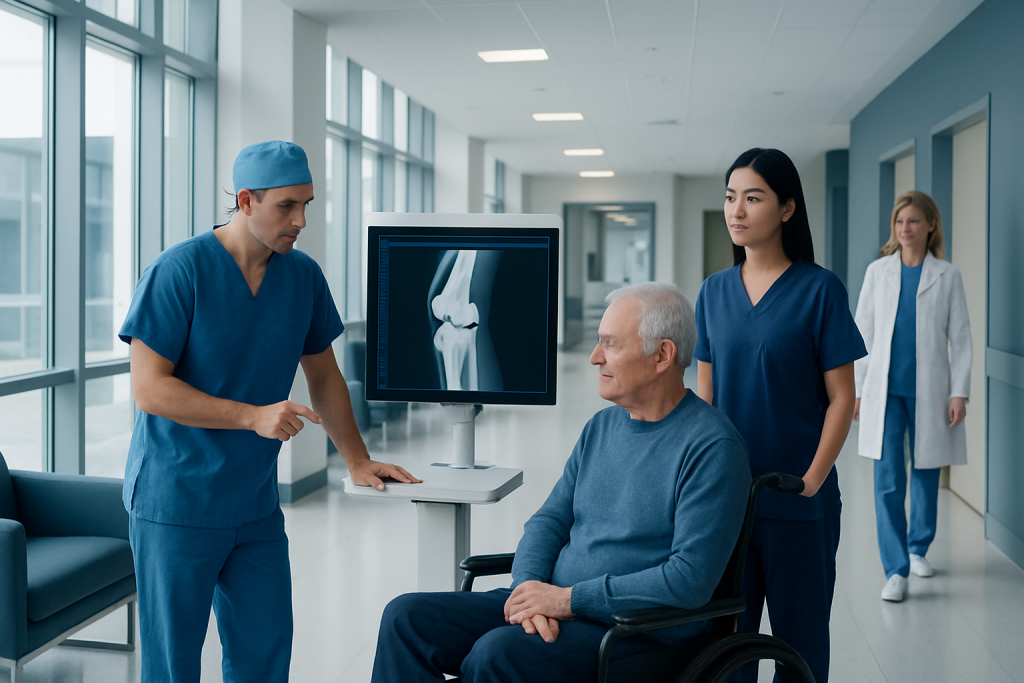
Computer-assisted knee replacement combines surgical expertise with digital guidance tools during knee replacement surgery. The goal is accurate implant alignment, balanced movement, and a knee that functions as naturally as possible.
Key Takeaways
- Computer-assisted knee replacement combines surgical expertise with digital guidance tools during knee replacement surgery.
- The goal is accurate implant alignment, balanced movement, and a knee that functions as naturally as possible.
- Preparation usually includes imaging, medical evaluation, and a clear rehabilitation plan.
- Recovery still depends on physical therapy, pain control, wound care, and gradual return to activity.
- Not every patient needs the same surgical technique, so the best option should be discussed with an orthopedic surgeon.
Computer-assisted knee replacement is a form of knee replacement surgery that uses digital planning and real-time guidance to help surgeons position implants with high precision. For many patients with advanced knee arthritis, it offers a more personalized approach before, during, and after surgery.
Overview of Computer-Assisted Knee Replacement
Computer-assisted knee replacement is a type of knee replacement procedure in which the surgeon uses digital technology to guide parts of the operation. It is most often used for people with severe knee arthritis, especially when pain, stiffness, and reduced mobility continue despite medication, exercise, weight management, injections, or other nonsurgical treatments. The operation may involve replacing the damaged joint surfaces with artificial components, also called implants.
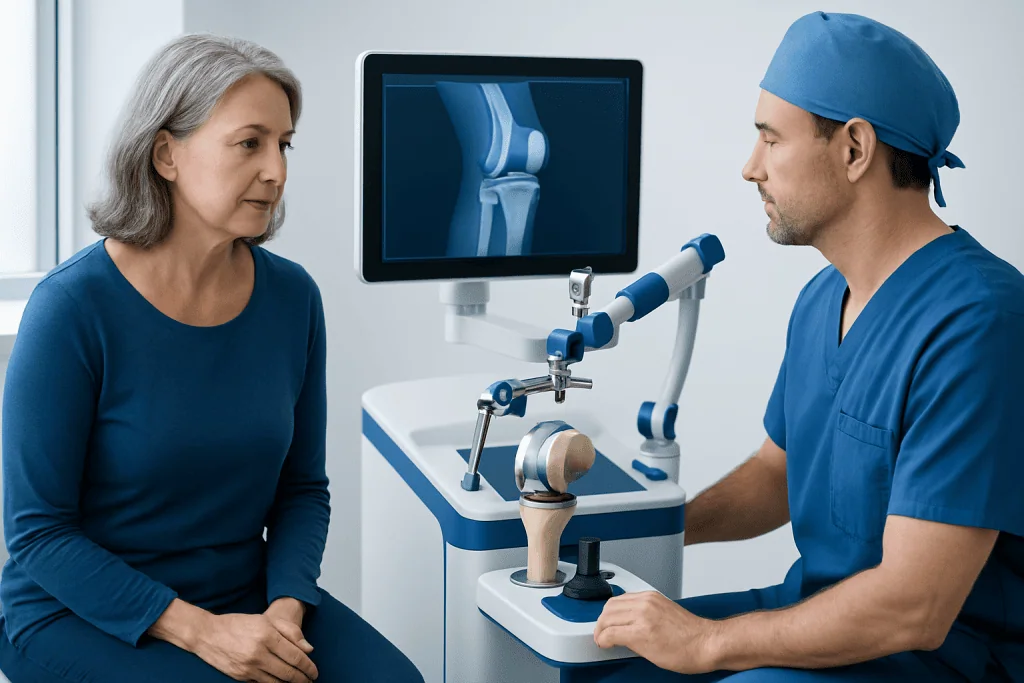
In standard knee replacement, surgeons rely on experience, measurements, and specialized instruments to position the implants. In computer-assisted surgery, extra tools such as navigation systems, sensors, or robotic platforms help the surgical team map the knee and check alignment in real time. This does not mean the computer performs the surgery on its own. The surgeon remains in control throughout the procedure.
The main aim is to place the knee implant as accurately as possible according to the patient’s anatomy. Better precision may help with joint balance, stability, and the way the knee moves after surgery. For some patients, this can support comfort and function, although outcomes still depend on many factors, including overall health, the condition of the joint, the skill of the surgical team, and commitment to rehabilitation.
Computer-assisted techniques may be used in total knee replacement or, in selected cases, partial knee replacement. They are part of a broader shift toward more personalized orthopedic care, where imaging, planning software, and advanced instruments are used to tailor treatment to each individual.
Who May Benefit and What Symptoms Lead to Surgery
Most people who consider computer-assisted knee replacement have advanced osteoarthritis of the knee. This common joint condition develops when cartilage gradually wears down, leading to pain, swelling, stiffness, and difficulty with everyday activities. Some patients may also need surgery because of inflammatory arthritis, post-traumatic joint damage, or deformity in the knee.
Symptoms that often lead people to discuss surgery include persistent knee pain during walking or climbing stairs, pain at rest, swelling that keeps returning, and stiffness that limits bending or straightening the knee. Some people notice a grinding sensation, reduced walking distance, instability, or changes in leg alignment, such as bowing. Sleep and quality of life may also be affected when symptoms become severe.
Knee replacement is usually considered when conservative treatment is no longer enough. Before recommending surgery, doctors often review options such as physical therapy, activity modification, pain-relieving medication, anti-inflammatory treatment, bracing, and injections. If these measures provide only short-term or limited relief, surgery may become the next step.
Computer-assisted techniques may be especially helpful when anatomy is more complex or when precise alignment is a key priority. However, the decision is individualized. A surgeon will consider symptoms, physical examination findings, X-rays or other scans, age, activity level, body weight, and overall medical condition before advising the most suitable approach.
How the Technology Works

Computer-assisted knee replacement uses digital information to support surgical planning and execution. Depending on the system, the process may begin with preoperative imaging such as X-rays, CT scans, or MRI scans, although some platforms rely mainly on information collected in the operating room. This data helps create a detailed picture of the knee’s shape, joint surfaces, and alignment.
During surgery, the system tracks the position of the bones and surgical instruments. The surgeon may use small markers, sensors, or a robotic arm to guide bone preparation and implant placement. Real-time feedback can help the team assess how the knee moves, whether the soft tissues are balanced, and how the artificial joint is likely to function through its range of motion.
These technologies are designed to assist, not replace, surgical judgment. The surgeon interprets the information, adjusts the plan if needed, and performs the procedure. Many patients hear terms such as navigation-assisted surgery, robotic-assisted knee replacement, or personalized alignment. While the systems differ, they all aim to support precision and consistency.
Technology may also help reduce unnecessary bone removal and improve reproducibility from one step to the next. Still, no technique can guarantee a perfect result. A successful outcome depends on careful patient selection, sound surgical planning, implant choice, and structured recovery after the operation.
What to Expect Before Surgery
Preparation usually starts with a consultation with an orthopedic surgeon. The doctor reviews symptoms, previous treatments, medical history, medications, and any other health conditions that could affect surgery or recovery. The knee is examined for pain, range of motion, stability, swelling, and leg alignment. Imaging studies are used to confirm joint damage and plan the operation, including whether a computer-assisted approach is appropriate.
Patients may need blood tests, heart evaluation, and other preoperative checks depending on age and general health. The care team also discusses anesthesia, expected hospital stay, pain management, and rehabilitation goals. If a person smokes, stopping before surgery can support wound healing and lower the risk of complications. If weight reduction is advised, even modest progress may help recovery and reduce stress on the new joint.
Home preparation is also important. Patients are often encouraged to arrange help for the first days after surgery, prepare a safe walking space, and remove tripping hazards such as loose rugs or clutter. Supportive shoes, a stable chair, and an accessible bathroom setup can make early recovery easier.
Many hospitals offer preoperative education so patients know what will happen on the day of surgery and afterward. People who are exploring surgical options may also read more about knee replacement surgery and the recovery process. Clear expectations can reduce anxiety and help patients take an active role in rehabilitation.
What Happens During the Procedure
On the day of surgery, the patient is admitted to the hospital and prepared for the operation. Knee replacement is commonly performed under general anesthesia or regional anesthesia, depending on the surgical plan and medical needs. The surgical team confirms the treatment plan, the knee being operated on, and the imaging or navigation system to be used.
Once the operation begins, the surgeon makes an incision to access the knee joint. Damaged cartilage and a small amount of bone are removed from the joint surfaces. In a computer-assisted procedure, the surgeon then uses the digital system to measure alignment, guide bone cuts, and help position the implant components with precision. Trial components may be placed first so the team can assess movement and balance before the final implants are inserted.
The artificial knee usually includes metal components and a durable plastic spacer that allows smooth movement. The surgeon checks the stability and motion of the new joint and then closes the incision. The exact surgical time can vary depending on the technique used, the complexity of the knee, and whether additional corrections are needed.
After surgery, the patient is monitored in the recovery area. Pain relief begins early, and movement often starts on the same day or the next day. Some centers also combine advanced digital guidance with minimally invasive approaches when suitable, but the choice depends on anatomy, safety, and the surgeon’s judgment rather than technology alone.
Recovery, Rehabilitation, and Possible Risks
Recovery after computer-assisted knee replacement is similar in many ways to recovery after conventional knee replacement. Early movement is encouraged to reduce stiffness and support circulation. Physical therapy focuses on walking, gentle strengthening, improving range of motion, and relearning daily activities such as sitting, standing, and climbing stairs. Most patients gradually increase activity over weeks to months.
Pain, swelling, bruising, and temporary fatigue are common during the first phase of healing. The care team provides guidance on medication, icing, elevation, and wound care. Assistive devices such as a walker or cane may be needed at first. Many people improve steadily, but full recovery can take time, and progress is often gradual rather than immediate.
Like any major surgery, knee replacement has risks. These can include infection, blood clots, bleeding, stiffness, nerve or blood vessel injury, ongoing pain, implant loosening, and problems related to anesthesia. Computer-assisted technology aims to improve precision, but it does not remove all surgical risks. Patients should report fever, increasing redness, drainage, chest pain, calf swelling, or sudden shortness of breath without delay.
Long-term success depends on several factors, including implant positioning, soft tissue balance, muscle strength, and healthy habits after surgery. In some cases, further evaluation may be needed if pain or function does not improve as expected. Patients interested in related orthopedic care may also learn about orthopedic rehabilitation as part of a structured recovery pathway.
Self-Care, Long-Term Joint Protection, and When to Seek Medical Advice
After knee replacement, long-term self-care helps protect the new joint and support mobility. Regular low-impact exercise, including walking, cycling, or swimming, can maintain strength and flexibility. A healthy body weight reduces pressure on the knee and may help the implant last longer. Patients are usually advised to avoid high-impact activities unless their surgeon says otherwise.
Follow-up appointments are important even when the knee feels well. These visits allow the surgeon to check healing, function, and implant position over time. Any new pain, stiffness, instability, or change in walking pattern should be discussed, especially if symptoms develop suddenly or get worse. People with signs of arthritis in other joints may benefit from broader evaluation for conditions such as osteoarthritis.
Medical advice should be sought promptly if there is increasing swelling, a hot or red incision, wound drainage, fever, calf pain, chest discomfort, or breathing difficulty. These symptoms do not always mean a serious problem, but they should be assessed quickly. Ongoing difficulty with movement, sleep-disturbing pain, or delayed progress in therapy also deserve review.
For international patients who need specialist assessment, Acibadem International’s multidisciplinary orthopedic teams in JCI-accredited hospitals diagnose and treat knee joint conditions using modern surgical and rehabilitation approaches, including selected technology-assisted procedures when appropriate. In some cases, related support such as physical therapy and rehabilitation is an important part of long-term recovery.
Frequently asked questions
Is computer-assisted knee replacement the same as robotic knee replacement?
They are related but not always identical terms. Computer-assisted knee replacement is a broad term that includes digital navigation systems, sensors, and robotic-assisted platforms used to guide surgery. In all cases, the surgeon remains in control of the operation.
Does computer-assisted knee replacement last longer than standard knee replacement?
The goal of computer assistance is to improve precision in implant positioning and joint balance. This may support good function, but implant lifespan depends on many factors, including the patient's activity level, weight, bone quality, and overall surgical outcome. No technique can guarantee how long an implant will last.
Will recovery be faster with computer-assisted knee replacement?
Some patients hope for a smoother recovery, but recovery speed varies from person to person. Physical therapy, pain control, general health, and commitment to exercises usually have a major influence on progress. Even with advanced technology, knee replacement still requires time and rehabilitation.
Who is a good candidate for computer-assisted knee replacement?
A good candidate is usually someone with significant knee joint damage and symptoms that have not improved with nonsurgical treatment. The surgeon also considers anatomy, deformity, age, activity level, and other medical conditions. Not every patient needs a computer-assisted approach, so the decision is individualized.
How long will a patient stay in the hospital after surgery?
Hospital stay varies depending on the patient's health, pain control, mobility, and the hospital's recovery pathway. Some people go home relatively quickly, while others need a longer stay or rehabilitation support. The care team explains the expected plan before surgery.
What activities are usually possible after knee replacement?
Many patients return to daily walking, climbing stairs, driving when cleared, and low-impact exercise after recovery. Activities such as swimming, cycling, and gentle fitness routines are often encouraged. High-impact sports or activities with heavy twisting may be limited, depending on the surgeon's advice.
References
- American Academy of Orthopaedic Surgeons
- National Institute for Health and Care Excellence
- Arthritis Foundation
- National Institute of Arthritis and Musculoskeletal and Skin Diseases
- World Health Organization
This article is for general information only and is not a substitute for professional medical advice. Please consult a qualified doctor about your individual situation.
Joint and spine care in Turkey — expert assessment & treatment
JCI-accredited · board-certified surgeons · reply within 24h
Add us as a Preferred Source to see more of our trusted health content across Google Search, AI Overviews and Discover.