Condoms Female Condoms — Explained by Medical Evidence, Not Myths

Female condoms are internal barrier devices that help reduce pregnancy risk and lower STI transmission risk when used correctly. They are different from external condoms and should not be used at the same time as an external condom.
Key Takeaways
- Female condoms are internal barrier devices that help reduce pregnancy risk and lower STI transmission risk when used correctly.
- They are different from external condoms and should not be used at the same time as an external condom.
- Correct insertion, checking the package, and using a new condom each time are important for safety and effectiveness.
- Female condoms can be a good option for people who want a non-hormonal, user-controlled contraceptive method.
- Medical advice is important for persistent pain, condom breakage with exposure concerns, or symptoms of infection.
Condoms female condoms are barrier methods used during sex to help prevent pregnancy and lower the risk of sexually transmitted infections. Female condoms, also called internal condoms, offer a hormone-free option that sits inside the vagina and can be a useful choice for some couples.
Overview: what condoms and female condoms do
Condoms female condoms are protective barrier methods used during vaginal sex to help prevent pregnancy and reduce the spread of sexually transmitted infections (STIs). An external condom is worn on the penis, while a female condom, more accurately called an internal condom, is placed inside the vagina before sex. Both work by creating a physical barrier that helps keep semen away from the cervix and limits contact with bodily fluids.
Female condoms are made for single use and are typically soft, flexible pouches with rings at each end. The closed inner end is inserted into the vagina to help hold the condom in place, while the open outer ring remains outside the vaginal opening. This design allows the condom to line part of the vaginal canal during intercourse.
Used properly, female condoms can be an effective non-hormonal contraceptive option. They can also be useful for people who cannot or do not want to use hormone-based birth control, or who prefer a method they can place themselves before sex. They do not protect against all sexual health risks equally, but they do offer important protection when used correctly and consistently.
How female condoms work and how they differ from external condoms
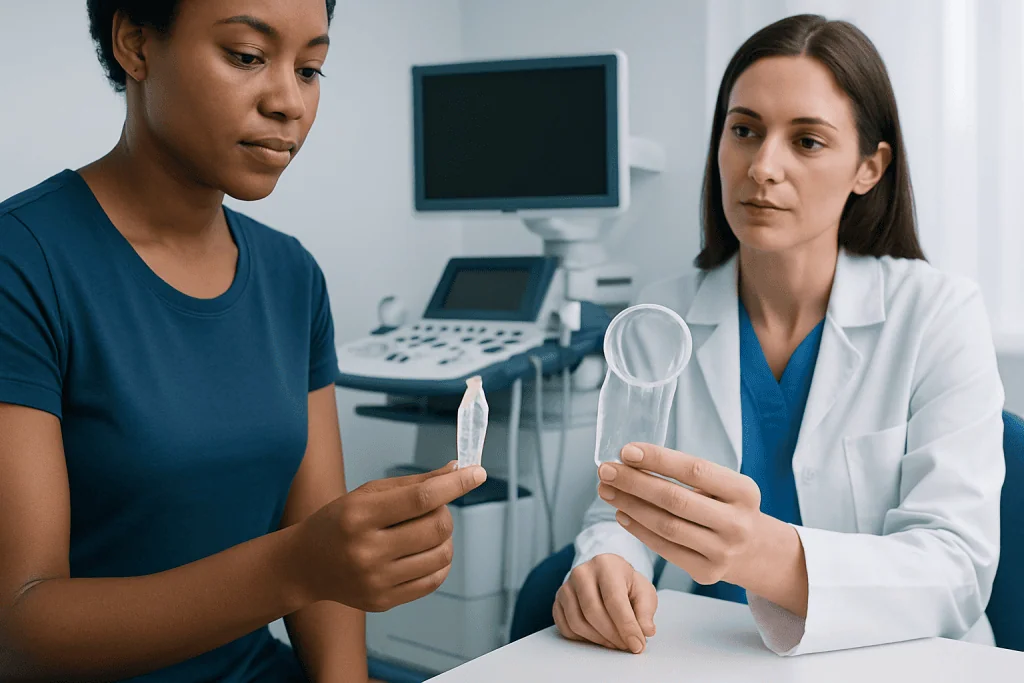
Female condoms work by collecting semen before it can enter the uterus. They also reduce direct contact between genital tissues and sexual fluids, which is why they can help lower the risk of many STIs. Because they line the inside of the vagina and partially cover the external genital area, they may offer some protection to skin that is not covered by an external condom.
There are several practical differences between female condoms and external condoms. Female condoms can be inserted before sexual activity begins, which some people find helpful because it does not interrupt intimacy. They are also not dependent on an erection for placement. For some couples, this offers more flexibility and a greater sense of control.
However, female condoms should not be used at the same time as an external condom. Using both together can create friction, making either device more likely to slip or break. A single barrier method used correctly is safer than combining the two.
- External condoms are worn on the penis.
- Female condoms are inserted into the vagina.
- Both are single-use methods.
- Both can help reduce STI risk, but neither offers 100% protection.
- Only one condom should be used at a time during intercourse.
Benefits, limitations, and common myths

Female condoms offer several advantages. They are hormone-free, latex-free in many cases, and can be used by people with certain sensitivities depending on the product material. Because they are controlled by the receptive partner, they may be a useful option when an external condom is not preferred or not available. Some users also find that the built-in lubrication improves comfort.
At the same time, female condoms have limitations. They require familiarity with insertion technique, and some people need practice before they feel comfortable using them. They may shift if not inserted correctly, and they are generally less familiar to the public than external condoms, which can lead to confusion about use.
Several myths can make decision-making harder. One common myth is that female condoms are unsafe or easily lost inside the body. In reality, the vagina is a closed canal, and the condom cannot travel into the abdomen. Another myth is that female condoms fully protect against every STI. They lower risk, but no barrier method can eliminate risk completely. A further misconception is that they can be reused; they should not be washed and reused.
People who want broader birth control counseling may also discuss other options such as contraception counseling and family planning with a qualified clinician. Choosing a method often depends on comfort, health history, pregnancy goals, and STI protection needs.
How to use female condoms correctly
Correct use matters. Before use, the person should check the package for damage and confirm that the condom is within its expiration date. Hands should be clean, and the condom should be opened carefully without scissors or sharp objects that might tear it. The inner ring at the closed end is squeezed and inserted into the vagina, similar to placing a tampon, until it sits comfortably near the cervix. The outer ring stays outside the vaginal opening.
During intercourse, it helps to guide the penis into the condom opening so it enters the pouch rather than slipping between the condom and the vaginal wall. If the condom twists, bunches, or slips, intercourse should stop so the issue can be corrected. After ejaculation, the outer ring can be twisted gently to help keep semen inside, and the condom can then be removed carefully and discarded.
Only a new condom should be used each time. Oil-based or water-based products may be compatible depending on the specific material, but the product instructions should always be followed. If there is breakage, slippage, or concern about STI exposure or unintended pregnancy, medical advice should be sought promptly. In some situations, emergency contraception or testing may be appropriate.
Safety, effectiveness, and STI protection
Female condoms can reduce the chance of pregnancy and lower STI transmission risk, especially when used consistently and correctly. Like all barrier methods, their effectiveness depends heavily on real-world use. Inconsistent use, incorrect insertion, slippage, or damage can reduce protection.
They are especially relevant in sexual health because they provide both contraceptive benefit and a degree of infection prevention. They may help reduce exposure to infections spread through semen, vaginal fluids, and some skin-to-skin contact. However, infections transmitted by contact with areas not covered by the condom can still spread.
If someone has symptoms such as genital sores, unusual discharge, burning with urination, pelvic pain, or bleeding after sex, evaluation may be needed even if condoms were used. Depending on symptoms, clinicians may assess for conditions such as sexually transmitted diseases or vaginal infections. Testing and treatment help protect both the individual and their partners.
For people with recurrent condom difficulties, pain during sex, or questions about the best prevention strategy, a doctor may review sexual health history, pregnancy prevention goals, and options for screening. In some cases, combining a condom method with another contraceptive approach may be recommended for added pregnancy prevention, while still using condoms for STI risk reduction.
Who may benefit and what to discuss with a doctor
Female condoms may suit people who want a non-hormonal method, want more personal control over barrier contraception, or need an alternative when an external condom is not acceptable or comfortable. They may also be helpful for those who want to prepare for sex in advance, since insertion can happen before intercourse begins.
They are not the right fit for everyone. Some people find insertion difficult at first, and others prefer methods that do not require placement with each sexual encounter. People with ongoing vaginal irritation, pain during intercourse, or concerns about product materials should discuss these issues with a clinician rather than assuming all barrier methods will cause the same problem.
A healthcare professional can explain how internal condoms compare with external condoms, diaphragms, hormonal methods, and long-acting contraception. If symptoms suggest irritation or infection, the doctor may recommend examination, STI testing, or treatment. For people with broader gynecologic concerns, assessment through gynecology services may be appropriate.
When to seek medical care
Medical care is advisable if a condom breaks or slips during sex and there is concern about pregnancy or STI exposure. Timing matters in these situations, because emergency contraception and post-exposure evaluation may be more useful when addressed promptly. A clinician can advise on testing and next steps based on the type of exposure.
Someone should also seek care for pelvic pain, persistent vaginal irritation, painful intercourse, genital sores, unusual discharge, a strong odor, fever, or bleeding after sex. These symptoms are not always caused by a condom, and they may need evaluation for infection or another gynecologic issue.
People who experience repeated problems using female condoms may benefit from practical instruction on insertion technique and alternative options. Near the end of the care pathway, it may also help to know that Acibadem International’s multidisciplinary specialists in JCI-accredited hospitals diagnose and treat sexual and reproductive health concerns for international patients.
Frequently asked questions
What is the difference between female condoms and regular condoms?
A female condom, also called an internal condom, is placed inside the vagina, while a regular condom is usually an external condom worn on the penis. Both create a barrier that helps prevent pregnancy and lowers STI risk, but they are used in different ways. They should not be used together during the same act of intercourse.
Are female condoms effective at preventing pregnancy?
Female condoms can help prevent pregnancy when they are used correctly every time. Their effectiveness depends on proper insertion, correct positioning during sex, and using a new condom with each act of intercourse. People who want the highest pregnancy prevention may ask a doctor about combining condoms with another contraceptive method.
Do female condoms protect against sexually transmitted infections?
Yes, female condoms can lower the risk of many sexually transmitted infections by reducing contact with semen, vaginal fluids, and some genital skin. However, they do not eliminate risk completely, especially for infections spread by contact with uncovered skin. Regular testing and medical advice remain important when there is exposure concern.
Can a female condom get lost inside the body?
No, a female condom cannot travel beyond the vagina into the abdomen. The vagina is a closed space, and the condom may move higher or shift, but it can usually be removed carefully. If it is difficult to remove or causes pain, medical help should be sought.
Can female condoms be reused?
No, female condoms are designed for single use only. Reusing them can increase the risk of tearing, slipping, and infection exposure. A fresh condom should be used each time.
Is it normal to need practice using a female condom?
Yes, many people need a few tries before insertion feels easy and comfortable. Learning the correct position and how to guide penetration into the condom can improve confidence and effectiveness. If problems continue, a healthcare professional can offer practical instruction and discuss alternatives.
This article is for general information only and is not a substitute for professional medical advice. Please consult a qualified doctor about your individual situation.
Explore treatments in Turkey — costs, top hospitals & a free quote
JCI-accredited · board-certified surgeons · reply within 24h
Add us as a Preferred Source to see more of our trusted health content across Google Search, AI Overviews and Discover.

More from the Health Library

David Shaffer: What Patients Need to Know

Allegra: A Complete Medical Overview

Harry Styles Aging: Procedure, Recovery and Results

White Tongue Indicates: What Patients Need to Know

Z Track Method: A Complete Medical Overview