Coolsculpting — Explained by Medical Evidence, Not Myths

Coolsculpting reduces targeted pockets of fat, not overall body weight. Results usually develop gradually over weeks to months as the body clears treated fat cells.
Key Takeaways
- Coolsculpting reduces targeted pockets of fat, not overall body weight.
- Results usually develop gradually over weeks to months as the body clears treated fat cells.
- The best candidates are close to their goal weight and have pinchable areas of stubborn fat.
- Common short-term effects include numbness, redness, swelling, and tenderness.
- Rare but important risks include paradoxical adipose hyperplasia, where the treated area becomes firmer and larger.
- A qualified medical assessment helps determine whether cryolipolysis or another body-contouring approach is more suitable.
Coolsculpting is a brand name for cryolipolysis, a non-surgical method that reduces small, localized fat bulges by cooling fat cells in a controlled way. Medical evidence suggests it can help contour selected body areas, but it does not treat obesity, replace healthy habits, or tighten loose skin.
Overview: what Coolsculpting is and what it is not
Coolsculpting is a non-surgical body-contouring treatment that uses controlled cooling to reduce small areas of unwanted fat. The medical term for this approach is cryolipolysis. It is designed for people who want to improve body contour in selected areas such as the abdomen, flanks, thighs, upper arms, or under the chin.
Medical evidence supports cryolipolysis as a way to reduce localized fat thickness in appropriately chosen patients. However, it is important to separate evidence from common myths. Coolsculpting is not a treatment for obesity, not a substitute for diet and exercise, and not a reliable way to tighten loose skin or address major body-shape concerns after significant weight change.
The treatment works gradually. After cooling exposure, the body breaks down and clears the affected fat cells over time. This means results are not immediate, and more than one treatment session may be recommended depending on the area, goals, and baseline body contour.
For some people, other options may be more appropriate. If excess fullness is linked to broader weight concerns rather than a small resistant fat pocket, a doctor may discuss lifestyle-based weight management or other approaches, including obesity surgery in carefully selected cases.
How Coolsculpting works
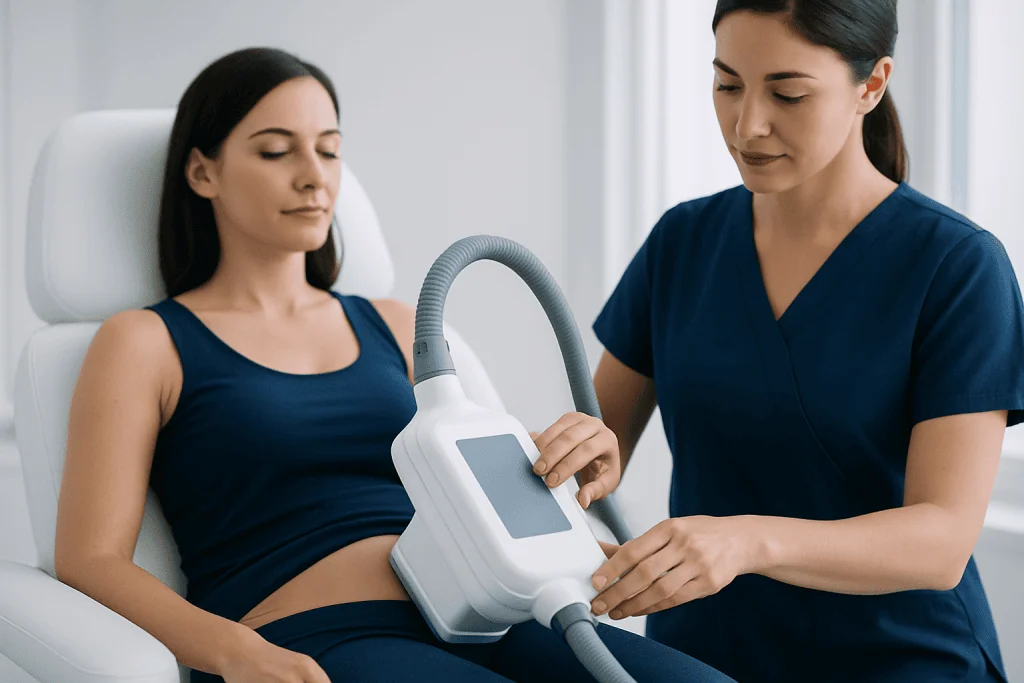
Fat cells are more sensitive to cold than many surrounding tissues. Cryolipolysis takes advantage of this difference by exposing a targeted area to carefully controlled cooling through an applicator placed on the skin. The aim is to trigger gradual fat-cell injury while minimizing damage to nearby skin, nerves, and muscle.
During a session, the applicator draws the tissue into a cup-like device and cools it for a set period. People often feel strong cold, pulling, pressure, tingling, or cramping at first. These sensations usually lessen as the area becomes numb. After the applicator is removed, the treated area may be massaged briefly.
Over the following weeks, the body’s natural processes remove some of the affected fat cells. This is why visible change appears slowly rather than right away. The contour improvement tends to be modest and localized, which is why setting realistic expectations is an important part of treatment planning.
Coolsculpting differs from liposuction and other fat-reduction methods. It does not involve incisions or anesthesia in the usual sense, and recovery is often quicker. Still, it is a medical procedure with benefits, limitations, and potential side effects that should be discussed before treatment.
Who may be a good candidate

The best candidates for Coolsculpting are usually adults who are near their usual or goal weight but have a small, stubborn fat bulge that has not changed much despite healthy habits. The area should be clearly localized and able to fit the treatment applicator. People generally see the best results when they want contour refinement rather than a major size reduction.
Coolsculpting is less suitable when the main concern is obesity, significant skin laxity, muscle separation, or a body shape issue caused by factors other than superficial fat. For example, fullness in the abdomen may also reflect lax skin, posture, bloating, or underlying conditions rather than excess subcutaneous fat alone.
A medical consultation should review general health, previous surgeries, medications, and the exact cosmetic concern. The clinician may examine the skin, measure the fat layer, and discuss whether another treatment would be more effective. In some situations, surgery may offer a clearer improvement, such as liposuction for larger-volume fat removal or abdominoplasty when loose abdominal skin is the main issue.
People with certain cold-related conditions may not be suitable candidates. This includes disorders such as cryoglobulinemia, cold agglutinin disease, or paroxysmal cold hemoglobinuria, because exposure to cold can trigger medical complications.
What results to expect and common myths
A realistic understanding of outcomes helps people decide whether Coolsculpting matches their goals. The treatment can reduce a selected fat pocket, but the change is usually subtle to moderate rather than dramatic. Some people notice improvement after one session, while others need repeat treatment to reach the desired contour.
Results are not instant. Improvement usually becomes noticeable over several weeks and may continue for a few months. Because the effect develops gradually, follow-up photos and measurements can be helpful when judging progress.
Several myths are worth correcting:
- Myth: Coolsculpting is a weight-loss treatment. Fact: It is a contouring treatment for localized fat.
- Myth: It tightens skin significantly. Fact: Any skin change is usually limited; it does not replace skin-tightening surgery.
- Myth: Results are guaranteed after one session. Fact: Response varies by body area, tissue characteristics, and treatment plan.
- Myth: Once fat is treated, lifestyle no longer matters. Fact: Weight gain can still affect untreated and remaining fat cells.
In some cases, a person seeking reduction in neck fullness may benefit from a different evaluation, especially if contour concerns involve skin laxity, glands, or deeper tissue rather than superficial fat alone. A specialist may compare cryolipolysis with procedures such as double chin surgery when appropriate.
Risks, side effects, and safety considerations
Most side effects after Coolsculpting are temporary and limited to the treated area. Common reactions include redness, swelling, bruising, numbness, tingling, firmness, cramping, itching, or tenderness. These symptoms often improve over days to weeks, though numbness can last longer in some people.
Some people experience temporary nerve-related discomfort or increased sensitivity after the treatment. Pain is usually manageable, but if it is severe, worsening, or does not improve, medical review is important. Rarely, changes in skin sensation may persist for an extended period.
A well-known but uncommon complication is paradoxical adipose hyperplasia. Instead of shrinking, the treated tissue becomes enlarged, firmer, and more noticeable over time. This complication is not dangerous in the usual sense, but it can be distressing and often requires another form of treatment, sometimes surgical correction. A clinician may also consider whether another condition is contributing to fullness or swelling, including a benign fatty growth such as lipoma in selected cases.
Safety depends not only on the device but also on careful patient selection, proper technique, and clear follow-up instructions. Treatment should be performed by trained professionals who can identify when cryolipolysis is suitable and when another diagnosis or therapy should be considered.
How doctors assess and plan treatment
Coolsculpting is often discussed as a cosmetic treatment, but good outcomes begin with a medical-style assessment. The clinician first confirms that the concern is truly a localized subcutaneous fat pocket. They may ask about weight stability, prior contouring procedures, pregnancy history, hernias, skin conditions, and any symptoms that suggest a different problem.
On examination, the doctor assesses the thickness and pinchability of the fat layer, the quality of the skin, and the symmetry of the treatment area. Standardized photographs may be taken for planning and later comparison. If a contour irregularity seems unusual, firm, or symptomatic, further evaluation may be needed before any aesthetic treatment proceeds.
Treatment planning also includes discussing expected improvement, the possibility of multiple sessions, likely recovery, and the limits of the procedure. This shared decision-making process helps avoid disappointment and reduces the chance of choosing a treatment that does not match the person’s anatomy or goals.
Near the end of the care pathway, some patients may benefit from multidisciplinary input if body contour concerns overlap with skin laxity, metabolic health, or prior surgery. Acibadem International’s multidisciplinary specialists in JCI-accredited hospitals diagnose and treat aesthetic and medical conditions for international patients when this type of evaluation is needed.
Aftercare, self-care, and maintaining results
Recovery after Coolsculpting is usually straightforward. Many people return to routine activities the same day or soon afterward. The treated area may feel numb, sore, swollen, or bruised for a period, so comfortable clothing and gentle skin care can help during the early recovery phase.
Aftercare instructions vary, but patients are commonly advised to monitor the area, avoid unnecessary friction if the skin is tender, and follow any guidance from their treatment team. Gentle movement and regular daily activity are generally reasonable unless a clinician advises otherwise.
Maintaining results depends largely on weight stability and overall health habits. Coolsculpting removes some fat cells from the treated area, but it does not prevent future weight gain. A balanced eating pattern, regular physical activity, good sleep, and management of stress can all support more durable contour results.
If the desired change is not seen after the expected time frame, a follow-up review is useful. The clinician can determine whether more time is needed, whether an additional session may help, or whether another approach would better address the concern.
When to seek medical care
Medical advice should be sought before treatment if the area of concern is painful, rapidly changing, unusually firm, associated with a lump, or accompanied by skin changes. These features may suggest that the issue is not simply localized fat and deserves proper diagnosis first.
After treatment, prompt medical review is sensible if there is severe pain, marked swelling, signs of infection, blistering, persistent worsening numbness, or an unexpected contour change that enlarges rather than improves over time. Although serious complications are uncommon, early assessment helps guide the next steps.
A doctor should also be consulted if expectations are uncertain. Many disappointments happen not because the treatment failed medically, but because the chosen procedure did not match the person’s anatomy or goals. A qualified professional can explain alternatives and help choose the safest, most suitable option.
Frequently asked questions
Is Coolsculpting the same as losing weight?
No. Coolsculpting is a body-contouring treatment for small, localized fat pockets, while weight loss reduces overall body mass. It may improve shape in selected areas, but it is not intended to treat obesity.
How long does it take to see Coolsculpting results?
Results usually appear gradually over several weeks and may continue to develop for a few months. The exact timing varies by treatment area and by how each person’s body responds. A follow-up visit can help assess whether the result matches the treatment plan.
Are Coolsculpting results permanent?
The treated fat cells are reduced and do not simply return in the same way. However, remaining fat cells in treated or untreated areas can still enlarge with weight gain. Healthy habits and stable weight help maintain the contour change.
Does Coolsculpting tighten loose skin?
Not reliably. Coolsculpting is designed to reduce localized fat, not to significantly tighten stretched or sagging skin. If loose skin is the main concern, a doctor may discuss other treatments that better address skin laxity.
Is Coolsculpting painful?
Most people describe temporary pulling, cold, pressure, tingling, or cramping during the beginning of treatment. Afterward, the area may be sore, numb, tender, or bruised for a while. Severe or persistent pain is not typical and should be reviewed by a clinician.
What is paradoxical adipose hyperplasia?
Paradoxical adipose hyperplasia is a rare complication in which the treated area becomes larger, firmer, and more prominent instead of smaller. It may appear some time after treatment and usually requires medical evaluation. Management often involves another corrective approach rather than waiting alone.
This article is for general information only and is not a substitute for professional medical advice. Please consult a qualified doctor about your individual situation.
CoolSculpting in Turkey — costs, top hospitals & a free quote
JCI-accredited · board-certified surgeons · reply within 24h
Add us as a Preferred Source to see more of our trusted health content across Google Search, AI Overviews and Discover.

More from the Health Library
Calcitonin: An Evidence-Based Guide for Patients

After eating dizzy: A Complete Medical Guide for Patients

Acarbose — Explained by Medical Evidence, Not Myths

Magnetic Lashes: What Patients Need to Know
Tickling on Feet: An Evidence-Based Guide for Patients