Crook of the Neck: An Evidence-Based Guide for Patients

A crook of the neck is a common description for acute neck stiffness and muscle spasm, not a diagnosis by itself. Awkward posture, prolonged screen use, sleeping positions, minor strain, and stress can all contribute.
Key Takeaways
- A crook of the neck is a common description for acute neck stiffness and muscle spasm, not a diagnosis by itself.
- Awkward posture, prolonged screen use, sleeping positions, minor strain, and stress can all contribute.
- Most uncomplicated cases improve over several days with relative rest, gentle activity, heat or cold, and suitable pain relief.
- Forceful stretching, neck manipulation, and prolonged bed rest can worsen symptoms or delay recovery.
- Urgent assessment is important when neck pain follows significant injury or occurs with fever, severe headache, weakness, numbness, or balance problems.
A crook of the neck usually describes sudden neck pain and stiffness that makes turning the head uncomfortable. It is commonly related to temporary muscle spasm, strain, or an awkward sleeping or working position, and it often improves with gentle movement, simple self-care, and time.
What Does “Crook of the Neck” Mean?
A crook of the neck is an everyday term for sudden neck pain, tightness, and reduced ability to turn or tilt the head. A person may wake with the head held slightly to one side, or notice that moving in one direction causes a sharp pull. In many cases, the discomfort comes from a short-lived spasm or irritation in the muscles and soft tissues that support the neck.
The neck is a mobile structure made up of vertebrae, small joints, discs, muscles, ligaments, and nerves. Muscles can tighten protectively when they are overworked, held in one position for too long, or irritated after a minor movement. This can create a painful cycle: pain limits movement, and limited movement can make the area feel even stiffer.
For most people, a simple crook of the neck is not dangerous and starts to settle within a few days. However, neck pain can occasionally reflect a more significant injury, infection, nerve problem, or inflammatory condition. The pattern of symptoms, associated signs, and a clinician’s examination help distinguish a straightforward muscle problem from conditions needing prompt care.
Common Symptoms and How They May Feel
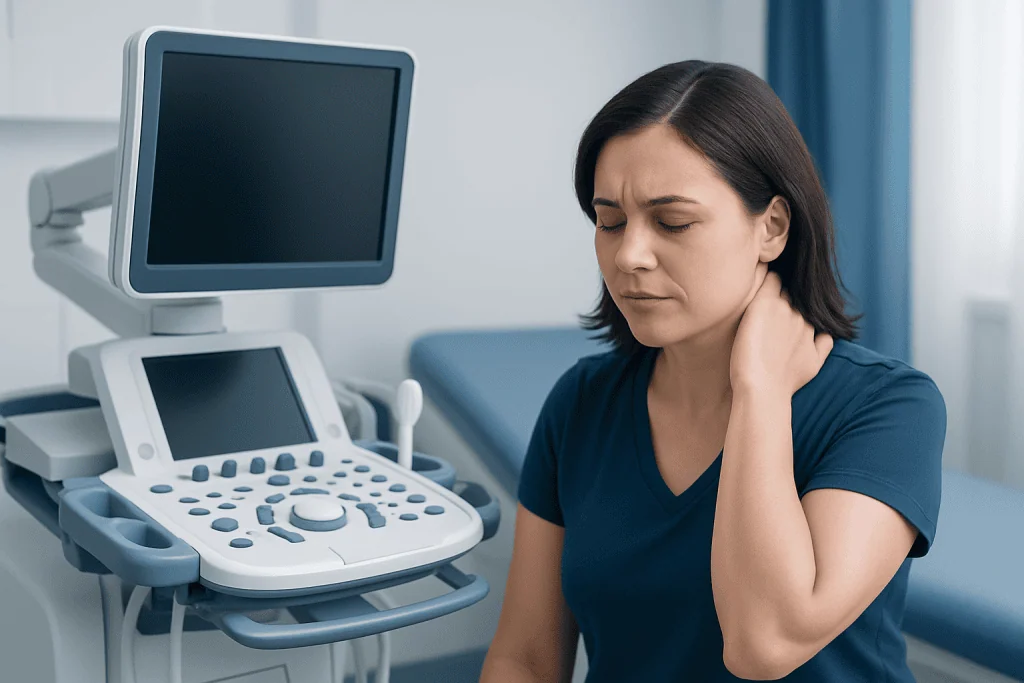
The main symptom is localized pain or stiffness at the back or side of the neck. The pain may feel aching, tight, cramping, or sharp with a particular movement. It is common to have difficulty checking over the shoulder while driving, looking up or down, or getting comfortable in bed.
Muscle tenderness may be felt along the upper shoulders, at the base of the skull, or between the shoulder blades. Some people also develop a tension-type headache because tight neck and scalp muscles can refer pain toward the head. Mild discomfort spreading into the upper shoulder can occur with muscle strain, particularly when nearby muscles are compensating.
A simple muscular crook of the neck should not usually cause persistent arm weakness, loss of hand coordination, widespread numbness, fainting, trouble walking, or problems with bladder or bowel control. These symptoms are not typical of ordinary stiffness and should be assessed promptly. Pain that is severe, worsening, or not improving as expected also deserves medical advice.
Why a Crook of the Neck Happens

Many episodes have no single identifiable cause. Sleeping with the neck turned or unsupported, dozing in a chair, carrying a heavy bag on one shoulder, sudden unaccustomed exercise, or a quick turn of the head may be enough to trigger muscle spasm. Long periods of looking down at a phone, laptop, book, or work surface can also place sustained load on the neck and upper-back muscles.
Stress, fatigue, and poor sleep can increase muscle tension and make pain feel more noticeable. Reduced general activity, weak or tired shoulder-girdle muscles, and an ergonomically unsuitable workstation may contribute to repeated episodes. These factors do not mean that a person has caused their own pain; they are modifiable influences that may be useful to address during recovery.
In children and adults, a head that is persistently tilted or rotated can sometimes be due to acute torticollis, meaning an abnormal neck posture caused by muscle tightening. Torticollis can be temporary, but medical evaluation is particularly important in a child with new neck tilt, pain after trauma, fever, difficulty swallowing, drooling, or an unwell appearance.
Less commonly, neck symptoms may be related to arthritis, disc changes, nerve irritation, inflammatory disease, infection, or injury. The likelihood of these causes depends on a person’s age, health history, mechanism of injury, and accompanying symptoms rather than on the stiffness alone.
How Clinicians Assess Neck Stiffness
For a recent uncomplicated episode, imaging is often not needed. A clinician will usually ask when the pain began, what happened beforehand, whether there was an injury, and whether symptoms travel into an arm or are associated with headache, fever, numbness, or weakness. They will also ask about previous episodes, medical conditions, medicines, and any history of cancer, immune suppression, or osteoporosis.
The examination may include observing posture, checking gentle neck movement, feeling for muscle tenderness, and assessing arm strength, sensation, reflexes, balance, and coordination when appropriate. This process helps identify whether the symptoms appear muscular or whether there are signs of nerve involvement or another cause that needs further investigation.
X-rays, CT scans, or MRI scans may be considered after substantial trauma, when neurological symptoms are present, or when pain remains unexplained or does not improve with appropriate care. Blood tests can be useful if infection or inflammatory disease is suspected. Tests are selected based on clinical need, because scans can show common age-related changes that may not be responsible for the current pain.
Relief and Treatment Options
Early care aims to reduce pain while maintaining comfortable movement. Relative rest is helpful, meaning a person avoids activities that clearly aggravate symptoms but does not stay in bed or keep the neck completely still for long periods. Gentle, frequent movements within a tolerable range can help prevent further stiffness. Normal daily tasks can usually be resumed gradually as comfort allows.
Heat, such as a warm shower or covered heat pack, may relax tight muscles. Some people prefer a wrapped cold pack during the first day or two if the area feels acutely sore after a strain. Either approach should be used for short periods and should not be placed directly on the skin. The better choice is the one that provides safe, temporary comfort.
Over-the-counter pain medicines may be appropriate for some adults, but the safest option depends on age, pregnancy status, allergies, stomach, kidney, liver, heart, and bleeding conditions, and other medicines being taken. A pharmacist or doctor can advise on suitable choices. Prescription medicines are occasionally considered for severe muscle spasm, but they are not appropriate for everyone and may cause drowsiness or other side effects.
Physiotherapy may help if pain persists, recurs, or affects work and daily activity. A physiotherapist can assess movement patterns, guide gradual exercises, and advise on posture and workplace adjustments. Forceful neck stretching, high-velocity manipulation, or attempts to “crack” the neck should be avoided during acute pain unless specifically advised by a qualified clinician.
Self-Care, Recovery and Prevention
A supportive recovery plan focuses on gentle activity rather than perfect posture. It can help to change position regularly, take brief movement breaks during desk work, and avoid holding a phone between the shoulder and ear. When using a screen, positioning it closer to eye level may reduce the amount of sustained neck bending. A headset can be useful for frequent calls.
For sleep, the goal is to keep the neck in a neutral, comfortable position. A pillow that is too high, too flat, or no longer supportive may contribute to discomfort for some people. Side sleepers often need enough support to keep the head aligned with the body, while back sleepers may prefer a pillow that supports the natural curve of the neck. There is no single best pillow for everyone.
As symptoms improve, gradual strengthening of the upper back, shoulders, and deep neck muscles may reduce strain during daily activities. Walking, swimming, and other regular physical activity can also support overall musculoskeletal health when they are comfortable. A clinician or physiotherapist can tailor exercises for people with recurrent pain, previous injury, or an underlying spinal condition.
Most people notice steady improvement within several days and recover within one to two weeks. Recovery is often uneven, with better and worse periods during the day. If symptoms are not improving, repeatedly return after minor triggers, or interfere with sleep and function, a medical review can help identify contributing factors and guide treatment.
When to Seek Medical Care
Medical care should be sought urgently after a major fall, collision, sports impact, or other significant injury, especially if neck pain is severe or the person cannot move the neck normally. Until assessed after a potentially serious injury, it is important to avoid unnecessary neck movement. Emergency evaluation is also needed for new weakness, numbness affecting an arm or leg, loss of coordination, difficulty walking, or changes in bladder or bowel control.
Prompt assessment is important when neck stiffness occurs with fever, a severe or unusual headache, rash, confusion, sensitivity to light, persistent vomiting, or feeling very unwell. These features can indicate conditions beyond a simple muscle spasm. A sudden severe headache or new neurological symptoms, such as facial drooping, speech difficulty, or vision changes, should be treated as an emergency.
A person should arrange a non-urgent medical appointment if pain is worsening, lasts longer than about one to two weeks, repeatedly returns, travels down an arm, or is accompanied by unexplained weight loss or night pain. Acibadem International’s multidisciplinary specialists and JCI-accredited hospitals can assess neck symptoms and coordinate care for international patients when evaluation or treatment is needed.
Frequently asked questions
How long does a crook of the neck usually last?
A simple muscle-related crook of the neck often begins to improve within a few days and resolves within one to two weeks. Recovery can vary depending on the trigger, activity demands, and whether there is an underlying neck problem. Medical advice is sensible if symptoms are worsening or not improving over this timeframe.
Should a person use heat or ice for a crook of the neck?
Both can provide short-term comfort, and the better choice depends on individual preference. Heat may ease muscle tightness, while cold may feel helpful after a recent strain or when the area feels sore. A cloth barrier should be used to protect the skin, and applications should be brief.
Is it safe to exercise with a stiff neck?
Gentle movement is usually preferable to complete rest for uncomplicated neck stiffness. A person should avoid painful forceful stretching, heavy lifting, contact sports, or movements that sharply worsen symptoms. If pain follows an injury or occurs with numbness, weakness, or dizziness, exercise should wait until medical advice is obtained.
Can a crook of the neck cause a headache?
Yes. Tight or irritated muscles in the neck and upper shoulders can contribute to a tension-type headache, often felt at the back of the head or as pressure around the scalp. A severe, sudden, or unusual headache, especially with fever or neurological symptoms, needs urgent assessment.
Why is a crook of the neck worse in the morning?
Symptoms may be noticeable on waking because the neck has remained in one position for several hours or has been supported awkwardly during sleep. Muscles can also become stiff after inactivity. Reviewing pillow comfort and gently moving after waking may help, but persistent morning pain should be discussed with a clinician.
Can a massage help a crook of the neck?
Gentle massage may provide temporary relief for some people with muscle tightness. It should not be painful or forceful, and it is best avoided after significant trauma or when there are neurological symptoms, fever, or severe unexplained pain. A qualified clinician or physiotherapist can advise whether hands-on treatment is suitable.
References
- American Academy of Orthopaedic Surgeons
- National Institute of Neurological Disorders and Stroke
- National Health Service
- Mayo Clinic
- MedlinePlus, U.S. National Library of Medicine
This article is for general information only and is not a substitute for professional medical advice. Please consult a qualified doctor about your individual situation.
Joint and spine care in Turkey — expert assessment & treatment
JCI-accredited · board-certified surgeons · reply within 24h
Add us as a Preferred Source to see more of our trusted health content across Google Search, AI Overviews and Discover.