Crooked Toe Gout: What Patients Need to Know

Gout commonly affects the big toe, but chronic gout can involve other toe joints and change their shape or movement. A toe that looks crooked may result from gout-related joint damage or tophi, but bunions, arthritis, injury, and tendon problems are also possible causes.
Key Takeaways
- Gout commonly affects the big toe, but chronic gout can involve other toe joints and change their shape or movement.
- A toe that looks crooked may result from gout-related joint damage or tophi, but bunions, arthritis, injury, and tendon problems are also possible causes.
- Prompt treatment of acute attacks and long-term uric acid management can help prevent further flares and joint damage.
- Sudden severe pain, redness, warmth, fever, or inability to bear weight requires timely medical assessment.
- Surgery is not usually the first treatment for gout-related toe deformity, but may be considered when pain, severe damage, or functional problems persist.
Crooked toe gout describes a toe that becomes misaligned, enlarged, stiff, or difficult to move in a person with gout. Repeated gout inflammation and deposits of uric acid crystals may damage joints over time, but a crooked toe is not always caused by gout and should be assessed by a qualified clinician.
Crooked Toe Gout: What Does It Mean?
Crooked toe gout usually refers to a toe that appears bent, enlarged, misaligned, or stiff after recurrent gout attacks. Gout is an inflammatory form of arthritis caused by monosodium urate crystals forming in and around a joint when uric acid levels in the body remain high. The big toe joint is a classic location, although gout can also affect smaller toe joints, the midfoot, ankle, knee, and other joints.
During an acute flare, the affected joint may become intensely painful, warm, swollen, and red. Over years, repeated untreated or inadequately controlled inflammation can injure cartilage and bone. In some people, crystal deposits called tophi collect beneath the skin or around tendons and joints. These changes may make a toe look larger or crooked and can limit footwear choices and walking comfort.
However, toe shape alone cannot confirm gout. A bunion, hammertoe, osteoarthritis, rheumatoid arthritis, previous fracture, tendon imbalance, or poorly fitting footwear may also change toe alignment. A clinician can assess whether gout is causing the problem, whether another condition is present, or whether more than one factor is involved.
How Gout May Change Toe Shape and Function
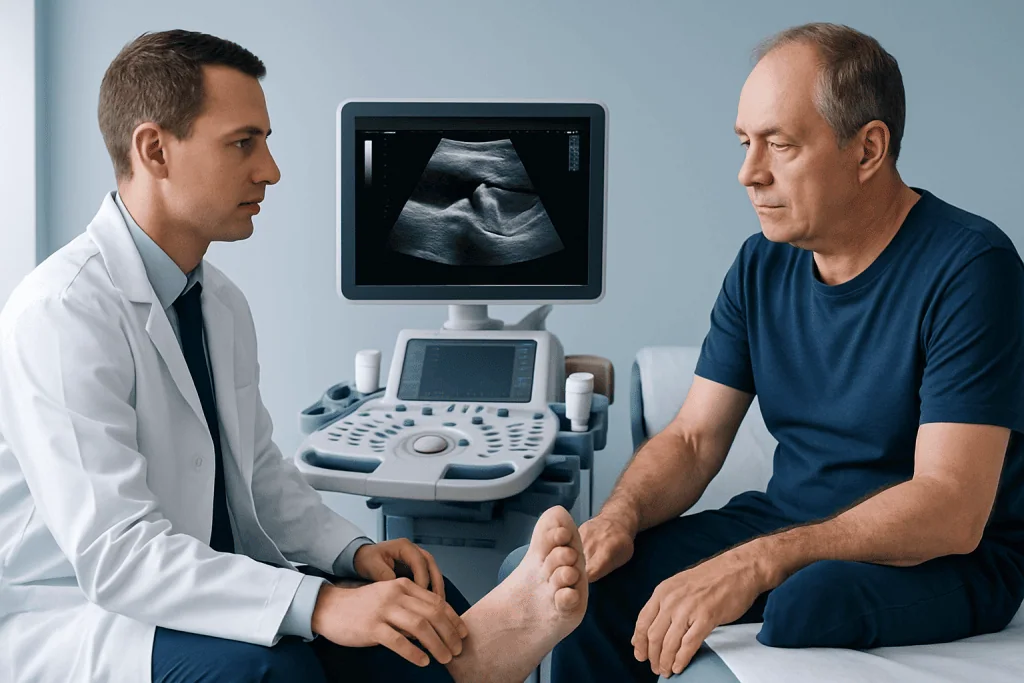
In early gout, symptoms typically come and go. Between attacks, a toe may look and feel normal. With persistent uric acid elevation and repeated inflammation, the joint lining and surrounding soft tissues can gradually become damaged. This may lead to reduced joint motion, a fixed bend at one of the toe joints, loss of the normal joint contour, or a toe that turns toward or away from neighboring toes.
Tophi are firm deposits of urate crystals that can develop on toes, the outer ear, fingers, elbows, Achilles tendon, or elsewhere. Around the foot, they may create visible lumps, pressure areas, or difficulty wearing shoes. Tophi are not always painful, but they can irritate skin, restrict movement, and contribute to joint deformity when they grow around a joint.
A gout-related deformity may affect daily activities differently from an acute flare. Ongoing stiffness, discomfort when pushing off during walking, rubbing against footwear, and recurrent calluses can be important concerns even when severe inflammatory pain is absent. These symptoms deserve attention because effective urate-lowering treatment may help prevent progression and can gradually reduce tophi in many patients.
Symptoms That Suggest Gout or Another Foot Problem

An acute gout attack often begins suddenly, frequently overnight. The joint may be extremely tender, with swelling, redness, heat, and pain that makes even a bedsheet or shoe uncomfortable. Although the big toe base is a common site, pain in a smaller toe does not rule gout out. Attacks often settle over days to a couple of weeks, especially with appropriate care, but they can recur.
Chronic gout may cause more persistent signs, including joint stiffness, decreased range of motion, visible nodules, or a changed toe position. A person may notice that a formerly flexible toe cannot straighten, that the toe joint appears enlarged, or that a shoe suddenly feels too tight in one area. Pain can occur with activity, during pressure from footwear, or during a new inflammatory flare.
Not every painful or deformed toe is gout. A bunion usually affects the joint at the base of the big toe and may make the big toe angle toward the second toe. Hammertoe commonly causes a bend in a smaller toe. Infection, especially when redness and warmth are rapidly worsening, can resemble a gout flare and needs prompt assessment. A clinician should not assume that recurrent foot pain is gout without considering these alternatives.
Why Gout Develops and Who May Be at Risk
Gout develops when uric acid, a substance produced as the body breaks down purines, reaches levels that allow crystals to form. Purines occur naturally in the body and are also found in some foods and drinks. High uric acid can result from the body producing more uric acid, the kidneys removing less of it, or both. An acute flare may be triggered by rapid shifts in uric acid levels as well as illness, dehydration, alcohol intake, certain foods, injury, or surgery.
Risk is influenced by family history, kidney disease, metabolic conditions, excess body weight, high blood pressure, and some medications, including certain diuretics. Alcohol, particularly beer and spirits, and frequent intake of sugar-sweetened beverages may increase risk for some people. Foods such as organ meats and some seafood are high in purines, but diet is only one part of gout risk and should not be viewed as a personal failing.
Having a crooked toe does not necessarily mean a person has advanced gout. Yet recurrent attacks, known high uric acid, or lumps around joints make a gout assessment especially important. Long-term control is aimed at lowering uric acid enough to stop new crystal formation and allow existing deposits to dissolve over time, while also addressing individual health conditions and treatment preferences.
How a Crooked Toe Is Evaluated
A medical evaluation usually begins with questions about the timing of pain, previous attacks, family history, medicines, diet, alcohol use, injuries, and other medical conditions. The clinician examines toe alignment, joint motion, skin changes, lumps, footwear pressure points, and signs of inflammation. They may also examine other joints because gout can affect more than one area over time.
Blood tests can measure uric acid and assess kidney function, but a uric acid result alone does not prove or exclude gout. Uric acid can be normal during an acute flare, and some people with elevated levels never develop gout. When the diagnosis is uncertain, removing a small sample of fluid from an inflamed joint and identifying urate crystals under microscopy is a highly reliable way to confirm gout and exclude joint infection.
Imaging may be useful when there is chronic pain, deformity, suspected tophi, or uncertainty about the cause. X-rays can show joint damage and bone changes, while ultrasound or dual-energy CT may identify urate deposits in selected cases. Imaging can also help distinguish gout-related changes from osteoarthritis, injury, or structural conditions such as bunions and hammertoes.
Treatment Options for Gout-Related Toe Problems
Treatment has two related goals: controlling painful flares and preventing future crystal deposition and joint damage. During a flare, a clinician may recommend anti-inflammatory treatment based on the person’s medical history, kidney function, other medicines, and timing of symptoms. Options can include nonsteroidal anti-inflammatory medicines, colchicine, or corticosteroids. These treatments should be selected with medical guidance because they are not suitable for everyone.
For people with recurrent flares, tophi, chronic gouty arthritis, kidney stones related to uric acid, or gout-related joint damage, a clinician may recommend long-term urate-lowering medicine. These medicines lower uric acid over time rather than providing immediate relief during a flare. Treatment is usually monitored with blood tests and adjusted individually, with the aim of preventing flares and allowing urate deposits to resolve gradually.
A toe deformity that is already fixed may not fully straighten after uric acid control, but controlling gout can help protect remaining joint function and reduce future deposits. Wide, supportive shoes, toe-box modifications, cushioning, and podiatry support can improve comfort. Surgery may be discussed when there is severe structural damage, persistent pain, skin breakdown, infection risk from ulcerated tophi, or major difficulty walking; it is generally considered only after careful assessment of gout control and foot mechanics.
Self-Care, Prevention, and When to Seek Medical Care
Self-care supports, but does not replace, medical gout treatment. During a flare, rest, elevation, and a wrapped cold pack applied briefly may ease discomfort for some people. Staying adequately hydrated, maintaining a weight that supports overall health, limiting alcohol when advised, and reducing sugar-sweetened drinks may help lower flare risk. Dietary changes should be practical and balanced; strict avoidance of every purine-containing food is usually neither necessary nor sustainable.
People taking urate-lowering medicine should take it consistently unless their prescribing clinician advises otherwise. Stopping and starting treatment without advice can destabilize uric acid levels. Keeping a record of flares, medicines, possible triggers, and toe symptoms can help guide follow-up discussions. Comfortable footwear with enough room for swelling or deformity can reduce rubbing and protect the skin.
When to seek medical care: Prompt medical assessment is important for a first episode of severe, red, hot joint pain; a sudden change in toe shape; a lump that breaks the skin; or pain that interferes with walking. Urgent care is needed if joint symptoms occur with fever, chills, feeling unwell, rapidly spreading redness, an open wound, or inability to bear weight, because infection must be ruled out. Acibadem International’s multidisciplinary specialists at JCI-accredited hospitals assess gout and complex foot concerns for international patients, including diagnostic and long-term management planning.
Frequently asked questions
Can gout make a toe permanently crooked?
It can. Repeated inflammation and urate crystal deposits can damage a joint and surrounding tissues over time, potentially leading to stiffness, enlargement, or deformity. Early diagnosis and effective uric acid control can help reduce the likelihood of further damage.
Is a crooked big toe always caused by gout?
No. Bunions, osteoarthritis, prior injuries, tendon problems, and other types of arthritis are common possible causes. A clinician may use examination, blood tests, joint fluid analysis, or imaging to identify the cause.
Can tophi on the toes go away?
Tophi may gradually shrink and sometimes resolve when uric acid is consistently lowered with appropriate long-term treatment. This process can take time, and established joint damage may not completely reverse. Regular follow-up helps determine whether treatment is reaching its intended goal.
Should someone walk on a toe during a gout attack?
Resting the affected foot is often more comfortable during a severe flare, especially when walking increases pain. Gentle movement can be resumed as symptoms improve, but forcing activity through severe pain is usually unhelpful. A clinician can advise on safe activity if there is concern about injury, deformity, or another diagnosis.
What foods should be avoided with gout?
Some people benefit from limiting alcohol, sugar-sweetened beverages, organ meats, and frequent large servings of certain seafood or red meat. Individual dietary advice should take account of overall nutrition, kidney health, diabetes, and other conditions. Diet can support gout management, but it may not replace medication when long-term uric acid lowering is indicated.
When is surgery considered for a gouty toe deformity?
Surgery may be considered when a deformity causes severe persistent pain, major walking limitation, repeated skin problems, ulcerated tophi, or substantial joint destruction. It is not routinely needed for every toe affected by gout. Specialists typically first address inflammation, uric acid control, footwear, and other nonsurgical measures.
This article is for general information only and is not a substitute for professional medical advice. Please consult a qualified doctor about your individual situation.
Gout in Turkey — costs, top hospitals & a free quote
JCI-accredited · board-certified surgeons · reply within 24h
Add us as a Preferred Source to see more of our trusted health content across Google Search, AI Overviews and Discover.
Check your numbers in seconds
BMI, calories, due date, blood pressure and 30+ more clinical calculators — free, instant, doctor-reviewed ranges.

More from the Health Library

Patchouli — Explained by Medical Evidence, Not Myths

E. Coli Meat UTI Study — Explained by Medical Evidence, Not Myths

Sucrose — Explained by Medical Evidence, Not Myths

Cherry: A Complete Medical Overview

Temazepam: What Patients Need to Know