CT Scan Calcium Score: Preparation, Procedure and Results

A calcium score test measures calcified plaque in the coronary arteries, not blood flow or artery narrowing directly. The scan is usually completed within minutes, does not typically need contrast dye or injections, and has no recovery period.
Key Takeaways
- A calcium score test measures calcified plaque in the coronary arteries, not blood flow or artery narrowing directly.
- The scan is usually completed within minutes, does not typically need contrast dye or injections, and has no recovery period.
- A score of zero is reassuring but does not rule out all coronary artery disease, particularly non-calcified plaque.
- Results should be interpreted alongside age, sex, symptoms, family history, cholesterol, blood pressure, diabetes and smoking status.
- Chest pain, breathlessness or other possible heart symptoms need prompt medical assessment and should not be evaluated with a screening calcium score alone.
A CT scan calcium score is a low-radiation, non-invasive scan that looks for calcium within the arteries supplying the heart. The result can help a clinician estimate coronary artery disease risk and guide prevention decisions, especially when a person’s cardiovascular risk is uncertain.
Overview: what a CT scan calcium score shows
A CT scan calcium score, also called a coronary artery calcium (CAC) score, is a specialized computed tomography scan of the heart. It detects and measures calcium deposits in the walls of the coronary arteries, which are the blood vessels that deliver oxygen-rich blood to the heart muscle. These deposits are a marker of atherosclerosis, commonly called plaque buildup.
The scan produces a numerical result, often reported as an Agatston score. In general, a higher score indicates a greater amount of calcified plaque and a higher likelihood of coronary artery disease. The result is not a diagnosis on its own: clinicians consider it together with a person’s age, sex, medical history, lifestyle and other cardiovascular risk factors.
A calcium score is primarily a risk-assessment tool for people without acute symptoms. It does not show every type of plaque, measure how well blood flows through the arteries, or replace urgent assessment for chest pain. For a broader explanation of plaque-related heart disease, see coronary artery disease.
How the test works and who may benefit
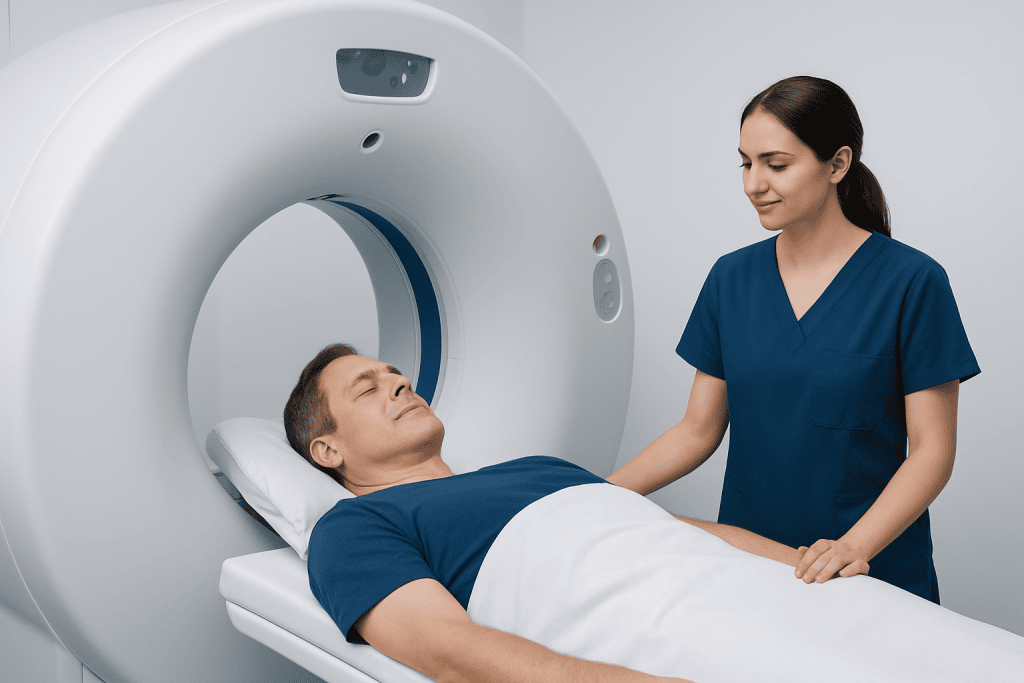
During the scan, a CT machine takes many detailed X-ray images while the heart is briefly held still between beats. Computer software identifies calcium in the coronary arteries and calculates the total amount. Because calcium appears bright on CT images, it can be measured reliably without a contrast injection in most calcium-scoring examinations.
The test may be useful for adults whose risk of heart disease is uncertain after a routine cardiovascular risk assessment. For example, a clinician may discuss it with someone who has borderline or intermediate estimated risk, a family history of early heart disease, high cholesterol, high blood pressure, diabetes, or a history of smoking. It can support a shared decision about the intensity of preventive measures, including lifestyle changes and cholesterol-lowering treatment.
It is not routinely appropriate for everyone. People with known coronary artery disease, previous coronary stents or bypass surgery generally need other forms of follow-up. It is also usually not used during pregnancy unless there is a compelling clinical reason. A clinician can determine whether cardiology assessment and preventive care or another type of heart test is more suitable.
Preparation: what should you not do before a calcium score test?

Preparation requirements are usually simple, but the imaging center’s instructions should always take priority. Many centers ask patients to avoid strenuous exercise, smoking and caffeine for several hours before the appointment because these can temporarily increase the heart rate. A slower, steadier heart rate can help produce clear images.
Patients should not stop prescribed medicines unless their doctor specifically advises it. It is important to tell the care team about all medicines, supplements, allergies, pregnancy or the possibility of pregnancy, and any previous heart procedures. Comfortable clothing is helpful, and metal jewelry or clothing items around the chest may need to be removed.
Some facilities recommend avoiding food for a short time beforehand, while others allow normal meals. This varies by local protocol and whether additional imaging is planned. Patients should confirm fasting instructions when booking rather than making unnecessary dietary changes on their own.
Can I drink coffee before a CT calcium score? It is commonly best to avoid coffee and other caffeinated drinks on the day of the scan, or for the period specified by the imaging center. Caffeine may raise the heart rate and make image timing more difficult. Water is usually acceptable, but patients should follow the instructions given for their particular appointment.
What happens during the procedure and after the scan
On arrival, a radiology staff member reviews the person’s medical information and explains the scan. Electrocardiogram (ECG) leads are placed on the chest to synchronize image capture with the heartbeat. The person then lies on their back on a narrow table, which moves through the circular CT scanner.
During image acquisition, the patient is asked to remain still and hold their breath for a few seconds. The actual imaging portion is very brief, and the full appointment often takes around 10 to 20 minutes. There are usually no needles, contrast dye or sedation required for a standard calcium score scan.
After the test, people can generally return to work, driving, eating and usual activities immediately. There is no physical recovery timeline because the scan is non-invasive. A radiologist reviews the images, and the ordering clinician discusses the score and what it means in the context of the person’s overall health.
In some cases, the calcium scan may be one part of a wider cardiac evaluation. Depending on symptoms and risk factors, a clinician may recommend additional investigations or a comprehensive heart check-up rather than relying on a calcium score alone.
Understanding results: what is a normal calcium score for a 70 year old?
There is no single “normal” calcium score for a 70-year-old because coronary calcium becomes more common with age and results vary by sex, ancestry and individual risk factors. A score of zero means no calcified plaque was detected and is generally associated with a lower short-term risk of coronary events. However, it does not completely exclude non-calcified plaque or eliminate the need to manage other risk factors.
Scores are often described in broad categories: 1 to 99 indicates a small amount of calcified plaque; 100 to 299 indicates a moderate amount; and 300 or above indicates a larger plaque burden. These ranges are not a measure of how blocked an artery is, and they should not be used to predict an individual outcome without clinical interpretation.
For an older adult, a clinician may compare the score with expected values for people of the same age and sex. A score that is higher than expected may be particularly informative, while any detectable calcium can still be relevant when deciding on prevention. Blood pressure, cholesterol, diabetes, kidney health, smoking, family history and symptoms remain important parts of the assessment.
A higher score may prompt discussion of risk-factor treatment, such as a heart-healthy eating pattern, regular activity, smoking cessation and appropriate medication when indicated. It does not automatically mean that an invasive procedure is needed.
Benefits, limits and risks of a CT calcium score
The main benefit of a CT scan calcium score is that it can provide individualized information about calcified coronary plaque. For some people, this information helps clarify whether preventive treatment should be started or intensified. A result of zero may also help some carefully selected patients and clinicians avoid treatment that is unlikely to offer meaningful benefit at that time.
The scan has limitations. It does not identify soft, non-calcified plaque well, does not show whether a specific artery is severely narrowed, and does not evaluate causes of chest discomfort other than coronary calcification. A person can have a low or zero score and still need urgent evaluation if concerning symptoms develop.
CT imaging uses a small amount of ionizing radiation. The dose is generally low, but radiation exposure is still considered when deciding whether the test is appropriate. Incidental findings outside the heart can occasionally lead to additional tests. False reassurance or unnecessary worry can be avoided by discussing the result with a qualified clinician rather than interpreting the number in isolation.
Is it worth getting a CT calcium score? Prevention and next steps
Is it worth getting a CT calcium score? It can be worthwhile when the result is likely to change a prevention plan, particularly for an adult without symptoms who has uncertain cardiovascular risk. It may be less useful when a person is already known to have coronary disease or when risk is clearly very low or clearly high based on existing information. The best decision is individualized and made with a clinician.
Regardless of the score, the foundations of heart health remain important: avoiding tobacco, following a dietary pattern rich in vegetables, fruits, whole grains and unsaturated fats, being physically active within personal ability, sleeping well, and managing blood pressure, cholesterol and blood sugar. A calcium score is not a substitute for these measures.
People with a high score may need a more detailed cardiovascular review to establish the most appropriate prevention strategy. Acibadem International’s multidisciplinary specialists and JCI-accredited hospitals assess cardiovascular risk and coordinate care for international patients when needed.
Repeat scanning is not automatically necessary. Whether to repeat a test, and when, depends on the original score, changes in health, current treatment and whether a future result would alter management.
When to seek medical care
A calcium score test is not designed to assess an emergency. Anyone with new, severe or persistent chest pressure, chest pain that spreads to the arm, jaw, back or neck, unexplained shortness of breath, fainting, cold sweating, nausea with chest discomfort, or a sudden sense of severe illness should seek emergency medical care immediately.
A non-urgent medical appointment is appropriate for recurring chest discomfort during activity, a decline in exercise tolerance, palpitations, dizziness, or questions about personal cardiovascular risk. People with diabetes, chronic kidney disease, high cholesterol, high blood pressure, smoking history or a close relative with early heart disease may also benefit from a routine risk discussion.
For symptoms suggestive of a possible heart problem, a clinician may use ECG testing, blood tests, echocardiography, stress testing or coronary CT angiography depending on the situation. The appropriate test depends on the symptoms, examination findings and level of immediate risk.
Frequently asked questions
What is a CT scan calcium score?
A CT scan calcium score is a non-invasive heart scan that measures calcium deposits in the coronary arteries. These deposits indicate calcified atherosclerotic plaque and can help estimate future cardiovascular risk. The score is interpreted alongside other health information rather than used alone.
Does a calcium score test require contrast dye?
A standard coronary calcium score scan usually does not require contrast dye, injections or sedation. ECG leads are placed on the chest so the scanner can take images at the right point in the heartbeat. Other cardiac CT tests may use contrast, so patients should confirm which examination has been ordered.
How long does a CT calcium score test take?
The scan itself generally takes only a few minutes, while the complete visit may take around 10 to 20 minutes. Patients are asked to lie still and briefly hold their breath while images are taken. They can normally return to regular activities immediately afterward.
What does a calcium score of zero mean?
A score of zero means that no calcified plaque was detected in the coronary arteries on the scan. This is generally associated with lower near-term risk, but it does not rule out non-calcified plaque or all heart disease. Ongoing risk assessment remains important, especially for people with diabetes, smoking history, strong family history or symptoms.
Can a high calcium score show a blocked artery?
A high score indicates a greater amount of calcified plaque, but it does not show exactly how narrowed a particular artery is. Some calcified plaque may not significantly obstruct blood flow, while narrowing can sometimes occur in areas with less calcium. Further testing may be needed if symptoms or clinical findings suggest reduced blood flow to the heart.
Should someone with chest pain get a calcium score test?
A calcium score is mainly used for preventive risk assessment in people without acute symptoms. New or concerning chest pain should be assessed promptly by a medical professional, as more appropriate urgent tests may be needed. A low calcium score should never be used to dismiss potentially serious symptoms.
References
- American College of Cardiology
- American Heart Association
- Society of Cardiovascular Computed Tomography
- Radiological Society of North America
- National Heart, Lung, and Blood Institute
This article is for general information only and is not a substitute for professional medical advice. Please consult a qualified doctor about your individual situation.
Heart care in Turkey — expert evaluation and treatment
JCI-accredited · board-certified surgeons · reply within 24h
Add us as a Preferred Source to see more of our trusted health content across Google Search, AI Overviews and Discover.
Check your numbers in seconds
BMI, calories, due date, blood pressure and 30+ more clinical calculators — free, instant, doctor-reviewed ranges.