Cure for gastric: Common Causes, Warning Signs, and When to Worry

A cure for gastric symptoms depends on the specific cause, not just the symptom itself. Common causes include indigestion, gastritis, acid reflux, stomach infections, ulcers, food intolerance, and stress.
Key Takeaways
- A cure for gastric symptoms depends on the specific cause, not just the symptom itself.
- Common causes include indigestion, gastritis, acid reflux, stomach infections, ulcers, food intolerance, and stress.
- Persistent pain, vomiting, black stools, weight loss, or trouble swallowing need prompt medical evaluation.
- Diet changes, avoiding triggers, and prescribed treatment often relieve symptoms effectively.
- Repeated or severe symptoms should not be self-treated for long without medical advice.
There is no single cure for gastric symptoms because “gastric” usually refers to a group of stomach-related problems such as indigestion, gastritis, acid-related irritation, gas, or ulcers. In many cases, symptoms can improve with the right diagnosis, simple lifestyle changes, and medical treatment tailored to the underlying cause.
Overview: Is There a Cure for Gastric Problems?
Many people search for a “cure for gastric” when they have bloating, upper abdominal discomfort, burning, nausea, or excessive belching. In everyday use, “gastric” is not a single diagnosis. It usually describes stomach or upper digestive symptoms that may come from indigestion, irritation of the stomach lining, acid reflux, ulcers, infection, or even eating habits.
For that reason, the best cure is to identify the cause first. Some gastric symptoms improve quickly with smaller meals, avoiding trigger foods, or short-term medicines. Others need treatment for conditions such as gastritis, peptic ulcer disease, or acid-related disorders.
A patient-friendly way to think about it is this: symptom relief and long-term cure are not always the same thing. Antacids may calm discomfort for a few hours, but if symptoms keep coming back, a doctor may need to check for an underlying issue. Early evaluation can help prevent complications and guide the most effective treatment.
Common Symptoms People Describe as “Gastric”

“Gastric” symptoms can feel different from person to person. Some notice a burning sensation in the upper abdomen or chest, while others mainly have fullness, bloating, belching, nausea, or discomfort after eating. These symptoms may be occasional and mild, or frequent enough to affect daily life.
Common symptoms include:
- Upper abdominal pain or burning
- Bloating or a feeling of pressure after meals
- Excess gas or frequent belching
- Nausea or an unsettled stomach
- Early fullness when eating
- Heartburn or sour fluid rising into the throat
- Loss of appetite
Symptoms may appear after large meals, spicy or fatty foods, alcohol, caffeine, or lying down soon after eating. Some people also notice symptoms during stressful periods. While this pattern often points to indigestion or reflux, repeated or worsening symptoms should still be assessed properly rather than assumed to be harmless.
What Causes Gastric Symptoms?
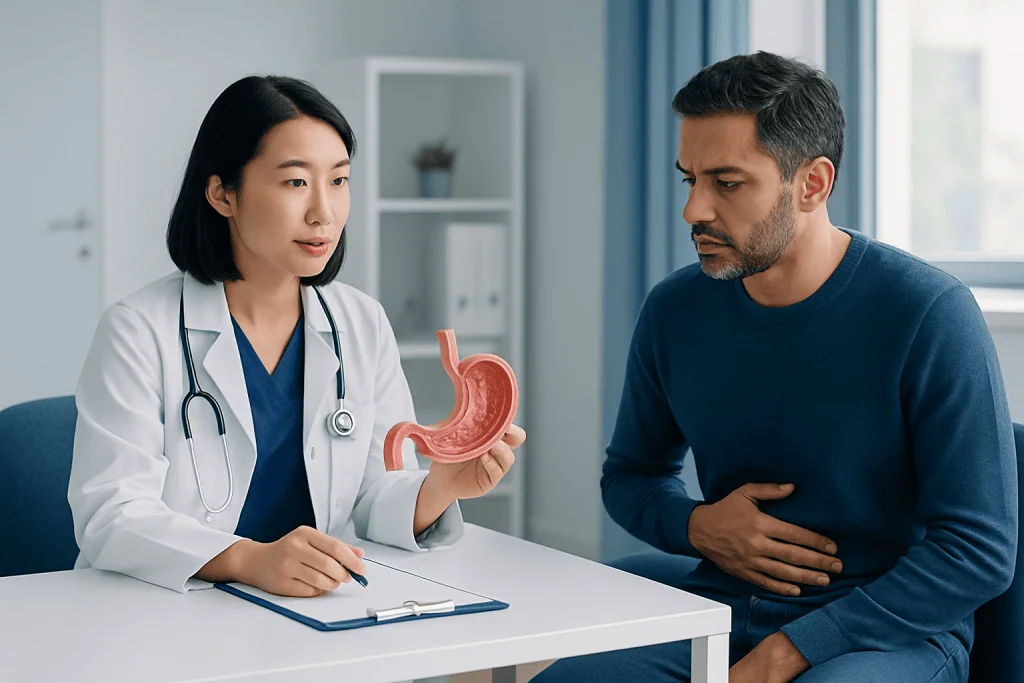
Several conditions can cause what people call gastric trouble. One of the most common is indigestion, also known as dyspepsia, which may cause discomfort, bloating, and early fullness. Another common cause is inflammation of the stomach lining, called gastritis, which can happen with certain medicines, alcohol use, infection, or prolonged irritation.
Stomach acid can also play a role. Acid reflux may cause heartburn and sour regurgitation, while peptic ulcers can lead to burning stomach pain, especially when the stomach is empty. Some ulcers are linked to Helicobacter pylori infection, a bacterium that can irritate the stomach and duodenum. In these cases, proper testing and treatment are important because symptom relief alone does not remove the cause.
Other possible causes include food intolerance, overeating, constipation, viral stomach infections, gallbladder problems, and, less commonly, more serious diseases affecting the digestive system. Symptoms can overlap, which is why persistent stomach complaints are best evaluated in a structured way instead of relying only on home remedies.
People with ongoing upper digestive symptoms may sometimes need assessment for related conditions such as gastroesophageal reflux disease, especially if heartburn is a frequent feature.
Risk Factors That Can Make Gastric Problems Worse
Certain habits and health factors can increase the chance of gastric symptoms or make existing symptoms worse. Eating quickly, having very large meals, lying down after eating, and regularly consuming fatty, spicy, or highly acidic foods can all contribute. Alcohol and smoking may irritate the stomach lining and worsen reflux or gastritis.
Some medicines are also important. Pain relievers such as nonsteroidal anti-inflammatory drugs can damage the stomach lining in some people, especially if taken often or without medical guidance. Stress does not directly cause every stomach condition, but it can worsen symptoms, eating patterns, and sensitivity to discomfort.
Other risk factors include obesity, pregnancy, older age, a history of ulcers, H. pylori infection, and certain chronic conditions. Recognizing these factors helps doctors understand whether symptoms are more likely to be temporary irritation or a sign of a condition that needs specific treatment.
How Doctors Find the Cause
Diagnosis usually begins with a careful history. A doctor may ask when symptoms started, whether they are linked to meals, what medicines are being taken, and whether there are alarm features such as weight loss, vomiting, or bleeding. This step is important because the pattern of symptoms often gives useful clues.
Depending on the situation, tests may include blood work, stool tests, or testing for H. pylori infection. If symptoms are persistent, severe, or accompanied by warning signs, a doctor may recommend an upper endoscopy to look directly at the esophagus, stomach, and upper small intestine. This can help detect inflammation, ulcers, bleeding, or other abnormalities. In some cases, evaluation may include endoscopy as part of a thorough digestive assessment.
Doctors may also consider whether symptoms could be coming from outside the stomach, such as the gallbladder, pancreas, or heart. Because upper abdominal pain and chest discomfort can sometimes overlap, self-diagnosis is not always reliable. A clear diagnosis helps match treatment to the actual cause and improves the chance of lasting relief.
Treatment Options: Relief Depends on the Cause
The most effective cure for gastric symptoms depends on what is causing them. For simple indigestion, treatment may focus on smaller meals, slower eating, avoiding known triggers, and short-term symptom relief. If symptoms are related to excess acid, doctors may suggest medicines that reduce stomach acid production or neutralize acid. These are often used alongside lifestyle changes rather than as a complete solution on their own.
If gastritis or an ulcer is present, treatment may involve stopping irritating medicines when medically appropriate, reducing alcohol intake, and using prescribed acid-lowering therapy. When H. pylori infection is found, doctors usually treat it with a specific combination of medicines. This is important because clearing the infection can allow healing and reduce the chance of symptoms returning.
People with significant reflux symptoms may benefit from a broader plan that includes weight management, meal timing, and targeted therapy. In selected cases, specialists may discuss advanced evaluation or procedures related to gastroenterology care or, when appropriate, treatment pathways for persistent reflux. If symptoms are severe, long-lasting, or linked to complications, a specialist can decide whether further treatment beyond standard medicines is needed.
Near the end of the care pathway, some patients may seek support at centers with multidisciplinary digestive specialists. Acibadem International’s JCI-accredited hospitals evaluate and treat digestive conditions for international patients, including problems involving the stomach and upper gastrointestinal tract.
Prevention and Self-Care for Mild Symptoms
Many mild gastric symptoms can improve with practical self-care. Helpful steps include eating smaller portions, avoiding heavy late-night meals, chewing food well, and limiting foods that repeatedly trigger discomfort. Trigger foods differ from person to person, but often include very fatty meals, spicy foods, chocolate, caffeine, carbonated drinks, and alcohol.
It can also help to stay upright for a few hours after eating, maintain a healthy weight, stop smoking, and manage stress in realistic ways. Keeping a simple food and symptom diary may reveal patterns that are easy to miss. This can be useful to share with a doctor if symptoms continue.
Self-care has limits, however. Repeated use of over-the-counter remedies without understanding the cause may delay diagnosis. If symptoms last more than a short time, keep returning, or interfere with eating and sleep, medical advice is a safer next step than continuing trial-and-error treatment at home.
When to Seek Medical Care
Medical care is important if gastric symptoms are severe, recurrent, or unusual for that person. A doctor should evaluate pain that does not improve, symptoms that wake someone from sleep, or digestive symptoms that are becoming more frequent over time. Ongoing heartburn, upper abdominal pain, and unexplained nausea all deserve attention if they persist.
Prompt medical evaluation is especially important if there is vomiting blood, black or tarry stools, unintentional weight loss, difficulty swallowing, persistent vomiting, fainting, chest pain, or signs of dehydration. These symptoms can point to bleeding, an ulcer complication, significant inflammation, or another condition that should not be treated only at home.
Older adults, people with a history of ulcers, and those taking regular pain relievers or blood-thinning medicines should be particularly cautious. If there is any doubt about the seriousness of symptoms, it is sensible to contact a qualified doctor rather than wait for them to pass.
Frequently asked questions
What is the best cure for gastric problems?
The best cure depends on the cause of the symptoms. Mild indigestion may improve with diet changes and short-term medicines, while gastritis, reflux, or ulcers may need targeted treatment from a doctor. If symptoms keep returning, proper diagnosis is usually the most important step.
Can gastric symptoms go away on their own?
Yes, mild symptoms caused by overeating, trigger foods, or temporary irritation can sometimes settle within hours or days. However, frequent or persistent symptoms should not be ignored, especially if they affect eating, sleep, or daily activities. Recurrent symptoms may signal an underlying condition that needs medical care.
Is gastric the same as gastritis?
No. “Gastric” is a broad everyday term people use for stomach-related discomfort, while gastritis is a specific medical condition involving inflammation of the stomach lining. Not all gastric symptoms are caused by gastritis.
What foods should be avoided if someone has gastric symptoms?
Common triggers include very fatty foods, spicy meals, alcohol, caffeine, chocolate, and carbonated drinks. Large portions and late-night eating may also worsen symptoms. Food triggers vary, so a symptom diary can help identify personal patterns.
When should someone worry about gastric pain?
Medical advice is important if the pain is severe, keeps coming back, or does not improve. Warning signs include black stools, vomiting blood, trouble swallowing, unexplained weight loss, chest pain, or persistent vomiting. These symptoms need prompt assessment.
Can stress cause gastric symptoms?
Stress may not be the only cause, but it can make digestive symptoms feel worse and may affect appetite, eating speed, and sensitivity to discomfort. It can also worsen conditions such as indigestion or reflux in some people. Stress management may help, but ongoing symptoms still need proper evaluation.
References
- National Institute of Diabetes and Digestive and Kidney Diseases
- American College of Gastroenterology
- National Health Service
- Mayo Clinic
- World Gastroenterology Organisation
This article is for general information only and is not a substitute for professional medical advice. Please consult a qualified doctor about your individual situation.
Persistent digestive symptoms? Get evaluated in Turkey
JCI-accredited · board-certified surgeons · reply within 24h
Add us as a Preferred Source to see more of our trusted health content across Google Search, AI Overviews and Discover.