Cure Groin Strain — Explained by Medical Evidence, Not Myths

Most groin strains improve with time, activity modification, and structured rehabilitation. The best approach depends on the severity of the muscle or tendon injury.
Key Takeaways
- Most groin strains improve with time, activity modification, and structured rehabilitation.
- The best approach depends on the severity of the muscle or tendon injury.
- Persistent groin pain is not always a strain and may need medical evaluation.
- Returning to sport too early can delay healing and increase the risk of reinjury.
- Imaging and specialist assessment may help when pain is severe, recurrent, or unclear.
A true “cure groin strain” is not usually one quick fix. Most groin strains heal with the right combination of rest, gradual rehabilitation, and an accurate diagnosis to rule out other causes of groin pain.
Overview: Can a Groin Strain Be Cured?
For most people, the answer to “can a groin strain be cured?” is yes, but the cure is usually healing over time rather than an instant remedy. A groin strain is an injury to the muscles or tendons of the inner thigh, often involving the adductor muscles that help bring the legs together and stabilize movement. With appropriate care, many mild and moderate strains recover well.
What matters most is understanding that “cure groin strain” does not mean forcing activity through pain or relying on myths such as aggressive stretching from day one. Evidence-based care usually includes early protection of the injured area, symptom-guided movement, and a gradual strengthening plan. This helps the tissue repair while restoring flexibility, balance, and function.
It is also important to know that not every pain in the groin is caused by a strain. Hip joint problems, hernias, tendon disorders, and other conditions can cause similar symptoms. If pain is persistent, severe, or repeatedly returns, a clinician may check for related problems such as hip pain or recommend a more detailed musculoskeletal assessment.
Symptoms and How a Groin Strain Feels
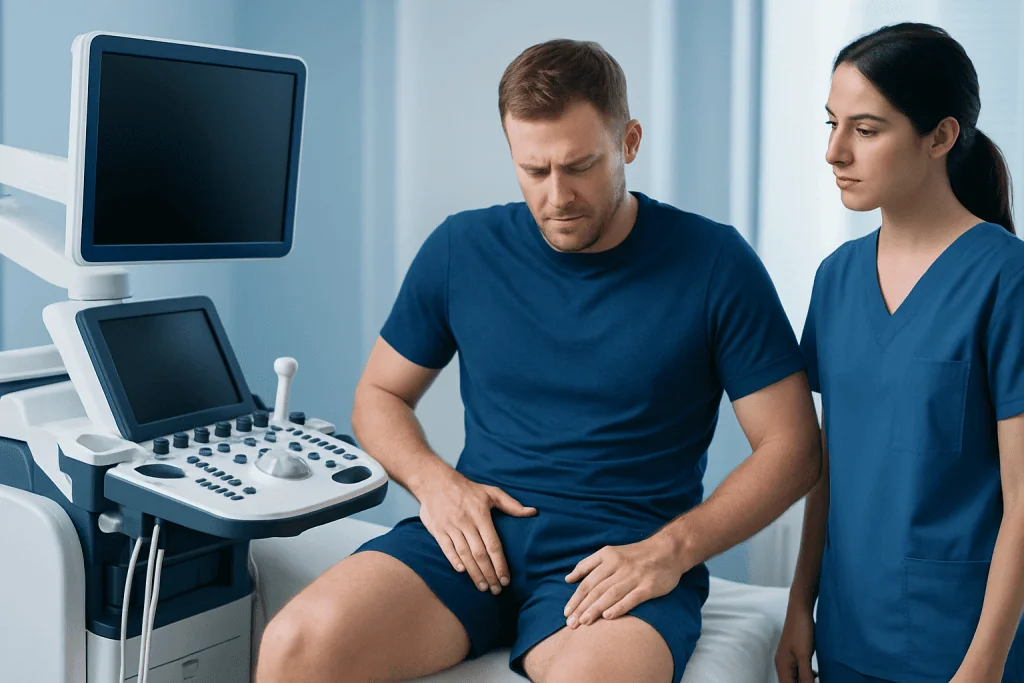
A groin strain often causes pain in the inner thigh or where the thigh meets the pelvis. Some people feel a sudden sharp pain during sprinting, kicking, twisting, changing direction, or overstretching. Others notice pain building more gradually after exercise, especially if the area has been overloaded repeatedly.
Common symptoms can include tenderness, swelling, bruising, stiffness, and pain when bringing the legs together or lifting the knee. Walking may be uncomfortable, and sports movements such as cutting, skating, kicking, or sudden acceleration may become difficult. In more significant injuries, there may be weakness or a sense that the muscle cannot generate its usual force.
Symptoms vary by severity. A mild strain may cause soreness but allow continued walking. A moderate strain can make normal exercise difficult. A severe strain may cause immediate pain, marked weakness, or trouble bearing weight. These differences matter because recovery time and treatment intensity often depend on how much tissue has been injured.
What Causes a Groin Strain and Who Is at Risk?

Groin strains usually happen when the inner thigh muscles are stretched beyond their capacity or forced to contract quickly under load. This is common in sports that require sprinting, kicking, side-stepping, sudden stops, or rapid changes in direction. Football, hockey, tennis, martial arts, and running sports commonly place stress on this area.
Risk factors include poor conditioning, muscle fatigue, previous groin injury, reduced hip strength, limited flexibility, and returning to full activity too quickly after time off. Weakness in the core, hips, or pelvis can increase strain on the adductor muscles. In some cases, training errors such as increasing intensity too quickly or skipping warm-up can also contribute.
Not all groin pain comes from the muscle itself. Sometimes the pain is related to tendons, the hip joint, or nearby structures. Doctors may also consider sports injuries more broadly when symptoms overlap, especially in athletes with ongoing or repeated pain. A clear diagnosis helps guide the safest path to recovery.
Diagnosis: Why the Right Diagnosis Matters More Than a Quick Fix
The diagnosis of a groin strain begins with a medical history and physical examination. A doctor or physiotherapist will usually ask how the pain started, where it is felt, what movements trigger it, and whether there is bruising, weakness, or difficulty walking. They may gently test hip motion, muscle strength, and pain with resisted leg movement.
This step is important because several conditions can mimic a groin strain. These can include a hip labral problem, inguinal hernia, tendon irritation, stress injury, or pain referred from the lower back. If symptoms are severe, prolonged, or confusing, imaging may be advised. Ultrasound can help evaluate soft tissues, while MRI may show the extent of a muscle or tendon injury in more detail.
Some people need a more complete orthopedic evaluation, especially when pain does not improve as expected or keeps recurring with activity. In selected cases, a specialist may recommend orthopedic assessment to confirm the diagnosis and plan recovery. Accurate diagnosis often prevents unnecessary treatments and shortens the road back to normal movement.
Treatment Options Supported by Medical Evidence
The most effective cure groin strain approach usually starts with relative rest, not complete immobility. In the early phase, reducing painful activity allows the injured tissue to begin healing. Ice, compression, and short-term activity modification may help manage pain and swelling. However, prolonged inactivity can lead to stiffness and weakness, so gentle movement is often reintroduced as symptoms allow.
Rehabilitation is the mainstay of treatment. A structured program typically progresses from pain-limited range-of-motion work to light strengthening, then to more demanding exercises for the adductors, hips, core, and balance. Later stages may include sport-specific drills, controlled running, and change-of-direction work. This stepwise approach is more helpful than resting until pain disappears and then suddenly returning to full activity.
Pain relief strategies may include over-the-counter medicines when appropriate, but medication alone does not heal the injury. Massage, taping, and manual therapy may support comfort for some people, though they work best when combined with active rehabilitation. If walking is difficult, symptoms are severe, or diagnosis is uncertain, a physician may suggest physical therapy and rehabilitation to guide safe progression.
Surgery is uncommon for a typical groin strain. It may be considered only in selected cases, such as major tendon injury, avulsion, or persistent symptoms linked to another structural problem. If there is concern for a more complex injury around the pelvis or hip, doctors may investigate further and, when relevant, discuss options through sports medicine and traumatology services.
Prevention and Self-Care During Recovery
Self-care plays an important role in both healing and prevention. The goal is to keep the body moving without repeatedly overloading the injured tissue. Many people benefit from temporarily avoiding sprinting, kicking, lateral movements, and deep stretching that reproduces sharp pain. As symptoms settle, movement can increase gradually.
Helpful recovery habits often include a progressive warm-up, strengthening of the adductor muscles, hip stabilizers, and core, and a gradual return to sport. Improving mechanics during running, cutting, and kicking may also reduce strain on the groin. Good sleep, hydration, and balanced nutrition support tissue recovery, even though they do not replace rehabilitation.
A practical self-care plan may include:
- Reducing activities that trigger pain
- Using cold packs early for comfort
- Starting gentle exercises as advised by a clinician
- Progressing strength before returning to full sport
- Warming up properly before exercise
- Addressing previous injuries or movement imbalances
Stretching has a role, but timing matters. Stretching too aggressively in the painful early stage can worsen symptoms. Later in recovery, flexibility work may be added alongside strengthening. For persistent or recurrent cases, a more tailored rehabilitation plan is often better than trying generic exercises from the internet.
When to Seek Medical Care
Medical care is recommended if groin pain is severe, followed a sudden popping sensation, or makes it difficult to walk or bear weight. A person should also seek assessment if there is significant swelling, bruising, fever, a visible lump in the groin, or pain that involves the testicle, abdomen, or hip. These features may point to something other than a simple strain.
Evaluation is also a good idea when symptoms do not improve after a reasonable period of self-care, or when pain repeatedly returns with training. Recurrent groin pain may suggest incomplete healing, a tendon problem, a hip issue, or another source of overload that needs targeted treatment. Early guidance can help prevent a minor strain from becoming a long-term problem.
For international patients who need specialist evaluation, Acibadem International offers diagnosis and treatment through multidisciplinary specialists in JCI-accredited hospitals. This can be helpful when persistent groin pain needs coordinated input from orthopedic, rehabilitation, and imaging teams.
Frequently asked questions
What is the fastest way to cure groin strain?
There is no instant cure, but the fastest safe approach is usually early activity modification followed by progressive rehabilitation. Rest alone may reduce pain at first, but strength and function need to be rebuilt before normal sport or exercise resumes.
How long does a groin strain take to heal?
Healing time depends on the severity of the injury and the person’s activity level. Mild strains may improve within a few weeks, while moderate or more significant injuries can take longer, especially if return to sport is rushed.
Should a person stretch a groin strain?
Gentle stretching may help later in recovery, but aggressive stretching early on can aggravate the injury. It is usually better to let pain guide the process and combine flexibility work with strengthening and gradual loading.
Can walking make a groin strain worse?
Light walking is often acceptable if it does not significantly increase pain or cause limping. If walking is painful, limited, or getting worse, the person should reduce activity and consider medical advice.
How can someone tell if groin pain is not just a strain?
Pain that persists, keeps returning, causes a lump, spreads to the abdomen or testicle, or is linked to hip clicking, locking, or deep joint pain may suggest another condition. A medical assessment can help distinguish a muscle strain from tendon, hip, hernia, or other causes.
Is surgery needed for a groin strain?
Most groin strains do not require surgery and improve with conservative treatment. Surgery is usually reserved for uncommon situations such as major tendon injury, avulsion, or another structural problem confirmed by specialist evaluation.
References
- American Academy of Orthopaedic Surgeons
- National Health Service
- American College of Sports Medicine
- American Orthopaedic Society for Sports Medicine
This article is for general information only and is not a substitute for professional medical advice. Please consult a qualified doctor about your individual situation.
Explore treatments in Turkey — costs, top hospitals & a free quote
JCI-accredited · board-certified surgeons · reply within 24h
Add us as a Preferred Source to see more of our trusted health content across Google Search, AI Overviews and Discover.

More from the Health Library

Projectile Vomiting: What Patients Need to Know

Lactulose — Explained by Medical Evidence, Not Myths

Lasix: What Patients Need to Know

DNA Test — Explained by Medical Evidence, Not Myths

Coffee and Gluten-Free Diets: What to Check