DNA Test — Explained by Medical Evidence, Not Myths

A DNA test looks at genetic material, but not every test answers the same question. Some DNA tests help diagnose inherited conditions, while others estimate risk rather than confirm disease.
Key Takeaways
- A DNA test looks at genetic material, but not every test answers the same question.
- Some DNA tests help diagnose inherited conditions, while others estimate risk rather than confirm disease.
- Results can be highly accurate for the DNA markers tested, yet still have important limits.
- Medical genetic testing is different from direct-to-consumer testing and usually includes professional guidance.
- A result should be interpreted alongside personal history, family history, symptoms, and other medical findings.
A dna test examines genetic material to answer specific questions about ancestry, biological relationships, or certain health risks. It can provide useful information, but the meaning of the result depends on the type of test, the quality of the laboratory, and careful interpretation by qualified professionals.
What Is a DNA Test?
A dna test is a laboratory analysis of a person’s genetic material. In practical terms, it looks for specific patterns, changes, or markers in DNA to answer a defined question, such as whether two people are biologically related, whether someone carries a genetic variant linked to disease, or whether certain inherited traits are present.
Medical evidence shows that DNA testing is a tool, not a diagnosis by itself in every situation. Some tests can confirm a known inherited disorder, while others only estimate the chance of developing a condition in the future. This is why the same phrase, “DNA test,” can refer to very different kinds of testing with very different meanings.
DNA may be collected from blood, saliva, a cheek swab, or sometimes tissue. The sample is processed in a laboratory, and specialists analyze selected genes, chromosomes, or genetic markers. The test report is then interpreted in light of the person’s symptoms, family history, and reason for testing.
For patients, the most important point is that a DNA test is most helpful when the goal is clear. Knowing why the test is being done helps determine which method is appropriate, what the result can realistically show, and what steps may come next.
Types of DNA Tests and What They Are Used For
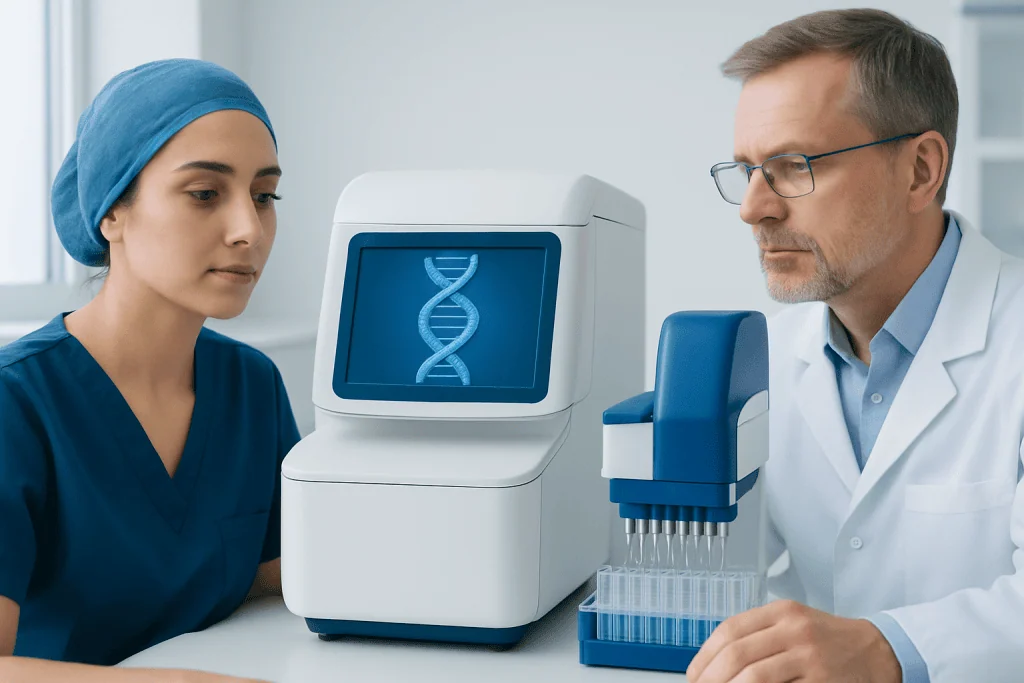
DNA tests are not all the same. Some are designed for family relationship questions, such as paternity or kinship testing. Others are used in healthcare to help diagnose inherited disorders, identify carrier status before pregnancy, or estimate the risk of certain cancers and other conditions.
In medicine, genetic testing may include single-gene testing, panel testing that examines multiple genes at once, chromosomal analysis, or broader approaches such as exome sequencing. The right choice depends on the clinical question. For example, a person with a strong family history of breast or ovarian cancer may be offered testing related to hereditary cancer risk, while a child with unexplained developmental concerns may need a different type of analysis.
Direct-to-consumer DNA tests are another category. These are often used for ancestry, traits, or wellness-related reports. They may be useful for personal interest, but they are not a substitute for a medical evaluation. If a consumer test suggests a possible health-related genetic finding, a doctor may recommend confirmatory medical testing before any decisions are made.
- Diagnostic testing: helps confirm or rule out a suspected inherited condition
- Predictive or risk testing: estimates whether a person has a higher chance of developing certain conditions
- Carrier testing: checks whether a person carries a gene change that could be passed to children
- Prenatal or preconception testing: informs reproductive planning in selected situations
- Relationship testing: evaluates biological connections between individuals
- Ancestry testing: explores population origins and inherited heritage patterns
How Accurate Is a DNA Test?

DNA test accuracy depends on what is being tested and how the result is being used. For a well-validated laboratory test that looks for a specific variant or compares relationship markers, the analytical accuracy can be very high. However, a technically accurate result does not always mean the clinical meaning is simple or complete.
For example, a health-related DNA test may find a variant associated with increased disease risk, but that does not mean the person will definitely develop the condition. Many diseases are influenced by multiple genes, lifestyle, age, and environmental factors. Likewise, a negative result may not eliminate risk if the test looked only for selected variants rather than every possible genetic cause.
False positives, false negatives, uncertain findings, and incidental findings are all possible in some forms of genetic testing. Laboratories may also differ in the scope of testing and reporting standards. This is one reason healthcare teams often recommend testing through accredited medical laboratories when the result could affect diagnosis, treatment, or family planning.
The most reliable interpretation comes from combining the laboratory result with medical history, examination findings, and, when appropriate, genetic counseling. In many cases, the key question is not only “Is the DNA test accurate?” but also “What exactly does this result mean for this person?”
What DNA Tests Can and Cannot Tell About Health
A DNA test can sometimes help explain symptoms, clarify an inherited diagnosis, or guide screening for relatives. It may also identify people who could benefit from closer follow-up for certain hereditary conditions. In some areas of medicine, genetic information can support more individualized care.
At the same time, DNA tests have clear limits. They usually do not predict the exact age when a disease may appear, how severe it will be, or whether it will happen at all. A result may show increased risk without certainty, or it may be uncertain if the significance of a genetic change is not yet fully understood.
Genetic testing is especially relevant when there is a strong family history of inherited illness, early-onset disease, repeated unexplained pregnancy loss, or symptoms suggesting a rare disorder. Depending on the concern, a doctor may also evaluate related conditions such as hereditary breast cancer risk or familial colorectal cancer patterns as part of a broader assessment.
In some cases, genetic findings can influence treatment planning. This may be relevant in areas such as medical genetics and genetic diagnosis or oncology care, where test results are interpreted in a clinical setting rather than in isolation.
When Doctors Recommend Genetic Testing
Doctors usually recommend a DNA test when there is a clear medical reason to do so. This may include symptoms suggesting an inherited condition, a family history of the same disease across generations, cancer occurring at a younger-than-expected age, or unexplained health problems that standard testing has not clarified.
Testing may also be considered before or during pregnancy if there is concern about inherited disorders in the family. In pediatrics, genetic evaluation may be suggested for certain birth differences, developmental concerns, or suspected metabolic or neurologic conditions. For adults, it may be useful in selected heart, neurologic, endocrine, or cancer-related situations.
Before testing, clinicians often discuss what the test can show, what it may not show, and how the result could affect the person or family members. This conversation is important because some results may lead to decisions about screening, follow-up testing, or informing relatives who could share the same inherited risk.
Genetic counseling can be especially valuable before and after testing. It helps patients understand the purpose of the test, possible outcomes, and practical next steps. This is often as important as the laboratory analysis itself.
How Results Are Interpreted and What Happens Next
DNA test reports are often described as positive, negative, or uncertain. A positive result means the laboratory found a genetic variant relevant to the question being asked. A negative result means no such finding was detected in the part of the DNA examined. An uncertain result means a variant was found, but current medical knowledge cannot clearly classify it as harmful or harmless.
What happens next depends on the reason for testing. A confirmed diagnosis may lead to specialist referral, treatment planning, or tailored screening. A risk-related result may lead to preventive care, closer monitoring, or testing of family members. An uncertain result often requires watchful follow-up as scientific knowledge evolves.
Results should not be used alone for major health decisions without medical review. For example, surgery, medication changes, or stopping screening should not be based only on an unconfirmed consumer DNA report. A qualified doctor may recommend repeating the test in a clinical laboratory or combining it with imaging, blood tests, or other evaluations.
Near the end of the care pathway, coordinated support matters. In complex cases, multidisciplinary teams may include medical geneticists, oncologists, neurologists, pediatricians, and counselors. Acibadem International’s multidisciplinary specialists in JCI-accredited hospitals diagnose and treat patients who need advanced genetic assessment and related care for international patients.
Privacy, Family Implications, and Self-Care Considerations
DNA information is personal, and many people naturally have questions about privacy. Before testing, it is reasonable to ask who will receive the result, how the sample is stored, whether additional analysis may be done, and how the report will become part of the medical record. These questions are especially relevant for non-medical or consumer testing services.
Genetic results can also affect family members. Because relatives may share the same inherited variant, one person’s result may have implications for siblings, parents, or children. This can be helpful, but it may also feel emotionally complex. Careful communication and professional guidance can make these conversations easier.
Self-care after a DNA test often means taking time to understand the result rather than reacting quickly. Writing down questions, reviewing the report with a doctor, and asking whether confirmatory testing is needed are sensible next steps. If the result concerns disease risk, it may also help to focus on general health measures such as routine screening, exercise, nutrition, sleep, and avoiding tobacco.
Even when a genetic risk is identified, many aspects of health remain manageable. The result is best viewed as information that may guide prevention or monitoring, not as a prediction of a person’s entire future health.
When to Seek Medical Care
Medical care should be sought if a DNA test result is linked to symptoms, if there is a strong family history of early or repeated disease, or if a consumer test suggests a serious health-related finding. A doctor can explain whether the result needs confirmation and whether other examinations are necessary.
It is also important to seek care when a child has unexplained developmental delays, repeated unusual symptoms, or congenital differences that may have a genetic cause. Adults should discuss testing if several close relatives have had the same cancer, heart problem, or neurologic condition, especially at younger ages.
Urgent symptoms should never be explained away by genetic test results alone. New chest pain, breathing difficulty, seizures, severe weakness, sudden neurologic symptoms, or other acute concerns require prompt medical evaluation regardless of any genetic background.
If a healthcare professional recommends further assessment, this may involve specialist consultation or tests such as a comprehensive medical check-up or, in selected cases, fertility and reproductive evaluation when inherited risks are part of family planning discussions.
Frequently asked questions
What is the main purpose of a DNA test?
The main purpose of a DNA test is to answer a specific question using genetic material. That question may relate to ancestry, biological relationships, inherited disease, carrier status, or health risk.
Can a DNA test diagnose a disease?
Sometimes, yes. In some inherited conditions, a medical genetic test can help confirm a diagnosis, but in other situations it only shows increased risk or the need for more evaluation.
Are home DNA tests the same as medical genetic tests?
No. Home or direct-to-consumer tests are often designed for ancestry or general trait information, while medical genetic tests are ordered or interpreted in a clinical context and may require confirmation in accredited laboratories.
How long does it take to get DNA test results?
The timing depends on the type of test and the laboratory. Some simple tests may return sooner, while more detailed genetic analyses can take longer because they involve broader sequencing and expert interpretation.
Does a positive DNA test mean someone will definitely get a disease?
Not necessarily. A positive result may indicate a higher genetic risk, but many conditions are also influenced by age, lifestyle, environmental factors, and other genes.
Should family members also be tested?
In some situations, yes. If a medically important inherited variant is found, doctors may advise relatives to discuss testing because the result could affect their own screening or prevention plans.
References
- World Health Organization
- U.S. National Library of Medicine MedlinePlus Genetics
- Centers for Disease Control and Prevention
- National Human Genome Research Institute
- American College of Medical Genetics and Genomics
This article is for general information only and is not a substitute for professional medical advice. Please consult a qualified doctor about your individual situation.
Explore treatments in Turkey — costs, top hospitals & a free quote
JCI-accredited · board-certified surgeons · reply within 24h
Add us as a Preferred Source to see more of our trusted health content across Google Search, AI Overviews and Discover.