Cystoscopy Male: An Evidence-Based Patient Guide

A cystoscopy examines the urethra and bladder and may be used for diagnosis, monitoring, or minor treatment procedures. Flexible cystoscopy is often performed with local anesthetic gel; more complex procedures may require sedation or general anesthesia.
Key Takeaways
- A cystoscopy examines the urethra and bladder and may be used for diagnosis, monitoring, or minor treatment procedures.
- Flexible cystoscopy is often performed with local anesthetic gel; more complex procedures may require sedation or general anesthesia.
- Temporary burning during urination, mild urinary frequency, and a small amount of blood in the urine can occur afterward.
- Most men return to usual light activities the same day after an uncomplicated flexible cystoscopy.
- Fever, inability to pass urine, worsening pain, or heavy bleeding after cystoscopy requires prompt medical advice.
Cystoscopy in men is a common urology procedure that allows a doctor to look directly inside the urethra and bladder using a thin camera. It can help explain urinary symptoms, investigate blood in the urine, and guide treatment decisions, with most flexible outpatient examinations completed quickly.
Cystoscopy Male: What It Is and Why It Is Done
Cystoscopy male refers to cystoscopy performed through the male urethra, the tube that carries urine from the bladder through the penis. A urologist inserts a cystoscope, a narrow instrument with a light and camera, through the urethral opening and into the bladder. The camera provides a direct view of the urethral lining, prostate area and bladder.
This test may be recommended when a person has blood in the urine, recurrent urinary tract infections, persistent burning or urgency, difficulty passing urine, bladder pain, suspected stones, or an abnormal scan or urine test. It can also be used to monitor certain bladder conditions, including bladder cancer, or to assess a possible urethral narrowing.
There are two main types. A flexible cystoscope is thinner and commonly used in the clinic for diagnostic examination. A rigid cystoscope is used more often in an operating room when the doctor may need to take a biopsy, remove a small stone, treat a bladder lesion, or carry out another procedure. The reason for the examination determines which approach is appropriate.
Who May Need a Male Cystoscopy?
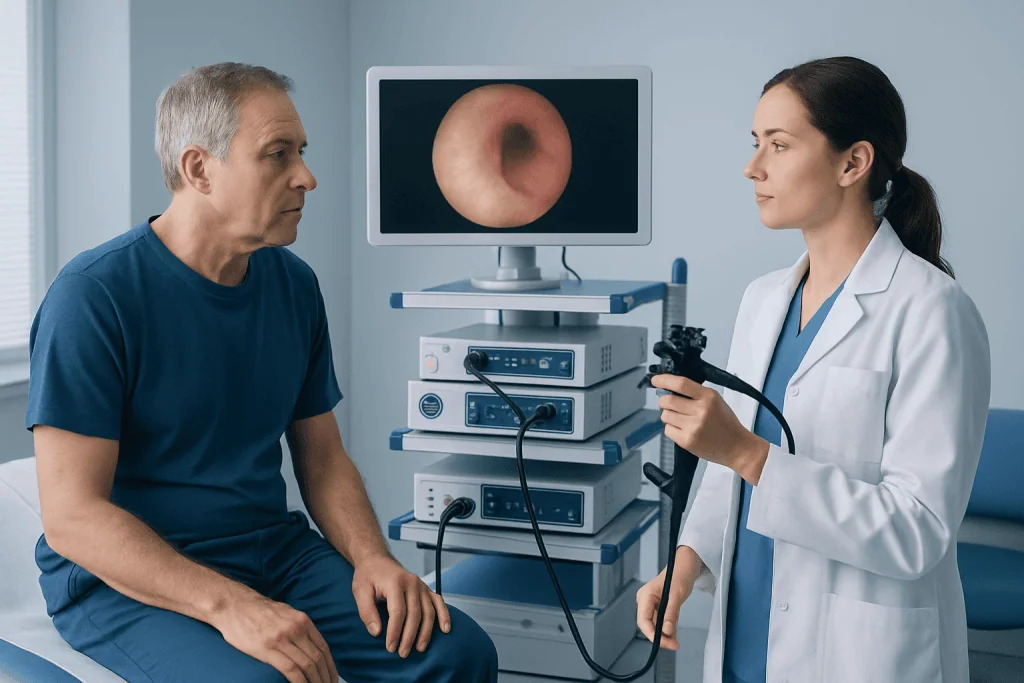
A cystoscopy is not automatically required for every urinary symptom. A clinician usually considers the person’s age, symptoms, medical history, urine testing, imaging results, medicines and risk factors before recommending it. Cystoscopy guidelines generally support using the procedure when a direct view of the lower urinary tract is likely to clarify an important question or influence care.
Common reasons include visible or unexplained microscopic blood in urine, repeated infections, abnormal urine cells, a suspected bladder stone, ongoing symptoms after treatment, or a possible obstruction. In men with weak flow, straining, incomplete emptying or recurrent retention, cystoscopy may help distinguish prostate-related obstruction from a urethral stricture or another cause.
People taking blood-thinning medicines, those with a current urinary infection, and individuals with allergies to anesthetic medicines should tell the urology team in advance. An active infection may need treatment before an elective cystoscopy. The doctor will also explain whether the planned examination is diagnostic only or may include treatment, such as transurethral resection of the prostate when prostate obstruction is confirmed and requires intervention.
How to Prepare for a Cystoscopy for a Male?
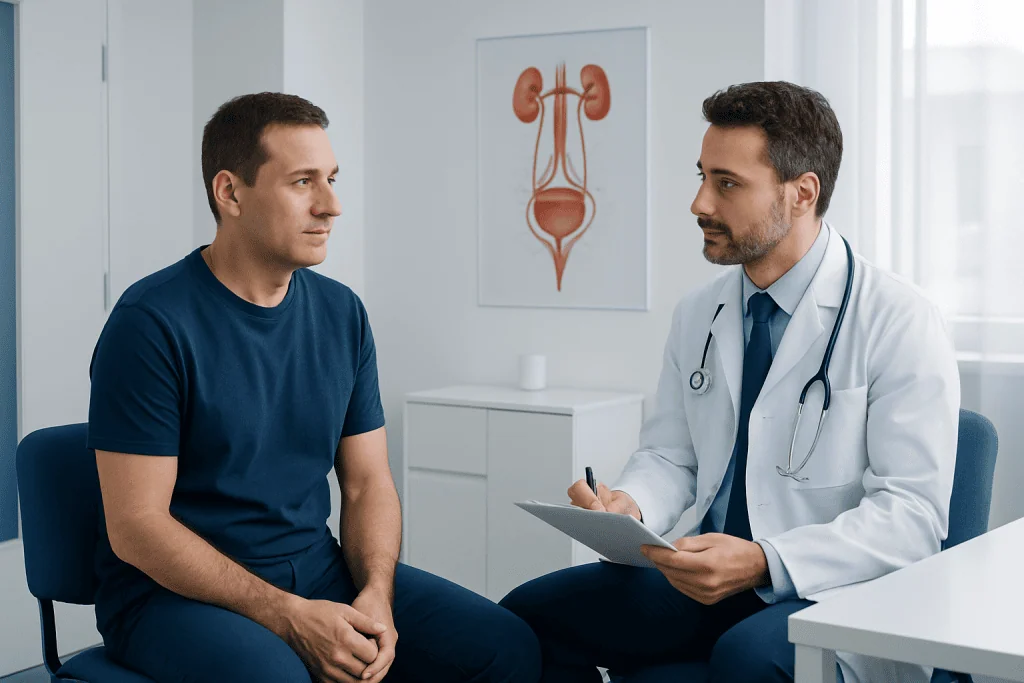
Preparation depends on whether the procedure is a simple flexible cystoscopy in the clinic or a procedure performed with sedation or general anesthesia. For an office-based flexible examination, many men can eat and drink normally unless their urologist gives different instructions. Some centers request a urine sample on arrival to check for signs of infection.
For a procedure involving sedation or anesthesia, fasting instructions are important and should be followed exactly. The team may advise when to stop solid food and clear fluids, which regular medicines to take, and whether any adjustments are needed for blood thinners, diabetes medicines, or supplements. These changes should only be made under the direction of the prescribing clinician and urology team.
Patients should bring a current medication list, details of allergies, relevant test results if requested, and a list of questions. If sedation or general anesthesia is planned, a responsible adult may need to take the patient home. A clear cystoscopy patient handout from the treating hospital can provide the most accurate instructions for that individual procedure.
What Happens During the Procedure?
Before cystoscopy, the patient is asked to empty the bladder and change position, usually lying on the back with the legs supported. The genital area is cleaned. For flexible cystoscopy, lubricating local anesthetic gel is placed into the urethra. This reduces friction and numbs the area, although pressure or a brief stinging sensation can still occur.
The urologist gently advances the flexible scope through the urethra. Sterile fluid is used to fill the bladder so its lining can be viewed. The patient may feel an urge to urinate as the bladder fills. The doctor examines the urethra, prostate region and bladder wall, including the openings where urine enters from the kidneys.
A straightforward diagnostic flexible cystoscopy often takes only a few minutes, although the appointment is longer because it includes preparation and discussion. If a biopsy, stone treatment, tumor removal or another intervention is needed, the procedure may take longer and may be arranged under anesthesia. Findings are sometimes discussed immediately; biopsy results usually take longer because tissue must be examined in a laboratory.
How Uncomfortable Is a Cystoscopy for a Man?
Experiences vary, but most men describe flexible cystoscopy as uncomfortable rather than severely painful. Local anesthetic gel and careful technique help reduce discomfort. Common sensations include pressure as the scope passes through the urethra, temporary stinging, and a strong urge to urinate when the bladder is filled.
Anxiety can make physical sensations feel more intense. It may help to ask the clinician to explain each step, use slow breathing, and report discomfort promptly. The team can pause when appropriate and can discuss whether an alternative anesthesia plan is suitable for a future procedure if the patient has had difficulty tolerating cystoscopy before.
Cystoscopy patient experiences can differ because urethral sensitivity, prior surgery, prostate enlargement, inflammation and the type of scope all matter. A rigid cystoscopy or a procedure involving treatment is generally more invasive and is often done with sedation, spinal anesthesia, or general anesthesia rather than local gel alone.
Do Men Get Hard During a Cystoscopy?
An erection during cystoscopy is not expected and is uncommon. The procedure is performed in a clinical setting with the genital area prepared and draped, and the focus is on safely passing the scope through the urethra. Anxiety, discomfort and the procedural setting generally make an erection unlikely.
Occasionally, a temporary involuntary erection can occur as a reflex, particularly during procedures involving anesthesia or stimulation of nearby nerves. This is a medical event, not a sign of sexual arousal, and the clinical team is trained to manage unexpected procedural issues professionally.
A patient who feels embarrassed about this question should still raise it before the examination. Open discussion can reduce anxiety and help the urology team explain what to expect in a respectful, matter-of-fact way.
Cystoscopy Male Findings, Benefits and Possible Risks
The main benefit of cystoscopy is that it allows direct inspection of areas that may not be fully assessed with urine tests or imaging alone. Cystoscopy male findings may include inflammation, infection-related changes, bladder stones, enlarged prostate effects, urethral scars, diverticula, polyps or suspicious bladder areas. A normal examination is also useful because it can help rule out certain lower urinary tract causes of symptoms.
Minor short-term effects are relatively common. These can include burning when urinating, needing to urinate more often, mild lower abdominal discomfort, and a small amount of blood in the urine for a day or two. Drinking fluids, if medically appropriate, may help dilute the urine and ease irritation.
Less common risks include urinary tract infection, significant bleeding, temporary inability to pass urine, and injury to the urethra or bladder. The risk may be higher when additional treatment is performed or when a person has certain underlying conditions. A clinician will explain the individual balance of benefits and risks before consent is obtained.
How Long Does It Take for a Man to Recover From a Cystoscopy?
After an uncomplicated flexible cystoscopy, most men can go home soon after the examination and resume normal light activity the same day. Mild burning, urgency or traces of blood in the urine commonly improve within 24 to 48 hours. Recovery after a rigid cystoscopy, biopsy or treatment procedure can take longer and depends on what was done and which anesthesia was used.
Patients should follow their clinician’s advice about fluids, work, exercise, sexual activity, driving and medicines. Anyone who received sedation or general anesthesia should not drive, drink alcohol, make important decisions, or operate machinery until the effects have fully worn off and according to the discharge instructions.
For men receiving further urological care, treatment may be tailored to the cystoscopy result. This can include management of a urethral stricture or procedures such as bladder tumor resection when clinically indicated. Acibadem International’s multidisciplinary specialists and JCI-accredited hospitals provide urology assessment and treatment planning for international patients.
When to Seek Medical Care
Patients should contact the treating team promptly if symptoms are not improving or if they are concerned after the procedure. Medical advice is particularly important for fever or chills, worsening pelvic or abdominal pain, inability to urinate, large blood clots, persistent heavy bleeding, or urine that remains markedly bloody.
Burning with urination that becomes more severe, cloudy or foul-smelling urine, and new back or flank pain may also indicate infection or another complication. These symptoms should not be managed by self-starting leftover antibiotics; assessment and testing may be needed.
In an emergency, such as inability to pass urine with severe pain, heavy bleeding, fainting, or rapidly worsening illness, urgent medical care is appropriate. The discharge information supplied after cystoscopy should include the correct contact route for the hospital or urology service.
Frequently asked questions
Is cystoscopy more difficult in men than in women?
The male urethra is longer and passes through the prostate area, so scope passage may involve more sensation and can be technically different from cystoscopy in women. However, flexible cystoscopy is routinely performed in men by trained urologists. The clinician selects the scope type and anesthesia approach based on the reason for the procedure and the patient’s circumstances.
Can a man urinate after a cystoscopy?
Most men can urinate normally after cystoscopy, though temporary burning, urgency, or a weaker stream may occur because of urethral irritation. Drinking fluids may be advised if there is no medical reason to limit intake. Inability to urinate, especially with pain or bladder fullness, needs prompt medical assessment.
Will a cystoscopy show prostate enlargement?
Cystoscopy can show how the prostate region affects the urethra and whether it appears to obstruct urine flow. It does not replace every assessment used for prostate enlargement, such as symptom review, examination, urine-flow testing, imaging, or blood tests when appropriate. The urologist combines the findings with the full clinical picture.
Can cystoscopy detect bladder cancer?
Cystoscopy is an important test for identifying abnormal areas in the bladder that may be cancerous. If the doctor sees a suspicious area, a tissue sample or removal procedure may be needed to confirm the diagnosis under laboratory examination. A normal cystoscopy can be reassuring, but follow-up depends on the original symptoms and individual risk factors.
How soon can a man have sex after cystoscopy?
After a simple flexible cystoscopy, many people can resume sexual activity when they feel comfortable and any irritation has settled. The treating clinician may advise waiting longer after a biopsy, tumor treatment, urethral procedure, or if bleeding continues. Individual discharge instructions should take priority.
Do I need antibiotics after a cystoscopy?
Antibiotics are not necessary for everyone after cystoscopy. A clinician may prescribe them in selected situations, such as when infection risk is higher or when a procedure involves additional intervention. Patients should take antibiotics only as prescribed and seek advice if they develop symptoms of infection.
References
- American Urological Association
- European Association of Urology
- National Institute of Diabetes and Digestive and Kidney Diseases
- National Health Service
- Urology Care Foundation
This article is for general information only and is not a substitute for professional medical advice. Please consult a qualified doctor about your individual situation.
Cystoscopy in Turkey — costs, top hospitals & a free quote
JCI-accredited · board-certified surgeons · reply within 24h

Urology
Treatment of the urinary system and male reproductive health, including robotic and laser procedures.
63 specialists in this unit