Dark Spot on Lip: An Evidence-Based Guide for Patients

Many dark spots on the lip are benign, including lentigines, melanotic macules, and post-inflammatory pigmentation. A new or changing spot, especially one that bleeds, ulcerates, or has irregular borders, should be examined by a doctor.
Key Takeaways
- Many dark spots on the lip are benign, including lentigines, melanotic macules, and post-inflammatory pigmentation.
- A new or changing spot, especially one that bleeds, ulcerates, or has irregular borders, should be examined by a doctor.
- Doctors diagnose the cause through history, physical examination, and sometimes dermoscopy or biopsy.
- Treatment depends on the cause and may range from observation to removal of suspicious lesions.
- Sun protection and avoiding lip trauma can help reduce some preventable causes of lip discoloration.
A dark spot on lip is commonly caused by harmless pigmentation, minor injury, or sun-related change, but some spots need assessment to exclude infection, vascular lesions, or skin cancer. The key clues are how the spot looks, whether it is changing, and whether it comes with pain, bleeding, or a sore that does not heal.
What a Dark Spot on the Lip Usually Means
A dark spot on lip tissue is often a benign pigment change rather than a serious disease. Common explanations include a lip melanotic macule, a small bruise from accidental biting, post-inflammatory pigmentation after irritation, or a sun-related spot. In many people, the spot stays stable in size and color and causes no symptoms.
Even so, lips deserve careful attention because the skin and mucosal surface are exposed, delicate, and sometimes harder to monitor than other areas. A spot that is new, enlarging, uneven in color, raised, painful, bleeding, or turning into a non-healing sore needs medical evaluation. Although uncommon, cancers and precancerous lesions can appear on or around the lips.
Rather than relying on color alone, doctors look at the whole picture: the exact location, shape, borders, texture, timing, associated symptoms, and personal risk factors. This helps distinguish common harmless pigmentation from conditions that need treatment or closer follow-up.
How the Spot May Look and Feel
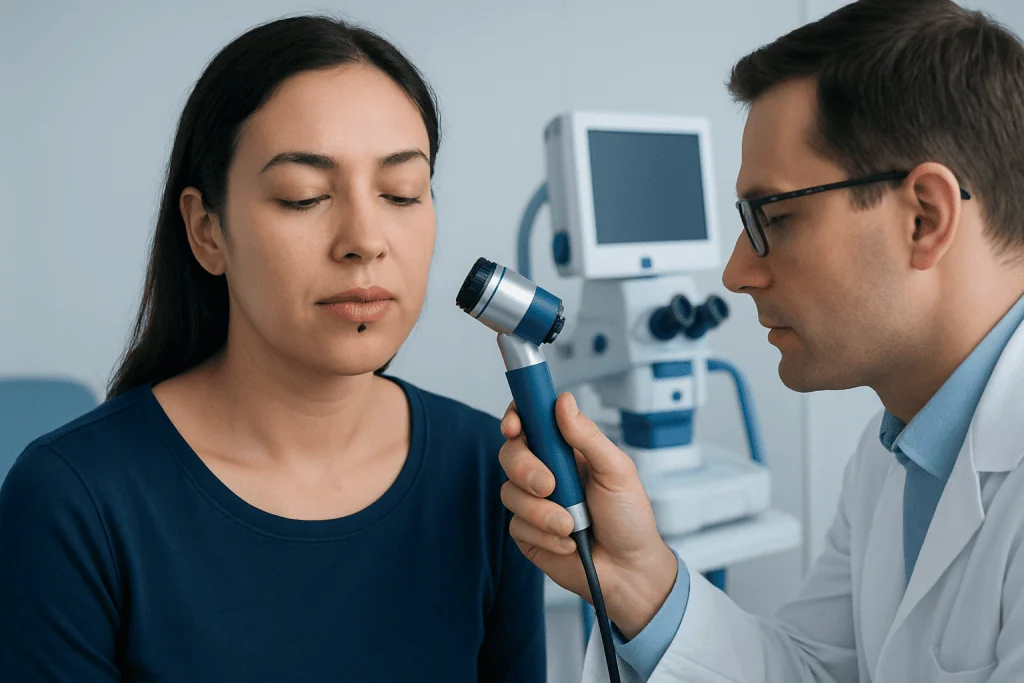
A dark lip spot may appear brown, black, blue-gray, purple, or dark red. Some are flat and sharply outlined, while others are slightly raised or have a smooth dome-like surface. A small pigmented mark on the lower lip is often benign, especially if it has been unchanged for a long time.
Symptoms vary with the cause. Harmless pigmented spots often do not hurt or itch. A bruise or blood blister may be tender for a short time, and inflammatory causes may come with dryness, cracking, or irritation. Vascular spots can look bluish or purplish and may slightly compress when touched.
Features that are more concerning include rapid growth, asymmetry, irregular borders, mixed colors, crusting, repeated bleeding, ulceration, numbness, or a sore that does not heal. Swelling, nearby lymph node enlargement, or persistent pain also support the need for prompt medical review.
- Often benign: stable color, flat shape, smooth surface, no pain, no bleeding
- Needs assessment: changing size, irregular outline, multiple colors, bleeding, ulceration, persistent soreness
- Urgent concern: a fast-changing lesion with tissue breakdown or unexplained bleeding
Common Causes and Important Risk Factors

One of the most common benign causes is a melanotic macule, a small flat brown-to-black spot caused by increased melanin. These often occur on the lower lip and are usually solitary and stable. Sun exposure can contribute to some pigmented lip lesions, especially in people with lighter skin tones or significant outdoor exposure.
Other noncancerous causes include minor trauma, such as lip biting, friction, or irritation from dental appliances, which can lead to a bruise or post-inflammatory hyperpigmentation. Smoking may contribute to oral and lip pigmentation in some individuals. Certain medicines and some hormonal or systemic conditions can also affect pigmentation, though these usually involve broader changes rather than a single isolated spot.
Vascular lesions such as venous lakes can also create a dark blue or purple spot on the lip, especially in older adults and in sun-exposed areas. Less commonly, pigmented spots are linked to inflammatory disorders, oral lesions, or, rarely, melanoma or another form of skin cancer. If the lesion resembles other pigmented skin changes, a doctor may also consider related skin conditions such as skin cancer in the differential diagnosis.
Risk factors that make careful evaluation more important include heavy sun exposure, a personal or family history of skin cancer, tobacco use, immunosuppression, older age, and any lesion that is newly appearing or changing over time. Persistent lip lesions may sometimes need input from specialists in dermatology evaluation or oral medicine.
How Doctors Evaluate a Dark Spot on the Lip
Assessment begins with a detailed history. The doctor will ask when the spot first appeared, whether it has changed, whether there was trauma, and whether there are symptoms such as pain, bleeding, tingling, crusting, or ulceration. Personal risk factors, sun exposure, medications, and any previous skin or oral lesions also matter.
Physical examination focuses on the size, shape, border, color pattern, and exact location of the spot. Doctors usually inspect the rest of the lips, the oral cavity, and sometimes the skin more broadly to look for related pigment changes or suspicious lesions elsewhere. In some cases, a dermatoscope or magnifying device helps reveal patterns that are not visible to the naked eye.
If the spot appears clearly benign and stable, monitoring may be enough. If there is uncertainty or any suspicious feature, the doctor may recommend a biopsy. This is the most reliable way to confirm the diagnosis and rule out melanoma or another malignancy. When deeper tissue involvement is suspected, imaging or referral to a specialist may be considered, and evaluation may overlap with services such as pathology review after tissue sampling.
Treatment Depends on the Underlying Cause
There is no single treatment for every dark spot on the lip because management depends entirely on the diagnosis. Benign melanotic macules that are stable and cosmetically acceptable may simply be observed. A traumatic bruise or blood blister often resolves on its own once the area is protected from further irritation.
If the cause is inflammatory or linked to a trigger, treatment focuses on removing the trigger and calming the tissue. This may include managing dryness, avoiding lip biting, adjusting dental appliances, stopping an irritating product, or addressing a medication-related cause in discussion with the prescribing doctor. Vascular lesions such as venous lakes may be left alone if they are asymptomatic, though some people choose treatment for comfort or appearance.
If a biopsy shows a precancerous or cancerous lesion, treatment is directed by the type, size, and depth of the abnormality. Options may include surgical removal and coordinated care with specialists in oncology or related fields. If the lesion is part of a broader oral problem, clinicians may also evaluate for associated oral cancer when the clinical picture suggests it.
Patients should avoid attempting to burn, cut, or bleach a lip lesion at home. Home treatment can delay diagnosis, worsen scarring, or irritate a lesion that should be examined. The safest approach is to let a qualified clinician decide whether observation or treatment is appropriate.
Self-Care and Prevention
Not every dark spot can be prevented, but several practical steps can lower risk. Regular lip sun protection is especially helpful. A lip balm with sun protection, re-applied during outdoor exposure, can reduce some sun-related pigment changes and may also support lip health more broadly.
It also helps to avoid repetitive trauma. People who bite or pick at their lips, wear poorly fitting dental appliances, or frequently expose the lips to friction may be more prone to irritation and pigmentation. Gentle lip care and prompt attention to dryness or cracking can reduce ongoing inflammation.
General skin and oral health habits are also useful. Avoiding tobacco, limiting unnecessary irritation from fragranced or harsh lip products, and monitoring any visible lip lesion over time can make changes easier to detect. Taking a clear photo with the date can help track whether a spot remains stable or is evolving.
- Use lip sun protection during outdoor activities
- Avoid biting, picking, or repeated friction
- Choose gentle, non-irritating lip products
- Arrange review for any spot that is new or changing
When to Seek Medical Care
A medical review is recommended if a dark spot on the lip is new and does not fade, or if it changes in size, shape, color, or texture. Care is also important when there is bleeding, crusting, pain, numbness, swelling, or a sore that does not heal within a reasonable time. These signs do not automatically mean cancer, but they do mean the lesion should not be ignored.
People with a history of skin cancer, significant sun exposure, tobacco use, or immunosuppression should be especially cautious about any persistent lip lesion. Lesions inside the mouth, or spots occurring together with widespread pigment changes, may need broader evaluation to look for local or systemic causes.
For international patients who need assessment, Acibadem International’s multidisciplinary specialists and JCI-accredited hospitals diagnose and treat lip and oral lesions with coordinated input when needed. The most appropriate first step is usually examination by a qualified doctor, who can decide whether reassurance, follow-up, or biopsy is the safest plan.
Frequently asked questions
Is a dark spot on the lip usually serious?
Often, no. Many dark spots on the lip are harmless pigment changes, minor bruises, or vascular spots. However, a new or changing lesion should be checked by a doctor to rule out less common but important causes.
Can sun exposure cause a dark spot on the lip?
Yes, sun exposure can contribute to pigment changes on the lips, including benign sun-related spots. The lower lip is especially exposed, so regular lip sun protection is a sensible preventive step.
How can someone tell if a lip spot needs medical evaluation?
A spot should be assessed if it is new, enlarging, irregular, bleeding, painful, ulcerated, or not healing. Any lesion with mixed colors or a noticeable change over time deserves professional examination.
Will a dark spot on the lip go away on its own?
Some do, especially if they are caused by minor trauma or a temporary blood blister. Others, such as benign pigmented macules, may remain stable for years without causing harm.
Do doctors always need to do a biopsy?
No. If a lesion looks clearly benign and has remained stable, a doctor may simply monitor it. A biopsy is usually recommended when the diagnosis is uncertain or when suspicious features are present.
Can smoking cause lip discoloration?
Smoking can contribute to pigmentation changes in the lips and mouth in some people. It is also a broader risk factor for oral disease, so stopping tobacco use is beneficial for overall oral and skin health.
This article is for general information only and is not a substitute for professional medical advice. Please consult a qualified doctor about your individual situation.
Oncology care in Turkey — second opinion and treatment plan
JCI-accredited · board-certified surgeons · reply within 24h
Add us as a Preferred Source to see more of our trusted health content across Google Search, AI Overviews and Discover.

More from the Health Library

Azithromycin: An Evidence-Based Guide for Patients

Confusion: What Patients Need to Know

Keto Flu: An Evidence-Based Guide for Patients

Dumbbell for Arms Workout: A Complete Medical Overview

Mesalamine: A Complete Medical Overview