Dehumidifier vs Humidifier for Indoor Air Moisture

Dehumidifiers are generally helpful for persistently damp spaces, condensation, mold growth, and dust-mite-friendly environments. Humidifiers can relieve discomfort from overly dry air, such as dry nasal passages, throat irritation, and cracked skin.
Key Takeaways
- Dehumidifiers are generally helpful for persistently damp spaces, condensation, mold growth, and dust-mite-friendly environments.
- Humidifiers can relieve discomfort from overly dry air, such as dry nasal passages, throat irritation, and cracked skin.
- Doctors do not diagnose a condition based on room humidity alone; they consider symptoms, examination findings, allergies, respiratory history, and environmental exposures.
- For most homes, moderate indoor humidity is preferable to air that is consistently very dry or very damp.
- Both devices need regular cleaning and appropriate use, because poorly maintained equipment can worsen air quality.
- Persistent breathing symptoms, recurrent wheezing, severe allergies, or visible mold warrant medical and environmental assessment.
A dehumidifier removes water from indoor air, while a humidifier adds water to it. The right choice depends on whether a person’s environment is too damp or too dry, as well as their symptoms, medical conditions, and the source of the moisture problem.
Dehumidifier vs Humidifier: Side-by-Side Comparison
Dehumidifier vs humidifier is mainly a question of whether indoor air contains too much or too little moisture. A dehumidifier draws excess water from the air and collects it in a reservoir or drains it away. A humidifier releases moisture into the air, which can make a dry room feel more comfortable.
| Feature | Dehumidifier | Humidifier |
|---|---|---|
| Primary function | Reduces excess moisture in the air | Adds moisture to dry air |
| May be useful when | There is condensation, a musty odor, dampness, mold, or persistently high humidity | Air feels dry and causes nasal, throat, eye, or skin dryness |
| Common locations | Basements, bathrooms, laundry areas, poorly ventilated rooms | Heated or air-conditioned bedrooms and living areas in dry climates or seasons |
| Potential respiratory relevance | May reduce conditions that support mold and dust mites | May ease irritation caused by very dry air |
| Main maintenance concern | Emptying and cleaning the water tank; addressing the source of dampness | Cleaning the reservoir and components to limit microbial growth and mineral buildup |
Neither device is a treatment for asthma, allergy, infection, or chronic sinus disease on its own. Instead, each may support a healthier indoor environment when it is used for the right reason and alongside appropriate medical care when symptoms are ongoing.
Why Indoor Humidity Can Affect Comfort and Health
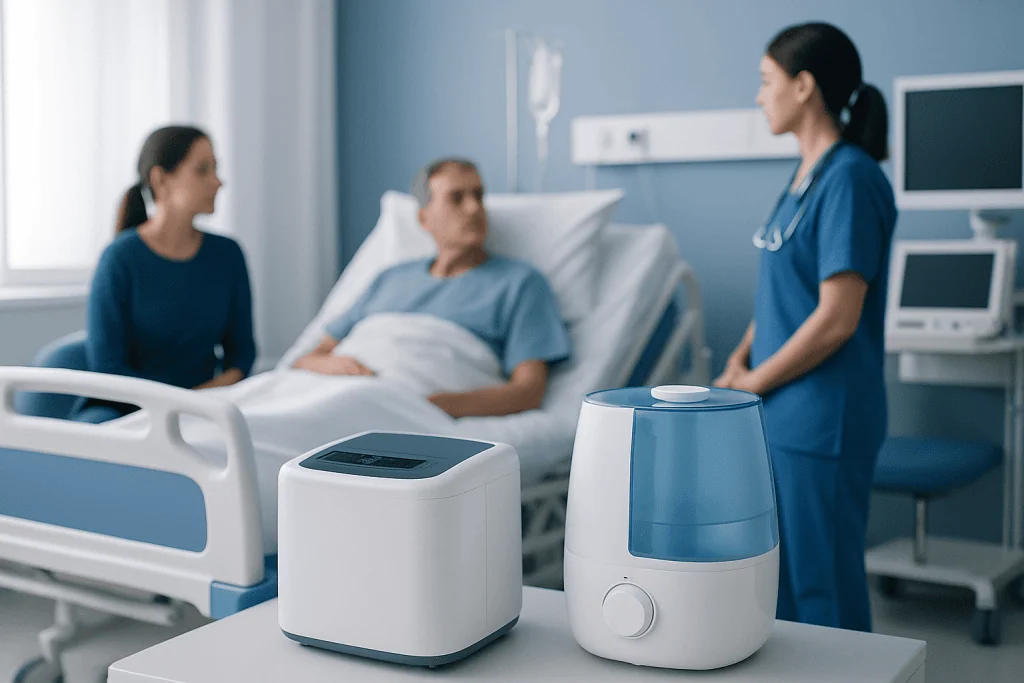
Indoor humidity is the amount of water vapor in the air. When it is too low, the nose, throat, eyes, and skin may lose moisture more easily. A person may notice a dry or scratchy throat on waking, nose discomfort, dry lips, itchy skin, or static electricity. Heating systems and air conditioning can contribute to dry indoor air, particularly during certain seasons.
When humidity is consistently too high, rooms may feel clammy and fabrics can remain damp. Condensation on windows, peeling paint, a musty smell, and visible mold are environmental clues that deserve attention. Damp conditions can encourage mold growth and dust mites, both of which can aggravate allergy symptoms in sensitive people.
The aim is not to make indoor air as dry or as moist as possible. In general, maintaining a moderate humidity level is most comfortable for many people and helps limit the problems associated with extremes. A simple hygrometer can help a household check humidity rather than relying only on how the room feels.
How a Clinician Tells Dry-Air Symptoms From Damp-Air Problems
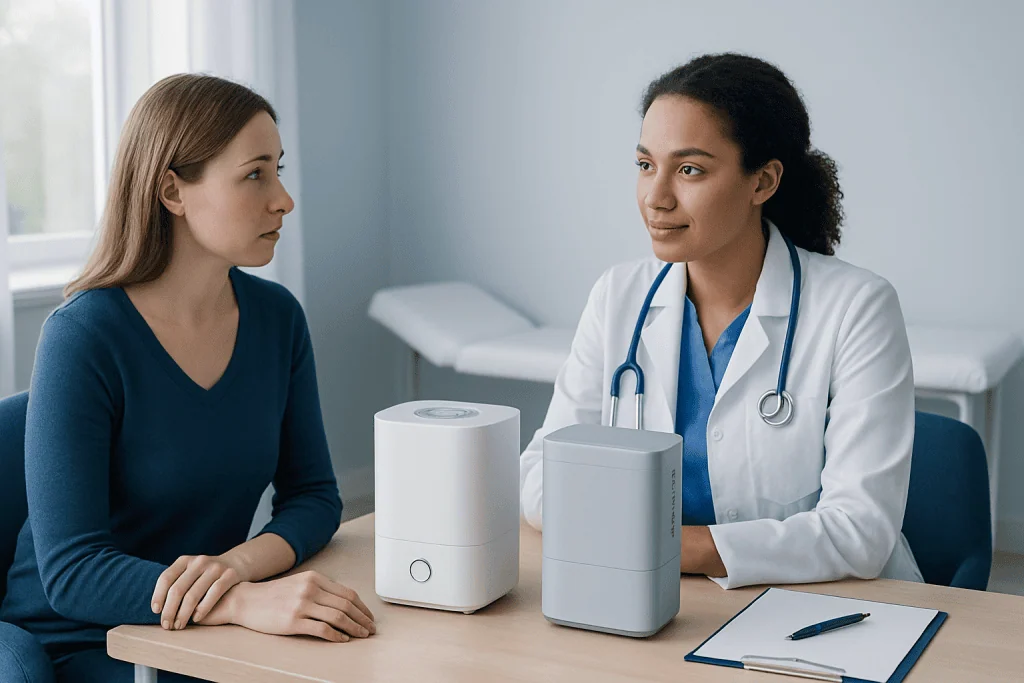
Clinicians begin with the person’s symptoms, their timing, and where they occur. Symptoms that are worse in a dry, heated room may include nasal dryness, crusting, mild nosebleeds, throat irritation, dry cough, and dry or irritated skin. The clinician may ask whether symptoms improve outside the home, after hydration, or when heating and air conditioning use changes.
Symptoms linked to dampness or allergens may include sneezing, itchy or watery eyes, a runny or blocked nose, cough, wheeze, chest tightness, or worsening of known asthma. A clinician will ask about visible mold, water leaks, flooding, condensation, musty odors, pets, ventilation, and whether symptoms are more noticeable in a particular room. These symptoms can overlap with colds, viral infections, seasonal allergies, and other conditions, so the device itself does not establish the cause.
The assessment may include examination of the nose, throat, skin, and lungs. Depending on the history, a doctor may consider allergy evaluation, lung function testing, or investigation for sinus, skin, or respiratory conditions. For example, persistent wheezing or breathlessness should be assessed for conditions such as asthma rather than managed only by changing room humidity.
Clinicians also look for an environmental source that needs correction. A dehumidifier may temporarily lower moisture, but it cannot repair a leaking pipe, poor drainage, damaged roof, or inadequate ventilation. Similarly, a humidifier cannot resolve ongoing nasal symptoms caused by allergy, infection, medication effects, or structural nasal concerns.
What to Do When the Air Is Too Dry
If dry air appears to be contributing to discomfort, a humidifier may be reasonable, especially in a bedroom during periods of indoor heating or air conditioning. It should be sized appropriately for the room and used according to the manufacturer’s instructions. A hygrometer can help prevent adding more moisture than needed.
Regular cleaning is essential. Standing water in a poorly maintained humidifier can allow microorganisms to grow, and some devices can disperse minerals from tap water as fine particles. Following the device instructions for cleaning, changing filters when applicable, and using the recommended water type can reduce these concerns. The water reservoir should not be left standing for long periods.
Other supportive measures may include drinking enough fluids, using a saline nasal spray or rinse when appropriate, applying fragrance-free moisturizer to dry skin, and avoiding overly hot showers that can further dry the skin. People with persistent nasal blockage, frequent nosebleeds, eczema flares, or cough should seek individualized advice rather than assuming dry air is the only explanation.
What to Do When the Air Is Too Damp
A dehumidifier may be helpful in a room that remains damp, feels humid, develops condensation, or has a musty odor. It is especially important to improve airflow in bathrooms, kitchens, laundry rooms, and basements. Using exhaust fans, venting dryers outdoors where applicable, opening windows when weather permits, and promptly drying wet surfaces can reduce moisture accumulation.
Visible mold or recurring water damage should be addressed at its source. Small, limited areas may sometimes be cleaned safely following local public health guidance, but extensive mold, material damage, sewage contamination, or repeated water intrusion may require qualified remediation. People with asthma, significant allergies, chronic lung disease, or weakened immune systems should avoid exposure to moldy environments where possible and discuss concerns with a clinician.
A dehumidifier tank and filter also need routine cleaning. The collected water should be emptied as instructed, and the unit should be positioned so that air can circulate around it. If indoor moisture remains high despite use, the household should investigate structural causes such as plumbing leaks, poor ventilation, foundation moisture, or inadequate drainage.
- Look for condensation on windows, walls, or pipes.
- Check for leaks beneath sinks, around appliances, and near roofs or windows.
- Use bathroom and kitchen ventilation during and after moisture-producing activities.
- Dry wet carpets, fabrics, and building materials promptly after spills or flooding.
Using Humidity Devices Safely With Allergies and Respiratory Conditions
People with allergies, asthma, chronic sinus symptoms, or recurrent respiratory complaints may be particularly aware of changes in indoor air. However, the best humidity strategy varies. Extra moisture may worsen dust-mite or mold exposure in a damp home, while excessively dry air can irritate sensitive nasal passages and airways. Monitoring the environment and symptoms is usually more useful than choosing a device based on a diagnosis alone.
For allergic rhinitis, avoiding known triggers remains important. This may include reducing dust accumulation, washing bedding regularly, managing pet exposure when relevant, and correcting dampness. A doctor may recommend treatments such as saline rinses, allergy medicines, or other measures depending on the cause and severity of symptoms. Humidity devices should be viewed as one part of environmental care, not a substitute for treatment.
Children, older adults, and people with chronic lung disease may be more affected by poor indoor air quality. Caregivers should avoid placing devices close to a child’s face or bed, keep cords and water reservoirs safely out of reach, and clean units consistently. Steam-based devices can cause burns, so cool-mist options are often preferred when humidification is needed around children.
Acibadem International’s multidisciplinary specialists and JCI-accredited hospitals can assess persistent allergy, sinus, and respiratory symptoms for international patients, helping identify whether environmental changes, medical treatment, or both are appropriate.
When to Seek Medical Care
Medical assessment is appropriate when symptoms persist despite reasonable changes to the indoor environment or interfere with sleep, school, work, or daily activities. A person should arrange a clinical review for recurrent wheezing, ongoing cough, frequent sinus symptoms, repeated nosebleeds, troublesome rashes, or suspected allergies that are not improving.
Urgent medical care is needed for severe shortness of breath, chest pain, bluish lips or face, confusion, fainting, or signs of a serious allergic reaction such as swelling of the lips, tongue, or throat. These symptoms should not be attributed to dry or humid air without prompt professional evaluation.
A doctor can help distinguish environmental irritation from asthma, infection, allergy, skin disease, or another health issue. Bringing a short symptom diary can be useful: note when symptoms occur, which rooms are involved, humidity readings if available, exposure to mold or dampness, and whether symptoms improve away from home.
Frequently asked questions
Which is better: a dehumidifier or humidifier?
Neither is automatically better. A dehumidifier is generally more appropriate for damp indoor spaces, while a humidifier may help when air is very dry and causes irritation. The choice should be guided by humidity measurements, signs in the home, and a person’s symptoms.
Can a humidifier make allergies worse?
It can if it raises humidity too much or is not cleaned properly. Excess moisture may support dust mites and mold, which can trigger symptoms in people with allergies. A person with allergies should monitor room humidity and keep the device clean.
Can a dehumidifier help with asthma?
A dehumidifier may help some people with asthma if dampness, mold, or dust mites are contributing triggers in the home. It does not replace an asthma action plan, prescribed medication, or medical follow-up. Ongoing wheeze, cough, or breathlessness should be discussed with a clinician.
What are signs that a home is too humid?
Common signs include condensation on windows, a musty smell, damp walls or fabrics, visible mold, and a clammy indoor feeling. Some people may also notice allergy-like symptoms that are worse in a particular room. The cause of persistent dampness should be identified and corrected.
What are signs that air is too dry?
Dry air can contribute to a scratchy throat, dry nose, mild nosebleeds, dry skin, chapped lips, itchy eyes, and static electricity. These symptoms can have other causes, including allergies, infection, medications, and skin conditions. Persistent or severe symptoms should be medically assessed.
Should a humidifier run all night?
It may be used overnight if it is needed, properly maintained, and does not make the room overly humid. A hygrometer can help a household monitor conditions. The device should be cleaned regularly and refilled with fresh water according to the manufacturer’s guidance.
This article is for general information only and is not a substitute for professional medical advice. Please consult a qualified doctor about your individual situation.
Explore treatments in Turkey — costs, top hospitals & a free quote
JCI-accredited · board-certified surgeons · reply within 24h
Add us as a Preferred Source to see more of our trusted health content across Google Search, AI Overviews and Discover.

More from the Health Library

How to Get Bigger Breasts? Causes, Explanations, and Next Steps

Eye Strain Headache: Common Causes, Related Conditions, and When to See a Doctor

Neck Pain Relief Explained: Common Triggers and Red Flags

Dizziness After Waking Explained: Common Triggers and Red Flags

Burning micturition treatment: Common Causes, Warning Signs, and When to Worry