Eye Strain Headache: Common Causes, Related Conditions, and When to See a Doctor
Eye strain headaches are commonly linked to prolonged close-up focus, screen use, dry eyes, glare, or uncorrected refractive errors. The discomfort may feel like pressure around the eyes, forehead, temples, or behind the eyes and may occur with tired or dry eyes.
Key Takeaways
- Eye strain headaches are commonly linked to prolonged close-up focus, screen use, dry eyes, glare, or uncorrected refractive errors.
- The discomfort may feel like pressure around the eyes, forehead, temples, or behind the eyes and may occur with tired or dry eyes.
- Screens do not usually cause permanent eye damage, but prolonged use can worsen eye fatigue and trigger headaches in some people.
- Regular visual breaks, comfortable screen positioning, good lighting, and appropriate glasses or contact lenses can reduce symptoms.
- Sudden severe headache, vision loss, eye pain, neurological symptoms, or headache after an injury needs urgent medical evaluation.
An eye strain headache is commonly a mild, pressure-like headache that develops after prolonged reading, screen use, driving, or other visually demanding tasks. It often improves with breaks, better lighting, hydration, and an up-to-date eye prescription, but persistent or severe symptoms should be assessed by a healthcare professional.
Overview: What Is an Eye Strain Headache?
An eye strain headache is a headache that occurs during or after intensive visual activity. It is often associated with eye fatigue, especially after long periods of computer work, reading, studying, driving, gaming, or detailed close-up tasks. The pain is commonly described as a dull ache or pressure across the forehead, at the temples, around the eyes, or behind the eyes.
Eye strain itself is not usually a serious condition. It generally reflects that the visual system and surrounding facial and neck muscles have been working hard for a sustained period. Symptoms often ease after resting the eyes, changing the activity, blinking more often, or correcting an environmental trigger such as glare or poor lighting.
However, not every headache felt around the eyes is caused by eye strain. Migraine, tension-type headache, sinus illness, dry eye disease, eye focusing problems, and less commonly eye conditions that raise pressure inside the eye can cause similar discomfort. A clinical assessment can help identify the source when symptoms are frequent, new, or do not improve with simple measures.
Typical Symptoms and Patterns
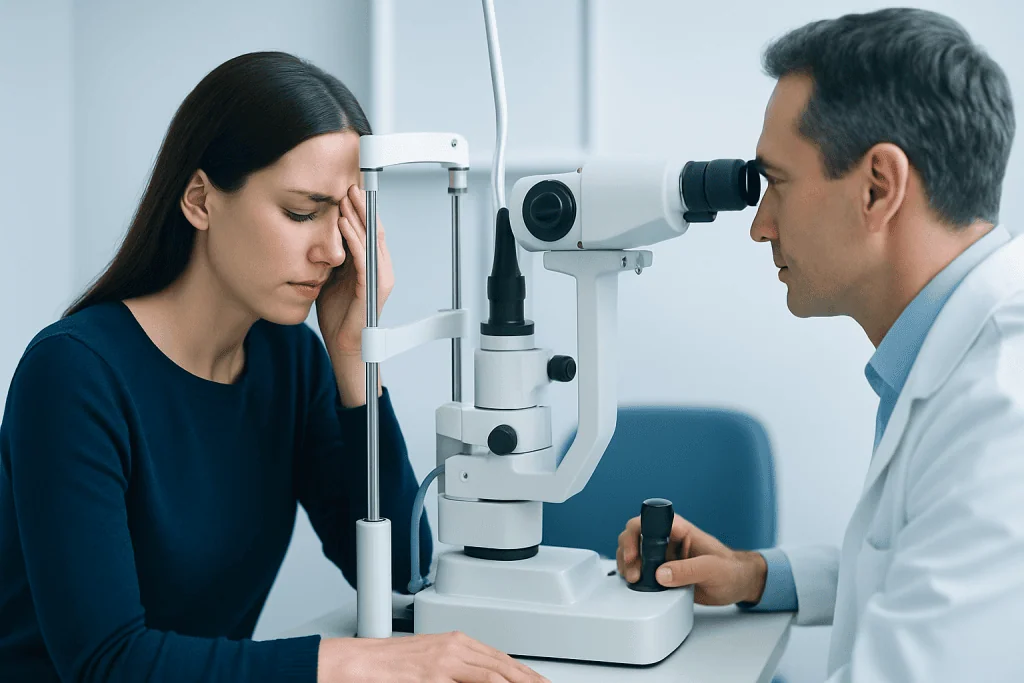
Symptoms of an eye strain headache usually develop gradually during a visually demanding task and improve after a break. People may notice aching or pressure in the forehead or temples, soreness around the eyes, difficulty maintaining focus, or a sense that the eyes feel tired or heavy. Some people also experience neck and shoulder tightness, particularly when their workstation posture is uncomfortable.
Eye symptoms may occur alongside the headache. These can include dryness, burning, itching, watery eyes, blurred vision that comes and goes, light sensitivity, or the need to blink or rub the eyes more frequently. With digital device use, reduced blinking can contribute to tear-film instability and dry, uncomfortable eyes.
The timing of symptoms provides useful clues. A headache that begins after several hours of screen work and settles after sleep or time away from the screen is more consistent with visual fatigue. In contrast, headaches that occur independently of visual tasks, wake a person from sleep, are steadily worsening, or are accompanied by significant nausea, neurological symptoms, or lasting vision changes should not automatically be attributed to eye strain.
Common Causes and Contributing Factors

Prolonged close work is one of the most common triggers. Reading small print, switching repeatedly between screens, concentrating on spreadsheets, or playing visually intense games requires continuous focusing and eye alignment. This may be more tiring when a person has an uncorrected or outdated glasses prescription, including nearsightedness, farsightedness, astigmatism, or age-related difficulty focusing up close.
Digital eye strain can also be influenced by how a device is used. A screen that is too close, too far away, too bright, dim, or positioned in a way that causes glare may increase discomfort. Long uninterrupted sessions are often more problematic than the device itself. Small fonts, poor contrast, reflective screens, and frequent multitasking may make sustained focus harder.
Dry eyes can intensify visual discomfort and headaches. Air conditioning, heating, wind, smoke, dehydration, contact lens use, some medicines, and certain health conditions may contribute to dryness. Poor sleep, stress, jaw clenching, and neck muscle tension may also lower the threshold for headaches during visual work.
- Uncorrected or changing vision prescription
- Glare from windows, overhead lights, or glossy screens
- Infrequent blinking during concentrated screen use
- Awkward desk posture or prolonged forward head position
- Fatigue, stress, dehydration, or skipped meals
Related Conditions That Can Resemble Eye Strain
Tension-type headaches are a frequent alternative or coexisting cause. They often create a band-like pressure across the forehead or temples and may be associated with tight neck, shoulder, or scalp muscles. Long periods at a desk can combine visual effort with poor posture, making it difficult to separate eye strain from muscle-related headache without considering the full pattern.
Migraine can also be mistaken for an eye strain headache. Migraine pain may occur around one eye or on one side of the head, but it more often involves moderate to severe throbbing pain, nausea, sensitivity to light or sound, or worsening with routine activity. Screens and bright light can trigger migraine in some people, but this does not necessarily mean that eye strain is the underlying cause.
Vision and eye-surface conditions deserve consideration when symptoms recur. These include dry eye disease, convergence insufficiency, difficulties with eye focusing, and refractive errors. Red, painful eyes; halos around lights; sudden blurred vision; or marked light sensitivity can indicate an eye problem that requires prompt examination rather than continued self-treatment.
Sinus congestion may cause facial pressure around the eyes and forehead, usually with nasal symptoms such as blockage, discharge, reduced smell, or facial tenderness. It is important not to assume that all pressure behind the eyes is sinus-related, as many headaches are not caused by sinus disease.
How an Eye Strain Headache Is Assessed
A clinician will usually begin by asking about the headache pattern, visual tasks, screen habits, work environment, sleep, stress, medicines, and associated symptoms. Helpful details include where the pain occurs, how long it lasts, whether it improves with rest, whether it is linked to glasses or contact lens use, and whether there are symptoms such as nausea, eye redness, double vision, or vision loss.
An optometrist or ophthalmologist may check visual acuity, refraction, eye alignment, focusing ability, eye movements, the eye surface, and pressure inside the eyes when appropriate. These tests can identify a need for glasses, changes in prescription, dry eye disease, or problems with binocular vision that may make sustained close work uncomfortable.
Most people with a typical, mild pattern of eye strain headache do not need scans or extensive testing. Further evaluation may be recommended when the headache is severe, atypical, increasing in frequency, accompanied by abnormal neurological findings, or associated with warning signs involving the eyes or vision. Keeping a brief record of symptoms and triggers can make an appointment more informative.
Relief, Prevention, and Everyday Eye Care
The most useful approach is usually to reduce the visual load and correct contributing factors. Taking regular breaks from close work gives the focusing system a chance to relax. A practical method is the 20-20-20 approach: about every 20 minutes, look at something roughly 20 feet away for at least 20 seconds. Longer breaks are helpful during extended work sessions.
Screen comfort matters. The display should be at a comfortable distance, with text large enough to read without leaning forward or squinting. Many people find it helpful to position the top of the screen at or slightly below eye level, reduce glare, use even room lighting, and adjust brightness to a comfortable level rather than using an extremely bright or very dim screen.
Conscious blinking, adequate fluids, and regular sleep may reduce eye dryness and headache susceptibility. Lubricating eye drops may be appropriate for some people, but persistent symptoms should be discussed with an eye-care professional, particularly for contact lens wearers. An updated eye examination is important if glasses seem less effective, reading has become difficult, or headaches occur during tasks that were previously comfortable.
Over-the-counter pain medicines may help occasional mild headaches for some adults when used according to the product label and their clinician’s advice. Frequent use of pain medicines can sometimes contribute to medication-overuse headaches, so recurring symptoms are better addressed by identifying the trigger rather than relying on repeated medication.
When to Seek Medical Care
Routine medical or eye-care assessment is appropriate when headaches are frequent, interfere with work or daily life, persist despite visual breaks and ergonomic changes, or occur with ongoing blurred vision, double vision, dry eye symptoms, or difficulty focusing. A clinician can check whether the problem relates to vision correction, eye alignment, dry eyes, migraine, tension-type headache, or another condition.
Urgent medical care is needed for a sudden and severe headache, especially one that reaches maximum intensity quickly. Immediate assessment is also important for new vision loss, double vision, a red and very painful eye, halos around lights with nausea or vomiting, weakness, numbness, difficulty speaking, confusion, fainting, fever with a stiff neck, or headache following a head injury.
People aged over 50 with a new headache, people who are pregnant or recently gave birth, and people with cancer, immune suppression, or a known neurological condition should seek timely medical advice for a new or changing headache pattern. These situations do not always indicate a serious cause, but they warrant careful assessment.
For international patients who need coordinated assessment, Acibadem International’s multidisciplinary specialists and JCI-accredited hospitals can evaluate headache and eye-related symptoms and help guide appropriate care.
Frequently asked questions
What does an eye strain headache feel like?
An eye strain headache often feels like dull pressure or aching around the eyes, forehead, or temples. It may occur with tired, dry, burning, or watery eyes and difficulty keeping text in focus. Symptoms commonly develop after sustained visual tasks and improve with rest.
Can screen time cause an eye strain headache?
Long periods of screen use can contribute to eye strain headaches, especially without breaks. Reduced blinking, glare, small text, poor screen positioning, and prolonged close focusing may all play a role. Screens do not usually cause permanent eye damage, but comfort and visual habits matter.
Do blue-light glasses prevent eye strain headaches?
Blue-light-filtering glasses may feel comfortable for some people, but evidence does not show that they reliably prevent digital eye strain or headaches for everyone. More consistently helpful measures include regular breaks, reduced glare, suitable text size, and an accurate prescription when needed. A clinician can advise whether glasses are appropriate for an individual's symptoms.
How long should an eye strain headache last?
A mild eye strain headache often improves within minutes to several hours after stopping the triggering activity and resting the eyes. If pain continues into the next day, occurs repeatedly, or does not improve after changing screen and work habits, it is sensible to arrange an eye or medical assessment. Persistent symptoms may have another cause.
Can needing glasses cause headaches behind the eyes?
Yes, an uncorrected or outdated prescription can make the eyes work harder during reading, computer use, or distance viewing. This may contribute to headaches, squinting, blurred vision, or tired eyes. An eye examination can determine whether vision correction or another eye-related issue is involved.
When is a headache behind the eyes an emergency?
Emergency assessment is important for sudden severe headache, vision loss, double vision, a painful red eye, weakness, numbness, speech difficulty, confusion, or fainting. Urgent care is also needed if headache occurs with fever and a stiff neck or after a head injury. These symptoms are not typical of simple eye strain.
References
- American Academy of Ophthalmology
- American Optometric Association
- National Eye Institute
- Mayo Clinic
- National Institute of Neurological Disorders and Stroke
This article is for general information only and is not a substitute for professional medical advice. Please consult a qualified doctor about your individual situation.
Explore treatments in Turkey — costs, top hospitals & a free quote
JCI-accredited · board-certified surgeons · reply within 24h
Add us as a Preferred Source to see more of our trusted health content across Google Search, AI Overviews and Discover.

More from the Health Library



Related Specialists

Assoc. Prof. Dr. Elif Şenocak Taşçı
Medical Oncology
Ody. İrem Mürtekin
Audiology
Fzt. Atahan Vardı
Physical Medicine & Rehabilitation
Prof. Dr. Yusuf Serdar Sakin
Gastroenterology