Dentures — Explained by Medical Evidence, Not Myths

Dentures can replace some or all missing teeth and may improve eating, speaking, and appearance. There are different options, including full, partial, immediate, and implant-supported dentures.
Key Takeaways
- Dentures can replace some or all missing teeth and may improve eating, speaking, and appearance.
- There are different options, including full, partial, immediate, and implant-supported dentures.
- A proper fit matters; loose or painful dentures are not something a person should simply "get used to."
- Daily cleaning, gum care, and regular dental checkups help reduce irritation, infection, and odor.
- Dentures usually need adjustment, relining, repair, or replacement over time as the mouth changes.
Dentures are removable dental prostheses that replace missing teeth and surrounding tissue. They can improve chewing, speech, and facial support, but the best results depend on a good fit, healthy gums, and regular dental review rather than myths or one-size-fits-all advice.
Overview: what dentures are and what they can realistically do
Dentures are removable appliances made to replace missing teeth and, in many cases, some of the surrounding gum tissue. They are commonly used when several teeth or all teeth are missing. Modern dentures can support everyday functions such as chewing and speaking, and they may also help maintain the shape of the lips and cheeks when natural teeth are no longer present.
Medical evidence does not support the common myth that dentures are a simple cosmetic accessory or that everyone adapts to them in the same way. In reality, comfort and performance depend on several factors, including the health of the gums and jawbone, saliva flow, the number of missing teeth, bite alignment, and the quality of the denture design and fit.
Dentures do not function exactly like natural teeth. Many people can eat and speak well with them, especially after an adjustment period, but certain foods may still be harder to manage and some people notice movement or pressure spots. This does not mean dentures have failed, but it may mean they need adjustment or that another tooth-replacement option should be discussed.
For some patients, dentures are one part of a broader dental rehabilitation plan. Depending on the condition of the mouth, a dentist may also talk about restoring remaining teeth, managing gum disease, or considering dental implants to improve stability in selected cases.
Types of dentures and who may need them
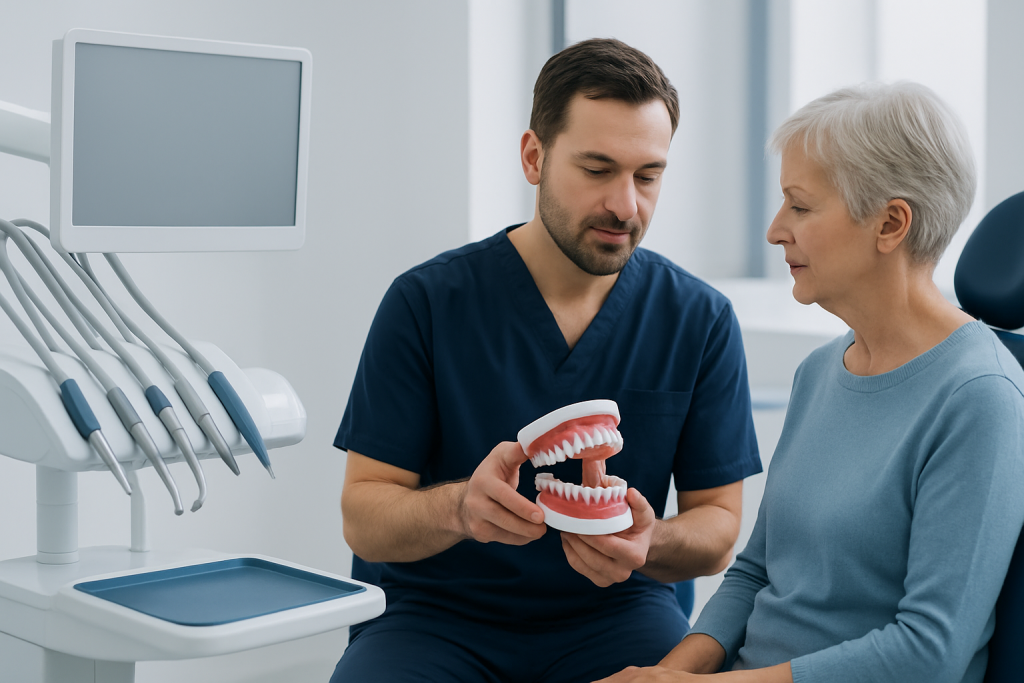
Dentures are not all the same. Full dentures replace all teeth in the upper jaw, lower jaw, or both. Partial dentures are used when some natural teeth remain and can help fill gaps while using nearby teeth for support. Immediate dentures may be placed soon after teeth are removed, while conventional dentures are usually fitted after the gums have healed more fully.
Another option is an implant-supported denture. This type still replaces multiple teeth, but it is anchored more securely using implants placed in the jawbone. It can improve retention and reduce slipping in suitable patients, especially when the lower denture is unstable. Not everyone is a candidate, so bone quality, general health, and oral hygiene all need review.
A dentist may recommend dentures for many reasons, including tooth loss from decay, trauma, advanced gum disease, or age-related oral changes. Some people seek them because missing teeth make eating difficult or affect speech or self-confidence. Others need a temporary solution while planning more definitive care such as prosthetic dentistry or implant treatment.
- Full dentures: replace all teeth in one or both jaws.
- Partial dentures: replace several missing teeth while keeping remaining natural teeth.
- Immediate dentures: placed soon after tooth removal, then often adjusted later.
- Implant-supported dentures: attached more securely to implants in appropriate patients.
What to expect: fit, speech, eating, and adjustment

New dentures usually feel unfamiliar at first. It is common to notice extra saliva, a feeling of fullness in the mouth, mild soreness, or small changes in speech during the early adjustment period. Many people improve with practice, but persistent pain, rocking, or major difficulty chewing should not be ignored.
Eating with dentures often requires gradual adaptation. Soft foods cut into small pieces are usually easier at first. Chewing slowly and using both sides of the mouth can help with balance. Very sticky, hard, or brittle foods may remain challenging for some people, particularly with lower dentures, which often have less natural suction and stability than upper dentures.
Speech can also change temporarily, especially with words that involve the tongue touching the front teeth or palate. Reading aloud and practicing difficult words may help the mouth adapt. If clicking, slipping, or repeated pronunciation problems continue, a dentist can assess whether the denture borders, bite, or tooth position need refinement.
It is a myth that discomfort should simply be tolerated until the mouth “hardens up.” While a short period of adaptation is expected, significant pain, ulcers, or looseness often mean the denture needs professional adjustment. A well-made denture should be functional and reasonably comfortable, even if it never feels identical to natural teeth.
Why dentures may become loose or uncomfortable
The mouth changes over time, especially after teeth are removed. The jawbone that once supported natural tooth roots gradually shrinks, a process called bone resorption. As this happens, dentures that once fit well may become loose, rub the gums, or feel less stable. This is one of the main reasons dentures often need relining, rebasing, repair, or replacement over the years.
Dry mouth can also make dentures harder to tolerate because saliva helps create comfort, lubrication, and some degree of suction. Dry mouth may be related to age, medicines, dehydration, certain medical conditions, or treatments such as radiation therapy. In addition, weight change, wear of the denture teeth, and changes in jaw alignment can affect fit and chewing efficiency.
Oral disease matters too. Conditions such as denture-related stomatitis, fungal overgrowth, mouth ulcers, or gum disease in remaining teeth can cause soreness and make denture use more difficult. Poor cleaning habits and wearing dentures continuously, including overnight when not advised, may increase irritation and infection risk.
Some people also develop problems because of damaged or very old dentures. Cracks, worn teeth, or bent clasps on a partial denture can change the bite or traumatize soft tissues. A dentist should assess these issues rather than having patients attempt home reshaping or repairs, which can worsen fit and harm the mouth.
How dentists assess dentures and oral health
Evaluation begins with a clinical examination of the mouth, gums, tongue, cheeks, jaw relationship, and any remaining teeth. The dentist asks about comfort, chewing, speech, denture movement, oral hygiene, and how long the denture has been in use. They also look for pressure areas, fungal infection, bite problems, and signs that the denture base no longer matches the gum contours.
If a person still has some natural teeth, these teeth need careful assessment because they influence the design and long-term success of a partial denture. The dentist may check for tooth decay, mobility, and signs of periodontal problems such as periodontitis. In many cases, X-rays are helpful to evaluate teeth, bone support, retained roots, or other hidden issues.
When planning new dentures, impressions are commonly taken to capture the shape of the gums and supporting tissues. Bite records help determine how the jaws meet. Try-in appointments may be used to review tooth position, bite, speech, and appearance before the final denture is finished. This stepwise process helps reduce avoidable fit and function problems.
Regular follow-up remains important even after treatment is complete. Denture users still need oral examinations because the tissues under the denture can develop sores, infection, or, more rarely, suspicious lesions that should be checked early. People sometimes assume they no longer need dental visits once teeth are gone, but ongoing oral care remains medically important.
Treatment options beyond one-size-fits-all dentures
Treatment depends on the condition of the mouth and the person’s goals. Some patients do well with conventional full or partial dentures. Others benefit from relining an existing denture when the shape of the gums has changed. If the denture is broken, worn, or poorly designed, repair or replacement may be more appropriate than repeated temporary fixes.
When only a few teeth are missing, alternatives to a removable denture may be considered. Depending on the clinical picture, a dentist may discuss crowns, bridges, or full mouth reconstruction as part of a broader plan to restore bite and function. The most suitable option depends on remaining teeth, bone support, oral hygiene, and patient preference.
For people struggling with loose lower dentures or reduced chewing ability, implant-supported options may provide greater stability. These are not automatically better for every patient, but they can be very helpful when anatomy, general health, and treatment goals align. A careful discussion of benefits, limitations, maintenance, and healing expectations is important before choosing this route.
In complex cases, care may involve more than one specialist. Patients with jaw pain, advanced tooth wear, oral infection, or major bone loss may need coordinated treatment planning. Near the end of care pathways like these, some international patients choose centers such as Acibadem International, where multidisciplinary specialists in JCI-accredited hospitals diagnose and treat dental conditions with individualized planning.
Daily care, cleaning, and prevention of common problems
Denture care is not only about appearance. Daily cleaning helps remove food debris, plaque, and microorganisms that can contribute to bad breath, staining, gum irritation, and denture-related stomatitis. Dentures should be cleaned gently with products suitable for dentures, and natural teeth, tongue, and gums should also be cleaned regularly if present.
Many dentists advise removing dentures at night to allow the oral tissues to rest, unless a clinician gives different instructions for a specific period, such as after certain procedures. Dentures should be stored as directed so they do not dry out or warp. Hot water, abrasive toothpaste, bleach, and home glues are not appropriate because they may damage the material or make the denture unsafe.
Healthy habits can also improve denture success. Adequate hydration may help if dry mouth is a problem. Limiting tobacco use supports oral tissue health and reduces irritation and disease risk. If a denture feels suddenly different, a person should not try to file or bend it at home; professional assessment is safer and usually more effective.
- Clean dentures every day and rinse after meals when possible.
- Brush gums, tongue, and any remaining teeth gently.
- Attend regular dental reviews even if all natural teeth are missing.
- Ask about relining or replacement if dentures become loose or painful.
- Seek evaluation for white patches, ulcers, odor, or persistent redness.
When to seek medical care
A person should seek professional care if dentures cause persistent pain, repeated mouth sores, bleeding, swelling, or difficulty eating that does not improve. Loose dentures that slip often, make chewing unsafe, or affect speech significantly also deserve assessment. These problems may be caused by an avoidable fit issue, infection, or changes in the underlying bone and gums.
Urgent review is especially important if there is facial swelling, fever, pus, severe tooth pain in remaining teeth, or a denture that suddenly no longer fits after trauma. A sore spot that does not heal, a lump, or a white or red patch in the mouth should also be examined without delay. Although many mouth changes are benign, persistent lesions should never be self-diagnosed.
People with diabetes, weakened immunity, recent cancer treatment, or medicines that reduce saliva may need earlier evaluation because they can be more prone to infections, ulceration, or delayed healing. If a person has long-term trouble tolerating dentures, the next step is not simply to stop trying; it is to revisit the diagnosis and discuss whether another design or treatment option would be safer and more effective.
Frequently asked questions
How long does it take to get used to dentures?
Adjustment varies from person to person. Many people need several weeks to become more comfortable with chewing and speaking, and follow-up visits are often part of the process. Persistent pain or severe looseness is not something a person should simply accept.
Can dentures restore normal chewing?
Dentures can improve chewing significantly, but they do not fully reproduce the strength and feel of natural teeth. Softer foods are usually easier at first, and some hard or sticky foods may remain difficult. If chewing remains poor, the fit and type of denture should be reassessed.
Should dentures be worn all the time?
Many patients are advised to remove dentures at night to let the gums rest and to lower the risk of irritation and infection. However, advice can differ for special situations, such as immediately after certain dental procedures. A dentist should provide individualized instructions.
How often do dentures need to be replaced?
There is no single timeline because the mouth changes over time and denture wear differs between individuals. Some dentures need adjustment or relining before full replacement is necessary. Regular reviews help determine when a denture is still safe and functional.
Are implant-supported dentures always better than regular dentures?
Not always. Implant-supported dentures can offer better stability for some patients, especially if conventional dentures are loose, but they also require suitable bone, healing capacity, and ongoing maintenance. The best option depends on overall oral health, medical history, and treatment goals.
What is the best way to clean dentures?
Dentures should be cleaned daily using methods and products recommended for denture materials. It is also important to clean the mouth itself, including the gums, tongue, and any remaining teeth. Harsh chemicals, boiling water, and DIY repairs should be avoided.
This article is for general information only and is not a substitute for professional medical advice. Please consult a qualified doctor about your individual situation.
Explore treatments in Turkey — costs, top hospitals & a free quote
JCI-accredited · board-certified surgeons · reply within 24h
Add us as a Preferred Source to see more of our trusted health content across Google Search, AI Overviews and Discover.

More from the Health Library

Waist — Explained by Medical Evidence, Not Myths

Vyvgart Hytrulo: What Patients Need to Know

Metacarpals: An Evidence-Based Guide for Patients

Comorbidity: What Patients Need to Know

Chakras: A Complete Medical Overview