Digital Rectal Exam for Prostate Cancer Screening: How It Works, Results and What to Expect

A DRE allows a clinician to assess the back portion of the prostate for unusual firmness, nodules, asymmetry or enlargement. The examination is quick and may feel uncomfortable or create pressure, but it should not usually be painful.
Key Takeaways
- A DRE allows a clinician to assess the back portion of the prostate for unusual firmness, nodules, asymmetry or enlargement.
- The examination is quick and may feel uncomfortable or create pressure, but it should not usually be painful.
- A normal DRE cannot rule out prostate cancer because not all areas of the prostate can be felt during the exam.
- PSA results do not have one universally normal value for every age; trends, symptoms and individual risk factors matter.
- An abnormal DRE or PSA result requires further assessment, not an immediate cancer diagnosis.
A digital rectal exam (DRE) for prostate cancer screening is a brief examination in which a clinician feels the prostate through the rectal wall for changes in size, shape or firmness. It can provide useful clinical information, but it does not diagnose prostate cancer on its own and is usually interpreted together with PSA testing, personal risk factors and, when needed, imaging or biopsy.
Overview: what a digital rectal exam checks
A digital rectal exam for prostate cancer screening is a short physical examination performed by a qualified clinician. Wearing a glove and using lubricant, the clinician gently inserts one finger into the rectum to feel the portion of the prostate that lies next to the rectal wall. They assess whether the gland feels enlarged, uneven, unusually firm, tender or nodular.
The exam is sometimes used as part of an evaluation for prostate cancer, urinary symptoms or other prostate concerns. It may be considered alongside a prostate-specific antigen (PSA) blood test rather than as a replacement for it. Screening decisions should be individualized through discussion with a doctor, taking account of age, family history, ancestry, overall health and personal preferences.
A DRE does not confirm or exclude cancer. Benign prostate enlargement, inflammation and infection can also affect what the prostate feels like. If there is a concerning finding, clinicians may recommend repeat assessment, PSA testing, urine tests, prostate MRI or a biopsy depending on the situation.
Who may be offered this examination
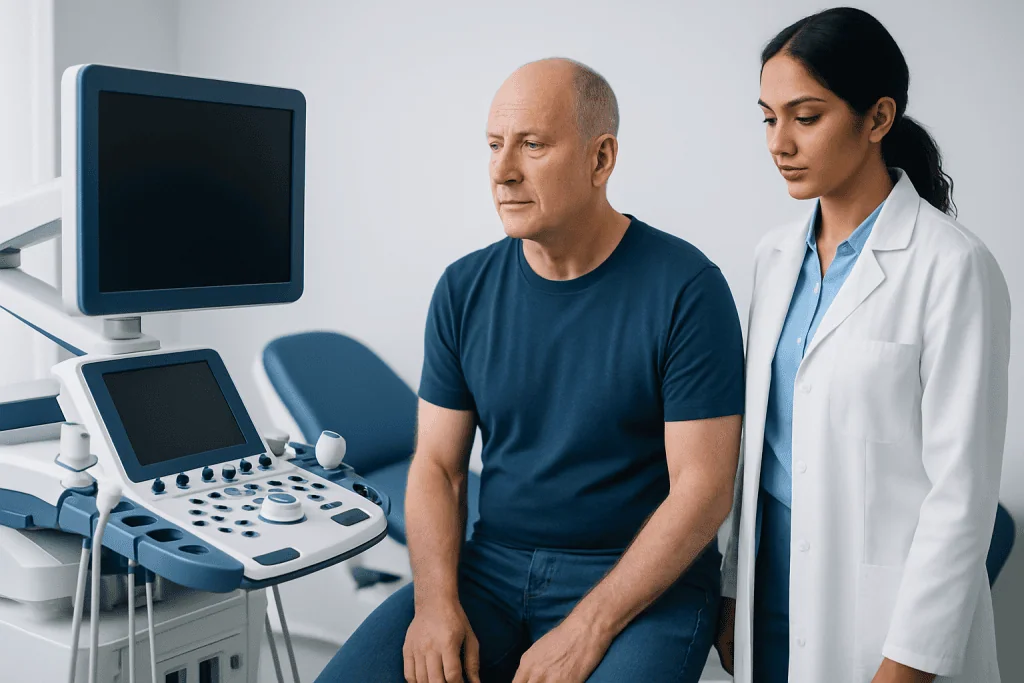
A clinician may offer a DRE to someone discussing prostate cancer screening, particularly when there are symptoms or risk factors that need assessment. It can also be performed during an evaluation of urinary difficulties, blood in the urine or semen, pelvic discomfort, erectile changes, unexplained weight loss, or abnormal PSA results.
People with a family history of prostate cancer, certain inherited genetic variants, or a higher baseline risk because of ancestry may benefit from an earlier conversation about screening. The appropriate starting age and screening interval vary between individuals and healthcare systems. A doctor can help weigh potential benefits, possible false-positive findings and the implications of follow-up testing.
The exam may also help evaluate common non-cancerous conditions such as benign prostatic hyperplasia, which can contribute to a weak urine stream, straining, frequent urination or waking at night to urinate. These symptoms are common and do not by themselves mean prostate cancer is present.
How it works: step-by-step during a prostate DRE
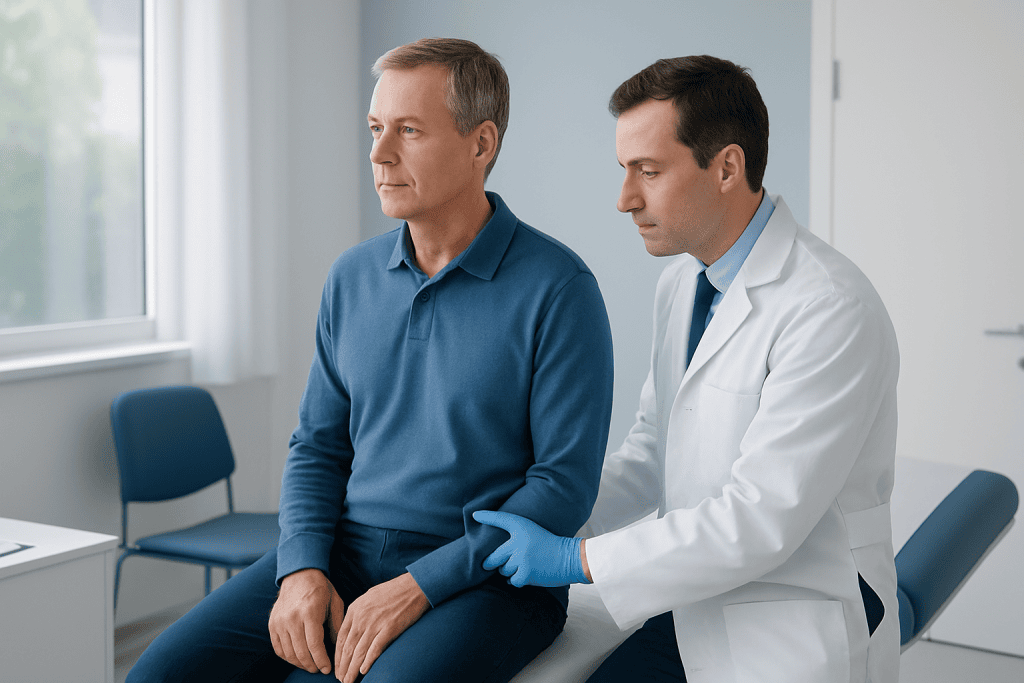
Usually, no special preparation is needed. The person may be asked to undress from the waist down and cover with a gown or sheet. Depending on the clinic and the reason for the exam, they may stand leaning forward, lie on their side with knees drawn up, or lie on an examination table in another comfortable position.
The clinician explains the process, puts on a glove and applies lubricant. They then gently insert a lubricated finger into the rectum and feel the prostate through the front wall of the rectum. The actual internal examination commonly lasts less than a minute, although the appointment may include discussion, a PSA blood test or other assessments.
During the exam, the clinician considers the prostate’s size, contour and consistency. They may also check for rectal tenderness, blood or other abnormalities when clinically relevant. It is appropriate to ask questions, request that the examination be explained as it happens, or tell the clinician if pain occurs.
- No sedation or anesthetic is normally required.
- It is helpful to relax the pelvic muscles and breathe slowly.
- People can usually return to normal activities immediately afterward.
Can you feel prostate on a rectal exam?
Yes. The prostate sits directly in front of the rectum, so a clinician can feel part of it through the rectal wall. However, only the back and side portions of the gland are accessible by touch; areas deeper within the prostate or toward its front cannot be reliably assessed with a DRE.
For this reason, the exam can identify some potentially important changes but has clear limits. A small tumor, a tumor located in an area that cannot be reached, or a cancer that does not alter the prostate’s surface may not be felt. Conversely, an uneven or enlarged prostate can result from non-cancerous causes.
When the examination raises a concern, further tests help clarify the cause. Depending on the findings, this may involve PSA testing, a multiparametric MRI and targeted or systematic biopsy. Modern prostate cancer treatment planning depends on an accurate diagnosis and a careful assessment of cancer grade, stage and the person’s overall health.
How accurate is a digital rectal exam for prostate cancer?
A DRE has limited accuracy as a stand-alone screening test. It can detect a prostate that feels hard, irregular, asymmetric or nodular, but it cannot feel the entire prostate and may miss cancers that are small or located beyond the area reached by the examining finger. A normal result therefore does not rule out prostate cancer.
An abnormal result also does not mean a person has cancer. Benign enlargement, prostatitis and previous inflammation can cause changes in prostate texture or size. The value of the DRE is greatest when it is interpreted alongside PSA results, symptoms, prior test results and known risk factors.
If the PSA is elevated, increasing over time, or the DRE is concerning, a urologist may recommend further evaluation. This approach helps avoid drawing conclusions from one finding alone and can reduce unnecessary procedures while identifying people who may need closer investigation.
What is an average PSA score for a 70 year old?
There is no single PSA score that is normal, safe or diagnostic for every 70-year-old. PSA levels can rise with age because the prostate often becomes larger, but they are also influenced by benign enlargement, inflammation, urinary infection, recent ejaculation, cycling, urinary retention and medical procedures involving the prostate.
Some laboratories and clinicians use age-related reference ranges, while others place greater emphasis on the PSA trend over time and the individual’s risk profile. A PSA result should be interpreted using that laboratory’s reference interval, prior PSA values, medications and findings from the medical history and examination.
A raised PSA does not automatically indicate cancer, and prostate cancer can sometimes occur with a PSA value that is not elevated. If a result is unexpected, a clinician may repeat the test after addressing temporary causes or arrange additional testing. Shared decision-making is particularly important for older adults, because the potential value of screening depends on health status and life expectancy as well as age.
How uncomfortable is a digital rectal exam?
Most people describe a DRE as brief pressure, fullness or awkwardness rather than pain. There may be a momentary urge to have a bowel movement when the finger is inserted. The examination should be gentle, explained clearly and stopped if the person experiences significant pain.
Discomfort can be greater when there are hemorrhoids, anal fissures, rectal inflammation, recent rectal surgery, severe constipation, active infection or marked anxiety. Letting the clinician know about these concerns beforehand can help them adjust the approach or decide whether the exam should be postponed.
Slow breathing and relaxing the buttock and pelvic muscles may make the examination easier. Mild, short-lived discomfort afterward is uncommon but can occur. Ongoing pain, substantial rectal bleeding or fever after an examination is not expected and should be discussed promptly with a healthcare professional.
Benefits, risks, follow-up and when to seek medical care
The main benefit of a DRE is that it is quick, does not involve radiation and can provide immediate information about the prostate and rectum. It may help identify a reason for further testing, especially when a person has urinary symptoms or an abnormal PSA. Its limitations are equally important: it cannot diagnose cancer and may lead to further tests for findings that prove non-cancerous.
Serious complications from the examination itself are rare. Minor rectal discomfort or a small amount of bleeding may occur, particularly in people with hemorrhoids or fragile rectal tissue. A clinician should be informed before the exam about rectal pain, bleeding, inflammatory bowel disease, recent surgery or medicines that affect bleeding.
Medical assessment is advisable for blood in the urine or semen, new persistent urinary difficulties, inability to urinate, unexplained pelvic or bone pain, unintentional weight loss, or a new lump or abnormality found during an examination. Urgent care is important for inability to pass urine, high fever with urinary symptoms, or heavy rectal bleeding. These symptoms can have many causes and deserve timely, calm evaluation.
At Acibadem International, multidisciplinary specialists in JCI-accredited hospitals can assess prostate symptoms and coordinate appropriate diagnostic testing and treatment planning for international patients. A urology consultation can help determine whether PSA testing, imaging or other investigations are appropriate for an individual’s circumstances.
Frequently asked questions
Does a digital rectal exam detect prostate cancer?
A DRE can sometimes detect changes that warrant further investigation, such as a hard area, nodule or irregular prostate contour. It cannot diagnose prostate cancer and cannot rule it out when the examination is normal. PSA testing, imaging and sometimes biopsy may be needed to clarify a concerning finding.
How long does a digital rectal exam take?
The internal portion of the examination usually takes less than a minute. The overall appointment may take longer because the clinician reviews symptoms, medical history, screening choices and any follow-up tests. No recovery period is generally needed.
Should a DRE be done with a PSA test?
A DRE and PSA test provide different types of information, and clinicians may use them together in selected situations. Whether both tests are appropriate depends on the person's age, symptoms, risk factors and local screening guidance. A doctor can explain the possible benefits and limitations before testing.
Can an enlarged prostate be felt during a DRE?
Yes, a clinician may be able to recognize that the prostate feels enlarged during a DRE. However, the examination cannot precisely measure the gland or identify the exact cause of enlargement. Imaging and other tests may be used when more detail is needed.
What happens if the DRE result is abnormal?
An abnormal result means that more assessment may be appropriate; it is not a cancer diagnosis. The clinician may review PSA testing, repeat the examination, assess for infection or benign enlargement, and consider prostate MRI or referral to a urologist. A biopsy is considered only when the overall findings indicate that it may be helpful.
Can I eat and drink before a digital rectal exam?
Most people can eat and drink normally before a standard DRE. Special preparation is not usually required. If the examination is part of another procedure or test, the healthcare team will provide any necessary instructions in advance.
References
- American Cancer Society
- European Association of Urology
- National Cancer Institute
- U.S. Preventive Services Task Force
- World Health Organization
This article is for general information only and is not a substitute for professional medical advice. Please consult a qualified doctor about your individual situation.
Prostate Cancer in Turkey — costs, top hospitals & a free quote
JCI-accredited · board-certified surgeons · reply within 24h
Add us as a Preferred Source to see more of our trusted health content across Google Search, AI Overviews and Discover.

More from the Health Library



Related Specialists

Dr. Muzaffer Ağır
Orthopedic Surgery & Traumatology
Assoc. Prof. Dr. Muhammet Ahmet Karakaya
Anesthesiology
Assoc. Prof. Dr. Şevket Tolga Tombul
Urology
Assoc. Prof. Dr. Ata Can
Orthopedic Surgery & Traumatology