DNA to: What Patients Need to Know

DNA is the body's genetic instruction manual, found in nearly every cell. DNA testing can help assess inherited conditions, family risk, and sometimes treatment choices.
Key Takeaways
- DNA is the body's genetic instruction manual, found in nearly every cell.
- DNA testing can help assess inherited conditions, family risk, and sometimes treatment choices.
- Not every DNA change causes disease; many variants are harmless or uncertain.
- Genetic test results should be interpreted with a qualified clinician or genetic counselor.
- Medical care is important if there is a strong family history of inherited disease or concerning symptoms.
DNA TO is not a standard medical diagnosis by itself, but people often use it when searching for information about DNA, genetic testing, or how DNA relates to health. Understanding what DNA does and what a DNA test can and cannot show helps patients make informed decisions with their doctor.
Overview: what “DNA TO” usually means
DNA stands for deoxyribonucleic acid, the molecule that carries genetic instructions in the body. When patients search for “DNA TO,” they are often looking for a simple explanation of what DNA is, how it relates to health, or whether DNA testing can help answer personal or family medical questions.
DNA contains genes, and genes help guide how the body grows, functions, and repairs itself. Every person inherits DNA from their biological parents, which is why some traits and some health conditions can run in families. However, DNA is only one part of health. Lifestyle, environment, age, infections, and chance also play important roles.
In medical care, DNA may be discussed when a doctor is evaluating an inherited condition, planning screening, or considering treatment options. For example, DNA-based tests may help clarify the cause of some cancers, blood disorders, neurologic diseases, or rare syndromes. In other situations, DNA testing is not necessary and routine care is enough.
The most helpful way to think about DNA is as information, not destiny. A DNA result can sometimes explain risk, but it does not always predict exactly whether a disease will happen, when it will appear, or how severe it will be.
How DNA affects health
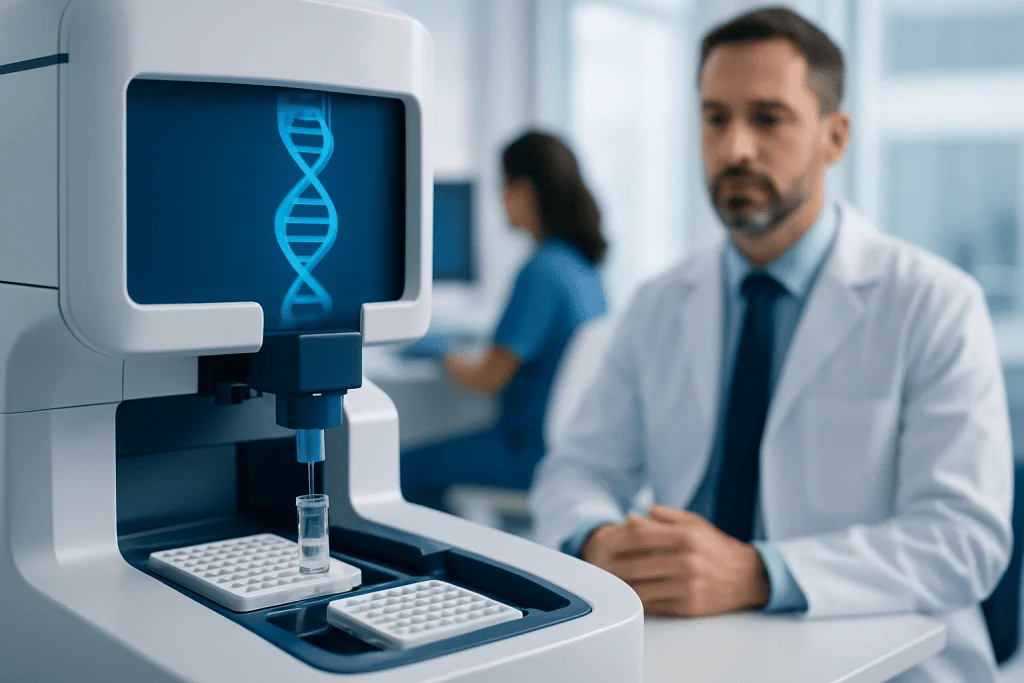
Genes are small sections of DNA that provide instructions for making proteins. Proteins help cells do their jobs, from carrying oxygen to digesting food to regulating hormones. If a gene has a change, also called a variant or mutation, the protein may work differently. In some cases this has no effect, while in others it may contribute to disease.
Some conditions are strongly linked to inherited DNA changes. These may include certain cancers, heart rhythm disorders, metabolic diseases, and some neurologic or muscle conditions. Other common illnesses, such as high blood pressure, diabetes, or asthma, are usually influenced by many genes together with lifestyle and environmental factors.
DNA can also change during life. These acquired changes are different from inherited changes and may happen in specific cells, such as cancer cells. This is one reason doctors may order DNA-related testing on a tumor sample rather than on blood alone. In cancer care, molecular testing can sometimes help classify a cancer and support treatment planning, including oncology treatment.
Because DNA affects many systems, genetic medicine often overlaps with several specialties. Depending on the concern, evaluation may involve pediatrics, neurology, cardiology, reproductive medicine, or medical genetics.
Why a doctor might recommend DNA testing
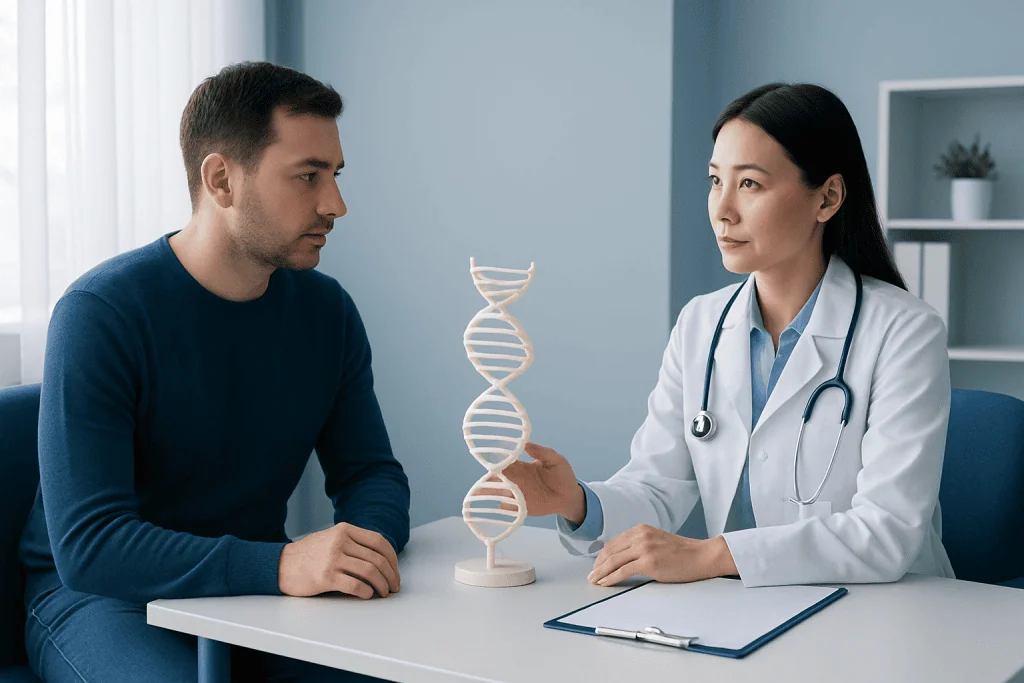
DNA testing is usually recommended for a specific medical reason. A doctor may suggest it if a patient has symptoms that point to an inherited disorder, if several relatives have had the same condition, or if a disease appeared unusually early in life. Testing may also be considered during pregnancy planning, after repeated pregnancy loss, or when a child has developmental concerns or unexplained health problems.
In some cases, testing helps confirm a diagnosis that doctors already suspect. In others, it helps rule out certain inherited conditions or guides screening for family members. For example, if a pathogenic variant is found, close relatives may be offered targeted testing so they can understand whether they share the same risk.
DNA testing may also be used in cancer care. Doctors sometimes look for inherited risk genes, and they may also test the genetic features of a tumor itself. This can be helpful in conditions such as cancer, where treatment decisions increasingly depend on the biology of the disease rather than only its location in the body.
Not every patient with a symptom needs a DNA test. Doctors consider whether the result is likely to change diagnosis, follow-up, prevention, or treatment. If the test will not add useful information, other evaluations may be more appropriate.
What different DNA tests can show
There is no single DNA test for every situation. Some tests look at one gene when a specific inherited disorder is suspected. Others examine a panel of genes linked to a certain group of conditions, such as hereditary cancer syndromes or inherited heart disease. More advanced methods may analyze most or all of a person’s protein-coding genes or even the entire genome.
Results are usually reported in categories. A result may be positive, meaning a disease-causing variant was identified. It may be negative, meaning no relevant variant was found. Another possible result is a variant of uncertain significance, which means a DNA change was found but its medical meaning is not yet clear.
It is important to understand the limits of testing. A negative result does not always rule out a genetic condition, especially if the responsible gene is still unknown or the test cannot detect all types of changes. Similarly, a positive result does not always predict how severe a condition will be or whether symptoms will definitely develop.
Testing can be done on blood, saliva, cheek swab, or tissue, depending on the question being asked. The best test depends on the patient’s symptoms, age, family history, and whether the concern is inherited, acquired, or related to a tumor sample.
How results are interpreted and what happens next
DNA results should be interpreted in context. Doctors review the patient’s medical history, symptoms, physical findings, and family history before deciding what a result means. The same variant may be more or less important depending on the person’s health picture and relatives’ diagnoses.
For many patients, genetic counseling is a valuable part of the process. A genetic counselor or specialist can explain what the test may show, what it cannot show, and what the possible emotional and family implications may be. This conversation can help patients decide whether testing is right for them before a sample is collected.
After testing, next steps vary. Some patients need regular screening, such as earlier cancer checks or heart monitoring. Others may need referral for specialist care, medication review, reproductive counseling, or family testing. If a result relates to a condition such as epilepsy or another neurologic disorder, care may also involve imaging, laboratory tests, or neurologic follow-up in addition to DNA analysis.
Sometimes the result is uncertain and no immediate change in care is recommended. In these cases, doctors may suggest periodic re-evaluation because scientific knowledge evolves. A variant that is unclear today may be reclassified in the future as harmless or disease-causing.
Benefits, limits, and privacy considerations
One benefit of DNA testing is clarity. For some patients, it can end a long search for a diagnosis and help explain symptoms that were previously uncertain. It may also help families understand inherited risk and plan screening or prevention more effectively.
At the same time, testing has limitations. It may reveal unexpected findings, identify a risk that cannot be fully prevented, or leave questions unanswered. Some patients feel relieved by the information, while others feel anxious, especially if results affect relatives as well as themselves.
Privacy is another important consideration. Genetic information is personal medical information and should be handled carefully. Patients may want to ask how results will be stored, who can access them, and whether family members should be informed of findings that may affect their health.
Before testing, it is reasonable to ask practical questions about purpose, expected benefits, possible drawbacks, and whether the result is likely to change care. A clear discussion with a qualified clinician helps patients make decisions that fit their medical needs and values.
Prevention, self-care, and when to seek medical care
People cannot change the DNA they were born with, but they can still support their health in many ways. General prevention remains important even when genetic risk is present. This includes keeping regular checkups, following recommended screening, staying physically active, eating a balanced diet, avoiding tobacco, limiting alcohol, and managing stress and sleep.
If a doctor identifies an inherited risk, self-care often means following a personalized plan rather than trying to “treat” DNA directly. That plan may include earlier or more frequent screening, monitoring for symptoms, or care from a specialist. In some cases, patients may be referred for check-up and screening or for focused care such as neurology when symptoms affect the nervous system.
Medical care should be sought if there is a strong family history of early cancer, sudden unexplained death, repeated miscarriages, birth defects, developmental delay, unexplained muscle weakness, seizures, or unusual symptoms affecting more than one body system. Prompt evaluation is also important if a person already has symptoms that are worsening, recurring, or difficult to explain.
For international patients who need coordinated evaluation, Acibadem International’s multidisciplinary specialists and JCI-accredited hospitals diagnose and treat a wide range of genetic and non-genetic conditions. A qualified doctor can help decide whether DNA testing is useful, which test is appropriate, and what the results mean in practical terms.
Frequently asked questions
What does DNA mean in simple terms?
DNA is the genetic material inside most cells of the body. It contains instructions that help determine how the body grows, functions, and passes traits from parents to children.
Is DNA testing the same as a diagnosis?
No. DNA testing is a tool that can support diagnosis, estimate inherited risk, or guide treatment, but it is not always enough on its own. Doctors interpret results together with symptoms, examination findings, and other tests.
Can a DNA test tell whether someone will definitely get a disease?
Usually not. Some genetic results show a strong risk, but many conditions depend on several genes plus lifestyle and environmental factors. A result often indicates increased or decreased likelihood rather than certainty.
Who should consider genetic testing?
It may be worth discussing with a doctor if there is a strong family history of certain diseases, symptoms suggesting an inherited condition, or a diagnosis that appeared unusually early in life. Pregnancy planning and unexplained developmental issues in a child are other common reasons to ask about testing.
What if a DNA result is unclear?
An unclear result is often called a variant of uncertain significance. It means a DNA change was found, but current science cannot say for sure whether it is harmless or related to disease. Doctors usually avoid major decisions based only on this type of result and may recommend follow-up over time.
Are at-home DNA tests enough for medical decisions?
Not usually. Some at-home tests provide limited health information, but they may not be designed to answer a specific medical question or meet the same standards as clinical testing. Important results should be reviewed and, if needed, confirmed through a healthcare professional.
References
- World Health Organization
- U.S. National Library of Medicine MedlinePlus
- Centers for Disease Control and Prevention
- National Human Genome Research Institute
- American College of Medical Genetics and Genomics
This article is for general information only and is not a substitute for professional medical advice. Please consult a qualified doctor about your individual situation.
Explore treatments in Turkey — costs, top hospitals & a free quote
JCI-accredited · board-certified surgeons · reply within 24h
Add us as a Preferred Source to see more of our trusted health content across Google Search, AI Overviews and Discover.
Check your numbers in seconds
BMI, calories, due date, blood pressure and 30+ more clinical calculators — free, instant, doctor-reviewed ranges.

More from the Health Library

Epsom Salt for Constipation: What Patients Need to Know

Lip Bite: A Complete Medical Overview

Blood When Blowing Nose: A Complete Medical Overview

Iris Eye — Explained by Medical Evidence, Not Myths

Gonorrhoea in the Eye: An Evidence-Based Guide for Patients