Do Colonoscopy Clips Fall Out: Preparation, Procedure and Results

Most colonoscopy clips fall off naturally as the bowel lining heals and usually pass unnoticed. Clips may be used after polyp removal, to control bleeding, or to close a deeper tissue defect.
Key Takeaways
- Most colonoscopy clips fall off naturally as the bowel lining heals and usually pass unnoticed.
- Clips may be used after polyp removal, to control bleeding, or to close a deeper tissue defect.
- A retained clip is usually not harmful, but patients should tell healthcare professionals about it before an MRI.
- Follow the recovery instructions provided after colonoscopy, especially regarding medicines, diet, and activity.
- Urgent medical assessment is needed for severe or worsening abdominal pain, heavy rectal bleeding, fever, fainting, or persistent vomiting.
Colonoscopy clips are small metal devices used to close or protect an area of the bowel after a polyp is removed or bleeding is treated. Most clips eventually detach on their own and pass naturally in stool, usually without the person noticing.
Do colonoscopy clips fall out?
Yes. Most colonoscopy clips eventually detach from the bowel wall as the treated area heals. They commonly pass in stool without being seen or felt, often within days to several weeks. The timing varies according to the type of clip, the location and size of the treated area, and how quickly the tissue heals.
Colonoscopy clips are also called endoscopic clips or hemoclips. They are tiny devices placed through the colonoscope, a flexible tube used to examine the large bowel. Their purpose is to help prevent or stop bleeding, or to close a small opening after a procedure such as removal of a larger polyp.
People generally do not need to look for a clip in the toilet or collect it. If a clip remains attached longer than expected, it is usually not a problem. The gastroenterology team can advise whether any follow-up is needed based on the reason the clip was placed.
Why clips may be used during colonoscopy
During colonoscopy, a clinician may find and remove a growth called a polyp. Most polyps are benign, but some can develop into cancer over time, which is why removing them is an important preventive step. The procedure is often part of the evaluation and prevention of colorectal cancer.
Clips may be placed after a polyp is removed, particularly if it was large, broad-based, or located in a part of the colon where bleeding risk is greater. They can compress a small blood vessel to stop active bleeding or reduce the chance of delayed bleeding. Clips can also help close a deeper area of tissue after a more complex endoscopic removal.
Not every polyp removal needs a clip. The decision depends on the polyp’s features, the removal technique, a person’s bleeding risk, and whether medicines such as anticoagulants or antiplatelet drugs are used. In some cases, a clip is also used to mark a site for possible future imaging or surgery.
Preparation and candidacy for colonoscopy clipping
Clips are not usually planned as a separate procedure. They may be used during a colonoscopy if the endoscopist considers them clinically helpful. Colonoscopy may be recommended for bowel cancer screening, investigation of rectal bleeding or changed bowel habits, follow-up after previous polyps, or assessment of certain digestive symptoms.
Good bowel preparation is essential because the clinician needs a clear view of the bowel lining. Preparation commonly involves following a temporary low-fibre diet, taking prescribed bowel-cleansing medicine, and drinking clear fluids according to the instructions given. Patients should follow the timing instructions carefully, as an inadequately cleaned bowel can make the examination less accurate or require it to be repeated.
Before the procedure, patients should provide a full medication list and mention allergies, pregnancy, heart or lung conditions, kidney disease, bleeding disorders, and previous reactions to sedation. Blood-thinning medicines should never be stopped independently. The prescribing clinician and endoscopy team can give an individualized plan that balances bleeding risk with the reason the medicine is needed.
- Ask whether regular medicines should be taken on the morning of colonoscopy.
- Arrange a responsible adult to take the patient home if sedation is used.
- Tell the team about implanted devices, prior bowel surgery, and any history of difficult procedures.
- Discuss diabetes medicines and insulin in advance, as fasting and bowel preparation may require adjustments.
How the procedure and clip placement work
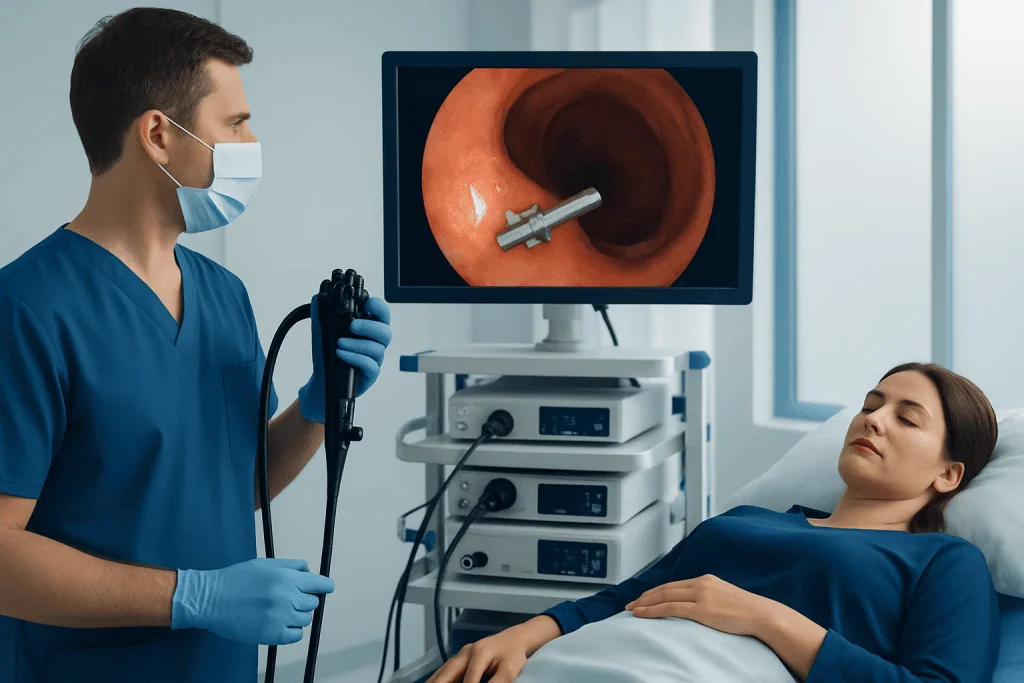
Colonoscopy is usually performed as an outpatient procedure. After admission, the patient changes into a gown and may receive sedation or pain relief through a vein. The team monitors breathing, heart rate, blood pressure, and oxygen levels throughout the examination.
With the patient lying on their side, the clinician gently passes the colonoscope through the rectum and advances it through the large bowel. Air or carbon dioxide is introduced to open the bowel for a clearer view. If a polyp or bleeding point is found, instruments can be passed through the scope to remove tissue, control bleeding, or place a clip.
For clip placement, the device is guided to the treatment site through the scope. The clip is opened, positioned across the tissue or vessel, and released to hold the edges together or apply pressure. It is designed to stay in place while early healing occurs. The clinician may use one clip or more than one depending on the size and nature of the area.
Many people benefit from colonoscopy because it allows examination, tissue sampling, polyp removal, and selected treatments in the same visit. Any tissue removed is usually sent to a laboratory, and the timing of results and future surveillance is based on the findings.
Recovery timeline, results and everyday considerations
After sedation, patients recover in a monitored area until they are alert enough to go home. Mild bloating, gas, or brief cramping can occur because of the air used during the examination. These symptoms generally settle within several hours. It is usually advisable to rest for the remainder of the day and avoid driving, alcohol, important decisions, and operating machinery until the effects of sedation have fully passed.
A clip itself should not cause a sensation in the bowel. It does not need to be removed, and routine X-rays are not generally needed to check whether it has passed. The clip will often fall away as the tissue heals. In some cases, it can remain in place for a longer period and be seen incidentally during a later examination.
Patients should follow the specific instructions given after polyp removal. Depending on the procedure, this may include temporarily avoiding strenuous exercise, heavy lifting, or certain medicines. The team may recommend a short period of simple foods and good fluid intake, although many people can return to their usual diet as advised.
If future MRI scanning is planned soon after clipping, patients should tell the radiology department and provide the procedure details if available. Many modern endoscopic clips are MRI-conditional, meaning they can be scanned under specified conditions, but the imaging team must confirm the safety information for the particular clip used.
Benefits, possible risks and when to seek medical care
The main benefit of a colonoscopy clip is that it can provide immediate mechanical control of bleeding or support healing after endoscopic treatment. This may reduce the need for additional interventions in selected situations. Clip placement is a well-established technique, but it does not eliminate all risk after polyp removal or other bowel treatments.
Minor bleeding can occasionally occur after a biopsy or small polyp removal. Delayed bleeding may happen after the patient has gone home, particularly after removal of a larger polyp. Less commonly, there can be infection, a reaction to sedation, or a perforation, which is a tear in the bowel wall. These complications are uncommon but require prompt assessment when suspected.
When to seek medical care: Patients should contact their treating team promptly for more than a small, brief amount of rectal bleeding, new or worsening abdominal pain, persistent abdominal swelling, fever, chills, repeated vomiting, dizziness, fainting, shortness of breath, or black stools. Emergency medical care is appropriate for heavy bleeding, severe pain, fainting, or symptoms that feel rapidly worse.
It is also sensible to contact the clinic if the patient has questions about restarting blood-thinning medicine, returning to work or exercise, or a planned MRI. Clear post-procedure guidance is particularly important for people who have had more extensive polyp removal or treatment for bleeding.
Follow-up and supporting digestive health
Follow-up after colonoscopy depends on why it was performed and what was found. The endoscopist may give preliminary information on the same day, while biopsy or polyp laboratory results can take longer. The report should explain whether polyps were removed, whether clips were placed, and when the next examination may be recommended.
Keeping follow-up appointments is important, especially when pathology results show polyps that need surveillance. A clinician may suggest lifestyle measures that support bowel health, such as eating a varied fibre-rich diet when appropriate, being physically active, limiting alcohol, avoiding tobacco, and maintaining a weight that supports overall health. These steps complement, but do not replace, recommended screening.
At Acibadem International, multidisciplinary specialists and JCI-accredited hospitals can assess digestive symptoms, perform colonoscopy, and coordinate follow-up care for international patients. People with ongoing bowel symptoms or a personal or family history that affects screening should discuss an individualized plan with a qualified gastroenterology clinician.
Frequently asked questions
Can a colonoscopy clip come out too early?
Clips are designed to remain attached long enough to support early healing, but the exact duration cannot be predicted. If a clip detaches naturally, it usually passes without causing symptoms. Patients who develop bleeding, worsening pain, or dizziness after a procedure should contact their medical team promptly.
How long do colonoscopy clips stay in the body?
Many clips detach within days to weeks, although some can remain longer. The duration depends on the clip design, the treated location, and individual healing. A clip that remains in place is not usually a concern unless the treating clinician says otherwise.
Will a person feel a colonoscopy clip when it passes?
Most people do not feel the clip and do not notice it in the stool. It is very small and normally passes naturally through the digestive tract. There is no need to search for it unless a healthcare professional has given specific instructions.
Can colonoscopy clips cause pain or bowel blockage?
Clips generally do not cause pain or blockage. Abdominal discomfort after colonoscopy is more often related to retained gas, bowel preparation, or the treatment performed. Severe, increasing, or persistent pain should be assessed urgently because it can signal a complication unrelated to simply having a clip in place.
Can a person have an MRI after colonoscopy clips?
The answer depends on the specific clip used and the MRI equipment. Many current clips are compatible with MRI under particular conditions, but patients should inform the radiology team before the scan. The endoscopy report or clinic can help identify the device if needed.
Do clips mean that the colonoscopy found cancer?
No. Clips are commonly used after benign polyp removal or to control bleeding, and their use does not by itself indicate cancer. Laboratory testing of removed tissue provides the information needed to determine whether a polyp was benign, precancerous, or cancerous.
References
- American Society for Gastrointestinal Endoscopy
- National Institute of Diabetes and Digestive and Kidney Diseases
- National Health Service
- U.S. Food and Drug Administration
- World Gastroenterology Organisation
This article is for general information only and is not a substitute for professional medical advice. Please consult a qualified doctor about your individual situation.
Persistent digestive symptoms? Get evaluated in Turkey
JCI-accredited · board-certified surgeons · reply within 24h
Add us as a Preferred Source to see more of our trusted health content across Google Search, AI Overviews and Discover.
Check your numbers in seconds
BMI, calories, due date, blood pressure and 30+ more clinical calculators — free, instant, doctor-reviewed ranges.

More from the Health Library



Related Specialists

Prof. Dr. Murat Karaman
Otorhinolaryngology
Dr. Nazmiye Özcan
Emergency Service
Dr. Fatmanur Yildirim
Physical Medicine & Rehabilitation
Dr. R. Kerem Temel
Cardiology