Do Shrooms Show Up in a Urine Drug Test? Here Is What the Evidence Says

Standard urine drug screens typically do not test for psilocybin or psilocin. Specialized testing may detect shrooms for a short window, often within the first day or two after use.
Key Takeaways
- Standard urine drug screens typically do not test for psilocybin or psilocin.
- Specialized testing may detect shrooms for a short window, often within the first day or two after use.
- Most cases are not medical emergencies, but severe confusion, agitation, chest pain, seizures, or trouble breathing need urgent care.
- A doctor may assess symptoms, hydration, mental status, and possible co-exposures rather than relying only on a drug test.
- Test results can vary by the type of panel used, the amount taken, timing, and individual metabolism.
Usually, shrooms do not appear on a standard urine drug test. However, specialized laboratory tests can sometimes detect psilocybin or its breakdown product, psilocin, for a limited time after use.
Overview: What the evidence says
In most situations, the answer is no: shrooms usually do not show up on a routine urine drug test. Standard workplace, school, or emergency screening panels commonly look for substances such as cannabis, cocaine, amphetamines, opioids, and benzodiazepines, but they generally do not include psilocybin, the main psychoactive compound in psychedelic mushrooms.
That said, this does not mean shrooms are completely undetectable. Psilocybin is converted in the body to psilocin, and specialized laboratory tests can sometimes identify psilocin in urine for a relatively short period after use. Whether detection happens depends on the exact test ordered, when the sample is collected, how much was taken, and the person’s metabolism and hydration status.
For many people, the immediate issue is not the test itself but how they feel afterward. Mild effects may wear off without lasting harm, but certain symptoms deserve prompt medical review. If there is severe anxiety, confusion, unsafe behavior, chest pain, seizures, persistent vomiting, or trouble breathing, medical care is important even if the person believes they only took mushrooms.
Why standard urine drug tests often miss shrooms
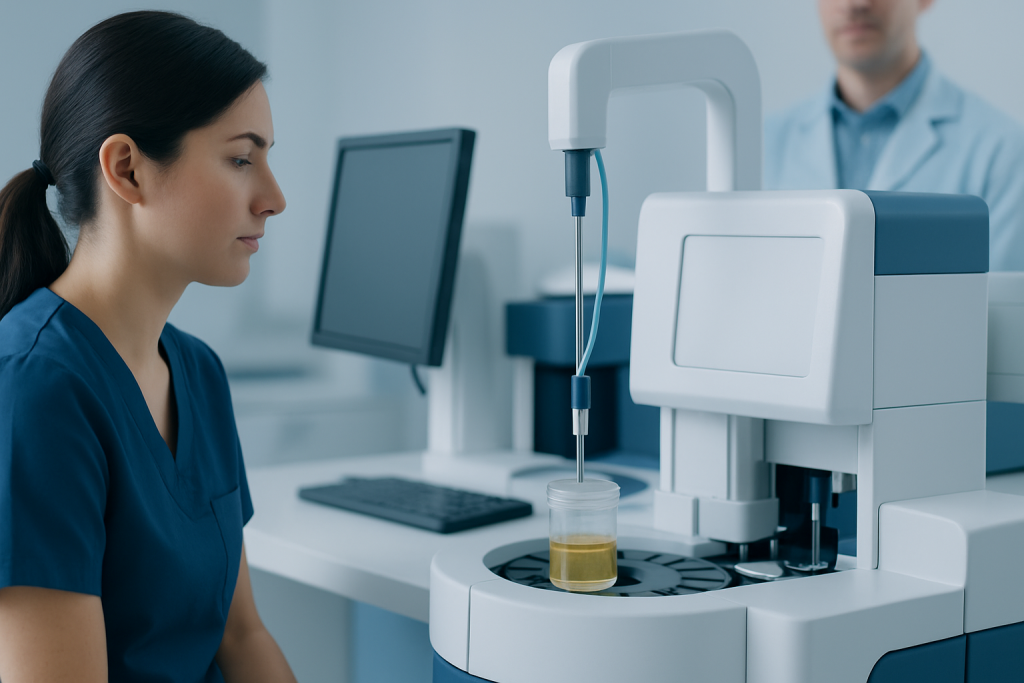
Routine urine drug screens are designed to detect the substances most commonly involved in workplace testing, emergency care, or substance use monitoring. Psilocybin and psilocin are not usually part of these standard panels. As a result, a person can have recently used shrooms and still test negative on a typical urine screen.
Another reason is timing. Psilocybin is processed relatively quickly compared with some other drugs, and psilocin does not remain in the body for very long. Because of this short detection window, even a test specifically designed to look for it may miss it if too much time has passed.
Immunoassay tests, which are commonly used for quick screening, are not especially useful for mushrooms unless they are specifically built to detect psilocin. Confirmatory methods such as gas or liquid chromatography with mass spectrometry are more accurate, but they must be intentionally requested by the clinician, employer, or laboratory. In everyday testing, that is uncommon.
How long can shrooms be detected in urine?
There is no single detection time that applies to everyone, but available evidence suggests that psilocin is usually detectable in urine only for a short period. In many cases, if a specialized test is used, detection is most likely within the first 24 hours and may sometimes extend to roughly 48 hours, depending on the method and the circumstances.
Several factors can affect this window. These include the amount taken, the concentration of psilocybin in the mushrooms, whether other substances were also used, the person’s liver and kidney function, body chemistry, and how soon the sample is collected after use. Hydration may also influence urine concentration, although it does not reliably “clear” a substance from the body.
Hair, blood, and saliva testing are discussed online, but for mushrooms these are not common in routine practice. Blood testing has a very narrow time window and is usually only considered in special clinical or forensic settings. A doctor focuses first on symptoms and safety rather than assuming a negative standard urine test rules mushroom exposure in or out.
What symptoms can happen after taking shrooms?
Shrooms can cause changes in perception, mood, thinking, and physical sensations. People may experience altered sense of time, visual distortions, euphoria, anxiety, restlessness, nausea, dilated pupils, faster heart rate, or sweating. These effects are often temporary, but they can be distressing, especially in unfamiliar settings or at higher doses.
Sometimes the bigger concern is not psilocybin alone but what else may be involved. A person may have taken another drug unknowingly, combined mushrooms with alcohol or stimulants, or eaten a toxic wild mushroom that was mistaken for a hallucinogenic one. Toxic mushroom poisoning is a very different and potentially serious situation from psilocybin exposure. If there is concern about accidental mushroom ingestion, a clinician may evaluate for mushroom poisoning.
It is also important to distinguish temporary substance-related symptoms from an underlying mental health or neurologic condition. Severe panic, prolonged confusion, psychosis-like symptoms, or unusual behavior should be assessed by a healthcare professional, especially if the person has a history of psychiatric illness or if symptoms persist after the expected effects should have worn off.
- Common short-term effects: visual changes, anxiety, nausea, dizziness, dilated pupils
- Concerning symptoms: chest pain, severe agitation, dehydration, self-harm risk, seizures
- Urgent red flags after eating wild mushrooms: repeated vomiting, diarrhea, jaundice, severe abdominal pain, confusion, or drowsiness
When to seek medical care
Most people do not need emergency treatment simply because they took shrooms, especially if symptoms are mild and improving in a safe setting. Calm supervision, hydration, and a low-stimulation environment may be enough while the effects wear off. However, a person should not be left alone if they are disoriented, frightened, or behaving unsafely.
Urgent medical care is needed if there is trouble breathing, chest pain, a seizure, loss of consciousness, severe agitation, suicidal thoughts, violent behavior, a very high fever, or ongoing vomiting that prevents drinking fluids. Emergency assessment is also important if the mushrooms were picked in the wild, because poisonous species can cause life-threatening liver, kidney, or neurologic problems and may first look like a routine stomach illness.
Medical review is also sensible when symptoms are lingering longer than expected, if there is concern about a mixed overdose, or if the person has a known heart condition or major mental health disorder. If a clinician suspects a serious neurologic issue based on headache, weakness, or altered awareness, they may consider broader evaluation such as MRI scanning to look for other causes rather than attributing everything to substance use.
How doctors evaluate possible shroom exposure
When someone seeks care, the first step is usually a clinical assessment rather than a mushroom-specific urine test. A doctor asks what was taken, when it was used, how much was used, whether alcohol or other drugs were involved, and what symptoms appeared. They also check vital signs, mental status, hydration, and whether the person can be kept safe.
Routine urine drug testing may be ordered in some settings, but the result can be negative even if psilocybin was used. If symptoms suggest another condition, or if there is a concern about hidden co-exposures, additional blood or urine tests may be needed. For example, clinicians may check electrolytes, blood sugar, kidney function, or liver tests, especially if there is vomiting, dehydration, or concern for toxic mushroom ingestion.
If a person has severe confusion, unusual behavior, or prolonged symptoms, the care team may also consider psychiatric or neurologic causes. In selected cases, referral for neurological rehabilitation or mental health follow-up may be part of recovery if symptoms reveal an underlying condition. When testing is necessary, a specialized toxicology panel must specifically include psilocin; it is not automatically part of standard urine screening.
Treatment and recovery
Treatment for uncomplicated psilocybin exposure is usually supportive. This means keeping the person safe, calm, and hydrated while the effects wear off. A quiet environment, reassurance, and supervision are often the main steps. In a medical setting, clinicians may monitor blood pressure, heart rate, temperature, and hydration status.
If symptoms are more severe, treatment depends on what is happening rather than on the drug test result alone. Doctors may treat nausea, dehydration, severe anxiety, or agitation, and they will watch for complications if other substances may have been used. If there is concern about toxic mushroom ingestion, treatment becomes more urgent and may involve specialist input, repeated blood tests, and close observation.
Persistent mood changes, perceptual symptoms, or anxiety after substance use should be discussed with a qualified professional. In some people, episodes of heavy use or polysubstance exposure may overlap with other concerns such as drug addiction, which may benefit from structured support. Near the end of the care pathway, some patients also need follow-up to review mental health, sleep, and coping strategies. Acibadem International’s multidisciplinary specialists in JCI-accredited hospitals diagnose and treat substance-related and neurologic concerns for international patients when further evaluation is needed.
Prevention, self-care, and practical points about testing
The safest way to avoid unexpected test issues or health effects is not to use mushrooms obtained from unreliable sources and never to eat wild mushrooms unless identified by an expert. Product strength is unpredictable, and misidentification can be dangerous. Combining shrooms with alcohol, stimulants, or other psychoactive substances can increase the risk of panic, injury, or a more complicated medical picture.
For someone worried about a urine test, it helps to understand that the answer depends more on the type of test than on home remedies or online “detox” advice. There is no reliable quick fix that makes a substance disappear from the body. Drinking excessive amounts of water can be unsafe and may only dilute a sample without changing what the body has already processed.
If there are ongoing questions about symptoms, mental health effects, or possible substance use patterns, a doctor can guide the next steps. This may include counseling, addiction support, or assessment for related problems such as psychiatric care. Honest communication with a healthcare professional is usually the most useful way to get clear answers and safe advice.
Frequently asked questions
Do shrooms show up on a 10-panel urine drug test?
Usually no. Most standard 10-panel urine drug tests do not include psilocybin or psilocin, so mushrooms are often not detected unless a special test is ordered.
How long do shrooms stay detectable in urine?
If a specialized test is used, detection is generally most likely within about 24 hours after use and may sometimes extend to around 48 hours. The exact timing varies with dose, metabolism, and the type of laboratory method used.
Can a hospital test for psilocybin?
Yes, but it is not usually part of routine emergency urine screening. A hospital or laboratory would need a specific toxicology test designed to look for psilocin or related compounds.
Will shrooms cause a false positive for another drug?
They are not typically known for causing common false positives on standard urine drug panels. Still, test interpretation depends on the method used, so unexpected results should be reviewed by a qualified clinician or the testing laboratory.
Should someone go to the emergency room after taking shrooms?
Not always. Mild symptoms may improve with calm supervision and time, but emergency care is important for chest pain, seizures, severe confusion, unsafe behavior, trouble breathing, or suspected toxic wild mushroom ingestion.
Can drinking lots of water help pass a urine drug test for shrooms?
There is no reliable or safe shortcut that removes a substance from the body quickly. Excessive water intake can be harmful, and while it may dilute urine, it does not change whether the body has metabolized the substance.
References
- National Institute on Drug Abuse
- Substance Abuse and Mental Health Services Administration
- MedlinePlus
- Centers for Disease Control and Prevention
- Merck Manual
This article is for general information only and is not a substitute for professional medical advice. Please consult a qualified doctor about your individual situation.
Explore treatments in Turkey — costs, top hospitals & a free quote
JCI-accredited · board-certified surgeons · reply within 24h
Add us as a Preferred Source to see more of our trusted health content across Google Search, AI Overviews and Discover.
Check your numbers in seconds
BMI, calories, due date, blood pressure and 30+ more clinical calculators — free, instant, doctor-reviewed ranges.