Does Chemo Affect Hearing: How It Works, Results and What to Expect

Some chemotherapy medicines, especially platinum-based drugs, can cause hearing loss, tinnitus, or balance symptoms. Hearing-related side effects may develop during treatment or appear gradually after it has finished.
Key Takeaways
- Some chemotherapy medicines, especially platinum-based drugs, can cause hearing loss, tinnitus, or balance symptoms.
- Hearing-related side effects may develop during treatment or appear gradually after it has finished.
- A baseline hearing assessment and follow-up audiology testing can identify changes early.
- People should report ringing in the ears, muffled hearing, dizziness, or trouble understanding speech promptly.
- Cancer treatment should never be stopped or changed without discussing concerns with the oncology team.
Yes, chemotherapy can affect hearing in some people, particularly when treatment includes medicines known to be ototoxic, meaning they may injure the hearing and balance structures of the inner ear. Hearing changes are not inevitable, and proactive symptom reporting and hearing monitoring can help the oncology team plan safer, individualized care.
Overview: Does Chemo Affect Hearing?
Does chemo affect hearing? It can. Certain chemotherapy medicines can harm delicate sensory cells and nerve pathways in the inner ear, leading to hearing loss, ringing or buzzing in the ears (tinnitus), or less commonly, problems with balance. This effect is called ototoxicity, and the likelihood depends on the medicine used, the treatment plan, and individual health factors.
Not every person receiving chemotherapy develops hearing changes. Some treatments have little or no known effect on hearing, while others need closer monitoring. When a medicine has a potential hearing-related risk, the cancer team weighs that risk against the expected benefit of treatment and may involve an ear, nose and throat specialist or audiologist.
Hearing changes can affect communication, sleep, concentration, work, and emotional well-being. Early assessment is useful because it documents hearing before treatment, helps detect subtle changes, and supports timely management if symptoms occur.
How Chemotherapy Can Affect the Ear
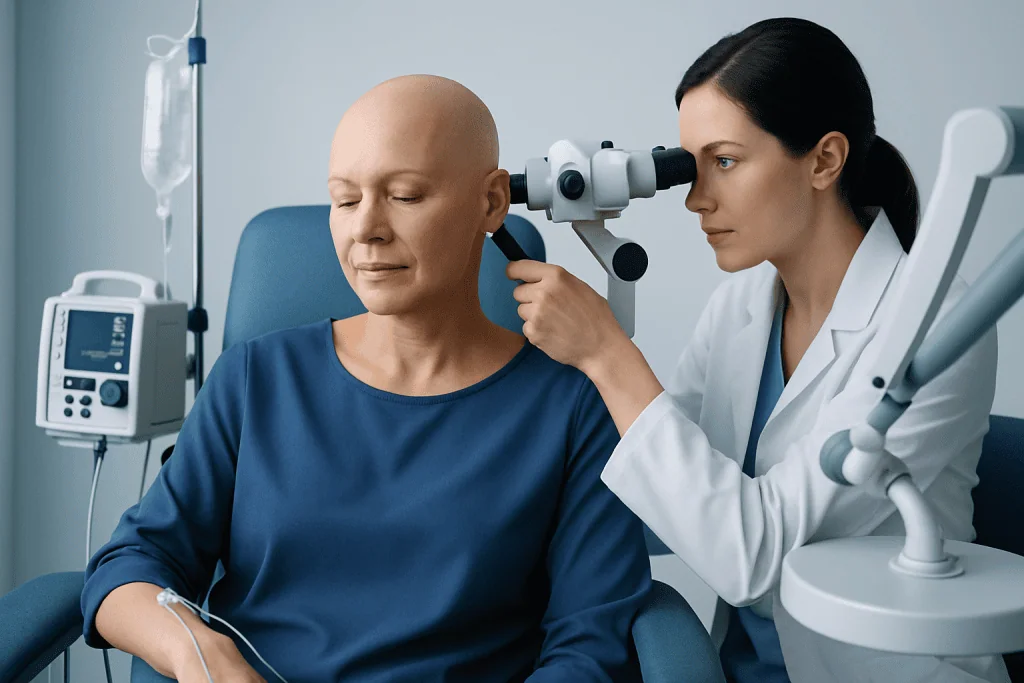
Hearing depends on tiny sensory hair cells in the cochlea, a spiral-shaped structure in the inner ear. Sound causes these cells to send electrical signals through the auditory nerve to the brain. Unlike many other cells in the body, inner-ear sensory hair cells do not reliably regenerate after injury.
Some chemotherapy medicines can enter inner-ear tissues and create cellular stress or inflammation that damages these hair cells and, in some cases, auditory nerve function. Hearing loss often begins with high-pitched sounds, so a person may first notice difficulty hearing birds, alarms, certain consonants, or speech in busy places. Over time, changes may become more noticeable in everyday conversations.
Platinum-based chemotherapy medicines, particularly cisplatin, are among the best-known treatments associated with ototoxicity. Carboplatin may also affect hearing, although risk can vary by dose, schedule, and individual circumstances. Other medicines used alongside chemotherapy, such as certain antibiotics, diuretics, or medicines for infection, may also have ototoxic potential. The care team reviews the complete medication list when considering risk.
Who May Need Closer Hearing Monitoring

There is no single test that can predict exactly who will develop chemotherapy-related hearing changes. However, clinicians may recommend more frequent hearing checks for people receiving medicines with recognized ototoxic effects, especially when treatment is expected to be intensive or repeated over several cycles.
Risk may be higher in people who already have hearing loss, tinnitus, kidney impairment, previous exposure to ototoxic medicines, or prior radiation involving the head and neck. Very young children and older adults can also require careful follow-up because hearing is especially important for language development, learning, independence, and communication.
Noise exposure can add to hearing strain. Regular exposure to loud workplaces, concerts, firearms, or headphones at high volume may be relevant. The oncology team should also know about previous ear surgery, recurrent ear infections, dizziness, a family history of hearing loss, and all prescription, non-prescription, and herbal products being used.
- Baseline hearing ability and existing tinnitus
- The specific chemotherapy medicine, dose, and treatment schedule
- Kidney function and other medical conditions
- Past or planned radiation near the head and neck
- Other medicines that may affect the ear or hearing nerve
Hearing Assessment: What Happens Step by Step
Before treatment with a potentially ototoxic medicine, an audiologist may perform a baseline hearing assessment. This is not a painful procedure and does not involve needles or radiation. It gives the clinical team a clear starting point for comparing future results.
The visit commonly begins with questions about hearing, tinnitus, ear symptoms, noise exposure, and relevant medical history. The audiologist may look inside the ears and perform tympanometry, which checks how well the eardrum and middle ear are functioning. This can help identify wax buildup, fluid, or other treatable causes of reduced hearing.
During pure-tone audiometry, the person wears headphones in a quiet booth and signals whenever a tone is heard. Speech testing may also assess how clearly spoken words are understood. Some centers use extended high-frequency testing, which can detect early changes before they affect the main speech range.
Follow-up testing may take place during chemotherapy, after selected treatment cycles, or after treatment ends, depending on the medicine and symptoms. Results are shared with the oncology team, which considers them alongside the person’s cancer type, response to treatment, and overall health.
What to Expect During and After Treatment
Hearing symptoms may begin during chemotherapy, shortly after treatment, or gradually over the months that follow. Some people notice a persistent ringing, hissing, clicking, or buzzing sound. Others describe muffled hearing, reduced clarity of speech, sensitivity to sound, or difficulty following conversations in restaurants and other noisy settings.
The course of hearing changes varies. In some cases, symptoms are temporary or stable after treatment ends. In others, particularly where inner-ear hair cells have been injured, hearing loss can be long-lasting and may progress after the final chemotherapy cycle. Regular follow-up is therefore important even when symptoms seem mild.
If a hearing change is found, the team may consider the timing of further testing, review other possible causes, and discuss treatment options in the context of the cancer care plan. Depending on the situation, this could include adjusting contributing medicines where clinically appropriate, arranging hearing rehabilitation, or considering hearing devices. Any decision about chemotherapy is individualized; patients should not delay, skip, or stop treatment without guidance from their oncologist.
Many people benefit from practical support such as hearing aids, communication strategies, tinnitus counseling, or assistive listening devices. These approaches do not interfere with cancer treatment and can help maintain participation in daily life.
Benefits, Limits, and Possible Consequences of Monitoring
Hearing monitoring does not prevent every case of ototoxicity, but it can identify changes at an earlier stage. This supports informed discussions between the patient and multidisciplinary team about the benefits of continuing the planned treatment, possible alternatives when available, and strategies to reduce the effect of hearing difficulty on everyday life.
The main benefit of a baseline test is comparison. Without a pre-treatment result, it can be harder to know whether a later hearing change is new, related to chemotherapy, linked to age-related hearing loss, or caused by an ear condition such as infection or wax. Testing itself has minimal risk and is generally straightforward.
It is important to keep expectations realistic. There is not always a proven way to fully prevent chemotherapy-related hearing loss without affecting cancer treatment. Similarly, changing a chemotherapy plan may not be appropriate if the medicine offers the best expected cancer-control benefit. Shared decision-making helps patients understand the reasons for each recommendation.
For international patients, Acibadem International’s multidisciplinary specialists and JCI-accredited hospitals can coordinate oncology, ENT, and audiology assessment when hearing concerns arise during cancer care.
Protecting Hearing and Managing Symptoms
People can take sensible steps to support hearing health during chemotherapy. Avoiding loud sound exposure is particularly important: use hearing protection in noisy environments, keep headphone volume moderate, and allow the ears quiet recovery time after unavoidable noise. However, patients should not use earplugs to ignore or delay assessment of new ear symptoms.
All new symptoms should be documented and reported. A short record of when tinnitus began, whether it affects one or both ears, what makes it better or worse, and whether there is associated dizziness can help the care team. It is also useful to bring an updated medication and supplement list to appointments.
Tinnitus can feel intrusive, especially in quiet settings or at bedtime. Low-level background sound, relaxation techniques, regular sleep routines, and counseling can help some people manage its impact. An audiologist can advise on hearing devices and sound-based support when suitable.
- Attend recommended hearing tests before, during, and after treatment.
- Tell the cancer team promptly about new tinnitus, muffled hearing, or dizziness.
- Limit loud noise and use appropriate hearing protection.
- Ask before starting any new medicine, supplement, or herbal product.
- Seek audiology support if hearing changes affect communication or quality of life.
When to Seek Medical Care
Patients should contact their oncology team or healthcare professional promptly if they develop new ringing in the ears, sudden or gradual hearing reduction, a blocked-ear sensation, trouble understanding speech, or new unsteadiness during chemotherapy. These symptoms do not always mean permanent damage, but they should be assessed rather than waiting until the next routine visit.
Urgent medical assessment is needed for sudden hearing loss, especially in one ear, severe spinning dizziness, new weakness or facial drooping, severe headache, confusion, or other neurological symptoms. Sudden hearing loss can have causes unrelated to chemotherapy and may require time-sensitive treatment.
Ear pain, discharge, fever, or a feeling of pressure may point to an infection or another ear problem that needs separate care. A clinician can distinguish these conditions from treatment-related ototoxicity and arrange the appropriate evaluation.
Frequently asked questions
Can chemotherapy cause permanent hearing loss?
Some chemotherapy medicines can cause hearing loss that is permanent, particularly if they damage inner-ear sensory hair cells. The outcome varies by medicine, total exposure, baseline hearing, age, kidney function, and other individual factors. Hearing tests before and during treatment can help identify changes early.
Which chemotherapy drugs are most likely to affect hearing?
Platinum-based medicines, especially cisplatin, are commonly associated with ototoxicity. Carboplatin can also affect hearing in some circumstances. The oncology team can explain the hearing-related profile of the specific medicines in an individual treatment plan.
Can chemo cause ringing in the ears?
Yes. Tinnitus, often experienced as ringing, buzzing, hissing, or another internal sound, can occur with some chemotherapy medicines. It should be reported to the cancer team because it may be an early sign of an effect on the auditory system.
How often should hearing be tested during chemotherapy?
The schedule depends on the chemotherapy medicine, treatment plan, previous hearing results, age, and symptoms. Many people at risk have a baseline assessment before treatment and repeat tests at intervals determined by their oncology and audiology teams. Testing may continue after treatment because some changes appear later.
Will hearing return after chemotherapy ends?
Some hearing symptoms may improve after chemotherapy, but recovery cannot be guaranteed. If inner-ear sensory cells have been significantly damaged, hearing loss may persist. Audiology follow-up can identify rehabilitation options, including hearing aids or assistive communication technology when appropriate.
Should a patient stop chemotherapy if hearing changes develop?
No, chemotherapy should not be stopped independently. New symptoms should be reported promptly so the oncology team can assess them and discuss the balance of cancer-treatment benefit and potential hearing risk. The team may arrange repeat testing, review other medicines, and consider options appropriate to the individual situation.
References
- American Cancer Society
- National Cancer Institute
- American Speech-Language-Hearing Association
- National Institute on Deafness and Other Communication Disorders
- World Health Organization
This article is for general information only and is not a substitute for professional medical advice. Please consult a qualified doctor about your individual situation.
Oncology care in Turkey — second opinion and treatment plan
JCI-accredited · board-certified surgeons · reply within 24h
Add us as a Preferred Source to see more of our trusted health content across Google Search, AI Overviews and Discover.