Does implantation bleeding always happen: A Complete Medical Guide for Patients

Implantation bleeding is possible, but it is not a universal sign of pregnancy. When it occurs, it is usually light spotting rather than a normal menstrual flow.
Key Takeaways
- Implantation bleeding is possible, but it is not a universal sign of pregnancy.
- When it occurs, it is usually light spotting rather than a normal menstrual flow.
- A missed period and a pregnancy test are more useful than spotting alone for confirming pregnancy.
- Bleeding in early pregnancy can have several causes, including harmless changes and conditions that need medical review.
- Heavy bleeding, severe pain, dizziness, or fainting should be assessed promptly by a doctor.
No, implantation bleeding does not always happen. Some people notice light spotting around the time an embryo implants, but many healthy pregnancies begin without any bleeding at all, and spotting can also have other explanations.
Overview: Does implantation bleeding always happen?
No, implantation bleeding does not always happen. Many people who become pregnant never notice any spotting at all, while others may have a small amount of light bleeding around the time a fertilized egg attaches to the lining of the uterus.
Implantation bleeding is considered a possible early pregnancy sign, not a required one. It is also not specific enough to diagnose pregnancy on its own, because light spotting can happen for other reasons, including normal hormonal changes, irritation of the cervix, or the start of a menstrual period.
For patients, the most important point is that the absence of implantation bleeding does not mean pregnancy is unlikely, and the presence of spotting does not confirm pregnancy. A home pregnancy test after a missed period, followed by medical evaluation when needed, gives clearer answers.
What implantation bleeding is and what it is not
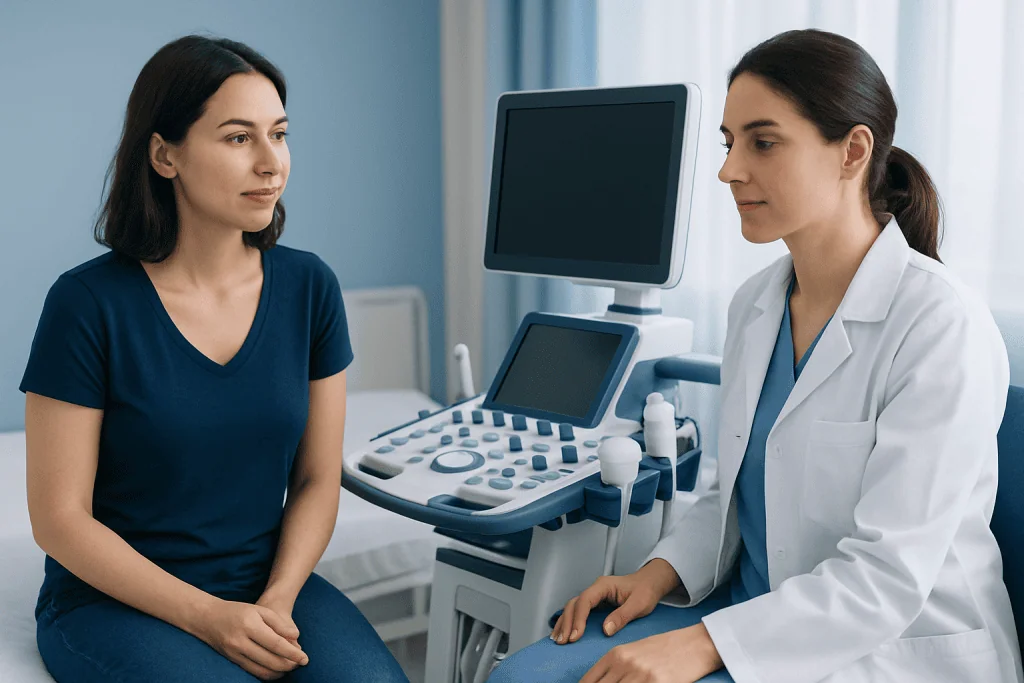
Implantation is the process in which a fertilized egg attaches to the uterine lining. Some clinicians and patients use the term implantation bleeding to describe light spotting that may happen around this time. However, not everyone experiences it, and research does not support using it as a reliable marker of implantation in every pregnancy.
Implantation bleeding is usually described as very light spotting rather than a steady flow. It may appear pink, light red, or brown. In many cases, it lasts only a short time, such as a few hours to a couple of days, and is not heavy enough to soak pads or produce large clots.
It is important not to confuse implantation bleeding with a menstrual period. Menstrual bleeding often becomes heavier, may last several days, and is commonly associated with a familiar pattern of cramping and flow. If a person is unsure whether bleeding is a period or early pregnancy spotting, tracking the timing and taking a pregnancy test can be helpful.
Spotting may also happen for reasons unrelated to implantation. These include ovulation, changes in hormonal contraception, cervical irritation after intercourse, or gynecologic conditions that may need assessment. If bleeding is unusual, recurrent, or accompanied by pain, a doctor can help clarify the cause.
When it may happen and what it may feel like

If implantation-related spotting occurs, it is often thought to happen about 1 to 2 weeks after ovulation, which may place it a few days before an expected period. This timing can make it easy to mistake for the start of menstruation, especially in people with irregular cycles or naturally light periods.
Some people notice mild cramping, a feeling of pelvic heaviness, breast tenderness, fatigue, or no symptoms at all. These sensations are not unique to implantation and can overlap with premenstrual symptoms. Because of this, symptoms alone usually cannot distinguish implantation from the normal hormonal changes that happen before a period.
Patients often ask whether color or amount can give a definite answer. In practice, color and quantity may offer clues but are not conclusive. Light pink or brown spotting may fit with implantation, but similar bleeding can occur in early pregnancy for other reasons as well.
The most reliable next step is to wait until the expected period or shortly after, then use a home pregnancy test according to the instructions. If the result is unclear or symptoms are concerning, a doctor may recommend repeat testing, blood tests, or an ultrasound.
Common causes of spotting in early pregnancy or before a period
Light bleeding around the time of a missed or expected period has a broad range of possible causes. In some cases it may be related to early pregnancy. In others, it may reflect normal hormonal changes or a gynecologic issue that has nothing to do with implantation.
Possible explanations include:
- Implantation-related spotting
- The beginning or end of a menstrual period
- Ovulation spotting
- Hormonal fluctuations or changes in birth control use
- Cervical irritation, including after sex or a pelvic exam
- Infection involving the vagina or cervix
- Early pregnancy loss
- Pregnancy outside the uterus, such as ectopic pregnancy
Because the causes vary widely, the pattern of bleeding matters. Very light spotting without pain may simply need observation and follow-up testing. Heavier bleeding, increasing pain, one-sided pelvic pain, shoulder pain, dizziness, or fainting can suggest a more urgent problem and should not be ignored.
For patients trying to conceive, it can be tempting to interpret any spotting as a positive sign. A balanced approach is better: note the timing and symptoms, but avoid assumptions until a pregnancy test and, if needed, medical review provide more definite information.
How pregnancy and early bleeding are evaluated
Evaluation usually begins with a careful history. A doctor may ask about the date of the last menstrual period, cycle regularity, whether the bleeding is spotting or a flow, the presence of clots, cramping, pelvic pain, recent intercourse, contraception use, and any prior pregnancy or miscarriage history.
A home urine pregnancy test is often the first step, but timing matters. Testing too early can produce a false-negative result. If pregnancy is still suspected despite a negative result, repeating the test after 48 to 72 hours or arranging a blood test may be recommended.
When more information is needed, doctors may use blood testing for pregnancy hormone levels and an ultrasound. Ultrasound can help confirm whether a pregnancy is in the uterus and whether there are signs of another cause for bleeding. In some cases, evaluation may include assessment for ovarian cyst or other pelvic conditions if symptoms suggest them.
If fertility support is already part of care, specialists may tailor the evaluation more closely. Patients undergoing IVF treatment or other monitored conception care are often given specific instructions about when to test and when to report spotting, because the timing of embryo transfer and hormone use can influence symptoms.
What treatment or next steps may involve
Implantation bleeding itself does not require treatment. If the spotting is brief, very light, and not associated with concerning symptoms, the next steps are usually observation, avoiding assumptions, and confirming whether pregnancy has occurred with a test.
Treatment depends on the actual cause of bleeding. If the bleeding is simply the start of a period, no pregnancy-specific treatment is needed. If pregnancy is confirmed and the spotting is mild, a doctor may advise monitoring symptoms and arranging routine prenatal follow-up. If another cause is found, such as infection or a structural problem, treatment is directed at that condition.
In more complex situations, care may involve gynecology or fertility specialists. For people seeking help to conceive, in vitro fertilization (IVF) and related fertility evaluation may be discussed when appropriate. If there is significant pelvic pain or concerns about abnormalities inside the uterus, procedures such as hysteroscopy may be considered in selected cases based on medical findings.
Near the end of the diagnostic pathway, some patients benefit from multidisciplinary review. Acibadem International’s multidisciplinary specialists and JCI-accredited hospitals diagnose and treat women’s health and fertility conditions for international patients when further evaluation is needed.
Self-care, tracking symptoms, and when to seek medical care
While waiting for a pregnancy test result or a medical appointment, simple symptom tracking can be helpful. Patients may note the date bleeding started, the color, whether it is spotting or flow, the number of pads used, and any associated symptoms such as cramping, nausea, dizziness, fever, or one-sided pelvic pain. This information helps a clinician interpret the situation more accurately.
Self-care should stay gentle and practical. Rest, hydration, and avoiding unnecessary stress are reasonable. It is usually wise not to self-medicate with new drugs or supplements specifically for bleeding unless a qualified doctor recommends them. If pregnancy is possible, it is also sensible to avoid smoking and alcohol and to discuss any regular medicines with a clinician.
Medical care should be sought promptly if bleeding becomes heavy, pain is severe, symptoms localize to one side, or there is fainting, marked dizziness, fever, or shoulder pain. Patients should also contact a doctor if they have a positive pregnancy test with ongoing bleeding, a history of ectopic pregnancy, fertility treatment, or repeated early pregnancy loss.
Even when symptoms seem mild, uncertainty itself is a good reason to ask for medical advice. A clinician can help distinguish normal variation from problems that need treatment and can guide the next step safely.
Frequently asked questions
Can a person be pregnant without implantation bleeding?
Yes. Many people who are pregnant never notice any implantation bleeding. The absence of spotting does not reduce the possibility of pregnancy if conception has occurred.
How is implantation bleeding different from a period?
Implantation bleeding is usually much lighter than a period and often appears as spotting rather than a steady flow. A menstrual period typically becomes heavier, lasts longer, and follows a more familiar pattern for that person.
How soon after implantation can a pregnancy test turn positive?
A pregnancy test may become positive after the body produces enough hCG, which often happens around the time of a missed period. Testing too early can lead to a false-negative result, so repeating the test after a few days may help.
Does brown or pink spotting mean implantation bleeding?
Not necessarily. Brown or pink spotting can occur with implantation, but it can also happen before a period, after ovulation, or because of cervical irritation or other causes. Color alone cannot confirm pregnancy.
Should a doctor be contacted for light spotting in early pregnancy?
Light spotting can be harmless, but it is sensible to inform a doctor, especially if a pregnancy test is positive. Medical attention is more urgent if the bleeding becomes heavy or is accompanied by pain, dizziness, or fainting.
Can implantation bleeding include cramps?
Some people report mild cramping with spotting around the time implantation may occur. However, cramps can also happen before a period, so they are not a reliable way to tell the difference.
References
- American College of Obstetricians and Gynecologists
- National Health Service
- Mayo Clinic
- Cleveland Clinic
- Office on Women's Health
This article is for general information only and is not a substitute for professional medical advice. Please consult a qualified doctor about your individual situation.
Explore treatments in Turkey — costs, top hospitals & a free quote
JCI-accredited · board-certified surgeons · reply within 24h
Add us as a Preferred Source to see more of our trusted health content across Google Search, AI Overviews and Discover.
Check your numbers in seconds
BMI, calories, due date, blood pressure and 30+ more clinical calculators — free, instant, doctor-reviewed ranges.

More from the Health Library



Related Specialists

Dt. İpek Mehmetoğlu Torun
Oral & Dental Health
Merve Güvendi
Physical Medicine & Rehabilitation
Dr. Zehra Filiz Gündoğan Turan
Anesthesiology
Dr. Erbil Ulus Duman
Ophthalmology