

Does Nyquil Have Alcohol in It? Here Is What the Evidence Says

Some NyQuil liquid products contain alcohol, but alcohol-free versions also exist. The Drug Facts label is the safest way to confirm ingredients in any specific NyQuil product.
Key Takeaways
- Some NyQuil liquid products contain alcohol, but alcohol-free versions also exist.
- The Drug Facts label is the safest way to confirm ingredients in any specific NyQuil product.
- Alcohol in cough and cold medicine may matter for children, pregnancy, liver disease, medication interactions, and people avoiding alcohol for personal or medical reasons.
- Drowsiness may come from the active ingredients as well as any alcohol content, so driving and combining with sedatives should be avoided.
- Medical advice is important if too much medicine was taken, symptoms are severe, or there are concerns about interactions or accidental ingestion.
Yes, some liquid NyQuil products contain alcohol, while certain alcohol-free formulations do not. In most cases this is not harmful when the medicine is used exactly as directed, but the label should always be checked because ingredients can vary by product and formulation.
Overview: what the evidence shows
Yes, some NyQuil products do have alcohol in them, especially certain liquid nighttime cold and flu formulations. However, not every NyQuil product contains alcohol, and alcohol-free versions are also sold. The most accurate answer depends on the exact product name and the Drug Facts label on the bottle or package.
For most healthy adults who take the medicine exactly as directed, a standard dose is usually not a cause for alarm. Even so, alcohol content can matter in certain situations, including pregnancy, liver disease, alcohol use disorder recovery, religious or personal avoidance of alcohol, and when other sedating medicines are being used at the same time.
NyQuil is a brand name rather than a single formula. Different products may contain different combinations of ingredients such as acetaminophen, dextromethorphan, and doxylamine. The inactive ingredients may also differ, and this is where alcohol may appear in some liquid versions.
Because formulas can change over time and differ by country, patients should avoid relying only on memory, online lists, or older articles. Reading the current label remains the safest and most practical way to answer the question for the specific bottle at home.
Why alcohol may be present in some NyQuil liquids

In some liquid medicines, alcohol is used as an inactive ingredient. It may help dissolve certain components, improve stability, or affect taste and texture. This does not mean the product is intended as an alcoholic drink; it reflects how some liquid medications are formulated.
Alcohol content can vary between nighttime liquids, capsules, gel forms, and alcohol-free versions. For that reason, it is not safe to assume that every product sold under the NyQuil name has the same ingredients. A nighttime liquid may differ from a capsule, a severe cold and flu formula, or a children’s preparation.
The label usually lists alcohol among inactive ingredients and may also state the percentage, depending on regulatory requirements and product format. Patients who need to avoid alcohol should check both the front packaging for terms such as “alcohol-free” and the full Drug Facts panel for confirmation.
This label-based approach is also useful for other over-the-counter products. Many cough syrups, sleep aids, and cold medicines may contain ingredients that affect alertness, and some can contain alcohol as well.
When alcohol content matters most
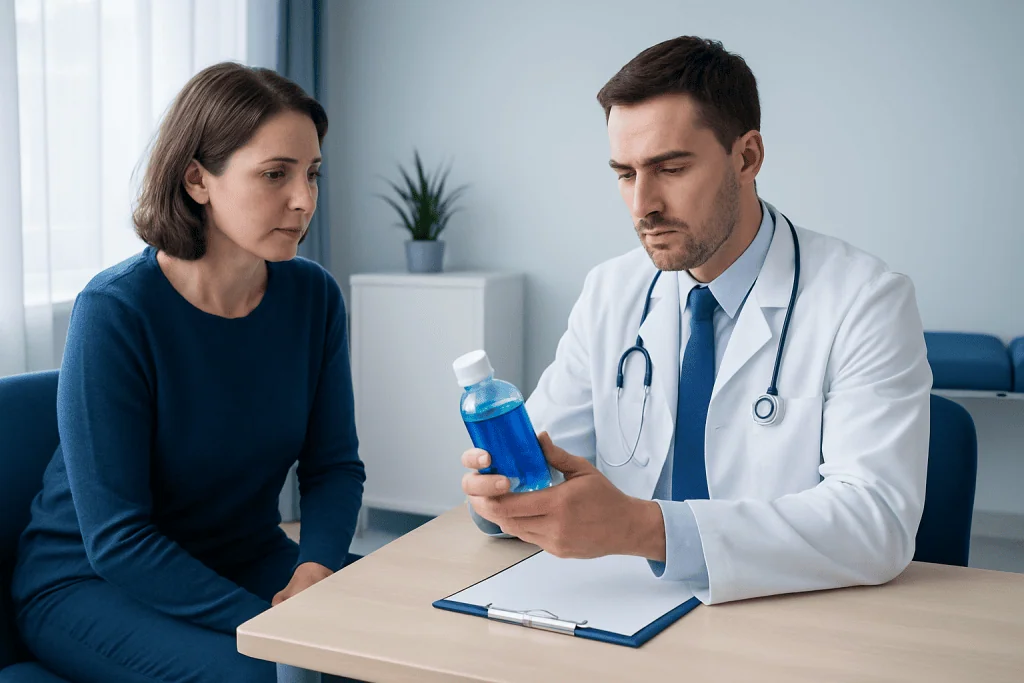
Although a directed dose is often harmless for many adults, alcohol in medicine can be more important for some people than others. This includes children, older adults, people with liver disease, those with a history of alcohol misuse, and anyone taking medicines that cause sleepiness or affect the central nervous system.
Pregnant or breastfeeding individuals should be especially cautious with any over-the-counter cold medicine. The issue is not only alcohol content but also the active ingredients and whether they are appropriate for the symptoms present. A clinician or pharmacist can help decide which options are safest.
People with certain medical conditions may also need extra care. Liver problems may increase concern because some NyQuil products contain acetaminophen, and alcohol use may add to the risk of liver stress. Those who already have a liver condition may benefit from medical guidance, especially if cold medicine is being taken repeatedly. Related background information about liver diseases can help explain why medication review matters.
Alcohol content may also matter for safety during daily activities. Nighttime cold medicines commonly cause drowsiness on their own, and alcohol can add to that effect. Driving, operating machinery, or combining NyQuil with sleeping pills, opioid pain medicines, or anti-anxiety drugs should be avoided unless a doctor has advised otherwise.
How to check whether a specific NyQuil product contains alcohol
The most reliable method is to read the product’s Drug Facts label carefully. Patients should look at the exact product name first, since similar bottles may have different formulas. Then they should review both the active and inactive ingredients, because alcohol may appear among the inactive components.
It may help to check for these details:
- The full product name, such as nighttime liquid, severe cold and flu, or alcohol-free
- The dosage form, such as liquid, liquicap, or capsule
- The inactive ingredients list for alcohol or ethanol
- Warnings about drowsiness, liver risk, or combining with other medicines
If the label is missing, damaged, or hard to understand, a pharmacist is often the best immediate source of guidance. This is particularly useful when comparing multiple cold and flu products or when a patient is also taking other medicines with overlapping ingredients.
Checking the active ingredients matters too. Many combination cold medicines share components such as acetaminophen or cough suppressants. Taking two products with the same active ingredient can increase the risk of side effects or overdose, even when the alcohol content itself is not the main concern.
Common concerns: drowsiness, interactions, and accidental extra doses
One of the most common reasons people ask whether NyQuil contains alcohol is concern about feeling sleepy or impaired. That concern is reasonable, but alcohol is only part of the picture. Nighttime formulas often include antihistamines such as doxylamine, which can cause marked drowsiness even without alcohol.
Mixing NyQuil with alcoholic drinks is generally not a good idea. Combining alcohol from beverages with a sedating cold medicine can increase sleepiness, slow reaction time, and raise the chance of poor judgment, falls, or other accidents. This can be more noticeable in older adults.
Interactions with other medicines also deserve attention. Sedatives, sleep medicines, opioid pain relievers, certain allergy medications, and some antidepressants may increase drowsiness or create other risks. If a person already has complicated medical needs, support from a doctor or pharmacist may help clarify whether a safer option is available, including formal medical check-up and medication review.
Another concern is taking too much acetaminophen by mistake. Some NyQuil formulations contain acetaminophen, and many people also use separate pain or fever reducers at the same time. In that situation, the major risk may be medication duplication rather than the alcohol content itself. When there is severe vomiting, confusion, marked sleepiness, or concern for overdose, urgent medical evaluation is appropriate.
What a doctor may assess if there is a concern
If someone is worried about side effects, accidental ingestion, or a possible interaction, a doctor will usually begin by identifying the exact product, how much was taken, and when it was taken. They may also ask about age, body size, other medications, alcohol use, liver history, and the symptoms that prompted treatment.
In many situations, no special testing is needed. The clinician may simply review the ingredients and explain whether the amount taken is likely to be low risk. If symptoms suggest a medication reaction, intoxication, dehydration, or acetaminophen overuse, a more detailed assessment may be recommended.
Depending on the situation, evaluation may include a physical examination, vital signs, and selected blood tests to check liver function or other concerns. When dizziness, confusion, fainting, or breathing problems are present, doctors focus first on immediate safety. If symptoms are significant, patients may require observation and supportive care in a setting equipped for emergency medicine.
People with repeated cough, fever, or breathing symptoms may need assessment for the illness itself rather than only the medication. For example, persistent chest symptoms can overlap with bronchitis or other respiratory conditions, and the right treatment depends on the underlying cause.
Practical self-care and safer medicine use
When choosing a cold medicine, patients can start by matching the product to the symptom they actually have. A nighttime formula may be useful if cough or congestion is disturbing sleep, but it may not be ideal during the day because of drowsiness. A targeted product with fewer ingredients may sometimes be a better fit.
Simple supportive measures can also help reduce the need for combination medicines. Rest, hydration, warm fluids, throat soothing measures, and a humidified environment may improve comfort during a short-term viral illness. If nasal symptoms are prominent, some people benefit from saline rinses or other clinician-recommended options, depending on their symptoms and medical history.
Reading labels carefully remains one of the most important safety steps. People should avoid taking more than one combination cold medicine at a time unless a healthcare professional has advised it. If symptom patterns are unclear or there are repeated upper-airway complaints, formal evaluation may help identify related conditions such as sinusitis.
Near the end of the care journey, some patients may benefit from specialist review if symptoms are recurrent, severe, or difficult to distinguish from allergies, sinus disease, or lower respiratory infections. Acibadem International’s multidisciplinary specialists and JCI-accredited hospitals diagnose and treat a wide range of respiratory and general medical concerns for international patients, including evaluation through services such as internal medicine.
When to seek medical care
Most questions about NyQuil alcohol content can be handled by checking the label or speaking with a pharmacist. However, medical care is important if a person took much more than directed, mixed the medicine with large amounts of alcohol, or develops troubling symptoms such as severe sleepiness, confusion, trouble breathing, repeated vomiting, or collapse.
Children should be assessed promptly after accidental ingestion, even if they seem well at first. The same is true for older adults, pregnant individuals, and people with known liver disease or multiple interacting medicines. If there is concern for overdose or serious reaction, urgent local poison center advice or emergency care is appropriate.
Patients should also seek medical review if cold symptoms are not improving, keep coming back, or seem more severe than expected. Warning signs include high or persistent fever, dehydration, chest pain, wheezing, or shortness of breath. These features suggest that the illness itself may need attention, not only the choice of cold medicine.
When in doubt, it is reasonable to bring the bottle or a photo of the label to a clinician or pharmacist. This helps confirm whether the product contains alcohol, whether its active ingredients fit the symptoms, and whether a safer alternative may be better suited to the individual.
Frequently asked questions
Does all NyQuil contain alcohol?
No. Some liquid NyQuil products contain alcohol, while some other formulations are alcohol-free. Because ingredients vary by product, the package label is the best source for the specific item being used.
How can someone tell if their NyQuil has alcohol in it?
The safest way is to read the Drug Facts and inactive ingredients on the bottle or box. Patients should check the exact product name as well, since different NyQuil versions may have different formulas.
Is the alcohol in NyQuil dangerous?
For many healthy adults using the medicine exactly as directed, it is usually not dangerous. However, it can matter more in children, pregnancy, liver disease, recovery from alcohol misuse, or when combined with alcohol drinks or sedating medications.
Can NyQuil make someone sleepy even if it is alcohol-free?
Yes. Drowsiness is often caused by active ingredients in nighttime cold medicines, especially sedating antihistamines. That is why patients should still avoid driving or activities requiring alertness after taking it.
Should NyQuil be taken with wine, beer, or other alcohol?
It is generally best not to combine NyQuil with alcoholic drinks. Doing so can increase drowsiness, reduce coordination, and raise the chance of side effects or medication-related accidents.
What should someone do if too much NyQuil was taken?
They should seek prompt medical advice, especially if the product contains acetaminophen or if symptoms such as confusion, vomiting, trouble breathing, or extreme sleepiness develop. Children and medically vulnerable adults should be assessed quickly after accidental extra doses.
References
- U.S. Food and Drug Administration
- MedlinePlus
- National Institute on Alcohol Abuse and Alcoholism
- American Academy of Family Physicians
- Mayo Clinic
This article is for general information only and is not a substitute for professional medical advice. Please consult a qualified doctor about your individual situation.
Explore treatments in Turkey — costs, top hospitals & a free quote
JCI-accredited · board-certified surgeons · reply within 24h
Add us as a Preferred Source to see more of our trusted health content across Google Search, AI Overviews and Discover.

More from the Health Library



Related Specialists
Dr. Murat Öksüz
Gastroenterology
Dr. Nihan Akça Gür
Otorhinolaryngology
Assoc. Prof. Dr. Dilek Altun
Anesthesiology
Fzt. Ebubekir Korkmaz
Physical Medicine & Rehabilitation