Ear Ache and Pain: Common Causes, Related Conditions, and When to See a Doctor

Ear ache and pain can come from the outer, middle, or inner ear, or from nearby structures such as the throat, teeth, or jaw. Not all ear pain means an ear infection; pressure changes, wax buildup, skin irritation, and temporomandibular joint problems are also common causes.
Key Takeaways
- Ear ache and pain can come from the outer, middle, or inner ear, or from nearby structures such as the throat, teeth, or jaw.
- Not all ear pain means an ear infection; pressure changes, wax buildup, skin irritation, and temporomandibular joint problems are also common causes.
- Warning signs include severe pain, fever, fluid or blood from the ear, sudden hearing loss, dizziness, or pain that does not improve.
- Diagnosis usually relies on a medical history, ear examination, and sometimes hearing tests or imaging when symptoms are persistent or unclear.
- Prevention may include managing allergies, avoiding cotton swabs in the ear canal, protecting the ears during swimming, and treating colds or sinus problems appropriately.
Ear ache and pain is a symptom rather than a diagnosis. It may start in the ear itself or be felt there because of nearby problems such as a throat infection, sinus issue, jaw joint disorder, or dental disease, so the right treatment depends on the cause.
Overview: what ear ache and pain can mean
Ear ache and pain is a common symptom in both children and adults. Sometimes it is caused by a problem inside the ear, such as an infection, pressure behind the eardrum, or irritation of the ear canal. In other cases, the pain is “referred,” meaning it starts elsewhere but is felt in the ear because the ear shares nerve pathways with the throat, jaw, teeth, and parts of the neck.
This is why ear pain should be considered in context rather than assumed to be a single condition. A child with a cold may develop middle ear pressure, while an adult with one-sided ear pain may actually have a dental problem, jaw clenching, or throat inflammation. The pattern of symptoms, age of the patient, recent illnesses, and exam findings all help point to the cause.
Most cases improve once the underlying issue is treated. However, persistent, severe, or unexplained ear pain should be evaluated by a qualified clinician because ear symptoms can overlap with conditions that affect hearing, balance, and nearby tissues.
Common symptoms that may occur with ear pain
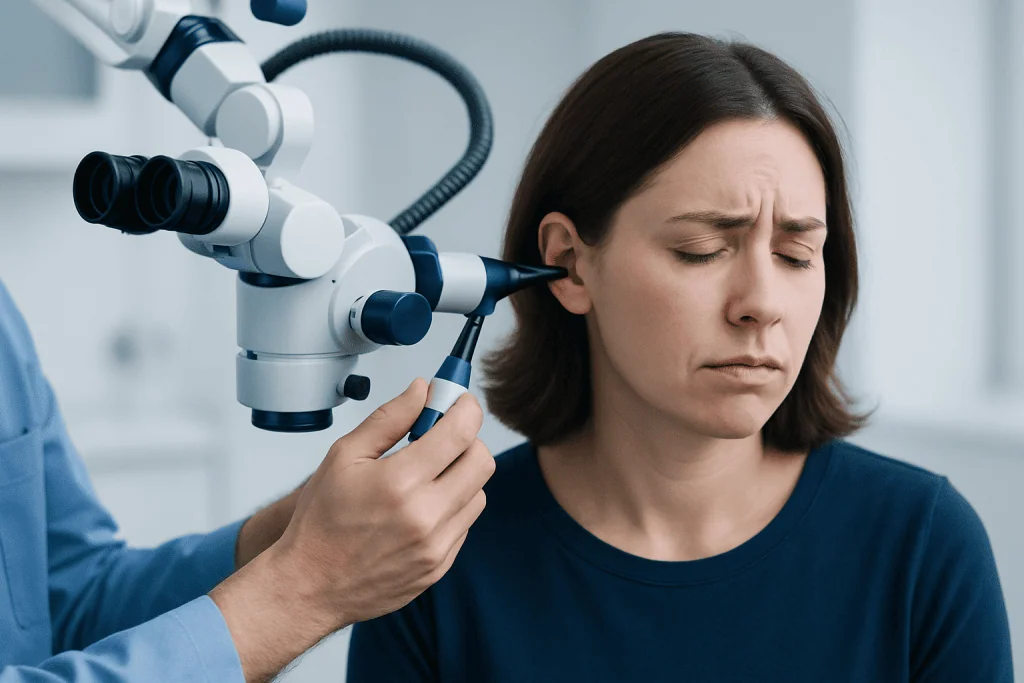
Ear pain may feel sharp, dull, throbbing, burning, or like pressure or fullness. It may affect one ear or both. Some people notice that the pain becomes worse when swallowing, chewing, lying down, or after a recent flight, diving, or upper respiratory infection.
Other symptoms can provide important clues. For example, itching and tenderness of the outer ear may suggest irritation or infection of the ear canal, while muffled hearing and a blocked sensation may happen with wax buildup or fluid behind the eardrum. Fever, irritability in children, and disrupted sleep may occur with infections.
- Reduced or muffled hearing
- A feeling of fullness or pressure in the ear
- Fluid, pus, or blood from the ear
- Fever or recent cold symptoms
- Dizziness or balance problems
- Ringing in the ear
- Pain with chewing or jaw movement
- Sore throat, toothache, or facial pressure
Some symptoms need more prompt medical attention. Sudden hearing loss, marked swelling around the ear, severe dizziness, facial weakness, or a child who appears very unwell should not be ignored.
Common causes and related conditions

Ear ache and pain often comes from conditions affecting the ear directly. These include middle ear infection, fluid trapped behind the eardrum after a cold, pressure problems related to the Eustachian tube, wax blockage, and outer ear canal inflammation sometimes called swimmer’s ear. The eardrum itself can also become injured by sudden pressure changes, trauma, or inserting objects into the ear.
Not all ear pain starts in the ear. Referred pain may come from the throat, tonsils, sinuses, teeth, jaw joint, or nearby muscles. People who clench their teeth, grind at night, or have temporomandibular joint dysfunction may feel repeated ear discomfort without having an ear infection. Throat problems, including tonsillitis, can also send pain toward the ear, especially during swallowing.
Common related conditions include middle ear infection, sinusitis, dental decay, gum infection, jaw arthritis, and allergic congestion. Pressure-related pain may happen during air travel or scuba diving when the Eustachian tube does not equalize pressure well. In adults, especially with persistent one-sided pain and a normal ear exam, doctors may also consider less obvious causes in the throat or neck.
Risk factors depend on the cause. Young children are more prone to middle ear infections because their Eustachian tubes are narrower. Swimming, eczema, and aggressive ear cleaning can increase the risk of outer ear irritation. Smoking exposure, seasonal allergies, recurrent colds, acid reflux, and chronic nasal congestion can also contribute to ear-related symptoms.
How doctors diagnose the cause
Diagnosis begins with a careful history. A doctor may ask when the pain started, whether it followed a cold, whether hearing has changed, and whether there is drainage, fever, dizziness, sore throat, dental pain, or recent travel. In children, sleep disturbance, tugging at the ear, feeding difficulty, and irritability can be helpful clues.
The physical exam usually includes looking into the ear canal and at the eardrum with an otoscope. The clinician may also examine the nose, throat, jaw, teeth, and neck because these areas can refer pain to the ear. This step is important because a normal-looking ear may mean the source is elsewhere.
If symptoms are persistent, severe, or recurrent, further assessment may be needed. This can include hearing evaluation, tympanometry to assess eardrum movement and middle ear pressure, or imaging in selected cases. When hearing symptoms are part of the picture, an hearing test may help clarify whether fluid, nerve-related change, or another issue is involved.
Specialist assessment is often useful when the diagnosis is uncertain, when symptoms last longer than expected, or when there are repeated infections. In such cases, an ENT evaluation can help identify structural, infectious, or referred causes more precisely.
Treatment options depend on the underlying cause
There is no single treatment for ear ache and pain because the best approach depends on why it is happening. Mild discomfort may improve with rest, hydration, and appropriate over-the-counter pain relief if a clinician considers it safe for that person. However, treatment aimed at the real cause is what usually brings lasting relief.
If the problem is a bacterial ear infection, a doctor may recommend antibiotics. If pain is due to wax blockage, removal by a trained professional may be advised rather than using cotton swabs or sharp objects. For irritation or infection of the outer ear canal, medicated ear drops are often used. Allergy-related congestion, Eustachian tube dysfunction, or sinus inflammation may improve when nasal or sinus issues are managed.
When ear pain is referred from the jaw or teeth, treatment may focus on dental care, bite-related issues, or jaw joint support. Persistent middle ear fluid, structural concerns, or recurrent infection may sometimes require procedural treatment. Depending on the findings, this may include ear surgery or related ENT procedures.
Care should be individualized, especially in young children, older adults, people with diabetes, and those with weakened immunity. If drainage, severe pain, or possible eardrum injury is present, ear drops or home remedies should only be used after medical advice because not all products are safe in every situation.
Self-care and prevention
Simple self-care measures can help reduce discomfort while waiting for medical advice and may lower the chance of future problems. Rest, fluids, and avoiding exposure to smoke or strong irritants can support recovery when ear pain is linked to a cold or congestion. Gentle swallowing, yawning, or chewing may help equalize pressure during minor pressure-related discomfort.
It is best not to place cotton swabs, hairpins, earbuds, oils, or other objects into the ear canal. These can push wax deeper, injure the skin, or damage the eardrum. Swimmers and people with recurrent outer ear irritation may benefit from keeping the ears dry and discussing preventive strategies with a clinician.
- Treat seasonal allergies and nasal congestion appropriately
- Practice good hand hygiene to reduce colds and upper respiratory infections
- Avoid smoking and secondhand smoke exposure
- Use hearing protection in loud environments
- Seek dental care for tooth pain or jaw discomfort
- Use pressure-equalizing strategies during flights if recommended by a doctor
People with repeated infections, hearing concerns, or lingering fullness may need more than self-care alone. In those situations, formal evaluation can prevent prolonged discomfort and help protect hearing.
When to seek medical care
Medical attention is recommended if ear ache and pain is severe, lasts more than a short time, keeps returning, or is accompanied by other concerning symptoms. Prompt assessment is particularly important for babies, very young children, older adults, and anyone with diabetes or reduced immunity, because infections and complications may be harder to recognize or can progress more quickly.
A doctor should assess ear pain that occurs with fever, drainage from the ear, swelling around the ear, sudden or significant hearing loss, severe dizziness, or pain after an injury. One-sided pain in an adult with no obvious ear findings also deserves evaluation because it may come from the throat, jaw, teeth, or another nearby structure.
If symptoms are ongoing or complex, multidisciplinary ENT care can be helpful. Acibadem International’s specialists in JCI-accredited hospitals evaluate and treat ear conditions for international patients, including diagnostic workup and tailored management when needed.
Even when the cause turns out to be minor, an accurate diagnosis can prevent unnecessary antibiotics, reduce the risk of repeated symptoms, and provide reassurance. Seeking care early is especially wise when ear pain affects hearing, balance, sleep, or daily activities.
Frequently asked questions
Does ear ache and pain always mean an ear infection?
No. Ear ache and pain can also be caused by wax buildup, pressure changes, throat inflammation, dental problems, or jaw joint disorders. A medical exam helps distinguish an infection from other causes.
Why can a sore throat or tooth problem cause ear pain?
The ear shares nerve pathways with the throat, teeth, and jaw. Because of this, pain from those areas can be felt in the ear even when the ear itself is normal. This is called referred pain.
When is ear pain an emergency?
Urgent assessment is needed if ear pain comes with sudden hearing loss, severe dizziness, facial weakness, major swelling, significant trauma, or blood from the ear. These symptoms may point to a more serious problem and should not be watched at home for long.
Can ear wax cause ear ache and pain?
Yes. Impacted wax can create pressure, fullness, muffled hearing, and sometimes pain. It is safer to have troublesome wax assessed and removed professionally rather than trying to dig it out at home.
How long should ear pain last before seeing a doctor?
If ear pain is severe, worsening, or lasts more than a short time, it should be checked by a doctor. Medical advice is also important sooner if there is fever, ear drainage, hearing change, or repeated episodes.
Are home remedies safe for ear pain?
Some simple measures, such as rest and appropriate pain relief, may help temporarily. However, putting drops, oils, or objects into the ear without guidance may be unsafe, especially if the eardrum could be injured or there is drainage.
References
- American Academy of Otolaryngology–Head and Neck Surgery
- American Academy of Pediatrics
- National Institute on Deafness and Other Communication Disorders
- Centers for Disease Control and Prevention
- Mayo Clinic
This article is for general information only and is not a substitute for professional medical advice. Please consult a qualified doctor about your individual situation.
Joint and spine care in Turkey — expert assessment & treatment
JCI-accredited · board-certified surgeons · reply within 24h
Add us as a Preferred Source to see more of our trusted health content across Google Search, AI Overviews and Discover.