Ear Fluid in — Explained by Medical Evidence, Not Myths

Ear fluid in the ear most often means fluid trapped in the middle ear behind the eardrum. Common symptoms include ear fullness, popping, muffled hearing, and mild imbalance.
Key Takeaways
- Ear fluid in the ear most often means fluid trapped in the middle ear behind the eardrum.
- Common symptoms include ear fullness, popping, muffled hearing, and mild imbalance.
- Colds, sinus congestion, allergies, and eustachian tube dysfunction are frequent causes.
- Many cases clear without invasive treatment, but persistent fluid may need medical assessment.
- Children are more prone to middle ear fluid, though adults can develop it too.
- Sudden severe pain, fever, discharge, or lasting hearing loss should prompt medical care.
Ear fluid in the ear usually refers to fluid collecting behind the eardrum rather than water sitting in the outer ear canal. It is often linked to colds, allergies, or eustachian tube dysfunction, and while it often improves on its own, persistent symptoms should be medically evaluated.
Overview: What “ear fluid in” usually means
When people search for “ear fluid in,” they are usually describing a sensation of liquid, pressure, or fullness in the ear. In many cases, this is not visible water in the ear canal but fluid trapped behind the eardrum in the middle ear. This fluid can build up after a cold, during allergy flare-ups, or when the eustachian tube does not open and close normally.
The eustachian tube connects the middle ear to the back of the nose and throat. Its job is to equalize pressure and help drain normal secretions from the middle ear. If the tube becomes swollen or blocked, air cannot move freely and fluid may collect. This can create a clogged sensation, reduced hearing, or popping sounds.
Middle ear fluid is medically called otitis media with effusion when there is fluid without the signs of an acute infection. It differs from swimmer’s ear, which affects the outer ear canal, and from a classic ear infection, which often causes more pain and fever. Understanding this difference helps explain why symptoms may feel uncomfortable but not always indicate a serious problem.
Symptoms and how ear fluid may feel
Ear fluid can cause a range of symptoms, and not everyone experiences them in the same way. Many people notice a blocked or stuffed feeling in one or both ears. Sounds may seem dull or far away, and the person may feel the need to swallow, yawn, or “pop” the ear repeatedly.
Other common symptoms include mild ear pressure, crackling, clicking, or a sensation that liquid is moving when the head changes position. Some people notice temporary balance problems or lightheadedness, especially when pressure changes quickly. In children, signs may be subtle, such as turning the television up louder, saying “what?” more often, or seeming less attentive.
Symptoms that suggest an actual infection rather than simple fluid buildup can include stronger pain, fever, irritability, and sometimes drainage if the eardrum ruptures. Persistent hearing changes are important because even painless fluid can affect communication, sleep, concentration, and speech development in younger children.
- Ear fullness or pressure
- Muffled hearing
- Popping, crackling, or clicking
- Mild imbalance
- Temporary discomfort with altitude changes
- Sometimes no symptoms except hearing reduction
Causes and risk factors

The most common reason for ear fluid is eustachian tube dysfunction. After a cold, flu, sinus infection, or allergy flare, the lining of the nose and throat may swell. This swelling can narrow the eustachian tube, prevent normal ventilation of the middle ear, and allow fluid to collect.
Children develop middle ear fluid more often because their eustachian tubes are shorter, more horizontal, and more easily blocked. Enlarged adenoids can also contribute by pressing near the tube opening. For this reason, recurrent fluid or infection in children may overlap with broader ear infection concerns that need pediatric review.
In adults, allergies, chronic sinus problems, smoking exposure, air travel, scuba diving, and rapid pressure changes can play a role. Reflux, structural nasal problems, and upper respiratory infections may also contribute. Less commonly, a persistent one-sided effusion in an adult needs evaluation to rule out an underlying blockage in the nasopharynx or eustachian tube region.
Fluid in the ear canal is a different issue and usually results from swimming, bathing, or trapped moisture. This can irritate the skin of the outer ear and may lead to swimmer’s ear, which tends to cause tenderness and pain when the outer ear is touched. That is different from the deeper pressure sensation caused by fluid behind the eardrum.
How doctors diagnose ear fluid
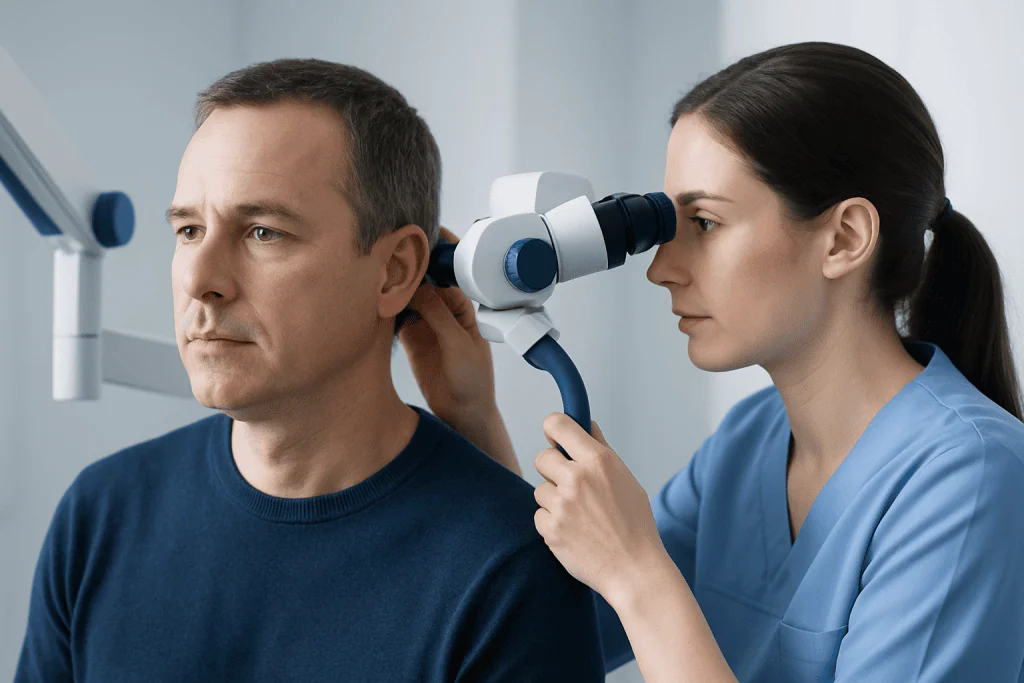
Diagnosis begins with a medical history and ear examination. A doctor will ask about recent colds, allergies, pressure changes, hearing changes, pain, fever, and how long symptoms have been present. The ear is then examined with an otoscope to look at the eardrum for signs of fluid, retraction, reduced movement, redness, or bulging.
Special tests can help confirm middle ear fluid. Tympanometry measures how the eardrum moves in response to pressure changes and is often useful when fluid is suspected. A hearing test may also be recommended, especially if symptoms persist, affect both ears, or interfere with speech, learning, or daily communication.
In children with recurrent episodes or persistent fluid, doctors may evaluate the nose and throat and consider enlarged adenoids or frequent infections. In adults, one-sided symptoms that do not resolve may lead to a more detailed ENT assessment. This may involve ENT evaluation and, when needed, hearing testing to clarify the cause and its effect on hearing.
Treatment options and what usually helps
Treatment depends on the cause, the person’s age, symptom severity, and how long the fluid has been present. Many cases improve over days to weeks once a cold settles or inflammation decreases. In these situations, watchful waiting may be appropriate, especially when there is no severe pain, high fever, or significant hearing difficulty.
If allergies or nasal inflammation are contributing, a doctor may suggest treatments aimed at the underlying problem. These can include allergy management or other medications chosen after examination. Antibiotics are not always helpful for simple middle ear fluid because fluid can remain even after an infection has cleared, and not all fluid represents a bacterial infection.
When symptoms continue for a prolonged period or hearing is significantly affected, additional treatment may be considered. In some children and adults, a specialist may recommend ear tube insertion to ventilate the middle ear and allow fluid to drain. If enlarged adenoids are contributing in children, adenoid surgery may sometimes be part of management.
Because treatment should match the exact cause, self-prescribing repeated decongestants or antibiotics is not ideal. A qualified doctor can decide whether monitoring, medication adjustment, or referral is the most sensible next step.
Self-care, prevention, and common myths
Gentle self-care can support recovery, but it should not replace medical advice when symptoms persist. Rest, hydration, and managing nasal allergy or cold symptoms can be helpful. Some people find that swallowing, yawning, or chewing gum briefly eases pressure, especially during altitude changes, though relief may be temporary.
Prevention focuses on reducing triggers where possible. Managing allergies, avoiding tobacco smoke exposure, treating chronic nasal congestion, and using pressure-equalizing strategies during flights may lower the chance of fluid buildup. Good hand hygiene can also reduce viral infections that often start the process.
Several common myths are worth correcting. Ear fluid behind the eardrum usually cannot be “drained” at home with cotton swabs, ear candles, or ear drops designed for wax. Inserting objects into the ear may injure the canal or eardrum. Another myth is that all ear fluid needs antibiotics; in reality, many cases are inflammatory or post-infectious rather than active bacterial infection.
Warm compresses may offer comfort for mild pressure, but ongoing symptoms still deserve assessment. If the problem is recurrent, the goal is not only symptom relief but also identifying the reason the ear is not ventilating properly.
When to seek medical care
Medical review is important if ear fluid symptoms last more than a few weeks, keep returning, or noticeably affect hearing. Children should be assessed sooner if there are concerns about speech, language development, school performance, or frequent ear problems. Adults with one-sided persistent blockage or hearing loss should not ignore it.
Urgent medical attention is appropriate if there is severe ear pain, high fever, dizziness that is intense or worsening, new facial weakness, blood or pus draining from the ear, or sudden hearing loss. These symptoms can point to a more significant problem that needs timely evaluation.
People with weakened immune systems, a history of ear surgery, or known structural ear problems should also seek advice promptly. For international patients who need coordinated evaluation, Acibadem International’s multidisciplinary specialists in JCI-accredited hospitals diagnose and treat ear conditions with individualized care plans.
Frequently asked questions
Is ear fluid the same as an ear infection?
Not always. Ear fluid can remain behind the eardrum after a cold or infection has improved, and this is not the same as an active infection. An infection is more likely when there is stronger pain, fever, or marked inflammation seen on examination.
Can ear fluid go away on its own?
Yes, many cases improve without invasive treatment, especially after a viral illness or temporary congestion. The body often clears the fluid as swelling in the eustachian tube settles. If symptoms last or hearing is affected, a doctor should assess it.
Why does my ear feel full but not hurt?
A feeling of fullness without pain often happens when fluid is trapped behind the eardrum or pressure is not equalizing properly. This can reduce eardrum movement and make hearing sound muffled. Pain is not always present, especially when there is no acute infection.
Are antibiotics necessary for fluid in the ear?
Not in every case. Antibiotics are used when a doctor suspects a bacterial infection, but simple middle ear fluid often does not benefit from them. Treatment depends on symptoms, examination findings, age, and how long the problem has lasted.
Can adults get middle ear fluid, or is it mainly a childhood problem?
Adults can definitely get middle ear fluid, although it is more common in children. In adults it may be linked to allergies, sinus problems, viral infections, or pressure changes. Persistent fluid in one ear should be medically evaluated.
Should I try to clean out the fluid with cotton swabs or ear candles?
No. If the fluid is behind the eardrum, cotton swabs and ear candles will not remove it and may cause injury. It is safer to avoid putting objects into the ear and seek medical advice if symptoms continue.
This article is for general information only and is not a substitute for professional medical advice. Please consult a qualified doctor about your individual situation.
Explore treatments in Turkey — costs, top hospitals & a free quote
JCI-accredited · board-certified surgeons · reply within 24h
Add us as a Preferred Source to see more of our trusted health content across Google Search, AI Overviews and Discover.

More from the Health Library

Organophosphate Poisoning: What Patients Need to Know

Muehrcke’s Lines: An Evidence-Based Guide for Patients

Alma Oil: What Patients Need to Know

Asd medical abbreviation: A Complete Medical Guide for Patients

Neurosurgeon: What Patients Need to Know