Neurosurgeon: What Patients Need to Know

A neurosurgeon treats conditions of the brain, spine, spinal cord, and peripheral nerves. Not every patient seen by a neurosurgeon needs surgery; many receive evaluation, monitoring, or coordinated non-surgical treatment.
Key Takeaways
- A neurosurgeon treats conditions of the brain, spine, spinal cord, and peripheral nerves.
- Not every patient seen by a neurosurgeon needs surgery; many receive evaluation, monitoring, or coordinated non-surgical treatment.
- Common reasons for referral include herniated discs, brain tumors, spinal stenosis, head trauma, and nerve compression.
- Diagnosis often involves a medical history, neurological exam, and imaging such as MRI or CT scans.
- Urgent symptoms such as sudden weakness, seizures, severe head injury, or loss of bladder or bowel control need prompt medical attention.
A neurosurgeon is a doctor trained to diagnose and treat conditions affecting the brain, spine, and nervous system, including both surgical and non-surgical care. Patients may be referred to a neurosurgeon for symptoms such as severe back pain with nerve problems, brain tumors, head injuries, or certain vascular and movement disorders.
Overview: what a neurosurgeon does
A neurosurgeon is a medical doctor who specializes in diagnosing and treating disorders of the nervous system, especially the brain, spine, spinal cord, and peripheral nerves. Despite the title, a neurosurgeon does more than perform operations. This specialist also evaluates symptoms, confirms diagnoses, recommends monitoring when appropriate, and works with other doctors on long-term treatment plans.
Patients are often referred to a neurosurgeon when a symptom or scan suggests a structural problem affecting nerves or the central nervous system. Examples include a herniated disc pressing on a nerve, a brain tumor, bleeding in the brain, spinal instability, nerve entrapment, or complications after head or spine injury. Some neurosurgeons focus mainly on brain conditions, while others concentrate on spine or peripheral nerve problems.
In practice, neurosurgeons often collaborate closely with neurologists, radiologists, pain specialists, rehabilitation teams, oncologists, and intensive care doctors. This team-based approach helps match the treatment plan to the individual condition, symptoms, age, general health, and personal goals.
Conditions a neurosurgeon commonly treats
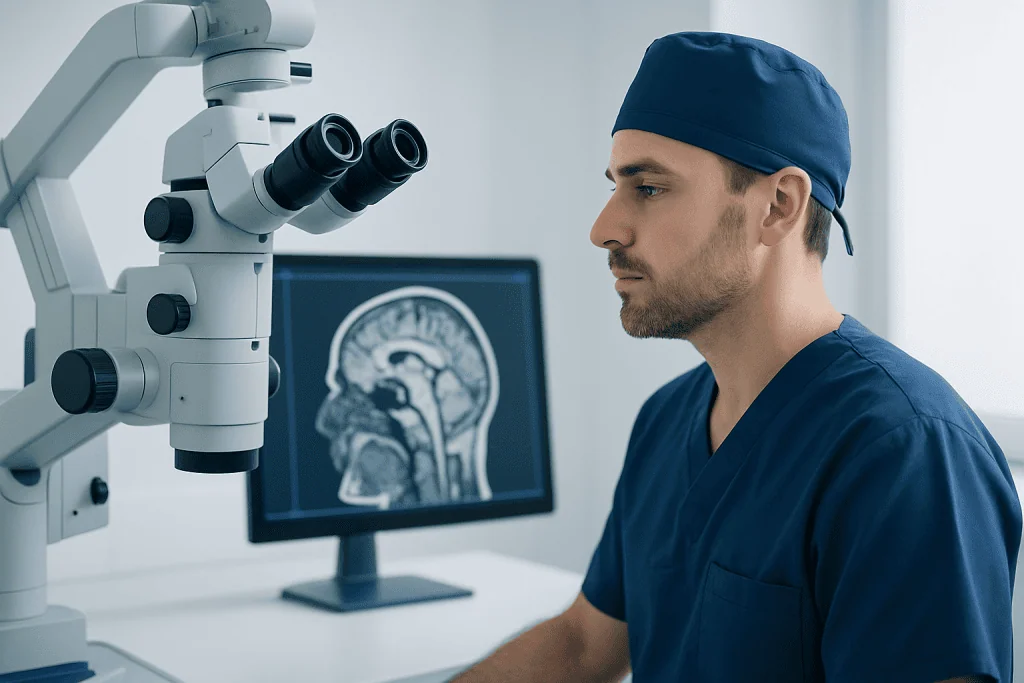
Neurosurgeons care for a wide range of conditions. Some are emergencies, such as severe head trauma, bleeding around the brain, or spinal cord compression. Others develop more gradually, such as chronic back pain caused by nerve compression, benign or malignant brain tumors, or progressive neck problems related to spinal stenosis.
Common conditions include:
- Brain tumors and other masses, including brain tumor conditions
- Herniated discs, spinal stenosis, and degenerative spine disease
- Head injuries and bleeding in or around the brain
- Peripheral nerve compression, such as some forms of nerve entrapment
- Hydrocephalus and certain congenital nervous system disorders
- Epilepsy that does not respond well to medication
- Movement disorders that may benefit from advanced procedures
- Vascular abnormalities such as aneurysms or arteriovenous malformations
Some patients are surprised to learn that symptoms like arm numbness, leg weakness, sciatica, balance problems, facial pain, or severe headaches can sometimes relate to a condition within a neurosurgeon’s field. Even so, symptoms alone do not confirm a neurosurgical problem. Careful evaluation is needed to identify the true cause.
Signs that may lead to a neurosurgery referral

A person may be referred to a neurosurgeon by a primary care doctor, emergency physician, neurologist, orthopedic specialist, or another clinician. The referral usually happens when symptoms suggest that the brain, spine, or nerves may be involved, especially if imaging shows a structural problem or if symptoms are worsening despite initial treatment.
Examples of symptoms that may prompt referral include persistent back or neck pain with numbness or weakness, shooting pain down an arm or leg, changes in walking or balance, unexplained seizures, repeated severe headaches with neurological symptoms, or difficulties with coordination, speech, vision, or memory. In children, developmental concerns, head size changes, or congenital abnormalities may also require specialist review.
It is important to remember that a referral to a neurosurgeon does not automatically mean surgery is needed. In many cases, the visit is meant to clarify the diagnosis, assess how urgent the problem is, and discuss all available options, including conservative care and watchful follow-up.
How a neurosurgeon evaluates a patient
The first assessment usually begins with a detailed medical history. The neurosurgeon asks about when symptoms started, how they have changed over time, what makes them better or worse, and whether there are related problems such as numbness, weakness, falls, seizures, headaches, or bladder and bowel changes. Past medical conditions, prior injuries, and earlier treatments are also relevant.
A neurological examination is a central part of the visit. This may include checking strength, reflexes, sensation, coordination, balance, vision, eye movements, language, and mental status. The exam helps identify which part of the nervous system may be affected and whether there are signs of pressure on the brain, spinal cord, or nerves.
Imaging and other tests are often used to confirm the diagnosis. These may include MRI, CT scans, angiography, nerve conduction studies, or laboratory tests, depending on the problem. For spine-related concerns, the neurosurgeon may review prior scans or request updated imaging before discussing whether options such as rehabilitation, injections, or spine surgery are appropriate.
Treatment options: surgery is only one part of care
Neurosurgical treatment is individualized. Some patients need urgent intervention, while others benefit from observation, medication adjustments, physical therapy, rehabilitation, or image-guided procedures. The best treatment depends on the diagnosis, the severity of symptoms, the risk of progression, and the expected benefits and risks of each option.
When surgery is recommended, the goal may be to remove a tumor, relieve pressure on nerves, stop bleeding, repair injury, restore stability, or improve symptoms that are limiting daily life. Procedures may involve the brain, spine, spinal cord, or peripheral nerves. In selected cases, a neurosurgeon may discuss brain tumor surgery or advanced procedures such as deep brain stimulation for carefully evaluated movement disorders.
Before any operation, patients should understand why it is being advised, what alternatives exist, what recovery may involve, and what symptoms or functional changes the procedure is expected to address. Shared decision-making is important, especially for conditions that are not emergencies and can be managed in more than one way.
What to expect before and after neurosurgery
If surgery is planned, the care team usually arranges preoperative testing and provides instructions about medications, eating and drinking, and hospital admission. Patients may meet not only the neurosurgeon but also anesthesiologists, nurses, rehabilitation specialists, and other clinicians involved in recovery. Asking questions in advance can make the process clearer and less stressful.
Recovery varies widely depending on the condition and the type of procedure. Some patients go home quickly after minimally invasive or targeted surgery, while others need longer hospital care, intensive monitoring, or rehabilitation. Follow-up appointments often include wound checks, repeat imaging, medication review, and discussion of activity limits and return to work or daily routines.
For many conditions, recovery is not only about healing after an operation. It may also include pain management, physical therapy, occupational therapy, speech therapy, or long-term neurological follow-up. In complex cases, multidisciplinary centers such as Acibadem International bring together specialists in JCI-accredited hospitals to diagnose and treat neurosurgical conditions for international patients.
When to seek medical care
Medical advice should be sought promptly if symptoms suggest a serious problem involving the brain, spine, or nerves. Warning signs include sudden weakness or numbness on one side of the body, new seizures, confusion, loss of consciousness, severe head injury, sudden difficulty speaking, sudden vision changes, or a sudden very severe headache unlike usual headaches. These symptoms may require emergency assessment.
Urgent evaluation is also important for severe back or neck pain with rapidly worsening weakness, numbness in the groin area, or loss of bladder or bowel control, as these can signal significant pressure on the spinal cord or nerves. A doctor should also assess persistent headaches with neurological symptoms, unexplained balance problems, or pain with progressive limb weakness.
Less urgent but still important reasons to arrange a specialist review include ongoing symptoms that do not improve with standard treatment, abnormal brain or spine imaging, or recurrent episodes that affect daily function. Early evaluation can help clarify whether symptoms are related to a neurosurgical condition or another health issue.
Frequently asked questions
What is the difference between a neurologist and a neurosurgeon?
A neurologist diagnoses and treats nervous system disorders mainly with medications and other non-surgical approaches. A neurosurgeon is trained to evaluate the same broad area but can also perform operations when a structural problem in the brain, spine, or nerves needs surgical treatment.
Does seeing a neurosurgeon mean surgery is necessary?
No. Many people see a neurosurgeon for evaluation only and may be advised to have monitoring, rehabilitation, medication changes, or other non-surgical care. The consultation helps determine whether surgery would be useful, optional, or unnecessary.
What symptoms might suggest a person should see a neurosurgeon?
Symptoms can include persistent neck or back pain with numbness or weakness, seizures, balance changes, severe or unusual headaches with neurological symptoms, or imaging that shows a brain or spine problem. Emergency symptoms such as sudden weakness, major head injury, or loss of bladder or bowel control need immediate medical attention.
What tests does a neurosurgeon usually order?
The tests depend on the condition being assessed. Common investigations include MRI, CT scans, vascular imaging, and sometimes nerve conduction studies or laboratory tests, along with a detailed neurological examination.
Do neurosurgeons treat only brain conditions?
No. Neurosurgeons also treat disorders of the spine, spinal cord, and peripheral nerves. In fact, many neurosurgical visits relate to spine conditions such as herniated discs, spinal stenosis, or nerve compression.
How should a patient prepare for a neurosurgery consultation?
It helps to bring prior scan reports, a list of medications, and a summary of symptoms, including when they started and how they affect daily life. Writing down questions in advance can also make the appointment more useful and easier to follow.
References
- National Institute of Neurological Disorders and Stroke
- American Association of Neurological Surgeons
- National Health Service
- Mayo Clinic
- World Health Organization
This article is for general information only and is not a substitute for professional medical advice. Please consult a qualified doctor about your individual situation.
Joint and spine care in Turkey — expert assessment & treatment
JCI-accredited · board-certified surgeons · reply within 24h
Add us as a Preferred Source to see more of our trusted health content across Google Search, AI Overviews and Discover.

More from the Health Library

Black Butts: What Patients Need to Know

Contracture — Explained by Medical Evidence, Not Myths

Molybdenum: What Patients Need to Know

Adding Salt to Water: A Complete Medical Overview

Short Attention Span: An Evidence-Based Guide for Patients