

Ear Piercing Infection: Early Signs, Risk Factors, and How It Is Treated

An ear piercing infection can cause redness, pain, warmth, swelling, and discharge at the piercing site. Cartilage piercings carry a higher risk of more serious infection than earlobe piercings.
Key Takeaways
- An ear piercing infection can cause redness, pain, warmth, swelling, and discharge at the piercing site.
- Cartilage piercings carry a higher risk of more serious infection than earlobe piercings.
- Good piercing hygiene, avoiding unnecessary touching, and proper aftercare reduce risk.
- Persistent pain, spreading redness, fever, or deformity of the ear needs medical attention.
- Treatment depends on severity and may include cleaning, local wound care, or prescription medicines.
Ear piercing infection usually starts with localized redness, tenderness, swelling, or discharge around the piercing site. Most mild infections improve with prompt care, but cartilage infections and worsening symptoms should be assessed by a qualified doctor.
Overview
An ear piercing infection is a common problem that can happen days, weeks, or sometimes even months after a new piercing. It typically causes redness, tenderness, swelling, or drainage around the hole. In many cases, the infection is mild and limited to the skin, but some infections can go deeper and need medical treatment.
The part of the ear that is pierced matters. Earlobe piercings usually have a better blood supply and tend to heal more easily. Piercings through ear cartilage, such as the upper ear, are more prone to significant infection because cartilage has less blood flow and can be harder for the body to heal.
Not every irritated piercing is infected. Fresh piercings often have some soreness, slight swelling, or a small amount of clear or pale crusting during normal healing. Infection becomes more likely when symptoms are increasing instead of improving, especially if the area becomes hot, very painful, or produces thick yellow or green discharge.
How to Recognize Early Signs
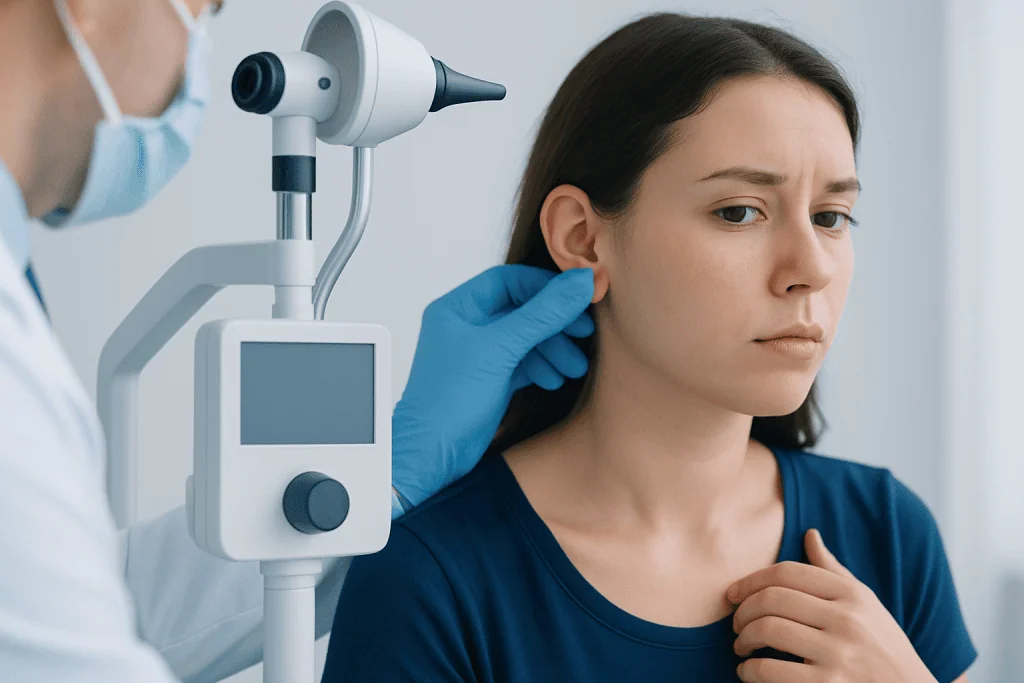
Early recognition is important because quick care may prevent the infection from getting worse. The first signs often include increasing redness around the piercing hole, tenderness when the ear is touched, and mild swelling. The skin may feel warm, and there may be a small amount of cloudy fluid or crusting.
Symptoms that suggest a more active infection include throbbing pain, worsening swelling, pus, a bad odor, or redness that spreads beyond the immediate piercing site. Jewelry that suddenly feels tight can also be a clue, because swelling may trap the earring in the tissue.
Cartilage infections can look different from a simple earlobe infection. The upper ear may become firm, very painful, noticeably swollen, and red or purple in appearance. Because cartilage infections can damage the shape of the ear if not treated promptly, they should be taken seriously.
- Common early signs: redness, mild swelling, tenderness, warmth
- Possible infection: cloudy or thick discharge, increasing pain, tight jewelry
- More urgent warning signs: spreading redness, fever, severe swelling, ear shape changes
Why Ear Piercing Infections Happen

An ear piercing creates a small wound in the skin. Infection can happen when bacteria enter that opening before it has fully healed. This may occur during the piercing itself if sterile technique is poor, or afterward if the area is touched frequently with unwashed hands, exposed to contaminated water, or irritated by friction.
Several factors can increase risk. Cartilage piercings are one of the most important risk factors. Tight helmets, headphones, telephones, masks with ear loops, or sleeping on the new piercing can repeatedly irritate the area. Jewelry made from irritating metals may also trigger inflammation, which can make it easier to mistake irritation for infection or allow infection to develop.
Other contributors include removing jewelry too early, changing it before the channel has healed, or using harsh cleaning products that damage the skin barrier. People with eczema, a history of contact allergy, diabetes, or conditions that affect the immune system may have a higher chance of complications. Sometimes a bump near a piercing may be due to scar tissue, allergy, or a skin condition rather than infection, such as a sebaceous cyst or inflamed tissue around the piercing.
How Doctors Diagnose It
Doctors usually diagnose an ear piercing infection by examining the ear and asking about symptoms, timing, piercing location, aftercare, and recent jewelry changes. In many straightforward cases, no special test is needed. The doctor will look for redness, tenderness, swelling, drainage, trapped jewelry, and whether the infection involves the earlobe or cartilage.
It is also important to distinguish infection from allergic contact dermatitis, pressure injury, or normal healing changes. Nickel sensitivity and other metal reactions can cause itching, rash, and swelling that may resemble infection. If the earring back is embedded or the piercing channel is torn, management may be different.
If the infection is severe, recurrent, not improving, or producing significant pus, a doctor may take a sample for culture to identify the organism. In uncommon situations, especially when the outer ear appears deformed or deep infection is suspected, a specialist may recommend further evaluation. People with persistent swelling or a lump may also need assessment for other ear or skin conditions, including otitis externa when symptoms extend into the ear canal.
Treatment Options
Treatment depends on how severe the infection is and where it is located. Mild infections around the earlobe may improve with careful local care, including gentle cleansing as advised by a healthcare professional and avoiding unnecessary touching or twisting of the jewelry. Harsh products such as concentrated alcohol or peroxide can irritate healing skin and are not always the best choice unless specifically recommended by a clinician.
If the area is clearly infected, a doctor may prescribe topical or oral medicines based on the likely cause, the piercing site, and how extensive the infection is. Cartilage infections often need closer attention because they can progress more quickly and may require prescription treatment sooner than earlobe infections. If jewelry is embedded, very tight, or blocking drainage, a clinician may need to remove or replace it safely.
When there is a collection of pus, worsening swelling, or a deeper soft tissue infection, a procedure may be needed to drain the area and protect surrounding tissue. In some cases, patients may be referred for an ENT examination or a dermatology consultation if the diagnosis is unclear or the skin reaction is severe. More advanced ear problems may need specialist care similar to evaluation for ear surgery if structure is affected, although this is not typical for simple piercing infections.
People should not start leftover antibiotics or remove trapped jewelry on their own without advice, especially in cartilage piercings. Inappropriate treatment can delay healing and may increase the risk of abscess, recurrence, or cosmetic changes to the ear.
Prevention and Self-Care During Healing
Prevention starts before the piercing is done. Choosing a reputable professional who uses sterile technique and appropriate jewelry materials is one of the most effective ways to lower infection risk. Earlobe piercings generally heal more safely than cartilage piercings, and using suitable starter jewelry can reduce irritation.
After piercing, the area should be cleaned exactly as instructed by the piercer or clinician. Hands should be washed before touching the site. It is best to avoid swimming in pools, lakes, or hot tubs during early healing if advised, and to keep hair products, cosmetics, and dirty devices away from the piercing. Sleeping on the piercing and changing jewelry too soon can slow healing.
People should also watch for noninfectious irritation. If the skin becomes itchy, flaky, or develops a rash without clear signs of infection, the problem may be sensitivity to the metal rather than bacteria. In that case, a clinician can help decide whether the jewelry material should be changed after the area is stable.
- Wash hands before touching the piercing
- Follow aftercare instructions consistently
- Avoid unnecessary twisting or frequent handling
- Do not change jewelry before the piercing has healed
- Protect the area from friction, pressure, and contaminated water
When to Seek Medical Care
Medical care is recommended if an ear piercing becomes increasingly painful, swollen, red, or warm instead of gradually improving. A doctor should also assess thick pus, a foul smell, bleeding that does not settle, or jewelry that appears trapped in the ear.
Prompt medical attention is especially important for cartilage piercings, because these infections can become more serious than earlobe infections. Fever, spreading redness, severe tenderness, a visible lump of pus, or any change in the shape of the ear should not be ignored. People with diabetes, immune system conditions, or poor wound healing should seek advice early even for milder symptoms.
If symptoms are unusual or recurrent, a specialist can help rule out look-alike conditions and tailor treatment. Near the end of the care pathway, it may be reassuring to know that Acibadem International’s multidisciplinary specialists in JCI-accredited hospitals evaluate and treat ear conditions for international patients when further assessment is needed.
Frequently asked questions
How do people know if an ear piercing is infected or just healing?
Normal healing can cause mild soreness, slight swelling, and some clear or pale crusting. Infection is more likely when redness, pain, warmth, or swelling are getting worse rather than better, especially if there is thick discharge or a bad smell. If symptoms are uncertain or persistent, a doctor can help distinguish infection from irritation or allergy.
Are cartilage piercings more dangerous than earlobe piercings?
Cartilage piercings usually have a higher risk of significant infection than earlobe piercings. Cartilage has less blood supply, which can make infections harder to clear and increase the chance of damage to the ear's shape. For that reason, worsening symptoms in the upper ear should be checked promptly.
Should jewelry be removed if there is an ear piercing infection?
Not always. Removing jewelry without guidance can sometimes trap infection inside or allow the hole to close before drainage occurs. A clinician can decide whether the jewelry should stay in place, be changed, or be removed safely.
Can an ear piercing infection go away on its own?
Some very mild surface infections may improve with early local care and reduced irritation. However, persistent pain, pus, spreading redness, or any cartilage involvement should not be left to settle on its own. Medical review helps prevent complications and guides the right treatment.
What makes someone more likely to get an ear piercing infection?
Important risk factors include cartilage piercing, poor aftercare, touching the piercing with unwashed hands, early jewelry changes, and repeated pressure or friction. Metal allergy, skin conditions, diabetes, and immune system problems can also contribute. Safe technique and consistent aftercare lower risk.
When should someone see a doctor for an infected ear piercing?
A doctor should be consulted if symptoms are worsening, not improving after early care, or involve thick discharge, severe pain, fever, or spreading redness. Medical review is particularly important for cartilage piercings and for anyone with a weakened immune system. Changes in the shape of the ear or trapped jewelry need prompt attention.
References
- American Academy of Dermatology
- American Academy of Otolaryngology–Head and Neck Surgery
- Centers for Disease Control and Prevention
- Mayo Clinic
- National Health Service
This article is for general information only and is not a substitute for professional medical advice. Please consult a qualified doctor about your individual situation.
Explore treatments in Turkey — costs, top hospitals & a free quote
JCI-accredited · board-certified surgeons · reply within 24h
Add us as a Preferred Source to see more of our trusted health content across Google Search, AI Overviews and Discover.

More from the Health Library



Related Specialists

Dr. Gülin Muradiye Öztürk
Radiology
Prof. Dr. Sinan Karaoğlu
Orthopedic Surgery & Traumatology
Dr. Ercan Yavuz
Urology
Prof. Dr. Mehmet Veli Karaaltın
Aesthetic Plastic & Reconstructive Surgery