Ear Reconstruction: Procedure, Recovery and Results

Ear reconstruction focuses on the outer ear and does not automatically restore hearing. Reconstruction may use the person’s rib cartilage, a medical implant, local tissue, skin grafts, or a removable prosthetic ear.
Key Takeaways
- Ear reconstruction focuses on the outer ear and does not automatically restore hearing.
- Reconstruction may use the person’s rib cartilage, a medical implant, local tissue, skin grafts, or a removable prosthetic ear.
- Most people need several weeks for early healing, while final contour and scar maturation can take months.
- Children with microtia are often considered for reconstruction when the chest has developed sufficiently, commonly around school age or later.
- Pain and swelling are expected after surgery but are usually manageable with the care plan provided by the surgical team.
- Prompt assessment is important after ear trauma, infection, sudden changes in the surgical site, or wound-healing concerns.
Ear reconstruction is a personalized surgical process that restores or improves the shape of the outer ear after a congenital difference, trauma, infection, or removal of tissue for cancer treatment. The approach, number of procedures, recovery time, and expected results depend on the amount of missing or damaged tissue and the reconstruction method used.
Ear Reconstruction: What It Is and What It Can Achieve
Ear reconstruction is surgery to create, restore, or improve the appearance of the outer ear, also called the auricle or pinna. It may be considered when part or all of the ear is absent, underdeveloped, injured, scarred, or removed during treatment for a skin cancer or another condition. The central aim is to create an ear shape that is balanced with the face and suited to the individual’s anatomy and goals.
The ear reconstruction process is highly individualized. Some reconstructions are completed in one operation, while others are performed in stages to allow tissue to heal between procedures. Depending on the situation, surgeons may use the patient’s own cartilage and skin, an implant framework, tissue from nearby areas, or an external prosthetic ear.
Outer-ear reconstruction can improve appearance, support eyeglasses, and help some people feel more comfortable in social settings. It does not necessarily improve hearing because hearing depends on the ear canal, eardrum, middle ear, and inner ear as well as the outer ear. Hearing assessment and hearing-support options may be discussed separately when appropriate.
Who May Be a Candidate for Ear Reconstruction?

People may seek ear reconstruction for congenital conditions such as microtia, in which the outer ear is small or incompletely formed. It may also be used after burns, bites, accidents, poorly healed wounds, severe infections, or removal of tissue for tumors. The best method depends on whether the concern involves the earlobe, the upper rim, the full outer ear, or nearby skin and soft tissue.
A surgeon considers general health, smoking or nicotine exposure, wound-healing history, available skin and cartilage, previous operations, and the person’s expectations. For children, the team also considers physical growth, emotional readiness, school activities, and whether hearing or ear-canal treatment should be coordinated with reconstruction.
Assessment may involve a plastic and reconstructive surgeon, an ear, nose and throat specialist, audiologist, dermatologist, oncologist, or pediatric specialist. This coordinated evaluation is particularly useful where a congenital ear difference is associated with hearing loss or where reconstruction follows treatment of a complex injury or cancer.
Not everyone needs or wants surgery. A silicone prosthetic ear, cosmetic camouflage, or observation may be appropriate alternatives for some individuals. A consultation allows the care team to explain the likely appearance, scar placement, treatment stages, and practical demands of each option.
How Does the Ear Reconstruction Surgery Process Work?
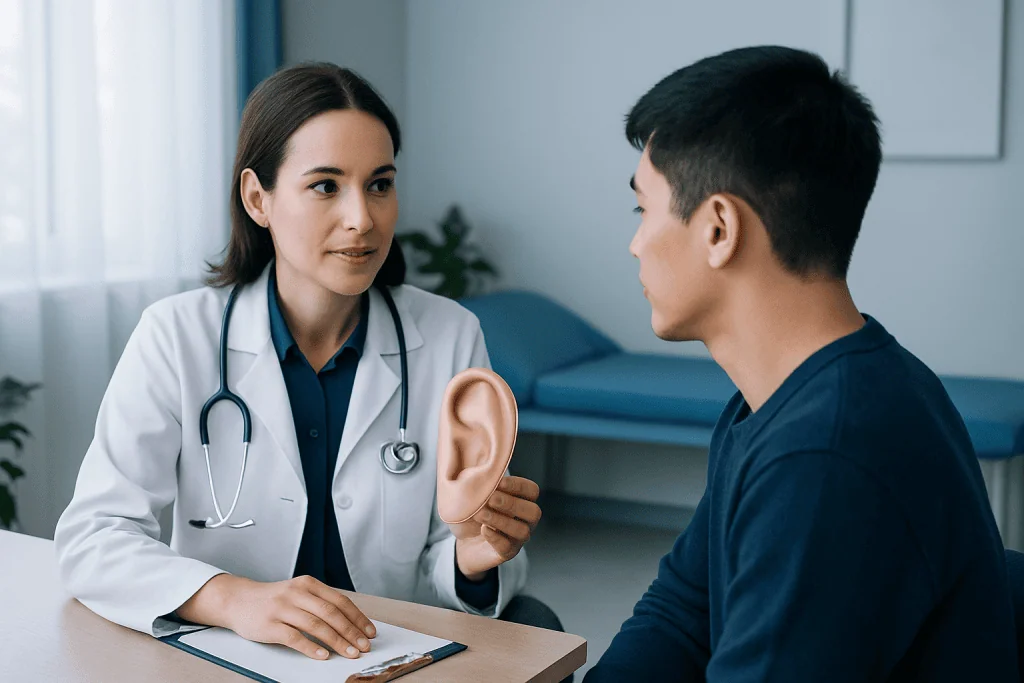
Planning begins with a detailed examination, medical history, photographs, and sometimes imaging. The surgeon evaluates the opposite ear, when present, as a guide for size, position, and contour. They also review whether the ear canal and hearing structures need separate evaluation. The primary surgical option may include ear reconstruction treatment using autologous cartilage, an implant-supported framework, or soft-tissue reconstruction.
When rib cartilage is used, the surgeon takes a small amount of cartilage from the chest and carefully sculpts it into an ear framework. This framework is placed under skin at the side of the head. In a later stage, the reconstructed ear may be elevated away from the head to create a more natural projection, often using a skin graft to cover the back surface.
For selected patients, a porous implant framework may be placed beneath well-vascularized tissue and skin. This can reduce the need to harvest rib cartilage, but it has specific suitability requirements and potential complications that should be discussed carefully. Smaller defects may be repaired with local flaps, cartilage grafts, or skin grafts without rebuilding the entire ear.
Ear reconstruction surgery time varies with the technique and complexity. A smaller repair may take a few hours, while full reconstruction can take longer and may require more than one operation. Procedures are generally performed under anesthesia, and the surgical team provides personalized instructions about fasting, medications, wound care, and plans for going home.
At What Age Is Ear Reconstruction Typically Performed?
For children born with microtia, ear reconstruction is commonly considered when the child is older and the body has developed enough to provide suitable cartilage if a rib-cartilage technique is planned. This is often around 8 to 10 years of age, although timing differs between children and surgical approaches. Some implant-based techniques may be considered at a younger age in selected cases.
Timing is not based on age alone. The child’s chest size, ear size, general health, hearing needs, school routine, and family preferences all matter. If there is hearing loss, early assessment is important because hearing support and communication development may need attention before or alongside cosmetic reconstruction.
Adults can undergo ear reconstruction at many ages when they are medically suitable for surgery. Reconstruction after injury or tumor removal may be performed promptly or delayed until wounds have healed and the surgeon can plan the safest, most effective approach. A specialist can explain whether immediate, staged, or delayed reconstruction is most appropriate.
Recovery, Rest and Expected Results
How long does it take to recover from ear reconstruction surgery? Early recovery usually takes several weeks, but complete healing and scar maturation take months. Dressings and drains, if used, are commonly reviewed within the first days after surgery. Follow-up visits allow the surgeon to check circulation, swelling, wound healing, and the position of the reconstructed ear.
How many days should I rest after ear surgery? Most patients need to rest at home for at least several days and often plan one to two weeks away from school, work, or regular activities, depending on the extent of surgery and their role. Strenuous exercise, contact sports, swimming, and activities that could bump or compress the ear usually need to be avoided longer. The surgical team gives specific guidance because restrictions differ after cartilage harvesting, grafting, and staged procedures.
How painful is ear surgery recovery? Discomfort is expected, especially when cartilage has been taken from the chest, but pain is generally managed with the prescribed or recommended medicines and improves over time. Tightness, numbness, itching, bruising, and swelling can occur during healing. Patients should not take additional medicines or supplements without checking with their care team, as some may increase bleeding risk.
Ear reconstruction surgery results develop gradually. The new ear should have improved shape and projection, but it may not be identical to the other ear or look exactly like a natural ear on close inspection. Scars generally fade over time but do not disappear completely. Protecting the area from sun exposure and following wound-care instructions can support the best possible healing.
Benefits, Risks and Practical Self-Care
Potential benefits of ear reconstruction include restoring facial balance, repairing missing tissue, improving the ability to wear glasses or hearing devices, and addressing the personal impact of a visible ear difference. A realistic discussion before surgery is important, including the possibility of staged operations, revisions, or asymmetry.
As with all surgery, risks can include bleeding, infection, delayed healing, anesthesia-related complications, visible scarring, uneven shape, skin or cartilage loss, and the need for further treatment. With implant reconstruction, exposure or infection of the implant is a specific concern. With rib-cartilage reconstruction, there can be pain, scarring, or contour changes at the chest donor site.
After surgery, patients are usually advised to keep dressings dry and intact until instructed otherwise, sleep in a position that avoids pressure on the reconstructed ear, and attend all follow-up appointments. Smoking and nicotine products can impair circulation and healing, so clinicians commonly advise stopping them well before and after surgery. Sun protection is also important once the wound has healed.
Results are supported by careful planning and appropriate follow-up rather than by a single operation alone. Acibadem International’s multidisciplinary specialists and JCI-accredited hospitals can assess and treat ear reconstruction needs for international patients, including coordination with relevant hearing and reconstructive care.
When to Seek Medical Care
Medical assessment is advisable after an ear injury, burn, bite, deep cut, or infection that causes deformity, tissue loss, worsening pain, drainage, or changes in skin color. Early evaluation can help preserve tissue and guide repair. A person who has had skin cancer removed from the ear should also discuss reconstructive options with the treating team.
After ear reconstruction surgery, patients should contact their surgeon promptly if they develop increasing redness, warmth, swelling, severe or worsening pain, fever, persistent bleeding, foul-smelling drainage, a wound opening, or dark, pale, or cool skin around the reconstruction. These signs do not always indicate a serious problem, but they need timely professional review.
Urgent medical care is needed for trouble breathing, chest pain, fainting, rapidly spreading swelling, or symptoms of a severe allergic reaction. Children with suspected microtia or any concern about hearing should receive a hearing evaluation and pediatric specialist advice rather than waiting for cosmetic reconstruction alone.
Frequently asked questions
What is ear reconstruction surgery?
Ear reconstruction surgery restores or reshapes the visible outer ear when it is underdeveloped, damaged, scarred, or partly absent. The surgeon may use rib cartilage, an implant, nearby tissue, skin grafts, or a combination of these methods. The approach is tailored to the size and location of the defect.
How long does ear reconstruction surgery take?
The duration depends on the type of reconstruction. Small repairs may take a few hours, while full outer-ear reconstruction can take longer and may be completed in more than one planned stage. The surgeon can provide an estimate after examining the ear and discussing the chosen technique.
How long does it take to recover from ear reconstruction surgery?
Initial healing commonly takes several weeks, and most people gradually return to daily routines during that period. Swelling, scar changes, and refinement of the ear’s final appearance continue for several months. Recovery may take longer when reconstruction is staged or includes cartilage harvesting from the chest.
How many days should I rest after ear surgery?
Many patients rest at home for several days and may need one to two weeks away from work or school, depending on the operation and daily activities. Strenuous activity and anything that could put pressure on the ear are restricted for longer. The surgeon’s individual instructions should guide the return to exercise, swimming, and sports.
How painful is ear surgery recovery?
Pain is usually most noticeable in the first few days and is often manageable with the postoperative pain plan. If rib cartilage is used, the chest donor area may be more uncomfortable than the ear itself. Pain that becomes stronger rather than improving, or occurs with fever, redness, or drainage, should be reported to the surgical team.
At what age is ear reconstruction typically performed?
For children with microtia, reconstruction using rib cartilage is often considered around 8 to 10 years of age, when there is sufficient growth for cartilage harvesting. However, the appropriate age varies according to the child’s anatomy, health, hearing needs, and the technique being considered. Adults may be candidates at any age if their overall health and treatment goals are suitable.
References
- American Society of Plastic Surgeons
- American Academy of Otolaryngology–Head and Neck Surgery
- National Institute on Deafness and Other Communication Disorders
- Children's Hospital of Philadelphia
- Mayo Clinic
This article is for general information only and is not a substitute for professional medical advice. Please consult a qualified doctor about your individual situation.
Oncology care in Turkey — second opinion and treatment plan
JCI-accredited · board-certified surgeons · reply within 24h
Add us as a Preferred Source to see more of our trusted health content across Google Search, AI Overviews and Discover.