Early Psoriasis — Explained by Medical Evidence, Not Myths

Psoriasis is not contagious and is not caused by poor hygiene. Early psoriasis may look different across skin tones and can resemble eczema, fungal infection, or dandruff.
Key Takeaways
- Psoriasis is not contagious and is not caused by poor hygiene.
- Early psoriasis may look different across skin tones and can resemble eczema, fungal infection, or dandruff.
- Symptoms may affect the skin, scalp, nails, and sometimes joints.
- There is no single blood test that confirms psoriasis; clinicians usually diagnose it through a skin and medical-history assessment.
- Treatment is tailored to the type, location, extent, and effect of psoriasis on daily life.
Early psoriasis is an immune-mediated skin condition that may begin with persistent scaly patches, small flaky bumps, itching, or changes around the scalp and nails. Recognising possible early symptoms and seeking an accurate diagnosis can help a person find effective treatment and reduce the impact of future flares.
Early psoriasis: what it is and what it can look like
Early psoriasis is the beginning phase of psoriasis, a long-term inflammatory condition in which the immune system speeds up the growth cycle of skin cells. Instead of shedding gradually, skin cells can build up on the surface and form visible patches or scale. The condition may develop slowly over weeks or appear more suddenly, particularly after an infection or another trigger.
The most common form, plaque psoriasis, often begins as clearly outlined areas of inflamed skin with dry, whitish or silvery scale. On lighter skin, these patches may look pink, red, or salmon-coloured. On darker skin, they may appear violet, brown, grey, or darker than the surrounding skin, and scale may be less obvious. Psoriasis can be mild and affect only a few small areas, but even limited disease can be uncomfortable or distressing when it involves visible or sensitive sites.
Psoriasis is not infectious. It cannot be passed from one person to another through touch, shared towels, swimming pools, or close contact. It is also not a reflection of cleanliness. Although psoriasis has no permanent cure at present, many people achieve good symptom control with personalised care and ongoing attention to triggers.
Early signs that may suggest psoriasis
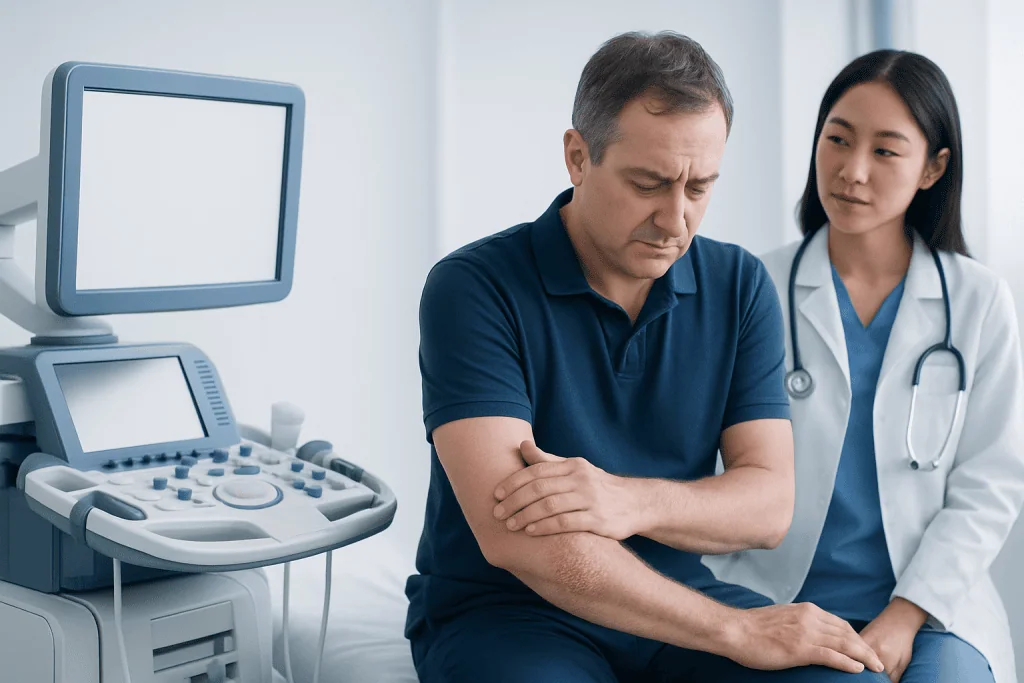
Early psoriasis does not look identical in every person. A patch may first be mistaken for dry skin, a minor rash, or irritation. However, psoriasis is more likely when an area persists, returns in the same place, becomes more sharply bordered, or develops repeated scaling despite gentle skin care.
Possible early signs include dry, thickened, or flaky patches; itching, burning, tenderness, or tightness; and cracks in the skin that may occasionally bleed. Common locations include the elbows, knees, scalp, lower back, around the belly button, and buttock crease. Psoriasis may also affect the ears, hands, feet, genital area, or skin folds. In skin folds, the rash may be smooth and shiny rather than visibly scaly because of moisture and friction.
Scalp psoriasis can resemble persistent dandruff but may extend beyond the hairline or form thicker, more adherent scale. Nail changes can also occur early, including tiny pits, separation of the nail from the nail bed, thickening, or yellow-brown discolouration. Some people develop many small, drop-like spots over the trunk and limbs; this pattern, called guttate psoriasis, can occur after a throat infection.
- Persistent scaly plaques that do not fully settle
- Recurring patches in the same locations
- Scalp flaking with redness or well-defined thicker areas
- Nail pitting, lifting, or unusual thickening
- Joint stiffness, swelling, or pain alongside a skin rash
Why psoriasis starts: causes, triggers and risk factors

Psoriasis develops through a combination of immune activity, genetic tendency, and environmental influences. It is not caused by one behaviour or one food. Having a close relative with psoriasis can increase the likelihood of developing it, but a family history is not always present. The condition can begin at any age, including childhood, although onset is common in young adulthood or later adulthood.
For some people, a trigger brings on the first noticeable episode or contributes to a flare. Skin injury, such as a cut, sunburn, tattoo, or repeated friction, can sometimes lead to psoriasis in the injured area. This is known as the Koebner phenomenon. Streptococcal throat infection may precede guttate psoriasis, especially in children and young adults.
Other factors that may worsen psoriasis include emotional stress, smoking, heavy alcohol use, cold or dry weather, and certain medicines. A clinician should review all prescribed, over-the-counter, and herbal products rather than advising a person to stop medication independently. Higher body weight and some health conditions, including diabetes and cardiovascular risk factors, occur more commonly in people with psoriasis, so whole-person health care is valuable.
How clinicians distinguish psoriasis from similar skin conditions
Psoriasis can resemble several common skin conditions, particularly at an early stage. Eczema often causes intense itch and less sharply defined patches, while fungal infections may spread outward with a more active edge. Seborrhoeic dermatitis commonly affects the scalp, eyebrows, sides of the nose, and chest, with greasy or yellowish scale. Contact dermatitis may be linked to a new product, metal, workplace exposure, or repeated irritation.
A dermatologist or another qualified clinician will usually diagnose psoriasis by examining the skin, scalp, and nails and asking about symptoms, family history, recent infections, medicines, and possible triggers. They may also ask whether the person has joint pain, morning stiffness, swollen fingers or toes, or changes in mobility. These questions help identify possible psoriatic arthritis, which may occur with or without extensive skin disease.
There is no routine blood test that confirms psoriasis. Blood tests may be used to assess other causes of symptoms or to help plan some treatments. Occasionally, when the diagnosis remains uncertain, a clinician may remove a very small skin sample for laboratory examination. This biopsy is generally a straightforward procedure performed with local anaesthetic.
An accurate diagnosis matters because treatments that help one rash may not be suitable for another. For example, using a strong steroid cream on an untreated fungal infection can alter its appearance and allow it to spread. A professional assessment is especially useful for a new, persistent, widespread, painful, or rapidly changing rash.
Treatment options in early psoriasis
Treatment aims to reduce inflammation, ease symptoms, clear or minimise visible lesions, and support quality of life. The best approach depends on the psoriasis type, the amount of skin involved, the body areas affected, nail or joint symptoms, other health conditions, and a person’s preferences. Mild psoriasis is often managed with treatment applied directly to the skin, while more extensive or difficult-to-control disease may need light-based or systemic treatment.
Regular moisturisers can soften scale, reduce dryness, and support the skin barrier. Clinicians may prescribe topical anti-inflammatory medicines, vitamin D-related treatments, or other creams and ointments. The face, genitals, skin folds, and eyelids require particular care because the skin is thinner and more sensitive; treatment for these areas should be selected and monitored by a clinician.
For moderate to severe psoriasis, options can include supervised phototherapy, oral medicines, injections, or infusions that act on specific parts of the immune system. These treatments require assessment for suitability and monitoring for potential side effects. They should not be considered a sign that a person has done anything wrong; rather, they are evidence-based options when topical care alone is insufficient.
It is important not to use unverified remedies or prolonged courses of potent topical steroids without medical guidance. A clinician can help create a practical treatment plan, explain how and where to apply each medicine, and adjust care when symptoms improve or flare. Psoriasis can also occur with other inflammatory skin disorders; for broader context, patients can read about psoriasis and its clinical management.
Daily skin care and practical self-management
Daily habits cannot cure psoriasis, but they can make skin more comfortable and may reduce common aggravating factors. Applying a fragrance-free moisturiser after bathing and whenever the skin feels dry can lessen scaling and cracking. Short, lukewarm showers or baths are usually gentler than hot, prolonged washing. Patting the skin dry rather than rubbing it can also limit irritation.
People may find it useful to keep a simple record of symptom changes, infections, stressful periods, skin injuries, and new medicines. This can reveal personal patterns over time, although not every flare has an identifiable cause. If smoking or heavy alcohol use is relevant, discussing support for reducing these with a healthcare professional may benefit both psoriasis and general health.
A balanced eating pattern, regular movement suited to the individual, sleep, and stress-management practices can support overall wellbeing. No single diet has been proven to treat psoriasis for everyone. Restrictive diets should be avoided unless medically indicated, as they may create nutritional risks and unnecessary pressure. Scratching and picking can injure the skin, so keeping nails short and using cool compresses or prescribed itch-relieving treatments may help.
Psoriasis can affect confidence, relationships, work, and mood even when skin involvement is limited. Speaking openly with a clinician about these effects is appropriate and can influence treatment choices. Support from family, patient organisations, or a mental health professional may be helpful when the condition causes persistent distress.
When to seek medical care
A person should arrange a medical assessment if they develop a new rash that persists for several weeks, repeatedly returns, spreads, causes significant itching or pain, affects the scalp or nails, or does not improve with gentle skin care. Professional review is also sensible before self-treating a suspected fungal rash or using strong medicated creams, as different conditions can look alike.
Prompt medical advice is important when psoriasis-like symptoms occur with swollen, warm, or painful joints; prolonged morning stiffness; difficulty moving; or a swollen whole finger or toe. Early recognition of inflammatory joint disease can help protect mobility and function. A person should also seek timely care if skin becomes rapidly widespread, intensely painful, oozing, crusted, or accompanied by fever or feeling unwell, as infection or another condition may need attention.
Acibadem International’s multidisciplinary specialists and JCI-accredited hospitals can assess psoriasis and related joint concerns for international patients, with care guided by dermatology and other relevant clinical teams. The appropriate next step is an individual consultation, as symptom patterns and treatment needs vary considerably from person to person.
Frequently asked questions
What are the first signs of psoriasis?
Early psoriasis often appears as persistent, well-defined dry or scaly patches, although the colour can vary by skin tone. It may also begin with scalp flaking, small widespread spots after a throat infection, or nail pitting. A clinician can distinguish it from eczema, fungal infection, and other common rashes.
Can early psoriasis go away on its own?
Psoriasis symptoms can improve or disappear for periods of time, which is called remission. However, psoriasis is usually a long-term condition and symptoms may return. Early assessment and an appropriate treatment plan can help manage flares effectively.
Is psoriasis contagious?
No. Psoriasis is an immune-mediated inflammatory condition and cannot be passed between people through skin contact, sharing personal items, or close relationships. It is also not caused by poor hygiene.
Can stress cause psoriasis?
Stress does not directly cause psoriasis in every person, but it can contribute to flares or make symptoms feel harder to manage. Other triggers may include skin injury, infections, smoking, alcohol, cold weather, and certain medicines. Trigger patterns are individual and may not always be clear.
How is psoriasis diagnosed?
A clinician usually diagnoses psoriasis by examining the skin, scalp, and nails and discussing symptoms and medical history. Blood tests do not routinely confirm psoriasis, although they may be useful in some situations. A skin biopsy may be considered if the diagnosis is uncertain.
Can psoriasis affect the joints?
Yes. Some people with psoriasis develop psoriatic arthritis, which can cause joint pain, swelling, stiffness, or reduced movement. Anyone with psoriasis and persistent joint symptoms should seek medical evaluation, particularly if morning stiffness lasts or fingers and toes become swollen.
This article is for general information only and is not a substitute for professional medical advice. Please consult a qualified doctor about your individual situation.
Hair transplant in Turkey — costs, graft counts & a free assessment
JCI-accredited · board-certified surgeons · reply within 24h
Add us as a Preferred Source to see more of our trusted health content across Google Search, AI Overviews and Discover.

More from the Health Library

Lactic Acid for Skin: An Evidence-Based Guide for Patients

Dexamethasone Injection — Explained by Medical Evidence, Not Myths

Sodium Hyaluronate: A Complete Medical Overview

Olive Oil As Lube: An Evidence-Based Guide for Patients

Blackstrap Molasses: A Complete Medical Overview