

Early Stage Leukemia Rash Pictures: Possible Causes and When to Seek Care
A leukemia-related rash is not a single classic rash; it can look like petechiae, purpura, bruising, or less commonly raised skin lesions. Skin changes in leukemia often happen because blood cell counts are affected, especially low platelets.
Key Takeaways
- A leukemia-related rash is not a single classic rash; it can look like petechiae, purpura, bruising, or less commonly raised skin lesions.
- Skin changes in leukemia often happen because blood cell counts are affected, especially low platelets.
- Many common conditions can mimic a leukemia rash, including viral illnesses, allergic reactions, and skin irritation.
- A doctor may use a physical exam, complete blood count, and sometimes additional blood or bone marrow tests to find the cause.
- Urgent medical care is important if a rash appears with fever, unusual bleeding, severe weakness, or shortness of breath.
Early stage leukemia rash pictures may resemble tiny red or purple pinpoint spots, flat bruiselike patches, or skin that bruises more easily than expected. These changes can happen in leukemia, but they are not specific, so a rash should be assessed along with other symptoms and blood test results.
Overview: What early stage leukemia rash pictures may show
People searching for early stage leukemia rash pictures are usually trying to understand whether a new skin change could be serious. In real life, pictures can only offer general examples. A leukemia-related rash may appear as tiny red, purple, or brown pinpoint spots called petechiae, larger flat patches known as purpura, or bruises that seem to appear with little or no injury.
These marks often develop because leukemia can interfere with normal blood cell production in the bone marrow. When platelet levels fall, the body has more difficulty stopping small amounts of bleeding under the skin. That is why the rash may look more like specks or bruising than a typical itchy, raised rash.
It is important to know that there is no single “classic” early leukemia rash. Some people with leukemia have no skin findings at all, while others may notice skin changes only after other symptoms begin. For this reason, images should be treated as a visual guide rather than a way to diagnose the condition at home.
How a possible leukemia rash can look on the skin
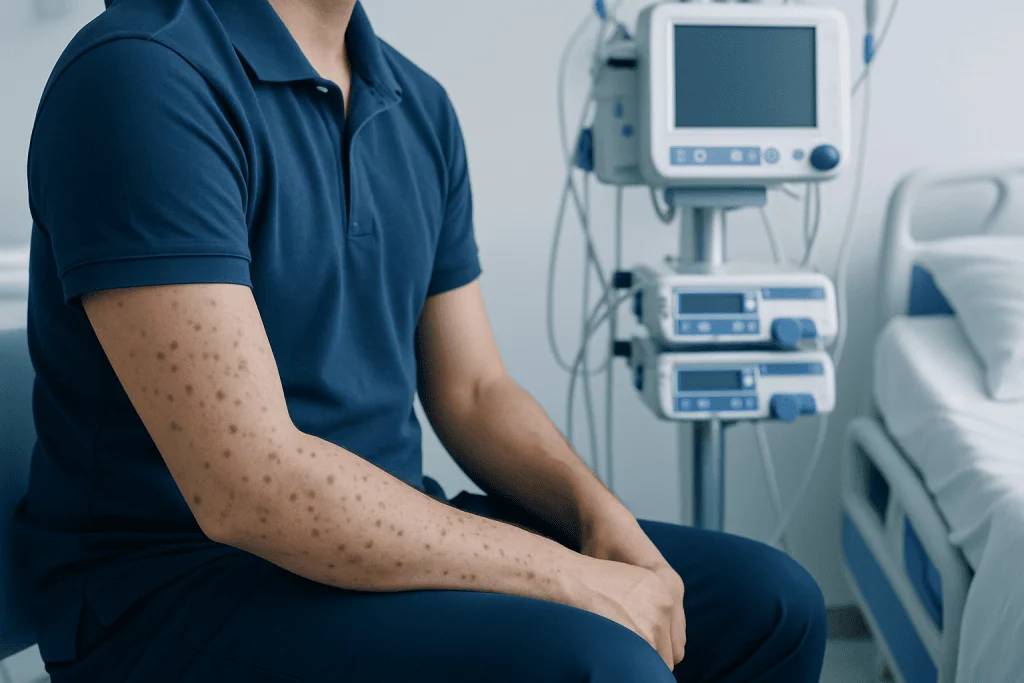
The most commonly discussed skin finding is petechiae. These are very small, flat red, purple, or brown dots caused by tiny amounts of bleeding under the skin. They often appear on the legs, ankles, feet, arms, or inside the mouth, and they usually do not blanch, meaning they do not fade when pressed.
Some people may develop purpura, which are larger purple patches, or bruises that seem out of proportion to a minor bump. The skin may look as though it has multiple unexplained marks in different stages of healing. In darker skin tones, these changes may appear deep brown, violaceous, or almost black rather than bright red.
Less commonly, leukemia can involve the skin directly, causing firm bumps, nodules, plaques, or a widespread rash. These changes are more likely to need specialist assessment because they can resemble many other skin conditions. If a rash is painful, rapidly spreading, or associated with swelling or sores, a clinician should evaluate it promptly.
- Petechiae: pinpoint, flat spots
- Purpura: larger purple flat patches
- Ecchymoses: easy bruising or broad bruiselike areas
- Less common lesions: raised nodules, plaques, or infiltrated patches
Why leukemia can cause skin changes
Leukemia begins in blood-forming tissues, most often the bone marrow. Abnormal white blood cells can crowd out healthy cells, reducing the body’s ability to make normal platelets, red blood cells, and effective infection-fighting cells. This disruption is one reason skin findings may develop.
Low platelet counts, called thrombocytopenia, are a major cause of petechiae, purpura, and easy bruising. Platelets help blood clot, so when levels are low, tiny blood vessels can leak more easily. This can lead to small skin spots or bleeding from the gums or nose as well.
In some cases, skin changes may also be linked to anemia, infections, or leukemia cells involving the skin. The broader context matters. If a rash appears together with fatigue, repeated infections, swollen lymph nodes, unexplained weight loss, night sweats, or persistent fever, a doctor may consider blood disorders such as leukemia among other possibilities.
Symptoms that may appear alongside the rash
A skin change becomes more concerning when it is part of a wider pattern. Leukemia can cause symptoms that are easy to mistake for a viral illness or general exhaustion, especially early on. The rash itself does not confirm leukemia, but associated symptoms can help guide whether testing is needed.
Common accompanying symptoms may include unusual tiredness, weakness, paleness, fever, frequent infections, night sweats, swollen lymph nodes, bone or joint discomfort, or shortness of breath with exertion. Some people also notice nosebleeds, bleeding gums, or menstrual bleeding that seems heavier than usual.
Because blood disorders may overlap in their presentation, doctors sometimes consider related causes of bruising or low blood counts as well. Depending on the clinical picture, further evaluation may distinguish leukemia from lymphoma or from non-cancerous causes such as viral infections, medication effects, or immune platelet disorders.
Other conditions that can look similar
Many harmless or less serious conditions can resemble early stage leukemia rash pictures. Viral infections can cause red or purple spots, especially in children and young adults. Allergic skin reactions may create widespread redness or bumps, while contact dermatitis may cause itchy patches where the skin touched an irritant.
Small red or purple spots can also happen after intense coughing, vomiting, exercise, or pressure on the skin. Certain medicines, including blood thinners and some antibiotics, may increase bruising or trigger skin eruptions. Low platelet counts can occur for reasons other than leukemia, such as autoimmune conditions, liver disease, or other bone marrow disorders.
Because appearance alone is not enough to tell these apart, self-diagnosis based on photographs can be misleading. A healthcare professional considers the rash pattern, medical history, medications, physical examination, and laboratory findings before deciding whether the cause is dermatologic, hematologic, infectious, or something else.
How doctors evaluate a suspected leukemia rash
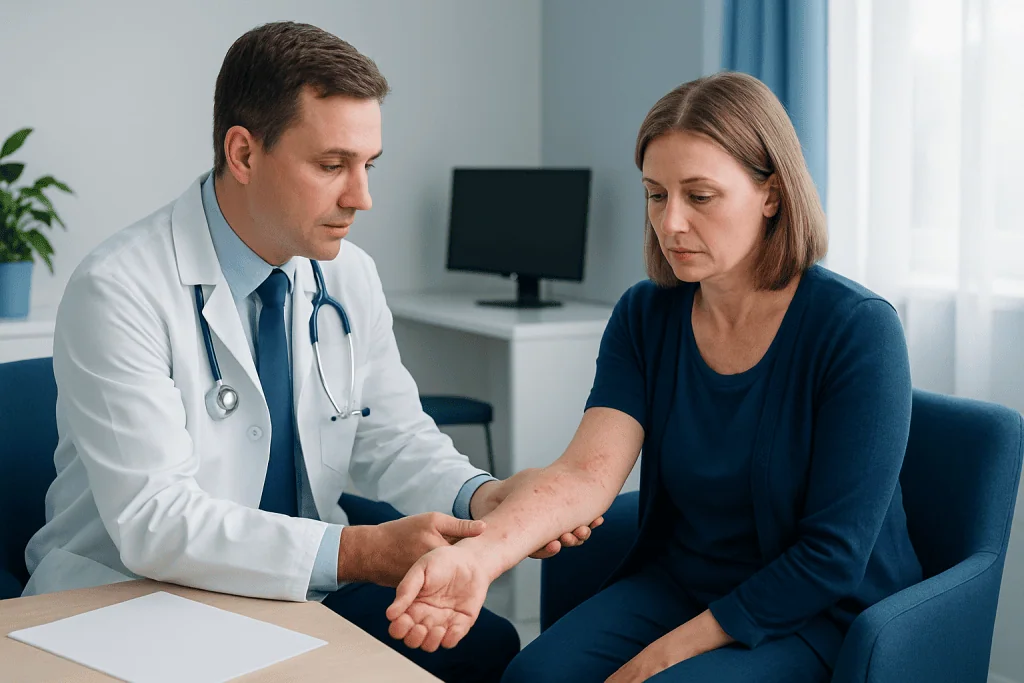
Assessment usually starts with a detailed history and physical examination. A clinician may ask when the rash began, whether it blanches, whether there has been itching or pain, and whether bruising or bleeding has increased. They will also ask about fever, weight loss, infections, medication use, and any family or personal history of blood disorders.
The first key test is often a complete blood count with differential, which measures white blood cells, red blood cells, hemoglobin, and platelets. A peripheral blood smear may help show whether blood cells look abnormal. If results raise concern, a hematologist may recommend more specialized testing, such as coagulation studies, flow cytometry, genetic testing, or a bone marrow examination.
If there are unusual skin lesions, a dermatologist may be involved and sometimes a skin biopsy is considered. Imaging is not always needed for a rash itself, but it may be used if doctors need to evaluate lymph nodes, organs, or related complications. When cancer is suspected, a coordinated plan may include hematology evaluation and, if appropriate, bone marrow transplantation planning for selected cases.
Treatment and self-care: what happens next
Treatment depends entirely on the cause. If tests show that the rash is not related to leukemia, care may focus on managing a skin condition, infection, medication reaction, or another blood abnormality. If leukemia is diagnosed, treatment is tailored to the specific type, the person’s age and general health, and how advanced the disease is.
Leukemia treatment may include chemotherapy, targeted therapy, immunotherapy, supportive transfusions, or other specialist care. Some patients may need inpatient treatment, while others are treated mainly as outpatients. When skin symptoms are due to low platelets or treatment effects, the medical team works to manage bleeding risk and protect the skin.
At home, it is sensible not to scratch or traumatize the area, and to note whether new spots are appearing. Over-the-counter creams should not delay evaluation if the rash is unexplained or accompanied by bruising or bleeding. If cancer care is needed, this may involve chemotherapy and multidisciplinary follow-up; Acibadem International’s multidisciplinary specialists and JCI-accredited hospitals also diagnose and treat blood cancers for international patients.
When to seek medical care
Prompt medical advice is appropriate if a new rash looks like petechiae or unexplained bruising, especially when there is no clear injury. It is also wise to book an appointment if skin changes persist, recur, or happen together with unusual fatigue, repeated infections, swollen glands, or unintentional weight loss.
Urgent care is important if the rash is accompanied by fever, active bleeding, nosebleeds that are hard to stop, bleeding gums, severe weakness, chest pain, fainting, trouble breathing, or confusion. These symptoms do not automatically mean leukemia, but they deserve immediate assessment because they may reflect a significant blood, infection, or clotting problem.
For many people, the outcome is not leukemia but another treatable condition. Still, early evaluation can bring reassurance or lead to faster treatment if a blood disorder is present. The safest approach is to let a qualified clinician assess the full picture rather than relying on photographs alone.
Frequently asked questions
What does a leukemia rash usually look like in the early stage?
It often looks like tiny flat red, purple, or brown spots called petechiae, or like unexplained bruises and larger purple patches. However, there is no single rash that proves leukemia, and some people with leukemia have no rash at all.
Does a leukemia rash itch?
Many leukemia-related petechiae or bruiselike spots are not itchy. If a rash is very itchy, common skin conditions such as eczema, allergy, or contact irritation may be more likely, but only an exam can sort this out reliably.
Can pictures online confirm whether a rash is leukemia?
No. Pictures can show general patterns, but many different conditions can look similar on the skin. A diagnosis depends on symptoms, examination, and blood tests rather than images alone.
Where on the body does a leukemia rash appear?
Petechiae and purpura often show up on the legs, feet, ankles, arms, or inside the mouth, but they can appear in other places too. The location matters less than the overall pattern and whether there are other symptoms such as bruising or bleeding.
Should someone go to the emergency room for a suspected leukemia rash?
Emergency care is appropriate if the rash comes with fever, active bleeding, shortness of breath, chest pain, fainting, or marked weakness. If the person feels otherwise stable, they should still arrange prompt medical evaluation, especially if the spots are unexplained or increasing.
Can children get a rash with leukemia too?
Yes, children can develop petechiae, bruising, or other skin changes if leukemia affects blood counts. But children also commonly get viral rashes and minor bruising, so a pediatric assessment is important before drawing conclusions.
References
- American Cancer Society
- National Cancer Institute
- Leukemia & Lymphoma Society
- Mayo Clinic
- National Health Service
This article is for general information only and is not a substitute for professional medical advice. Please consult a qualified doctor about your individual situation.
Leukemia in Turkey — costs, top hospitals & a free quote
JCI-accredited · board-certified surgeons · reply within 24h
Add us as a Preferred Source to see more of our trusted health content across Google Search, AI Overviews and Discover.

Medical Oncology Department
Medical treatment of cancer with chemotherapy, immunotherapy and targeted therapies under a multidisciplinary tumor board.
60 specialists in this unitMore from the Health Library


Related Specialists

Prof. Dr. Şafak Kıziltaş
Gastroenterology
Prof. Dr. Osman Güven
Orthopedic Surgery & Traumatology
Dr. Osman Egüz
Emergency Service
Dr. Savaş Gündoğan
Gynecology & Obstetrics