Egg freezing in Turkey: Hospitals, Safety & What to Expect

Egg freezing, also called oocyte cryopreservation, collects and freezes mature unfertilised eggs for future fertility treatment. The process usually includes testing, 10 to 14 days of hormone injections, monitoring, a short egg-retrieval procedure and cryostorage.
Key Takeaways
- Egg freezing, also called oocyte cryopreservation, collects and freezes mature unfertilised eggs for future fertility treatment.
- The process usually includes testing, 10 to 14 days of hormone injections, monitoring, a short egg-retrieval procedure and cryostorage.
- Age and ovarian reserve influence the number of eggs that may be collected and the likelihood of future success, but no outcome can be guaranteed.
- Egg retrieval is generally an outpatient procedure; temporary bloating, cramping and light spotting can occur afterward.
- People travelling for care should confirm the clinic’s licensing, laboratory standards, storage arrangements, communication plan and follow-up support.
Egg freezing in Turkey can be an option for people who wish to preserve unfertilised eggs for possible future use. A safe experience depends on an individual fertility assessment, an experienced reproductive medicine team, regulated laboratory standards and clear planning for treatment and travel.
Overview: egg freezing in Turkey
Egg freezing in Turkey is a fertility-preservation treatment in which mature eggs are collected from the ovaries, rapidly frozen and stored for possible future use. It may be considered by people who want to delay pregnancy, who are facing treatment that could affect fertility, or who have personal circumstances that make trying for pregnancy later more appropriate.
The treatment is usually provided by reproductive endocrinology and IVF teams in specialised fertility centres. It is important to understand that freezing eggs preserves the eggs available at the time of collection; it does not stop natural age-related changes in fertility, guarantee a future pregnancy or replace individual medical advice.
For a detailed introduction to the service pathway, patients can review egg freezing treatment. A consultation helps determine whether egg freezing is suitable, how long a visit may need to last, and what monitoring or travel arrangements may be required.
How egg freezing works
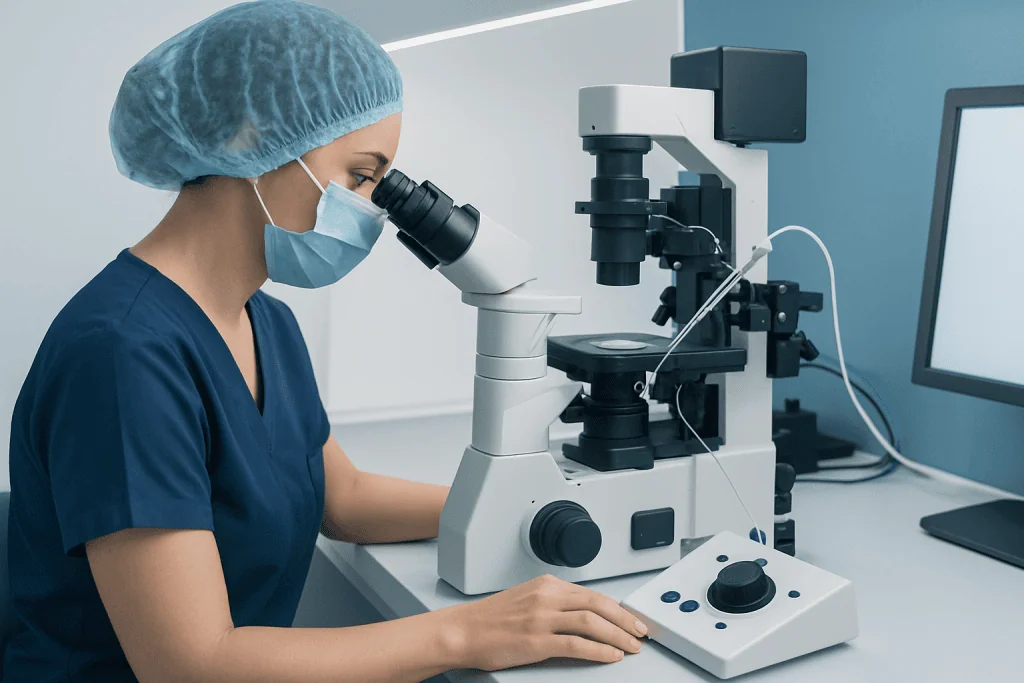
Egg freezing is also known as mature oocyte cryopreservation. During a natural menstrual cycle, several follicles begin to develop, but usually only one egg matures and ovulates. Fertility medicines are used to encourage several follicles to develop in the same cycle so that more mature eggs may be collected.
After collection, embryologists assess the eggs in the laboratory. Mature eggs are frozen using vitrification, a rapid freezing technique designed to reduce the formation of ice crystals that can damage cells. The eggs are then stored in carefully monitored cryostorage until the patient chooses to use them, subject to applicable regulations and the storage agreement.
When eggs are used in the future, they are warmed, fertilised in the laboratory, commonly using intracytoplasmic sperm injection, and any resulting embryos may be transferred to the uterus in a later treatment cycle. This is related to, but not identical with, IVF treatment, because egg freezing occurs before fertilisation.
Who may consider egg freezing

Egg freezing may be considered for medical or non-medical reasons. Medical fertility preservation can be relevant before chemotherapy, radiotherapy involving the pelvis, ovarian surgery, or treatment for conditions that may affect ovarian function. It may also be discussed when there is a known risk of early loss of ovarian function.
Some people choose planned egg freezing because they are not ready to try for pregnancy now but would like to retain the possibility of using younger eggs later. The decision is personal and may involve medical, emotional, relationship, work and financial considerations. Fertility counselling can help patients consider both the benefits and the limits of treatment.
A fertility specialist may assess age, menstrual history, previous pregnancies, medical conditions, medications and family history. Tests can include an ultrasound to count visible ovarian follicles and blood tests such as anti-Müllerian hormone measurement. These tests help guide planning, but they cannot precisely predict egg quality, the number of eggs retrieved or future pregnancy outcomes.
- Egg freezing may be especially time-sensitive before cancer treatment or other gonadotoxic therapy.
- It may not be appropriate to delay urgent medical treatment solely to complete a cycle; decisions should be coordinated with the treating medical team.
- Some people may need more than one stimulation cycle if they hope to freeze a larger number of eggs.
Step by step: what the procedure involves
The first stage is a consultation and pre-treatment assessment. The fertility team reviews health history, discusses expectations, performs relevant tests and explains consent, egg storage, future use and possible alternatives. For international patients, it is helpful to discuss the expected length of stay before booking travel, as monitoring appointments are needed throughout stimulation.
Ovarian stimulation usually begins early in a menstrual cycle. The patient uses prescribed hormone injections at home, while the clinic monitors follicle growth with ultrasound scans and, when appropriate, blood tests. Medication plans vary from person to person. Monitoring allows the team to adjust treatment and schedule the final maturation injection at the safest and most effective time.
Egg retrieval is typically performed about 34 to 36 hours after the final injection. Under sedation or anaesthesia, a doctor uses ultrasound guidance to pass a fine needle through the vaginal wall and collect fluid from the ovarian follicles. The procedure commonly takes a short time, and the embryology laboratory identifies and freezes suitable mature eggs on the same day.
After a period of observation, most patients return to their accommodation with a responsible adult. The clinic should provide written aftercare guidance, a contact route for urgent questions and confirmation of the storage arrangements. Patients travelling internationally should allow adequate time after retrieval before flying, based on their clinician’s advice and how they feel.
Safety, benefits and possible risks
When delivered by qualified fertility specialists with appropriate monitoring and laboratory quality systems, egg freezing is an established fertility-preservation technique. Its main potential benefit is that eggs frozen at a younger age may have a higher chance of leading to a pregnancy than eggs collected later. However, outcomes depend on age at freezing, the number and maturity of eggs, laboratory processes, sperm factors, embryo development and uterine health at the time of future treatment.
Hormone medicines can cause temporary effects such as headaches, mood changes, breast tenderness, abdominal bloating or injection-site irritation. After retrieval, mild cramping, bloating, fatigue and light vaginal spotting are common and usually settle over several days. Anaesthesia also has uncommon but recognised risks that should be discussed before the procedure.
A less common complication is ovarian hyperstimulation syndrome, in which the ovaries become enlarged and fluid shifts can cause more significant symptoms. Modern protocols and careful monitoring aim to reduce this risk, but patients should know when to contact their team. Rare procedure-related complications include bleeding, infection or injury to nearby structures.
People considering egg freezing in Turkey should ask how the fertility centre is licensed and monitored, who performs egg retrieval and anaesthesia, how the embryology laboratory is quality-controlled, and how cryostorage is safeguarded. JCI accreditation applies to hospitals rather than being a substitute for fertility-specific regulation, but it can be one indicator of broader organisational quality and patient-safety systems.
Recovery, travel and practical planning
Many patients feel well enough to resume light daily activities within one or two days after egg retrieval, although recovery is individual. Strenuous exercise, heavy lifting and sexual activity may be discouraged temporarily because the ovaries remain enlarged for a short period. The next menstrual period may occur earlier or later than expected and can be heavier or more uncomfortable than usual.
For patients coming from abroad, planning should include the approximate duration of ovarian stimulation, possible flexibility if follicle growth differs from expectations, and a recovery period after retrieval. It is useful to arrange accommodation close to the clinic, reliable local transport, translation support if needed, and a companion for the retrieval day.
Before travelling home, patients should receive a clear medical summary, medication instructions, emergency advice and details of how to contact the fertility team. They should also understand the storage contract, including consent requirements, storage duration, annual communication procedures, transfer options and what happens if contact details or future plans change.
Acibadem International’s multidisciplinary specialists and JCI-accredited hospitals can support international patients undergoing fertility assessment and treatment, including coordination of clinical appointments and care planning.
When to seek medical care
Patients should contact their fertility clinic promptly if they develop worsening abdominal pain or swelling, persistent nausea or vomiting, shortness of breath, dizziness, fainting, fever, heavy vaginal bleeding, markedly reduced urination or rapid weight gain after stimulation or egg retrieval. These symptoms may require assessment for complications such as ovarian hyperstimulation syndrome, bleeding or infection.
Urgent emergency care is appropriate for severe pain, difficulty breathing, chest pain, fainting or heavy bleeding. Patients should not rely on travel plans or wait for a scheduled appointment if they feel significantly unwell.
Before starting treatment, medical advice is also important for people with irregular periods, known ovarian conditions, previous pelvic surgery, a history of blood clots, significant chronic illness or current cancer treatment. A coordinated plan between fertility, oncology and other relevant specialists can help protect health while considering fertility preservation.
Frequently asked questions
Is egg freezing in Turkey safe?
Egg freezing is an established fertility-preservation procedure when it is provided by qualified fertility specialists, anaesthesia teams and embryology laboratories with appropriate quality systems. Safety also depends on an individual assessment, careful medication monitoring and clear aftercare arrangements. Patients should ask about clinic licensing, laboratory standards, complication support and long-term storage procedures.
How long does an egg-freezing cycle take?
The active stimulation phase commonly lasts around 10 to 14 days, with several monitoring visits before egg retrieval. The full process may take longer because it includes consultation, testing, cycle scheduling and recovery. Timelines vary according to menstrual cycle timing and the ovaries’ response to medication.
Does egg freezing guarantee pregnancy later?
No. Egg freezing may preserve future reproductive options, but it cannot guarantee that frozen eggs will survive warming, fertilise, form embryos, implant or result in a live birth. Age at the time eggs are frozen and the number of mature eggs stored are important factors in future chances.
Is egg retrieval painful?
Egg retrieval is usually carried out with sedation or anaesthesia, so patients generally do not feel pain during the procedure. Mild cramping, pelvic pressure, bloating or light spotting can occur afterward and often improve within a few days. The clinic can advise on suitable pain relief and symptoms that need review.
Can someone travel after egg retrieval?
Travel plans should be discussed with the treating fertility team. Many people can travel after a short recovery period, but the timing depends on symptoms, the response to stimulation and the risk of complications. It is sensible to avoid scheduling an immediate flight and to have access to medical advice after returning home.
What happens to eggs after they are frozen?
Mature eggs are stored in specialised cryogenic conditions until the patient chooses to use them or makes another decision under the terms of the storage agreement. If they are used later, the eggs are warmed and fertilised in a laboratory to create embryos for possible transfer. Consent and storage rules may differ by country, so patients should review these carefully before treatment.
References
- American Society for Reproductive Medicine
- European Society of Human Reproduction and Embryology
- Human Fertilisation and Embryology Authority
- World Health Organization
This article is for general information only and is not a substitute for professional medical advice. Please consult a qualified doctor about your individual situation.
IVF & fertility treatment in Turkey — success rates and costs
JCI-accredited · board-certified surgeons · reply within 24h
Add us as a Preferred Source to see more of our trusted health content across Google Search, AI Overviews and Discover.